
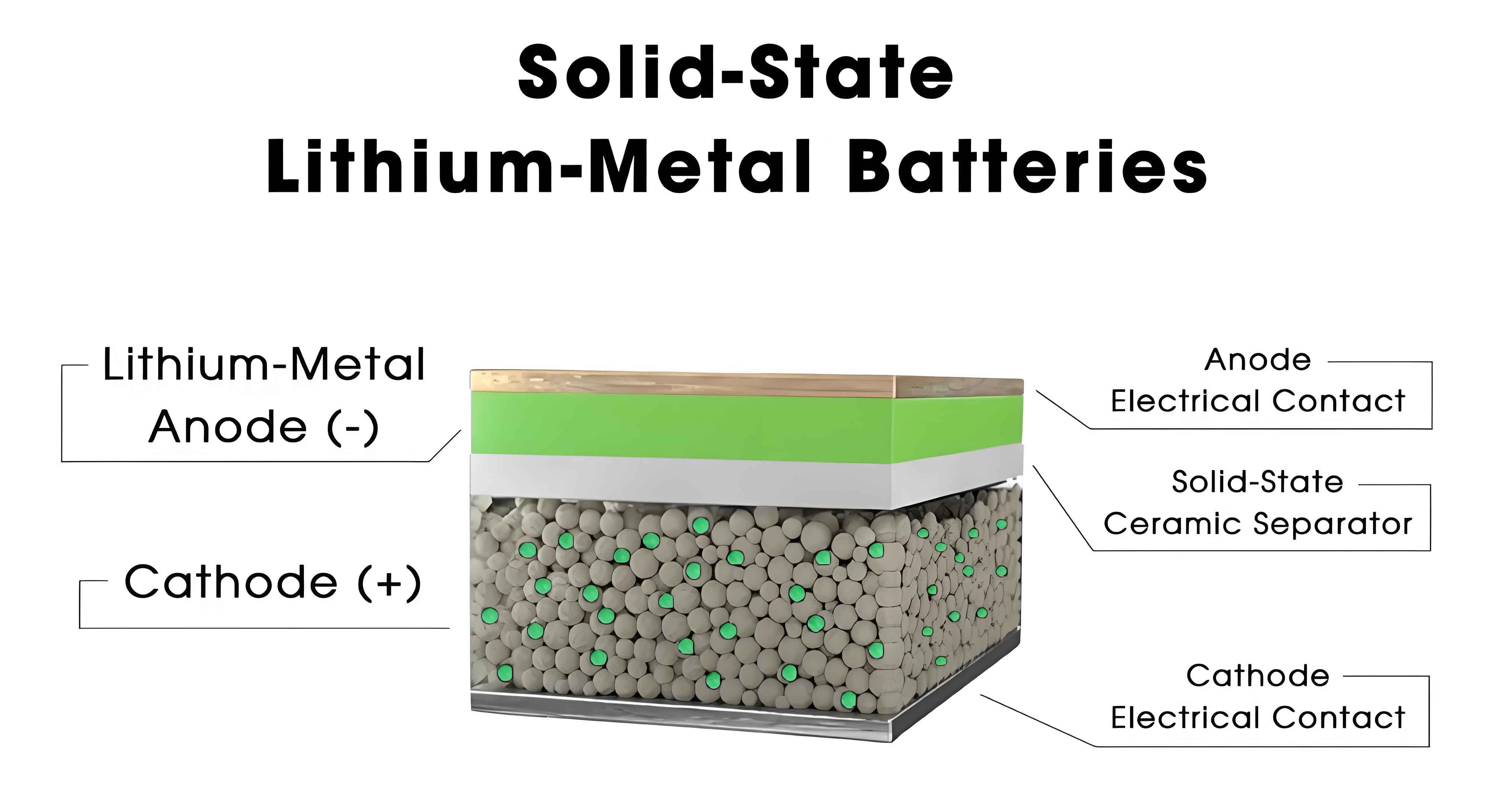
The relentless pursuit of higher energy density and enhanced safety in electrochemical energy storage has positioned solid-state batteries at the forefront of next-generation battery technology. Replacing the flammable liquid electrolytes in conventional lithium-ion batteries with solid-state electrolytes (SSEs) is considered a pivotal step toward realizing this goal. SSEs are broadly categorized into inorganic ceramics and solid polymer electrolytes (SPEs). While inorganic SSEs, such as garnet-type or NASICON-type oxides, often exhibit high ionic conductivity at room temperature, they typically suffer from poor interfacial contact with electrodes due to their rigid and brittle nature, along with high manufacturing costs. In contrast, SPEs, based on polymers like poly(ethylene oxide) (PEO) or poly(vinylidene fluoride-co-hexafluoropropylene) (PVDF-HFP), offer superior flexibility, easier processability, and better electrode compatibility. However, their widespread adoption in solid-state battery applications is severely hampered by intrinsically low ionic conductivity at ambient temperatures (often below $$10^{-4}$$ S/cm) and unsatisfactory interfacial stability against lithium metal anodes.
The ionic conduction in SPEs primarily occurs in the amorphous regions through the segmental motion of polymer chains. Therefore, strategies to suppress polymer crystallinity and enhance chain mobility are crucial. Polymer blending, a concept resonant with high-entropy design principles, introduces compositional disorder that can effectively reduce crystallinity. Furthermore, the incorporation of active inorganic fillers can create additional ion-conduction pathways and interact with polymer chains, further boosting ionic transport. Among polymer matrices, PVDF-HFP is particularly attractive due to its good electrochemical stability, high dielectric constant (which aids in lithium salt dissociation), and mechanical strength. To address the dual challenges of low conductivity and poor interface, we designed a composite SPE system. We introduced poly(acrylic acid) (PAA), rich in carboxylic acid (-COOH) groups, into the PVDF-HFP matrix. Polyethylenimine (PEI) was employed as a cross-linking agent to react with both PVDF-HFP and PAA, forming a cross-linked polymer network. This network is anticipated to increase the amorphous domain and provide coordinating sites for lithium ions. Simultaneously, the active NASICON-type filler Li1.5Al0.5Ge1.5(PO4)3 (LAGP) was incorporated to provide fast ion-conducting channels and enhance mechanical robustness. This manuscript details the preparation, comprehensive characterization, and electrochemical evaluation of this PAA/LAGP-modified PVDF-HFP-based composite SPE, demonstrating its significant potential for high-performance, room-temperature solid-state battery applications.
Experimental Methodology: Fabrication and Characterization
1. Materials and Electrolyte Preparation
The composite SPE, denoted as PAG, was fabricated via a solution casting method. The mass ratio of the components was PVDF-HFP : PAA : PEI : LiTFSI : LAGP = 1 : 0.02 : 0.15 : 0.5 : 0.15. A control sample without PAA, denoted as PG (PVDF-HFP : PEI : LiTFSI : LAGP = 1 : 0.15 : 0.5 : 0.15), was also prepared for comparison. The detailed preparation process is summarized in the workflow below.
Preparation Workflow:
- Solution A (Polymer/LAGP Matrix): PAA was first dissolved in N,N-dimethylformamide (DMF) at 90°C. Subsequently, PVDF-HFP, lithium bis(trifluoromethanesulfonyl)imide (LiTFSI), and LAGP powder were added sequentially. The mixture was stirred at 60°C until a homogeneous, viscous solution was obtained.
- Solution B (Cross-linker): PEI was dissolved in DMF at 60°C to create a cross-linking agent solution.
- Blending and Casting: Solution B was added to Solution A under vigorous stirring to initiate the cross-linking reaction. The final precursor slurry was cast onto a polytetrafluoroethylene mold.
- Drying: The cast film was dried at 60°C under vacuum for 24 hours to completely remove the solvent, resulting in a freestanding, flexible composite SPE membrane.
The ionic conductivity ($$\sigma$$) was calculated from electrochemical impedance spectroscopy (EIS) data obtained from stainless steel (SS) | electrolyte | SS symmetric cells using the equation:
$$\sigma = \frac{d}{R_b \cdot A}$$
where $$d$$ is the thickness of the SPE membrane, $$R_b$$ is the bulk resistance derived from the high-frequency intercept on the real axis in the Nyquist plot, and $$A$$ is the contact area between the electrolyte and the electrode.
2. Structural and Morphological Characterization
The morphology of the SPE membranes was investigated using scanning electron microscopy (SEM). The chemical interactions and functional groups were analyzed by Fourier-transform infrared (FTIR) spectroscopy. The crystalline phase of the polymers and the filler was examined using X-ray diffraction (XRD).
3. Electrochemical Cell Assembly and Testing
All cells were assembled in an argon-filled glovebox. For interfacial stability tests, Li | SPE | Li symmetric cells were fabricated. To evaluate practical performance, LiFePO4 (LFP) | SPE | Li full cells were constructed. The LFP cathode was prepared by coating a slurry of LiFePO4, acetylene black, and PVDF binder (8:1:1 by weight) on an aluminum foil. A minimal amount (≤ 5 µL) of liquid ether-based electrolyte was added to the electrode/electrolyte interfaces to reduce contact impedance, representing a common practice in the development of quasi-solid-state or hybrid solid-state battery configurations. The electrochemical stability window was assessed by linear sweep voltammetry (LSV). Galvanostatic cycling tests were performed on both symmetric and full cells using a battery testing system.
Results and Discussion: Unraveling the Enhanced Performance
1. Morphology and Structural Analysis
SEM images revealed a striking difference between the PAG and PG membranes. The PAG membrane exhibited a remarkably smooth, uniform, and dense surface without observable cracks or large granular features. In contrast, the PG membrane surface showed distinct phase separation, with visible blocky structures and crevices. This indicates that the introduction of PAA and its subsequent cross-linking with PEI and PVDF-HFP promoted the formation of a highly compatible and homogeneous polymer blend. The cross-linked network effectively inhibited the crystallization of PVDF-HFP, leading to a predominantly amorphous structure essential for facile ion transport. The uniform dispersion of LAGP particles within this amorphous polymer matrix was also inferred, which is critical for constructing continuous Li+ conduction pathways.
FTIR spectra provided evidence of the cross-linking reactions. Characteristic shifts or changes in the absorption bands corresponding to the -COOH groups of PAA, the C-F bonds of PVDF-HFP, and the amine groups of PEI confirmed successful chemical interaction among the components, forming a robust three-dimensional network.
2. Ionic Conductivity and Transport Mechanism
The temperature-dependent ionic conductivity is a critical metric for solid-state battery electrolytes. EIS measurements were conducted from 30°C to 80°C. The obtained bulk resistances were used to calculate the ionic conductivity. The results are summarized in Table 1.
| Sample | Conductivity at 30°C (S/cm) | Conductivity at 60°C (S/cm) | Activation Energy, Ea (eV) |
|---|---|---|---|
| PAG | 7.02 × 10⁻⁴ | 1.58 × 10⁻³ | 0.21 |
| PG (Control) | 9.30 × 10⁻⁵ | 3.98 × 10⁻⁴ | 0.28 |
The PAG electrolyte demonstrated a high room-temperature ionic conductivity of 7.02 × 10⁻⁴ S/cm, which is nearly an order of magnitude higher than that of the PG electrolyte (9.30 × 10⁻⁵ S/cm). This excellent performance stems from a synergistic effect:
- Polymer Network Effect: The cross-linked PAA-PVDF-HFP network creates an expansive amorphous region, facilitating segmental motion. The polar -COOH groups from PAA effectively coordinate with Li+ ions, promoting salt dissociation and increasing the number of charge carriers.
- Active Filler Effect: The LAGP particles not only act as passive reinforcing fillers but also provide active, fast Li+ conduction pathways through their bulk and along the polymer/filler interfaces.
The conductivity followed the Arrhenius relationship, $$\sigma T = A \exp(-E_a / k_B T)$$, where $$E_a$$ is the activation energy. The lower $$E_a$$ value for PAG (0.21 eV) compared to PG (0.28 eV) indicates a lower energy barrier for Li+ migration, confirming the efficiency of the designed composite structure.
3. Interfacial Stability with Lithium Metal Anode
The compatibility of the SPE with lithium metal is paramount for the cyclability and safety of a solid-state battery. The evolution of interfacial resistance in Li | SPE | Li symmetric cells during room-temperature storage was monitored by EIS.
| Storage Time | Interfacial Resistance (Li | PAG | Li) (Ω) | Interfacial Resistance (Li | PG | Li) (Ω) |
|---|---|---|
| 1 day | 170 | 875 |
| 2 days | 173 | 831 |
| 3 days | 176 | 878 |
The interfacial resistance for the PAG-based cell remained stable and very low (~175 Ω) over three days. In contrast, the PG-based cell showed higher initial resistance and significant fluctuation. This demonstrates superior interfacial stability for PAG. The -COOH groups in PAA can react with Li metal to form a stable, Li-ion conductive interfacial layer (e.g., Li-PAA complexes), which passivates the surface and ensures intimate contact. Furthermore, the polymer matrix effectively isolates the LAGP filler from direct contact with Li metal, preventing detrimental reduction reactions that commonly occur with oxide-based ceramics.
Galvanostatic cycling of symmetric cells provided further evidence. The PAG cell exhibited extremely stable and low polarization voltages ($$ \Delta V $$) across various current densities (0.1 to 0.5 mA/cm²), as shown in Table 2. Remarkably, it sustained a stable cycling for over 700 hours at a high current density of 0.5 mA/cm² without short-circuiting. The PG cell, however, showed large and increasing polarization, leading to failure after approximately 250 hours at 0.2 mA/cm².
| Current Density (mA/cm²) | Polarization Voltage, Li | PAG | Li (V) | Polarization Voltage, Li | PG | Li (V) |
|---|---|---|
| 0.1 | 0.008 | 0.081 |
| 0.2 | 0.018 | 0.163 |
| 0.3 | 0.032 | 0.254 |
| 0.5 | 0.049 | 0.463 (Unstable) |
4. Full Cell Performance in a Solid-State Battery Configuration
The practical viability of the PAG electrolyte was evaluated in LFP | PAG | Li full cells at room temperature. After an initial conditioning cycle at 0.1C, the cells were cycled at 0.5C (1C ≈ 170 mAh/g) within a voltage window of 2.5-4.0 V. The PG-based cell was tested under identical conditions for comparison. The cycling performance data is consolidated below.
| Cycle Number | Discharge Capacity – LFP | PAG | Li (mAh/g) | Discharge Capacity – LFP | PG | Li (mAh/g) | Coulombic Efficiency – PAG (%) |
|---|---|---|---|
| 1 (0.5C) | 156.4 | 150.4 | 99.1 |
| 50 | 154.8 | 135.2 | 99.3 |
| 75 | 153.1 | 128.5 | 99.0 |
| 100 | 153.9 | 123.2 | 99.2 |
The PAG-based solid-state battery delivered an initial discharge capacity of 156.4 mAh/g and retained an impressive 153.9 mAh/g after 100 cycles, corresponding to a capacity retention of 98.4%. The voltage profiles remained stable with minimal polarization growth throughout cycling. The PG-based cell suffered from continuous capacity fade, retaining only 81.9% of its initial capacity after 100 cycles. The superior performance of the PAG cell is directly attributed to its high ionic conductivity, which supports rapid charge/discharge kinetics, and its excellent interfacial stability, which maintains a low and stable impedance over prolonged cycling. This demonstrates a significant advancement toward practical room-temperature solid-state battery operation.
Conclusion
In this work, a high-performance composite solid polymer electrolyte was successfully developed for solid-state battery applications by strategically blending poly(acrylic acid) (PAA) and Li1.5Al0.5Ge1.5(PO4)3 (LAGP) inorganic filler into a PVDF-HFP matrix, with PEI as a cross-linker. The designed composite architecture delivers a synergistic combination of properties:
- Enhanced Ionic Conductivity: The cross-linked PAA-PVDF-HFP network significantly increases the amorphous content and provides Li+-coordinating sites, while the LAGP filler introduces fast ion-conduction pathways. This synergy results in a high room-temperature ionic conductivity of 7.02 × 10⁻⁴ S/cm.
- Superior Interfacial Stability: The in-situ formed stable interface between PAA and lithium metal, coupled with the protective polymer layer around LAGP, effectively suppresses side reactions and lithium dendrite growth. This enables stable long-term cycling of Li symmetric cells for over 700 hours at 0.5 mA/cm².
- Excellent Electrochemical Performance: When implemented in a practical LFP-based solid-state battery, the PAG electrolyte enables outstanding cycling stability with 98.4% capacity retention after 100 cycles at 0.5C and room temperature.
This study validates that the rational design of composite SPEs through polymer blending and active filler incorporation is a highly effective strategy to overcome the key limitations of traditional SPEs. The PAA/LAGP-modified PVDF-HFP electrolyte presents a promising candidate for developing safe, high-energy-density, and long-life solid-state battery systems, paving the way for their future commercialization.