
As we witness the rapid deployment of large-scale electrochemical energy storage projects worldwide, ensuring the intrinsic safety of high-capacity cell energy storage systems has emerged as a critical challenge. The intermittent nature of renewable energy sources like wind and solar necessitates robust storage solutions, and electrochemical storage, particularly lithium-ion batteries, has gained prominence due to its flexibility and scalability. However, safety incidents, including fires and explosions, have raised significant concerns, hindering broader adoption. In this context, I believe that adopting an intrinsic safety approach—rooted in principles from high-risk industries like mining and chemicals—can fundamentally mitigate these risks. This article explores the concept of intrinsic safety, proposes a hierarchical framework for cell energy storage system safety, and delves into key technological pathways for achieving intrinsic safety at the cell level, emphasizing the need for a holistic view across cells, modules, and container systems.
The concept of intrinsic safety has evolved over a century, originating from efforts to prevent explosions in coal mines. Initially, it focused on designing electrical circuits that could not ignite flammable atmospheres. Over time, thinkers like Trevor Kletz expanded this idea, arguing that the best way to prevent accidents is not to add protective devices but to eliminate or minimize hazards at the source. Intrinsic safety, as I understand it, involves designing systems where the likelihood of a hazardous event is reduced to an acceptable level, ideally zero, through inherent characteristics rather than external controls. This contrasts with traditional safety, which relies on alarms, barriers, and mitigation measures after a hazard occurs. In essence, intrinsic safety is about prevention, while traditional safety is about response. For cell energy storage systems, this means engineering batteries and their assemblies to avoid thermal runaway, short circuits, and other failure modes under both normal and fault conditions.
To apply intrinsic safety to cell energy storage systems, we must consider different structural levels: the individual cell, the module (a collection of cells), and the container system (housing multiple modules). Each level has distinct safety requirements. I propose a classification scheme that categorizes safety into three tiers: intrinsically safe, extrinsically safe (relying on traditional measures), and unsafe. This hierarchy helps in systematically addressing risks.
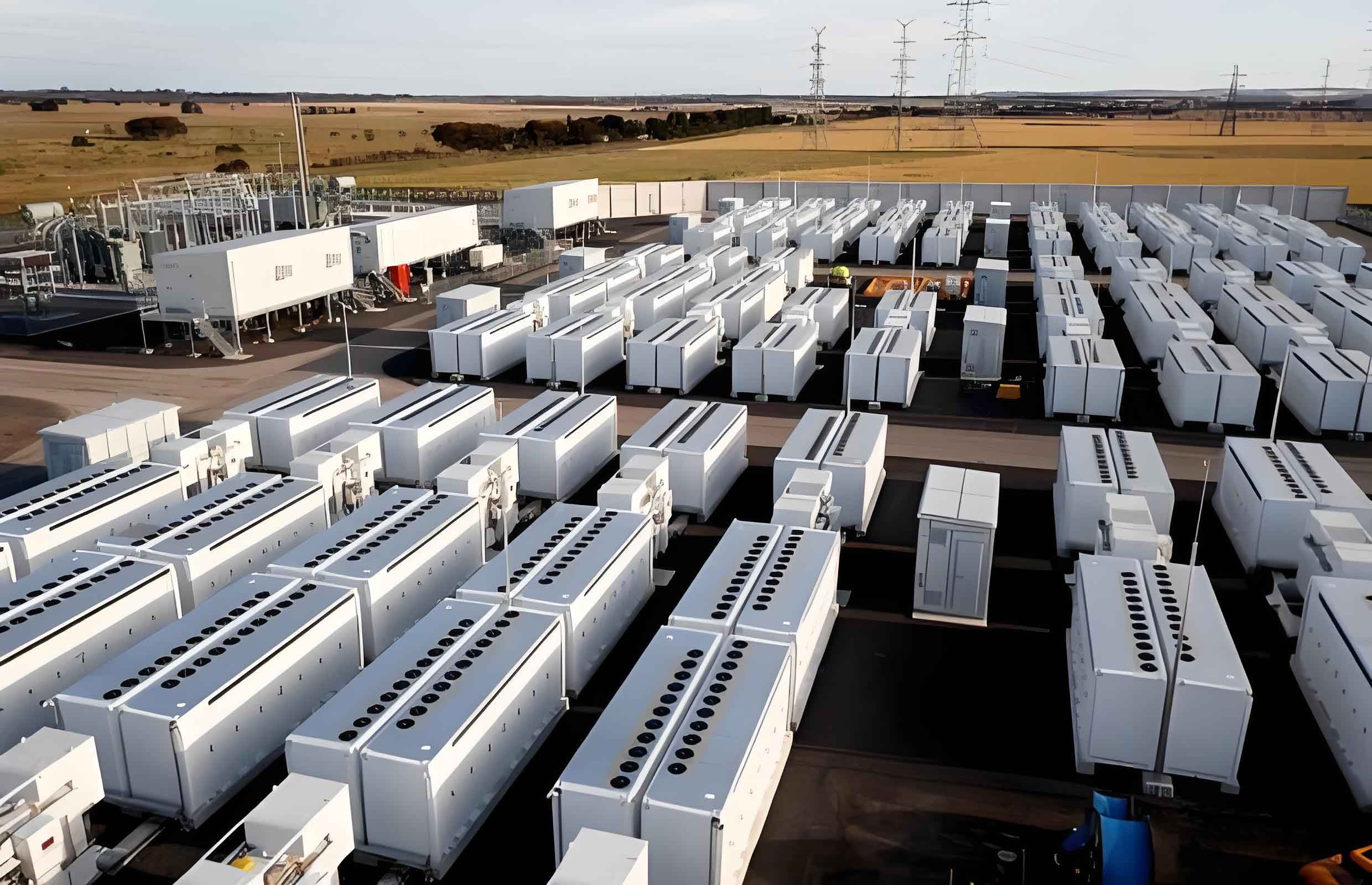
At the cell level, intrinsic safety implies that under specified conditions—such as overcharge, short circuit, or mechanical abuse—the cell does not undergo thermal runaway. Thermal runaway is a chain reaction where heat generation outpaces dissipation, leading to cell failure, gas release, and potentially fire. An intrinsically safe cell prevents this through material choices or design. For example, using non-flammable electrolytes or incorporating self-limiting reactions can raise the thermal runaway threshold. The progression from normal operation to explosion can be modeled as a series of stages, and intrinsic safety aims to halt it early. Mathematically, we can express the heat balance in a cell as:
$$ \frac{dT}{dt} = \frac{1}{m C_p} \left( Q_{\text{gen}} – Q_{\text{diss}} \right) $$
where \( T \) is temperature, \( t \) is time, \( m \) is mass, \( C_p \) is heat capacity, \( Q_{\text{gen}} \) is heat generation rate, and \( Q_{\text{diss}} \) is heat dissipation rate. For intrinsic safety, we design cells such that \( Q_{\text{gen}} \) remains below critical levels even under faults, or we enhance \( Q_{\text{diss}} \) inherently. Extrinsically safe cells, on the other hand, might reach thermal runaway but are equipped with external cooling or shutdown mechanisms to prevent combustion. Unsafe cells lack such features.
At the module level, intrinsic safety extends beyond individual cells to include interconnections and overall behavior. A module is intrinsically safe if it prevents thermal propagation between cells and ensures that any electrical sparks from wiring do not ignite components. This involves optimized thermal management, robust electrical insulation, and cell balancing. For instance, arranging cells to minimize heat accumulation or using materials that absorb energy can enhance intrinsic safety. The risk of thermal propagation can be assessed using models like:
$$ \frac{\partial T_i}{\partial t} = \alpha \nabla^2 T_i + \beta Q_i $$
where \( T_i \) is the temperature of cell \( i \), \( \alpha \) is thermal diffusivity, \( \beta \) is a coefficient, and \( Q_i \) is heat source term. Intrinsic safety measures aim to reduce \( Q_i \) or increase heat spread. Extrinsically safe modules might include fire-retardant coatings or phase-change materials that activate only after overheating begins.
At the container system level, intrinsic safety encompasses environmental protection and system-wide reliability. An intrinsically safe container prevents internal thermal runaway events, shields against external hazards like lightning or corrosion, and ensures that electrical faults do not escalate. This requires advanced insulation, surge protection, and climate control. For example, using corrosion-resistant materials or designing airtight seals can be intrinsic safety features. The overall safety of a cell energy storage system depends on integrating these levels cohesively.
To summarize this hierarchical approach, I present the following table, which outlines key intrinsic and extrinsic safety measures at each level for a cell energy storage system:
| Level | Intrinsic Safety Measures | Extrinsic Safety Measures |
|---|---|---|
| Cell | Use of non-flammable electrolytes; electrode materials with high thermal stability; built-in current limiters. | External cooling systems; thermal fuses; electrolyte drainage upon fault detection. |
| Module | Optimized cell spacing for heat dissipation; flame-retardant separators; balanced electrical connections to prevent sparks. | Fire suppression sprays; phase-change material padding; smoke detectors and alarms. |
| Container System | Lightning arresters; hermetic sealing against moisture; overvoltage protection circuits. | Immersive firefighting systems like water mist or gas; emergency ventilation; remote shutdown capabilities. |
Now, focusing on the cell level—the core of any cell energy storage system—I explore three prominent technological pathways toward intrinsic safety: aqueous batteries, solid-state batteries, and safener injection. Each approach has unique mechanisms and challenges.
Aqueous batteries replace organic electrolytes with water-based solutions, inherently reducing flammability. The typical organic electrolyte in lithium-ion cells, composed of salts like LiPF6 in carbonate solvents (e.g., ethylene carbonate, dimethyl carbonate), decomposes at elevated temperatures, releasing flammable gases such as CO and H2. The reaction can be simplified as:
$$ \text{LiPF}_6 + \text{Organic Solvents} \xrightarrow{\Delta T} \text{CO} + \text{H}_2 + \text{Hydrocarbons} $$
In contrast, aqueous electrolytes have higher thermal stability and are non-flammable under normal conditions. However, they face limitations like lower energy density due to a narrower electrochemical window (typically below 2 V). To address this, researchers are developing “water-in-salt” electrolytes that use high salt concentrations to expand the voltage range. Additionally, electrode materials like LiMn2O4 are being modified to prevent dissolution at high temperatures. The intrinsic safety of aqueous cells hinges on maintaining electrolyte integrity; if water evaporates, residual components might become combustible. Thus, I consider aqueous batteries a promising but evolving option for safe cell energy storage systems.
Solid-state batteries employ solid electrolytes instead of liquids, eliminating flammable organic solvents and reducing lithium dendrite growth—a common cause of internal shorts. Solid electrolytes, such as ceramics (e.g., garnet-type Li7La3Zr2O12) or polymers (e.g., PEO-based), offer high mechanical strength and thermal resistance. The heat generation in a solid-state cell can be lower, as modeled by:
$$ Q_{\text{gen}} = I^2 R + \left| \eta \right| I $$
where \( I \) is current, \( R \) is internal resistance, and \( \eta \) is overpotential. Solid electrolytes often have higher \( R \), but they mitigate shorts. However, challenges include low ionic conductivity at room temperature and interfacial instability. Some solid electrolytes may decompose at high voltages, releasing gases. Moreover, lithium metal anodes in solid-state designs can powderize and ignite if exposed. Therefore, while solid-state technology enhances intrinsic safety, it requires further refinement for widespread use in cell energy storage systems.
Safener injection is an emerging approach where a non-flammable fluid or gas is injected into a faulty cell to cool it and suppress reactions. This method directly addresses thermal runaway by extracting heat and replacing hazardous electrolytes. The cooling effect can be described by Newton’s law of cooling:
$$ \frac{dQ}{dt} = h A (T_{\text{cell}} – T_{\text{safener}}) $$
where \( h \) is heat transfer coefficient, \( A \) is surface area, and \( T \) are temperatures. Safeners like perfluorinated compounds or specialized coolants can also chemically inhibit exothermic reactions. For example, injecting a safener might dilute reactive species or form protective layers. However, compatibility with cell materials is crucial; water injection could react with lithium, generating heat. This technique is still experimental but represents an innovative leap toward intrinsic safety in cell energy storage systems, potentially applicable at module and container levels too.
To compare these cell-level technologies, I present a table highlighting their advantages, disadvantages, and research directions:
| Technology | Advantages for Intrinsic Safety | Challenges | Future Directions |
|---|---|---|---|
| Aqueous Batteries | Non-flammable electrolyte; low toxicity; cost-effective. | Low energy density; limited voltage; electrolyte evaporation risks. | Develop high-concentration electrolytes; stabilize electrodes; improve cycle life. |
| Solid-State Batteries | No liquid leakage; suppresses dendrites; high thermal stability. | Low conductivity; interfacial issues; potential gas release. | Optimize composite electrolytes; enhance electrode-electrolyte contact; scale production. |
| Safener Injection | Active cooling and reaction suppression; adaptable to existing designs. | Safener-cell compatibility; injection timing; system complexity. | Identify ideal safeners; integrate with BMS; test in real-world scenarios. |
Beyond the cell, intrinsic safety for modules and containers involves systemic design. In modules, we can use computational fluid dynamics to optimize airflow and heat distribution, ensuring no hot spots develop. The energy balance in a module can be expressed as:
$$ \sum_{i=1}^{n} m_i C_{p,i} \frac{dT_i}{dt} = \sum_{i=1}^{n} P_i – k A \Delta T $$
where \( n \) is number of cells, \( P_i \) is power loss per cell, \( k \) is thermal conductivity, and \( \Delta T \) is temperature gradient. Intrinsic safety measures might include designing modules with inherent thermal isolation, such as using ceramic spacers. For containers, we must consider external hazards like lightning strikes, which can induce overvoltages. The induced voltage \( V \) can be approximated by:
$$ V = L \frac{di}{dt} $$
where \( L \) is inductance and \( di/dt \) is current rate change. Surge protectors and grounding systems are intrinsic safety features that divert such energy safely. Additionally, corrosion resistance in coastal areas can be enhanced with coatings like hot-dip galvanized aluminum-magnesium, extending the lifespan of cell energy storage systems.
Looking ahead, I believe that achieving intrinsic safety in high-capacity cell energy storage systems requires a multi-faceted strategy. No single technology is a silver bullet; instead, we should combine material innovations, smart design, and advanced management. For instance, hybrid systems using solid-state cells with safener injection backup could offer redundant safety. Moreover, digital twins and AI-driven monitoring can predict failures before they occur, aligning with intrinsic safety’s preventive ethos. The integration of renewable energy grids will demand even safer storage, and intrinsic safety principles can guide this evolution.
In conclusion, as we scale up cell energy storage systems for a sustainable energy future, safety must be paramount. By adopting an intrinsic safety framework across cells, modules, and containers, we can mitigate risks at their source. Technologies like aqueous batteries, solid-state batteries, and safener injection show promise, but they need further development and integration. I encourage continued research and collaboration to make intrinsic safety the norm, ensuring that cell energy storage systems are not only efficient but also inherently secure for widespread deployment.