
As an engineer and researcher in the field of materials science and energy systems, I have observed significant progress in aluminum alloy technologies across various industries, from manufacturing to energy storage. In this article, I will explore key developments, including the optimization of flat containers for extrusion, innovations in casting, maritime applications, carbon capture solutions, and the pivotal role of energy storage batteries. My goal is to provide a comprehensive overview, supported by formulas and tables, to highlight the interdisciplinary nature of these advancements. Throughout, I will emphasize the growing importance of energy storage batteries in enabling sustainable solutions.
The optimization of flat containers for aluminum alloy extrusion wall panels is a critical aspect of industrial manufacturing. Flat containers, used in extrusion processes, must withstand high pressures and temperatures to ensure product quality. Through finite element method (FEM) analysis, we can model the structural integrity and performance. The stress distribution in a flat container can be described by the equilibrium equation:
$$ \nabla \cdot \sigma + f = 0 $$
where $\sigma$ is the stress tensor and $f$ represents body forces. For a cylindrical geometry typical in containers, the hoop stress $\sigma_h$ and radial stress $\sigma_r$ under internal pressure $P$ are given by:
$$ \sigma_h = \frac{P \cdot r_i^2}{r_o^2 – r_i^2} \left(1 + \frac{r_o^2}{r^2}\right) $$
$$ \sigma_r = \frac{P \cdot r_i^2}{r_o^2 – r_i^2} \left(1 – \frac{r_o^2}{r^2}\right) $$
Here, $r_i$ and $r_o$ are the inner and outer radii, and $r$ is the radial distance. Optimization involves selecting materials with high strength-to-weight ratios, such as aluminum alloys, to minimize deformation. The table below summarizes key parameters for flat container design:
| Parameter | Symbol | Typical Range | Impact on Performance |
|---|---|---|---|
| Inner Diameter | $d_i$ | 200-500 mm | Determines extrusion profile size |
| Wall Thickness | $t$ | 50-150 mm | Affects stress distribution and lifespan |
| Operating Pressure | $P$ | 500-1000 MPa | Influences material selection and safety factors |
| Material Yield Strength | $\sigma_y$ | 300-600 MPa | Critical for preventing plastic deformation |
| Temperature Resistance | $T_{max}$ | 400-600°C | Ensures stability under thermal loads |
In practice, FEM simulations help optimize these parameters, reducing trial-and-error in production. The use of aluminum alloys here aligns with broader trends in lightweighting, which also benefits energy storage systems by reducing overall system weight and improving efficiency for energy storage battery integration.
Moving to automotive applications, the advent of integrated casting, as pioneered by companies like Tesla, represents a leap in manufacturing efficiency. Integrated casting reduces part count and assembly time, but poses challenges for repair. From a structural perspective, the repair of such castings involves analyzing crack propagation and stress concentrations. The stress intensity factor $K$ for a crack in a cast component is given by:
$$ K = Y \sigma \sqrt{\pi a} $$
where $Y$ is a geometry factor, $\sigma$ is applied stress, and $a$ is crack length. Repair techniques must restore integrity without compromising safety. This innovation ties into the push for lighter vehicles, which can enhance the performance of electric vehicles and their energy storage battery packs. The table below compares traditional vs. integrated casting:
| Aspect | Traditional Casting | Integrated Casting |
|---|---|---|
| Number of Parts | Multiple welded components | Single or few large castings |
| Manufacturing Time | Longer due to assembly | Reduced by up to 50% |
| Repair Complexity | Modular, easier to replace | Requires specialized solutions |
| Weight Savings | Moderate | Significant, aiding energy storage battery efficiency |
| Cost Impact | Higher labor costs | Lower production costs but potential repair premiums |
The growth of this market is driven by the need for cost-effective, sustainable transportation, where energy storage batteries play a central role. By 2030, the integrated casting market is projected to expand rapidly, supported by advancements in aluminum alloys that also benefit energy storage battery enclosures and thermal management systems.
In maritime engineering, aluminum alloys are prized for their corrosion resistance and lightweight properties. The construction of high-performance pilot vessels, such as the 40-meter class ship mentioned, relies on optimized hull designs. The hydrodynamic performance can be analyzed using Bernoulli’s principle for fluid flow:
$$ P + \frac{1}{2} \rho v^2 + \rho g h = \text{constant} $$
where $P$ is pressure, $\rho$ is density, $v$ is velocity, $g$ is gravity, and $h$ is height. For a ship traveling at 25 knots, drag force $F_d$ is crucial and can be approximated by:
$$ F_d = \frac{1}{2} C_d \rho A v^2 $$
with $C_d$ as the drag coefficient and $A$ as the cross-sectional area. Aluminum’s use reduces weight, enhancing speed and fuel efficiency, which indirectly supports the deployment of maritime energy storage batteries for auxiliary power. The table below outlines key specifications for such vessels:
| Specification | Value | Benefit |
|---|---|---|
| Length Overall | 40.99 m | Provides stability in rough seas |
| Beam | 8.3 m | Offers spacious interior for crew and equipment |
| Draft | 1.48 m | Allows access to shallow waters |
| Design Speed | 25 knots | Ensures quick response times |
| Material | Aluminum alloy | Reduces weight, improving energy efficiency for potential energy storage battery systems |
This application demonstrates how aluminum alloys contribute to sustainable transportation, a theme that extends to energy storage batteries used in hybrid or electric marine propulsion.
The aluminum industry is also addressing its environmental footprint through carbon capture initiatives. Primary aluminum production emits significant CO₂, with global averages around 16.1 t CO₂ per t Al. Carbon capture technologies aim to reduce these emissions by 50% by 2030. The absorption process can be modeled using the reaction kinetics for CO₂ capture:
$$ \text{CO}_2 + 2\text{OH}^- \rightarrow \text{CO}_3^{2-} + \text{H}_2\text{O} $$
The efficiency $\eta$ of capture is given by:
$$ \eta = 1 – \frac{C_{out}}{C_{in}} $$
where $C_{in}$ and $C_{out}$ are inlet and outlet CO₂ concentrations. Implementing such solutions requires collaboration across companies, as seen in joint research projects. This effort is vital for producing greener aluminum, which can be used in components for energy storage batteries, thereby creating a circular economy. The table below compares emission reduction strategies:
| Strategy | Potential CO₂ Reduction | Challenges |
|---|---|---|
| Carbon Capture and Storage (CCS) | Up to 90% of direct emissions | High capital and operational costs |
| Use of Renewable Energy | Varies based on grid mix | Intermittency and infrastructure needs |
| Material Efficiency Gains | 10-20% through recycling | Collection and processing logistics |
| Integration with Energy Storage Batteries | Enables load shifting for smelters | Requires scalable battery technology |
By leveraging carbon capture, the aluminum industry can lower its carbon intensity, making it more compatible with sustainable energy storage battery production that relies on low-carbon materials.
Now, turning to the core topic of energy storage batteries, advancements in aluminum-based technologies are reshaping the energy landscape. The recent commissioning of a 5 GWh aluminum-lead-carbon energy storage battery project marks a milestone. These batteries offer advantages in cost, safety, and recyclability. The capacity $C$ of a battery is defined as:
$$ C = I \cdot t $$
where $I$ is discharge current and $t$ is time. For a large-scale energy storage battery system, the total energy stored $E$ is:
$$ E = C \cdot V = \int_0^t V I \, dt $$
with $V$ as voltage. Aluminum-lead-carbon batteries utilize aluminum alloys in electrodes, enhancing conductivity and lifespan. The performance metrics can be summarized in the table below:
| Parameter | Aluminum-Lead-Carbon Battery | Lithium-Ion Battery (Comparison) |
|---|---|---|
| Energy Density | 50-100 Wh/kg | 150-250 Wh/kg |
| Cycle Life | 3000-5000 cycles | 1000-2000 cycles |
| Cost per kWh | $50-$100 | $100-$200 |
| Safety | High, due to stable chemistry | Moderate, with thermal runaway risks |
| Recyclability | Excellent, using aluminum components | Complex, requiring specialized processes |
The growth of the energy storage battery market is exponential, driven by renewable integration and grid stability needs. For instance, the Chinese market for integrated casting and energy storage batteries is projected to grow at a compound annual rate of 122%, reaching billions by 2030. This underscores the strategic importance of energy storage batteries in global decarbonization efforts.
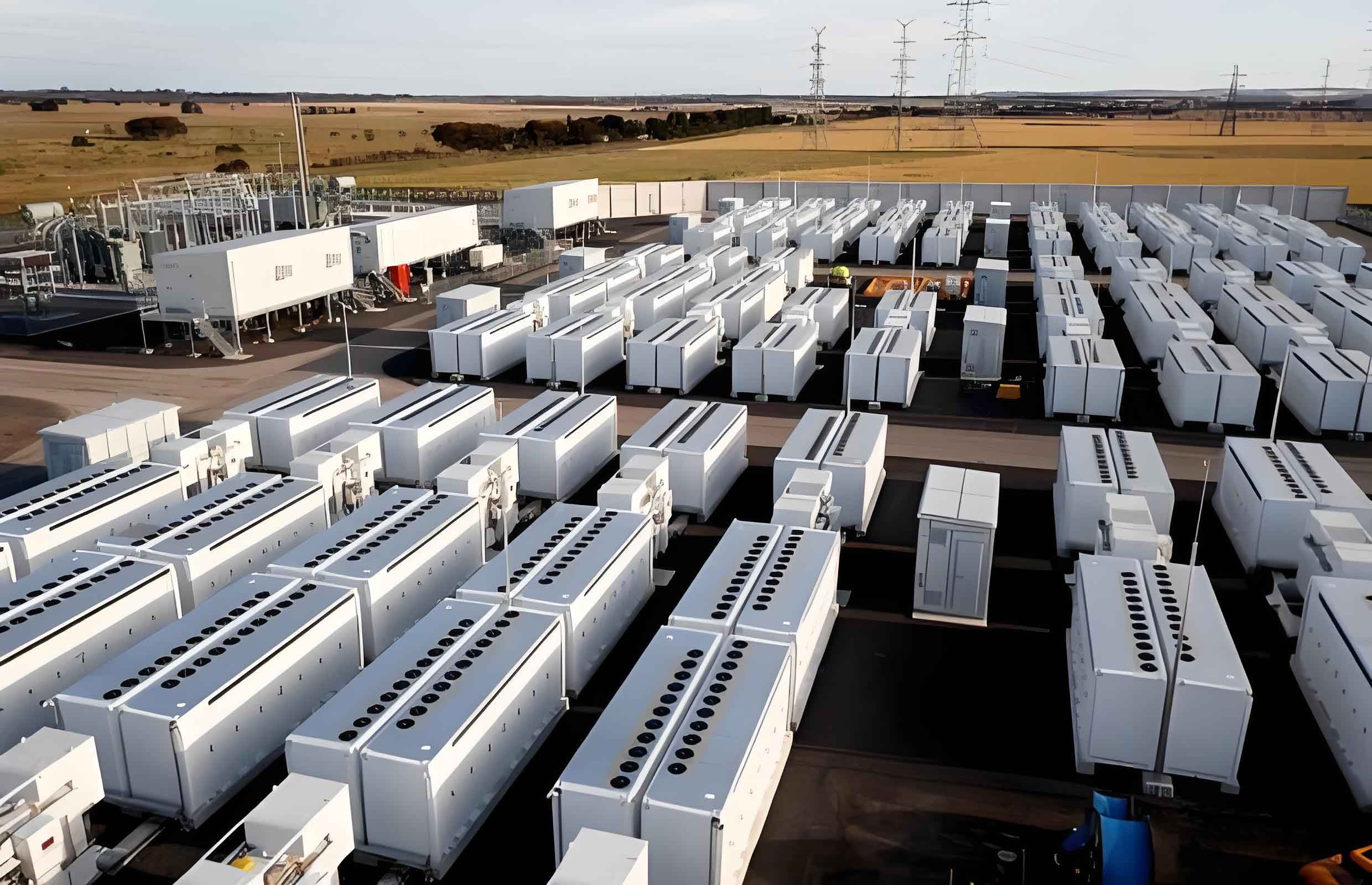
In the context of aluminum-lead-carbon energy storage batteries, the electrode reactions involve aluminum oxidation and reduction. The overall reaction can be represented as:
$$ \text{Al} + \text{PbO}_2 + \text{H}_2\text{SO}_4 \rightarrow \text{Al}^{3+} + \text{PbSO}_4 + \text{H}_2\text{O} $$
This chemistry provides a stable voltage profile, making such energy storage batteries suitable for stationary applications. Furthermore, the use of aluminum alloys improves mechanical strength and corrosion resistance, extending the lifespan of energy storage battery systems. As we scale up production, optimizing the manufacturing process for these energy storage batteries is crucial. The table below outlines key production steps for aluminum-based energy storage batteries:
| Step | Description | Role of Aluminum |
|---|---|---|
| Electrode Fabrication | Mixing active materials with binders | Aluminum foil used as current collector |
| Assembly | Stacking electrodes and separators | Aluminum casing provides structural integrity |
| Electrolyte Filling | Adding sulfuric acid or other electrolytes | Aluminum alloys resist acid corrosion |
| Formation | Initial charging to activate cells | Ensures stable performance for energy storage battery packs |
| Testing | Capacity and cycle life verification | Aluminum components facilitate heat dissipation |
The integration of these energy storage batteries into smart grids involves power management algorithms. The power balance equation for a grid with energy storage is:
$$ P_{grid} + P_{storage} = P_{load} $$
where $P_{storage}$ is the power from energy storage batteries. This highlights how energy storage batteries enable renewable energy smoothing and peak shaving. Looking ahead, innovations in aluminum alloy processing will further enhance energy storage battery performance, reducing costs and increasing adoption.
In conclusion, the synergy between aluminum alloy advancements and energy storage battery technologies is driving progress across multiple sectors. From optimized extrusion containers to integrated casting, maritime vessels, carbon capture, and scalable energy storage solutions, aluminum plays a pivotal role. The continuous improvement in energy storage battery designs, particularly aluminum-based systems, promises a more sustainable and efficient future. As I reflect on these developments, it is clear that interdisciplinary collaboration and innovative engineering will be key to overcoming challenges and harnessing the full potential of energy storage batteries in the global energy transition.
To further illustrate the economic impact, consider the projected growth of the energy storage battery market. Based on industry reports, the following table summarizes market trends:
| Year | Global Energy Storage Battery Market Size (Billion USD) | Key Drivers |
|---|---|---|
| 2023 | 16 | Early adoption in renewables and EVs |
| 2025 | 170 | Policy support and cost reductions |
| 2030 | 1500 | Grid modernization and decarbonization goals |
This growth is closely tied to advancements in materials like aluminum alloys, which reduce weight and cost for energy storage battery systems. In summary, the future of energy storage batteries is bright, with aluminum-based technologies leading the charge toward a cleaner, more resilient energy infrastructure.