
The global transition towards a sustainable energy future is fundamentally reshaping power systems. The cornerstone of this evolution is the new-type power system, characterized by deep integration of volatile and intermittent renewable energy sources (RES). While essential for decarbonization, this high penetration poses significant challenges to maintaining system balance, security, and economic efficiency. In this context, the deployment of large-scale energy storage batteries has emerged as a critical enabler, providing the necessary flexibility to buffer renewable fluctuations, shift loads, and ensure grid stability. Consequently, energy storage batteries are transitioning from ancillary players to core components in power system economic dispatch.
The economic value and operational effectiveness of an energy storage battery are intrinsically tied to its state of health, commonly quantified by its remaining usable life. The life of an energy storage battery is not static; it degrades over time due to complex electrochemical processes influenced by its operating conditions—charge-discharge cycles, depth of discharge, temperature, and charge rates. Traditional power system dispatch models have often simplified or neglected this degradation, typically modeling the cost associated with energy storage battery life loss as a simple linear or quadratic function of power throughput or energy exchanged. For instance, a common approach is to represent the life degradation cost as:
$$ C_{deg} = k \cdot |P_{bat}(t)| $$
or
$$ C_{deg} = \alpha \cdot (P_{bat}(t))^2 + \beta \cdot |P_{bat}(t)| $$
where \( P_{bat}(t) \) is the power of the energy storage battery at time \( t \), and \( k, \alpha, \beta \) are coefficients. Others equate life loss directly to cumulative energy throughput. These simplified models fail to capture the nuanced, non-linear relationship between complex operational profiles and the actual degradation of the energy storage battery’s life. This inaccuracy is no longer tenable in new-type power systems where energy storage batteries are deployed at scale, as an inaccurate life model leads to suboptimal or even infeasible dispatch decisions, misrepresents system costs, and risks premature asset failure.
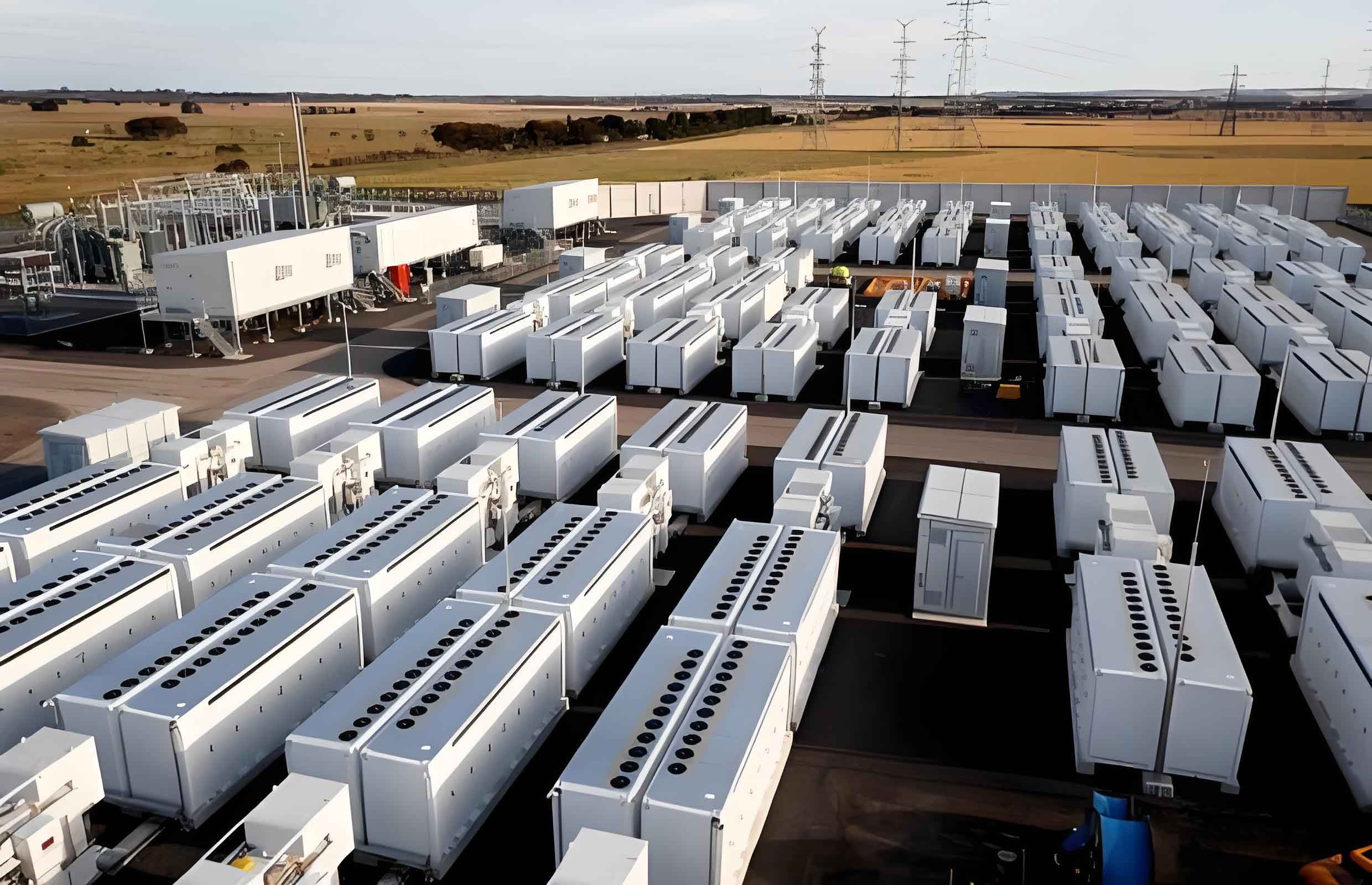
Therefore, this article addresses this gap by proposing a comprehensive framework for power system economic dispatch that accurately considers the life of large-scale energy storage batteries. The work is structured around three pivotal contributions. First, we rigorously establish the significant impact of energy storage battery life on dispatch outcomes. Second, we develop a high-fidelity, data-driven method for accurately estimating the state of life of an energy storage battery. Finally, we integrate this precise life estimation into a robust economic dispatch model, ensuring the operational and economic validity of schedules for systems with large-scale energy storage batteries.
The Critical Link: Analyzing the Impact of Energy Storage Battery Life on Dispatch
To formally demonstrate the importance of accurate energy storage battery life modeling, we first construct a detailed economic dispatch model for a power system integrated with large-scale energy storage batteries, conventional generators, wind farms, and photovoltaic plants. The primary objective is to minimize total system operating cost over a dispatch horizon (e.g., 24 hours).
The objective function \( F \) is formulated as:
$$
\min F = \sum_{t=1}^{T} \left( \sum_{i=1}^{N_G} a_i P_{G,i,t} + \rho_W \sum_{k=1}^{N_W} (P_{W,k,t}^{max} – P_{W,k,t}) + \rho_{PV} \sum_{r=1}^{N_{PV}} (P_{PV,r,t}^{max} – P_{PV,r,t}) + \sum_{j=1}^{N_B} (c_{d,j,t}P_{d,j,t} – c_{c,j,t}P_{c,j,t}) \right)
$$
where:
- \( T \): Total number of time intervals.
- \( N_G, N_W, N_{PV}, N_B \): Number of conventional generators, wind farms, PV plants, and energy storage batteries.
- \( a_i \): Bid price of conventional generator \( i \).
- \( P_{G,i,t} \): Output power of generator \( i \) at time \( t \).
- \( \rho_W, \rho_{PV} \): Penalty costs for wind and PV curtailment.
- \( P_{W,k,t}^{max}, P_{W,k,t} \): Available and actual dispatched wind power.
- \( P_{PV,r,t}^{max}, P_{PV,r,t} \): Available and actual dispatched PV power.
- \( c_{c,j,t}, c_{d,j,t} \): Charging and discharging price of energy storage battery \( j \) at time \( t \).
- \( P_{c,j,t}, P_{d,j,t} \): Charging and discharging power of energy storage battery \( j \).
The model is subject to standard constraints including system power balance, branch flow limits, generator ramping limits, and RES output limits. Crucially, it includes constraints specific to the energy storage battery operation and its life:
Energy Storage Operational Constraints:
$$
\begin{aligned}
& 0 \leq P_{c,j,t} \leq P_{B,j}^{max}, \quad 0 \leq P_{d,j,t} \leq P_{B,j}^{max} \\
& P_{c,j,t} \cdot P_{d,j,t} = 0 \quad \text{(Complementarity, cannot charge and discharge simultaneously)} \\
& E_{B,j,t} = E_{B,j,t-1} + (\eta_c P_{c,j,t} – P_{d,j,t} / \eta_d) \Delta t \quad \text{(State of Charge dynamics)} \\
& E_{B,j}^{min} \leq E_{B,j,t} \leq E_{B,j}^{max} \quad \text{(SOC limits)}
\end{aligned}
$$
Energy Storage Battery Life Constraint:
$$
E_{B,j}^{max} = C_{j,life} \cdot Q_j
$$
where \( C_{j,life} \) (in percentage) is the state of life (SoL) of energy storage battery \( j \), \( Q_j \) is its rated capacity when new (100% life), and \( E_{B,j}^{max} \) is its current maximum storable energy. This constraint explicitly links the operational capability of the energy storage battery to its degrading life. A fading \( C_{j,life} \) directly reduces the usable energy capacity \( E_{B,j}^{max} \), constraining its flexibility in the dispatch.
To analytically investigate how \( C_{j,life} \) influences the optimal dispatch solution \( F^* \), we employ multi-parametric programming theory. We treat the vector of energy storage battery lives, \( \mathbf{w} = [C_{1,life}, C_{2,life}, …, C_{N_B,life}] \), as parameters. The linearized dispatch model (the complementarity constraint can be handled via optimality-based equivalency proofs) can be expressed in the compact form:
$$
\begin{aligned}
\min_{\mathbf{x}} \quad & F = \mathbf{Kx} \\
\text{s.t.} \quad & \mathbf{Ax} \leq \mathbf{Bw} + \mathbf{C}
\end{aligned}
$$
where \( \mathbf{x} \) contains all decision variables (generator outputs, RES dispatches, energy storage battery powers), and matrices \( \mathbf{K}, \mathbf{A}, \mathbf{B}, \mathbf{C} \) are derived from the cost coefficients and constraints.
Solving this multi-parametric linear program partitions the parameter space \( \mathbf{w} \) (the feasible range of energy storage battery lives) into distinct regions called Critical Regions (CRs). Within each region \( CR_m \), the optimal cost \( F^*_m \) and solution \( \mathbf{x}^*_m \) are explicit affine functions of the parameter \( \mathbf{w} \):
$$
\begin{aligned}
\mathbf{x}^*_m &= \mathbf{E}_m \mathbf{w} + \mathbf{e}_m, \quad \forall \mathbf{w} \in CR_m \\
F^*_m &= \mathbf{G}_m \mathbf{w} + g_m, \quad \forall \mathbf{w} \in CR_m
\end{aligned}
$$
where \( \mathbf{E}_m, \mathbf{e}_m, \mathbf{G}_m, g_m \) are constant matrices/vectors specific to \( CR_m \), determined by the set of active constraints in that region.
This analysis yields a piecewise-linear mapping from energy storage battery life to system dispatch cost. A change in \( C_{j,life} \) can shift the operating point from one critical region to another, fundamentally altering the active constraint set (e.g., which energy storage battery is binding on its energy limit) and the associated cost function. The following table illustrates this non-linear impact for a simplified two-energy storage battery system, showing how total cost varies with the life of energy storage battery 1.
| Life of Energy Storage Battery 1 (\( C_{1,life} \)) | Total System Operating Cost (\( F^* \)) | Critical Region |
|---|---|---|
| 100% | 100,372 | CR_1 |
| 80% | 101,992 | CR_2 |
| 60% | 103,612 | CR_3 |
| 50% (minimum) | 104,422 | CR_4 |
A drop in the life of energy storage battery 1 from 100% to 50% can increase total cost by over 4%. This proves that the life parameter of an energy storage battery is not a minor factor but a decisive one that shapes the economic and operational landscape of the dispatch problem. Relying on an inaccurate or fixed value for the energy storage battery’s life can lead to significant economic inefficiencies and potentially insecure schedules.
A Data-Driven Paradigm for Accurate Energy Storage Battery Life Estimation
Given the proven sensitivity of dispatch outcomes to the life of the energy storage battery, obtaining an accurate real-time estimate of \( C_{j,life} \) is paramount. Traditional methods like direct laboratory measurement are accurate but impractical for online use. Empirical or physics-based models often lack the granularity to account for complex, real-world operating conditions. We propose a data-driven approach using Deep Neural Networks (DNNs), which can learn the intricate, non-linear relationship between operational data and the resulting degradation of the energy storage battery.
The core challenge is feature engineering: transforming raw operational time-series data into a informative, fixed-dimension input vector for the DNN. We focus on data from individual charging cycles, as they contain rich degradation signatures. For each charging cycle, we extract a multivariate time series \( \mathbf{X}_{raw} \) including:
- Battery Pack Voltage (\(V\))
- Battery Pack Current (\(I\))
- State of Charge (\(SOC\))
- Individual Cell Voltages (\(V_b, b=1,…,B\))
- Individual Cell Temperatures (\(T_b, b=1,…,B\))
To handle the high dimensionality and multi-collinearity among similar signals (e.g., 20 cell voltages), we perform feature consolidation:
$$
\begin{aligned}
V_{\mu} &= \frac{1}{B}\sum_{b=1}^{B} V_b, \quad V_{\delta} = \sqrt{\frac{1}{B}\sum_{b=1}^{B} (V_b – V_{\mu})^2} \\
T_{\mu} &= \frac{1}{B}\sum_{b=1}^{B} T_b, \quad T_{\delta} = \sqrt{\frac{1}{B}\sum_{b=1}^{B} (T_b – T_{\mu})^2}
\end{aligned}
$$
This reduces cell-specific data to four statistical features (mean and standard deviation of voltage and temperature) that capture balance and uniformity within the energy storage battery pack, which are strong indicators of health.
The consolidated time series for one charge cycle is \( \mathbf{X} = [V, I, SOC, V_{\mu}, V_{\delta}, T_{\mu}, T_{\delta}] \), with each variable being a vector of length \( R \) (number of sampled time points in the cycle). This matrix is flattened into a row vector \( \mathbf{X}_{in} \in \mathbb{R}^{1 \times (7R)} \). To further reduce dimensionality and extract the most salient features, Principal Component Analysis (PCA) is applied. The transformed feature vector \( \mathbf{X}_{in}^{PCA} \) serves as the input to the DNN model, which is trained to predict the corresponding state of life \( C_{life} \) (target) for that charging cycle.
The DNN model, such as a fully-connected network or a recurrent network, is trained on a historical dataset comprising many such charging cycle features and their associated (measured) energy storage battery life values. Once trained, the model can estimate the current \( \hat{C}_{j,life} \) by processing the features from the most recent charging cycle of the energy storage battery \( j \).
The Integrated Framework: Economic Dispatch with Accurate Energy Storage Battery Life
The complete framework for accurate economic dispatch is an iterative closed loop, combining the life estimation model with the optimization model.
Step 1: Real-Time Life Estimation. The DNN-based estimator continuously monitors the operational data from all large-scale energy storage batteries in the system. After each major charge cycle, it processes the data through the feature extraction and PCA pipeline to generate an updated, accurate estimate \( \hat{C}_{j,life} \) for each energy storage battery unit \( j \).
Step 2: Model Update. The estimated lives \( \hat{C}_{j,life} \) are embedded into the economic dispatch model by updating the capacity constraint: \( E_{B,j}^{max} = \hat{C}_{j,life} \cdot Q_j \). This ensures the optimization model reflects the true, degraded capability of each energy storage battery.
Step 3: Dispatch Solution. The updated economic dispatch model (a linear or quadratic program) is solved using standard optimization techniques (e.g., interior-point methods) for the upcoming dispatch horizon. The solution provides the optimal set points for all generators, the scheduling of charge/discharge for each energy storage battery (respecting its accurate capacity limits), and any necessary RES curtailment.
Step 4: Implementation and Feedback. The dispatch schedule is executed. The resulting operational data from the energy storage batteries are fed back into the life estimation model, closing the loop and enabling continuous adaptation to the evolving health state of the energy storage battery fleet.
Validation and Case Study
The proposed framework was validated on standard test systems (IEEE 30-bus, 118-bus) and a real-world 661-bus provincial system in China. The performance of the integrated method (termed M3) was compared against several benchmarks:
- M0: Baseline dispatch ignoring energy storage battery life degradation (\(C_{j,life} \equiv 1\)).
- M1: Dispatch using the true energy storage battery life (measured offline, serves as the ground truth).
- M2: Dispatch using a DNN-based life estimate but without the advanced feature extraction (PCA) proposed here.
The accuracy of the life estimation was first evaluated. The proposed method (M3) significantly outperformed the simpler data-driven approach (M2).
| Method | Estimated Life \( C_{1,life} \) | Error vs. M1 (True Life) |
|---|---|---|
| M1 (True Measurement) | 87.50% | – |
| M2 (DNN w/o PCA) | 92.30% | +5.49% |
| M3 (Proposed DNN with PCA) | 88.30% | +0.91% |
The economic dispatch results on the IEEE 118-bus system clearly demonstrate the cost of inaccuracy and the value of the proposed method.
| Method | Total System Cost | Cost vs. M1 | Remarks |
|---|---|---|---|
| M0 (Ignore Degradation) | 3.25 × 10⁶ | -5.85% (Underestimated) | Schedule may be infeasible/unsafe. |
| M1 (True Life) | 3.44 × 10⁶ | 0% (Baseline) | Optimal feasible schedule. |
| M2 (Inaccurate Estimate) | 3.36 × 10⁶ | -2.33% | Suboptimal due to life overestimation. |
| M3 (Proposed Accurate Estimate) | 3.43 × 10⁶ | -0.29% | Near-optimal, safe, and feasible. |
The results are conclusive: ignoring the life of the energy storage battery (M0) produces an optimistic but unrealistic and potentially hazardous schedule with significantly underestimated costs. Using an inaccurate life estimate (M2) leads to a suboptimal economic loss. Only by integrating a high-fidelity, data-driven estimate of the energy storage battery’s life (M3) can the dispatch solution approach the true economic optimum (M1) while ensuring operational feasibility and asset longevity. This framework provides a essential tool for the secure, economic, and sustainable operation of new-type power systems reliant on large-scale energy storage batteries.