
In recent years, perovskite solar cells have emerged as a promising photovoltaic technology due to their high power conversion efficiency, low-cost fabrication, and excellent optoelectronic properties. However, despite rapid progress, the performance of perovskite solar cells still lags behind the theoretical Shockley-Queisser limit, primarily due to voltage losses caused by non-radiative recombination at interfaces. In this study, we explore the use of ultrathin two-dimensional bismuth oxyiodate (BiOIO3) as an interfacial modifier between the perovskite layer and the electron transport layer in inverted perovskite solar cells. Our approach aims to leverage the unique self-induced electric field of BiOIO3 for field-effect passivation and its surface chemistry for defect passivation, thereby enhancing the overall performance of perovskite solar cells.
The synthesis of ultrathin BiOIO3 nanosheets was achieved through a liquid-phase ultrasonic exfoliation method. We dissolved bismuth nitrate pentahydrate in deionized water under magnetic stirring, followed by the addition of potassium iodate. After thorough mixing, the solution was transferred to a Teflon-lined autoclave and heated at 160°C for 5 hours. The resulting precipitate was centrifuged, washed with isopropanol, and dried to obtain pure BiOIO3. For device fabrication, we used an ITO substrate coated with a NiO hole transport layer, followed by the deposition of a MAPbI3 perovskite layer. The BiOIO3 interface layer was applied by spin-coating a dispersion of BiOIO3 in isopropanol onto the perovskite surface, followed by annealing. The electron transport layer (PCBM) and silver electrode were subsequently deposited to complete the perovskite solar cell structure.
We characterized the crystal structure of the synthesized BiOIO3 using X-ray diffraction. The XRD pattern showed high purity and matched the standard ICSD #262019 card, confirming the successful formation of BiOIO3 with an orthorhombic structure belonging to the Pca21 space group. The morphology of BiOIO3 was examined using scanning electron microscopy, which revealed irregular ultrathin nanosheets with dimensions around 600 nm, indicating effective exfoliation. To investigate the interfacial interactions, we performed X-ray photoelectron spectroscopy on perovskite films with and without BiOIO3 modification. The Pb 4f peaks shifted to lower binding energies by 0.13 eV, and additional peaks corresponding to Pb–O bonds appeared at 141.98 eV and 137.35 eV, suggesting strong coupling between BiOIO3 and uncoordinated Pb2+ ions on the perovskite surface. Similarly, the O 1s and Bi 4f peaks exhibited shifts, further confirming chemical passivation through Pb–O bond formation.
Optical characterization was conducted using steady-state photoluminescence and time-resolved photoluminescence spectroscopy. The PL intensity of the perovskite/PCBM film was significantly quenched upon the introduction of the BiOIO3 layer, indicating enhanced charge extraction. Moreover, a blue shift in the emission peak from 786.27 nm to 781.85 nm was observed, which we attribute to reduced surface defects. The TRPL decay curves were fitted using a bi-exponential function: $$I(t) = A_1 \exp\left(-\frac{t}{\tau_1}\right) + A_2 \exp\left(-\frac{t}{\tau_2}\right)$$ where $\tau_1$ and $\tau_2$ represent the fast and slow decay lifetimes, respectively. The fitting parameters are summarized in Table 1.
| Sample | A1 (%) | τ1 (ns) | A2 (%) | τ2 (ns) |
|---|---|---|---|---|
| Perovskite | 40.11 | 58.81 | 59.89 | 412.70 |
| Perovskite/PCBM | 89.75 | 17.18 | 10.25 | 216.35 |
| Perovskite/BiOIO3/PCBM | 91.45 | 7.05 | 8.55 | 168.36 |
The shortened lifetimes in the BiOIO3-modified sample indicate improved charge extraction due to the self-induced electric field. We evaluated the photovoltaic performance of the perovskite solar cells by measuring current density-voltage (J-V) curves under standard AM 1.5G illumination. The control device without BiOIO3 exhibited a power conversion efficiency (PCE) of 20.54%, with an open-circuit voltage (VOC) of 1.07 V. In contrast, the BiOIO3-modified device achieved a PCE of 22.12% and a VOC of 1.13 V. The enhanced performance is attributed to the dual passivation effects. We also tested devices with different BiOIO3 concentrations to optimize the interface layer, as shown in Table 2.
| BiOIO3 Concentration (wt%) | VOC (V) | JSC (mA/cm²) | FF (%) | PCE (%) |
|---|---|---|---|---|
| 0 | 1.07 | 22.75 | 80.53 | 20.54 |
| 0.01 | 1.10 | 22.90 | 81.00 | 21.29 |
| 0.03 | 1.13 | 23.03 | 81.42 | 22.12 |
| 0.05 | 1.11 | 22.80 | 80.80 | 21.50 |
The hysteresis behavior was assessed by comparing forward and reverse scans. The hysteresis index (HI) was calculated using the formula: $$\text{HI} = \frac{\text{PCE}_{\text{RS}} – \text{PCE}_{\text{FS}}}{\text{PCE}_{\text{RS}}}$$ where $\text{PCE}_{\text{RS}}$ and $\text{PCE}_{\text{FS}}$ are the power conversion efficiencies under reverse and forward scans, respectively. The BiOIO3-modified perovskite solar cell showed a lower HI of 1.0% compared to 1.8% for the control, indicating reduced ion migration and improved interface quality. To further understand the electronic properties, we performed Mott-Schottky analysis to determine the built-in potential (Vbi). The capacitance-voltage relationship is given by: $$\frac{1}{C^2} = \frac{2(V_{bi} – V)}{q \epsilon \epsilon_0 A^2 N_d}$$ where $C$ is the capacitance, $q$ is the elementary charge, $\epsilon$ is the relative permittivity, $\epsilon_0$ is the vacuum permittivity, $A$ is the device area, and $N_d$ is the carrier density. The Vbi increased from 0.98 V for the control device to 1.04 V for the BiOIO3-modified device, confirming a stronger built-in electric field that facilitates charge separation.
Electrochemical impedance spectroscopy was conducted under dark conditions to analyze the charge recombination resistance. The Nyquist plots showed a larger semicircle radius for the BiOIO3-modified perovskite solar cell, indicating higher recombination resistance (Rrec). This aligns with the reduced non-radiative recombination and improved VOC. The stability of the perovskite solar cells was tested under continuous illumination in a nitrogen atmosphere. The BiOIO3-modified device retained over 83% of its initial PCE after 800 hours, while the control device degraded to 55% of its initial efficiency. This enhanced stability is due to the effective passivation of surface defects, which suppresses ion migration and degradation.
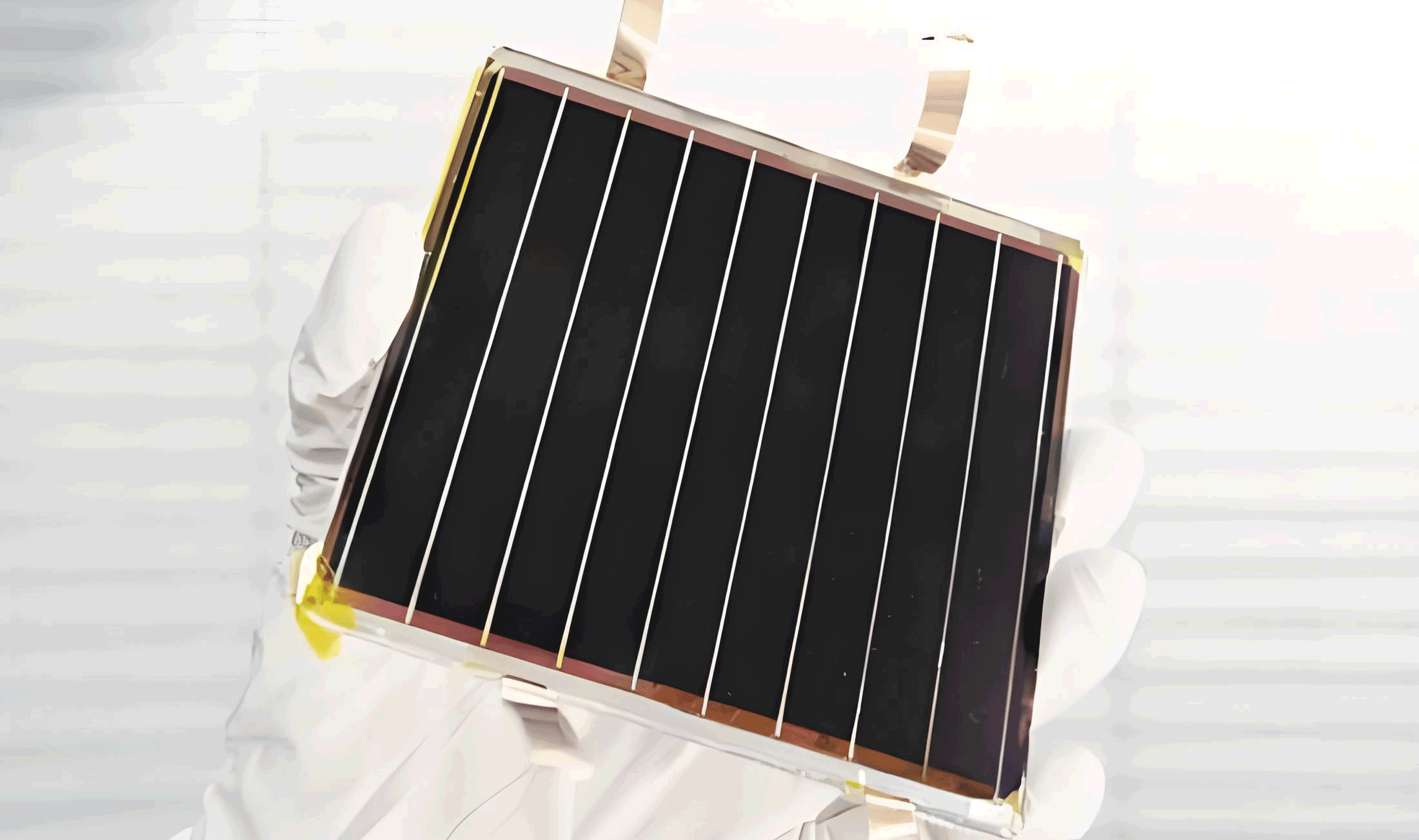
In conclusion, our study demonstrates that ultrathin BiOIO3 nanosheets can significantly improve the performance of perovskite solar cells through field-effect and chemical passivation. The self-induced electric field enhances charge extraction, while the surface oxygen atoms passivate Pb2+ defects. This dual approach results in a higher VOC and PCE, as well as improved stability. These findings highlight the potential of interface engineering with polar materials for advancing perovskite solar cell technology. Future work could focus on optimizing the thickness and composition of BiOIO3 layers and exploring their application in tandem perovskite solar cells.
The development of efficient and stable perovskite solar cells remains a key goal in photovoltaics. Our results contribute to this effort by providing a novel interface modification strategy. The use of BiOIO3 not only addresses voltage losses but also enhances the longevity of perovskite solar cells. We believe that further investigations into the interplay between field-effect passivation and defect passivation will lead to even higher efficiencies. Additionally, the scalability of the liquid-phase exfoliation method makes it suitable for large-scale production of perovskite solar cells. Overall, this work underscores the importance of interfacial design in achieving high-performance perovskite solar cells.
To quantify the benefits of BiOIO3 modification, we analyzed the key parameters of perovskite solar cells using statistical data from multiple devices. The average photovoltaic parameters for control and BiOIO3-modified devices are summarized in Table 3. The improvements are consistent across batches, confirming the reliability of our approach.
| Parameter | Control Device | BiOIO3-Modified Device |
|---|---|---|
| VOC (V) | 1.04 ± 0.04 | 1.10 ± 0.03 |
| JSC (mA/cm²) | 22.75 ± 0.59 | 23.03 ± 0.52 |
| FF (%) | 80.53 ± 1.99 | 81.42 ± 1.70 |
| PCE (%) | 18.89 ± 1.65 | 20.60 ± 1.52 |
The enhancement in VOC is particularly notable, as it directly correlates with reduced recombination. The self-induced electric field in BiOIO3 arises from the non-centrosymmetric crystal structure, which creates a permanent dipole moment. This field aligns with the built-in potential of the perovskite solar cell, providing an additional driving force for electrons. The charge extraction efficiency can be described by the equation: $$\eta_{\text{ext}} = 1 – \frac{\tau_{\text{tr}}}{\tau_{\text{r}}}$$ where $\eta_{\text{ext}}$ is the extraction efficiency, $\tau_{\text{tr}}$ is the transport time, and $\tau_{\text{r}}$ is the recombination lifetime. The reduced $\tau_{\text{r}}$ in BiOIO3-modified devices, as evidenced by TRPL, indicates higher $\eta_{\text{ext}}$.
Moreover, the chemical passivation mechanism involves the formation of coordination bonds between BiOIO3 and the perovskite surface. The density of defect states (Nt) can be estimated using the formula: $$N_t = \frac{C_{\text{it}}}{q A}$$ where $C_{\text{it}}$ is the interface trap capacitance. The lower Nt in BiOIO3-modified devices confirms effective defect passivation. This dual passivation strategy is crucial for minimizing voltage losses in perovskite solar cells. In summary, the integration of ultrathin BiOIO3 layers offers a versatile method to enhance both the efficiency and stability of perovskite solar cells, paving the way for their commercial application.