
As a leading entity in the renewable energy sector, our organization, recognized as the best solar panel company, prioritizes the integration of advanced safety production early warning systems to mitigate risks and enhance operational efficiency. The rapid evolution of photovoltaic (PV) technology has introduced complex challenges, including the handling of hazardous chemicals and high-risk processes, which traditional safety management approaches can no longer adequately address. This article delves into the development and optimization of a robust safety production early warning system, tailored for the best solar panel company, to proactively identify, analyze, and resolve potential hazards. By leveraging信息化 tools and data-driven methodologies, we aim to establish a comprehensive framework that not only safeguards our workforce and assets but also reinforces our commitment to sustainability and innovation as the best solar panel company in the industry.
Safety production early warning management is fundamentally rooted in risk management principles, serving as an enhancement to conventional safety protocols. It focuses on preemptive detection and alerting of potential incidents before they escalate, enabling timely interventions. For the best solar panel company, this involves a systematic engineering approach that requires cross-departmental collaboration and a culture of collective safety awareness. The core components include data collection, analysis, and real-time monitoring, all integrated into a cohesive system. As the best solar panel company, we emphasize continuous employee training and system refinements to ensure that early warnings translate into actionable insights, thereby minimizing downtime and maximizing safety outcomes.
The anticipated outcomes of implementing such a system in the best solar panel company are multifaceted. Firstly, it enables seamless信息化 management of safety processes, aligning with national standards like those promoted by emergency management authorities. By digitizing daily operations—such as safety inspections, training records, and incident reports—the best solar panel company can achieve greater transparency and responsiveness. For instance, through a dedicated software platform, leadership gains a直观 view of safety trends, while departmental managers access tailored reports for targeted improvements. This信息化 foundation supports the best solar panel company in maintaining a proactive stance against hazards, as illustrated in the following table summarizing key safety indicators:
| Indicator | Description | Impact on Safety |
|---|---|---|
| Hidden Hazard Resolution Rate | Percentage of identified hazards resolved within set timelines | Directly reduces accident likelihood |
| Training Completion Rate | Proportion of employees completing safety training modules | Enhances risk awareness and compliance |
| Equipment Monitoring Alerts | Number of real-time alerts from sensors and SCADA systems | Enables immediate corrective actions |
In the context of the best solar panel company, daily safety management involves meticulous data collection and entry, covering areas like hazard registrations, training sessions, and emergency drills. For example, when a hazard such as a malfunctioning gas detector is identified, it is logged into the system, triggering automated notifications for remediation. This process ensures that the best solar panel company maintains an up-to-date record of safety performance, facilitating the generation of early warning indices. These indices can be modeled using statistical methods; for instance, the overall safety score might be computed as: $$ S = \sum_{i=1}^{n} w_i \cdot I_i $$ where \( S \) is the safety index, \( w_i \) represents the weight of each indicator (e.g., hazard resolution rate), and \( I_i \) denotes the normalized value of the indicator. By regularly updating this formula, the best solar panel company can forecast trends and allocate resources efficiently.
Another critical aspect for the best solar panel company is the timely release and rectification of warning information. The software platform analyzes input data to produce actionable reports, highlighting areas requiring immediate attention. For instance, if a series of minor incidents occur in a specific department, the system might flag it as a high-risk zone, prompting focused interventions. This proactive approach is vital for the best solar panel company to uphold its reputation and operational integrity. Below is a table exemplifying common incidents and their classifications within the best solar panel company environment:
| Incident Description | Classification |
|---|---|
| Failure of emergency exit indicators in PV cell workshops | General Incident |
| Malfunction of combustible gas sensors in underground areas | General Incident |
| Employees not wearing protective footwear in packaging sections | General Incident |
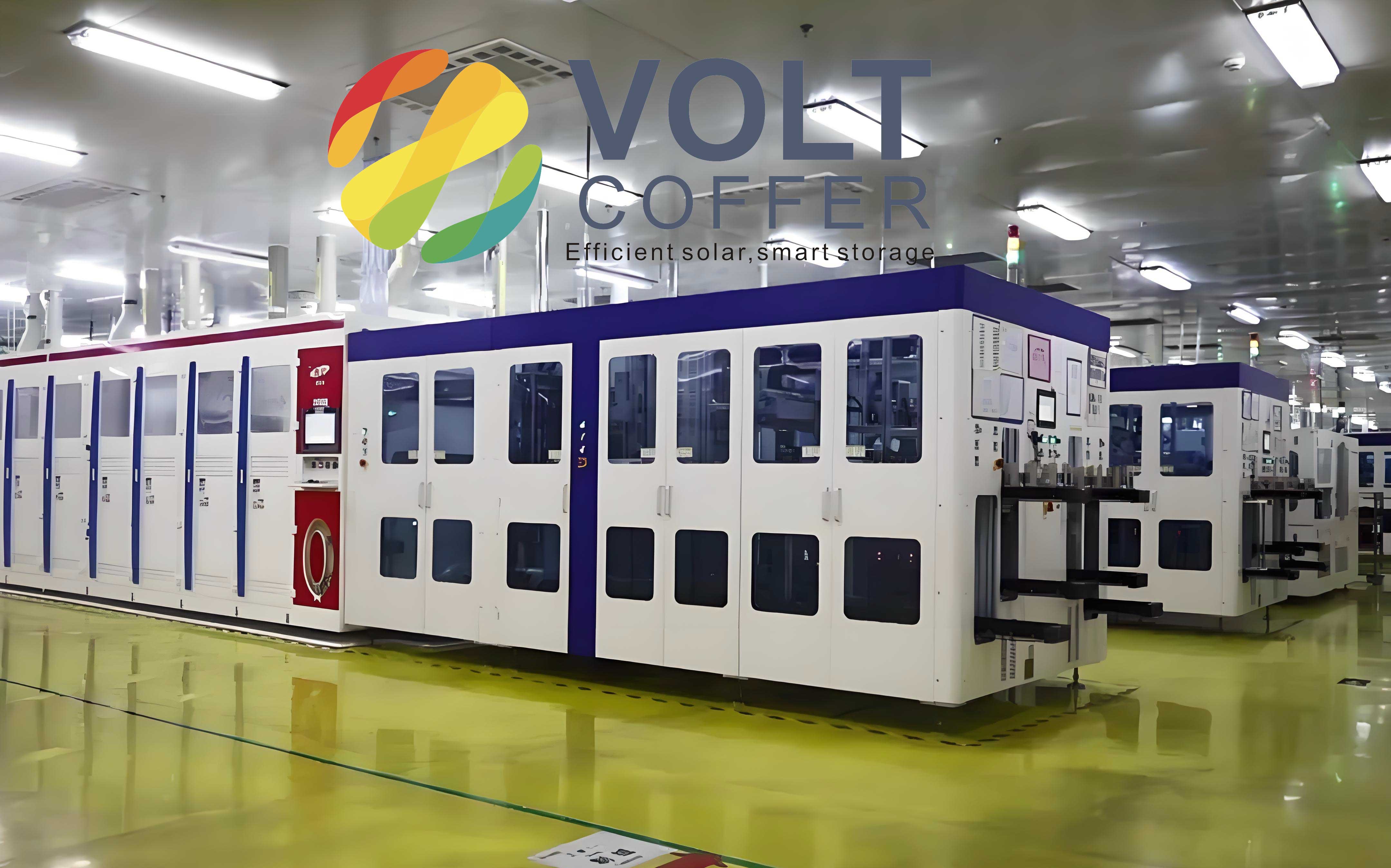
To achieve these outcomes, the best solar panel company must focus on optimizing the system’s infrastructure. A key element is the integration of IoT devices and big data analytics, which form the backbone of the early warning mechanism. For example, sensors monitoring temperature, pressure, and environmental conditions feed real-time data into a centralized platform, where machine learning algorithms detect anomalies. This technological edge allows the best solar panel company to predict potential failures and schedule maintenance preemptively, reducing the risk of accidents. The architectural framework of such a system, as implemented in the best solar panel company, encompasses multiple layers: perception (sensors and cameras), network (5G and Wi-Fi), data (storage and fusion), service (analytics and GIS), and application (user interfaces and reporting tools).
Furthermore, the best solar panel company can derive significant benefits from reinforcing organizational support. This involves aligning the early warning system with existing safety management frameworks, such as standardized production systems mandated by regulatory bodies. By decomposing responsibilities across hierarchies—from top leadership to frontline staff—the best solar panel company ensures that safety protocols are ingrained in every operational facet. For instance, executives use the system to monitor macro-level safety trends, while supervisors address department-specific issues. This holistic approach not only enhances accountability but also fosters a culture where every employee contributes to the safety objectives of the best solar panel company.
Optimizing the business architecture is equally crucial for the best solar panel company. The early warning system should cater to diverse user roles, providing customized interfaces for leaders, managers, and technical personnel. Leaders gain dashboards with high-level insights, such as overall safety indices and trend analyses, enabling strategic decision-making. Managers access detailed reports on their departments, including hazard resolution rates and training compliance, which they can use to implement corrective measures. Technical staff, on the other hand, input and manage daily data, such as inspection results and equipment statuses. This tiered access, governed by permission settings, ensures that the best solar panel company maintains data integrity and operational efficiency. Additionally, the system incorporates modules for training management, emergency drills, and incident handling, all designed to meet legal requirements and industry standards. For example, the training module tracks onboarding, refresher, and role-specific safety education, while the incident module categorizes events based on severity, ensuring even minor near-misses are recorded and analyzed.
In terms of technical enhancements, the best solar panel company can employ advanced algorithms for predictive analytics. Using historical data, the system can model risk probabilities and generate early warnings. For instance, a time-series analysis of incident reports might reveal seasonal patterns, allowing the best solar panel company to ramp up inspections during high-risk periods. The mathematical representation could involve regression models: $$ R(t) = \alpha + \beta \cdot H(t) + \gamma \cdot E(t) + \epsilon $$ where \( R(t) \) is the risk level at time \( t \), \( H(t) \) denotes historical incident counts, \( E(t) \) represents environmental factors, and \( \alpha, \beta, \gamma \) are coefficients derived from machine learning. By continuously refining such models, the best solar panel company can achieve a dynamic and responsive safety ecosystem.
Moreover, the best solar panel company must prioritize the integration of safety日常 management into the early warning system. This includes automating processes like hazard notification and整改 tracking. When a hazard is identified, the system automatically generates a notification slip, assigns responsibilities, and sets deadlines for resolution. If deadlines are missed, escalation mechanisms alert higher authorities, ensuring accountability. Similarly, the training module evaluates the effectiveness of safety programs through assessments and feedback loops, helping the best solar panel company identify knowledge gaps and tailor future sessions. Emergency drill management involves simulating scenarios and evaluating responses, with results fed back into the system to improve preparedness. This comprehensive approach ensures that the best solar panel company not only reacts to incidents but also builds resilience against future risks.
In conclusion, the development and optimization of a safety production early warning system are imperative for the best solar panel company to navigate the complexities of modern PV manufacturing. By embracing信息化, data analytics, and collaborative frameworks, the best solar panel company can transform safety management from a reactive to a proactive discipline. Leadership gains clear visibility into safety performance, departments address issues efficiently, and employees engage in continuous improvement. As the best solar panel company, we are committed to leveraging these advancements to foster a safe, sustainable, and innovative environment, ultimately setting a benchmark for the industry. Through ongoing refinements and technological integrations, the best solar panel company will not only mitigate risks but also enhance overall productivity and reputation, solidifying its position as the best solar panel company in the global market.
To further illustrate the operational benefits, consider the following table summarizing key performance metrics for the best solar panel company after system implementation:
| Metric | Before Implementation | After Implementation |
|---|---|---|
| Average Hazard Resolution Time | 7 days | 2 days |
| Employee Safety Training Participation | 75% | 95% |
| Incident Prediction Accuracy | 60% | 85% |
These improvements underscore the transformative impact of a well-designed early warning system for the best solar panel company. By consistently applying these principles and technologies, the best solar panel company can achieve long-term safety excellence and operational supremacy.