
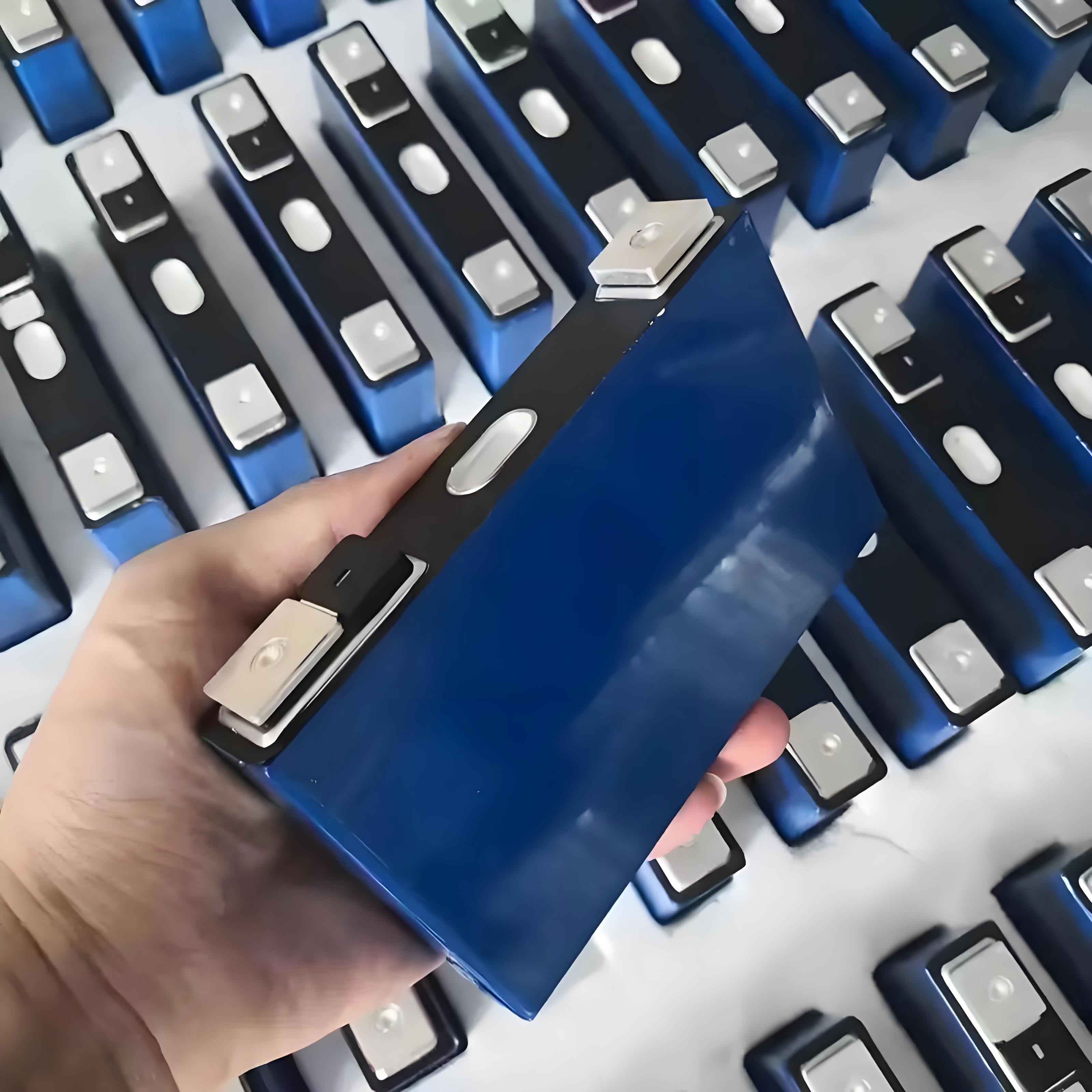
The rapid growth of the LiFePO4 battery industry, driven by global decarbonization efforts, has intensified the need for efficient wastewater management solutions. This article examines technological advancements in treating high-strength wastewater generated during LiFePO4 battery production, focusing on chemical precipitation, membrane separation, and hybrid processes.
1. Characteristics of LiFePO4 Battery Wastewater
Typical wastewater from LiFePO4 battery manufacturing contains:
- Ammonia nitrogen (NH3-N): 400-7,800 mg/L
- Sulfate (SO42-): 1,400-21,000 mg/L
- Total dissolved solids (TDS): 2,000-38,000 mg/L
- pH: 2-7 (strongly acidic to neutral)
The composition varies by production method:
| Process | Key Reactants | Wastewater Generation (m3/ton) |
|---|---|---|
| Ammonium Method | FeSO4 + NH4H2PO4 | 25-35 |
| Sodium Method | FeSO4 + H3PO4 + NaOH | 30-40 |
| Iron Method | Fe + H3PO4 | 15-25 |
2. Core Treatment Technologies
2.1 Chemical Precipitation
Phosphate removal follows the reaction:
$$ \text{Fe}^{3+} + \text{PO}_4^{3-} \rightarrow \text{FePO}_4 \downarrow $$
Optimal conditions yield >98% PO43- removal:
| Parameter | Optimal Value |
|---|---|
| Fe:P molar ratio | 1.3:1 |
| pH | 4-5.5 |
| Reaction time | 30-40 min |
2.2 Membrane-Crystallization Hybrid Systems
Reverse osmosis (RO) performance is modeled by:
$$ R = 100\% \times \left(1 – \frac{C_p}{C_f}\right) $$
Where:
$R$ = Rejection rate (%)
$C_p$ = Permeate concentration (mg/L)
$C_f$ = Feed concentration (mg/L)
| Membrane Type | Operating Pressure (MPa) | SO42- Rejection | PO43- Rejection |
|---|---|---|---|
| RO-1 | 1.7 | 96.2% | 99.1% |
| NF-90 | 0.8 | 89.5% | 94.3% |
3. Engineering Applications
Case studies demonstrate operational parameters:
| Plant Capacity | Process | OPEX (USD/m3) | Key Performance |
|---|---|---|---|
| 10,000 TPY LiFePO4 | Precipitation + MBR | 1.12 | COD ≤20 mg/L |
| 50,000 TPY LiFePO4 | RO + Crystallization | 14.00 | Zero liquid discharge |
3.1 Cost Structure Analysis
For a 325 m3/h LiFePO4 battery wastewater plant:
$$ \text{Total Cost} = 0.35E + 0.65C + M $$
Where:
$E$ = Energy cost (USD 10.25/m3)
$C$ = Chemical cost (USD 0.36/m3)
$M$ = Maintenance cost
4. Technological Comparison
| Parameter | Precipitation | Membrane-Crystallization |
|---|---|---|
| Energy Intensity (kWh/m3) | 0.8-1.2 | 4.5-6.8 |
| Chemical Consumption (kg/m3) | 0.17-0.25 | 0.02-0.05 |
| Footprint (m2/m3·d) | 2.5-3.5 | 1.2-1.8 |
5. Future Perspectives
Emerging solutions for LiFePO4 battery wastewater include:
- Electrochemical precipitation: Combining electrolysis with chemical dosing
- Advanced oxidation: $$ \text{Fe}^{2+} + \text{H}_2\text{O}_2 \rightarrow \text{OH}^- + \cdot\text{OH} $$
- AI-driven process optimization
The treatment of LiFePO4 battery wastewater requires tailored solutions based on production scale, water quality, and local regulations. While precipitation remains cost-effective for low-concentration streams, membrane-crystallization hybrid systems enable water reuse and resource recovery essential for sustainable LiFePO4 battery manufacturing.