
Lithium iron phosphate (LiFePO4), with its olivine structure, has emerged as a cornerstone of energy storage battery technology. Its theoretical specific capacity of 170 mAh/g, stable charge/discharge platforms, and compatibility with aqueous electrolytes within the water stability window make it ideal for long-term system stability. Since John B. Goodenough’s team first proposed LiFePO4 as a cathode material in 1996, its cost-effectiveness, non-toxicity, and thermal safety have driven its dominance in electric vehicle (EV) batteries. In 2022, LiFePO4-based energy storage batteries accounted for 61% (184.5 GWh) of China’s 302.3 GWh EV battery installations. This article explores the patent landscape and technological advancements shaping this critical sector.
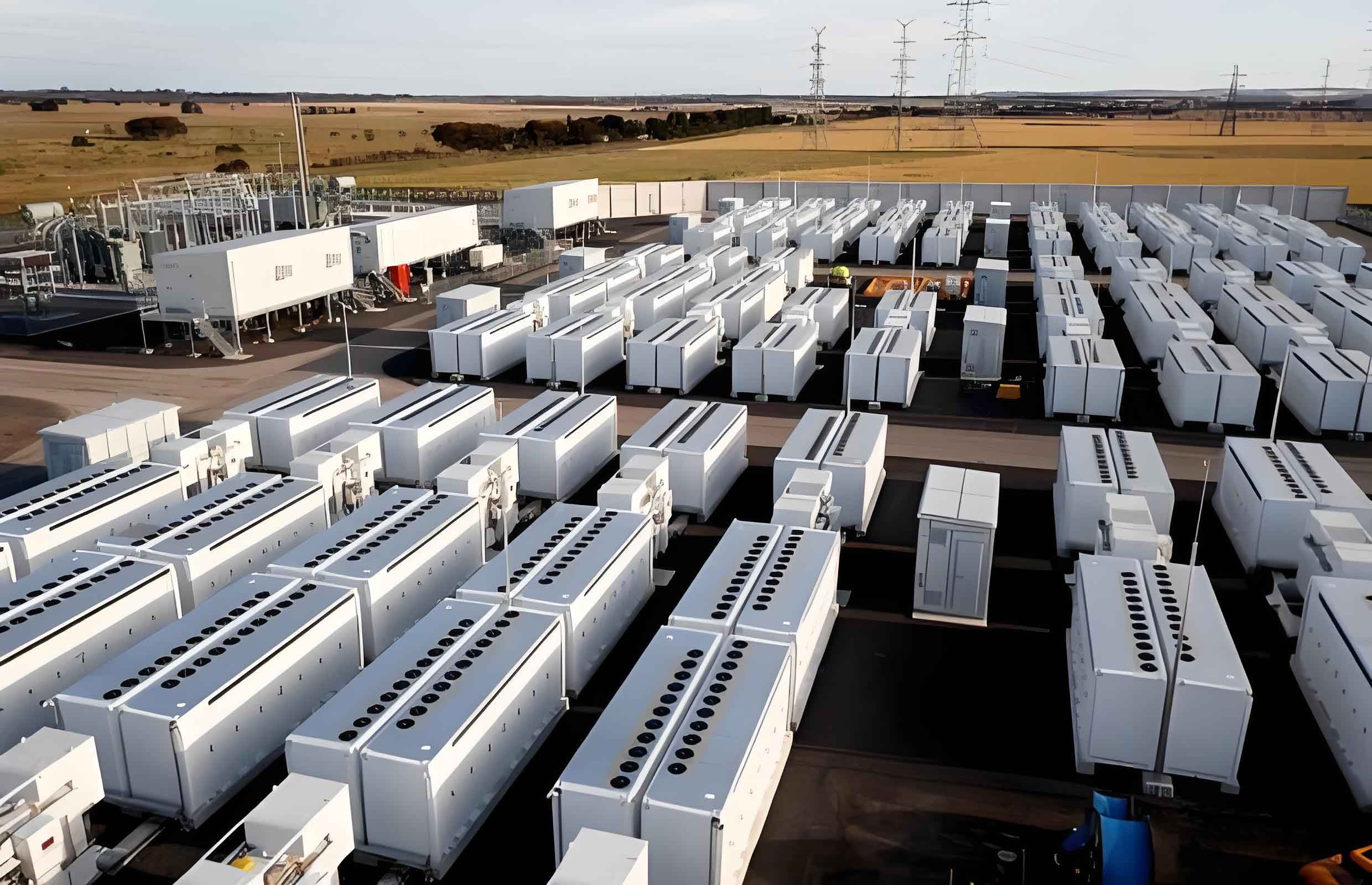
Global Patent Analysis
Using data from CNABS, DWPI, and incoPat (up to October 2023), we analyzed 3,417 patents related to LiFePO4 energy storage batteries. China leads with 80.25% of filings (2,742 patents), followed by the U.S. (9.33%), EU (4.45%), Japan (3.16%), and South Korea (2.81%). Table 1 summarizes the distribution:
| Country | Patent Share (%) | Key Contributors |
|---|---|---|
| China | 80.25 | BYD, CATL, Guoxuan High-Tech |
| United States | 9.33 | Tesla, QuantumScape |
| European Union | 4.45 | BASF, Northvolt |
| Japan | 3.16 | Panasonic, Toyota |
| South Korea | 2.81 | LG Chem, Samsung SDI |
Patent filings grew steadily from 2005 to 2013, peaked in 2017, and declined temporarily due to competition from ternary lithium batteries. Recent growth reflects renewed focus on energy storage battery safety and sustainability.
Key Innovations and Technical Advancements
The energy density of LiFePO4 cells is governed by:
$$
\eta = \frac{C \cdot V}{m}
$$
where \( \eta \) (Wh/kg) is specific energy, \( C \) is capacity (Ah), \( V \) is voltage (V), and \( m \) is mass (kg). Innovations targeting \( C \) and \( V \) include:
- Conductivity Enhancement: Graphene-doped cathodes (e.g., CN101800310A) improve electron mobility:
$$
\sigma = n \cdot e \cdot \mu
$$
where \( \sigma \) is conductivity, \( n \) is carrier density, \( e \) is charge, and \( \mu \) is mobility. - Layer-Structured Synthesis: Template-assisted methods (CN110429277A) create hierarchical LiFePO4/C composites, achieving 160 mAh/g at 5C rates.
- Battery Architecture: BYD’s blade battery (CN110518174A) increases pack energy density by 50% through modular cell stacking, reducing thermal runaway risks.
| Rank | Applicant | Patents | Key Contributions |
|---|---|---|---|
| 1 | BYD (China) | 327 | Blade battery design, high-density cathodes |
| 2 | Guoxuan High-Tech (China) | 284 | Layer-structured synthesis, fast-charging tech |
| 3 | CATL (China) | 261 | Graphene composites, thermal management |
| 4 | Panasonic (Japan) | 198 | Electrolyte additives, low-temperature performance |
| 5 | LG Chem (South Korea) | 175 | Binder systems, cycle life extension |
Legal Status and Commercialization
Of the analyzed patents, 47% remain active, 29% are expired, and 24% are pending. Early foundational patents like US2003124423A1 (assigned to Toyota) have expired, enabling widespread adoption. Current R&D focuses on:
- Ultra-fast charging (≤15 minutes)
- Low-temperature performance optimization (\( \geq 80\% \) capacity retention at -30°C)
- Recyclability (\( \geq 95\% \) material recovery)
Future Directions
The energy storage battery market will demand:
$$
\text{Energy Density} \geq 300 \text{ Wh/kg (cell level by 2030)}
$$
Advances in solid-state LiFePO4 batteries and AI-driven manufacturing will shape next-gen systems. With EVs reaching 30% global penetration by 2025, LiFePO4’s role in sustainable energy storage batteries remains irreplaceable.