
In the context of global efforts to achieve carbon neutrality, the transition towards renewable energy sources has accelerated, necessitating innovative energy storage solutions. Lithium-ion batteries, particularly the LiFePO4 battery variant, have gained prominence due to their high energy density, long cycle life, and thermal stability. However, the risk of thermal runaway—a self-sustaining exothermic reaction leading to fire or explosion—remains a critical safety concern for LiFePO4 battery packs in applications such as electric vehicles and energy storage systems. This study explores the efficacy of liquid nitrogen, a cryogenic agent, in suppressing thermal runaway propagation within 32650-type LiFePO4 battery packs, leveraging first-person experimental observations to analyze cooling and extinguishing performance.
The LiFePO4 battery, a cornerstone of modern energy storage, is prone to thermal runaway under abusive conditions like external short circuits, overcharging, or mechanical damage. During thermal runaway, a LiFePO4 battery undergoes sequential stages characterized by rapid temperature rise, gas venting, jet fires, and structural failure. This chain reaction can propagate to adjacent cells in a pack, amplifying the hazard. Traditional extinguishing agents—such as water, dry powder, or gaseous suppressants—often prove inadequate due to limited cooling capacity, toxicity, or residue issues. Liquid nitrogen, with its high latent heat of vaporization and oxygen displacement capability, offers a promising alternative for rapid cooling and flame suppression. This article details our experimental approach, quantifying the impact of liquid nitrogen spray on interrupting thermal runaway propagation in LiFePO4 battery packs.
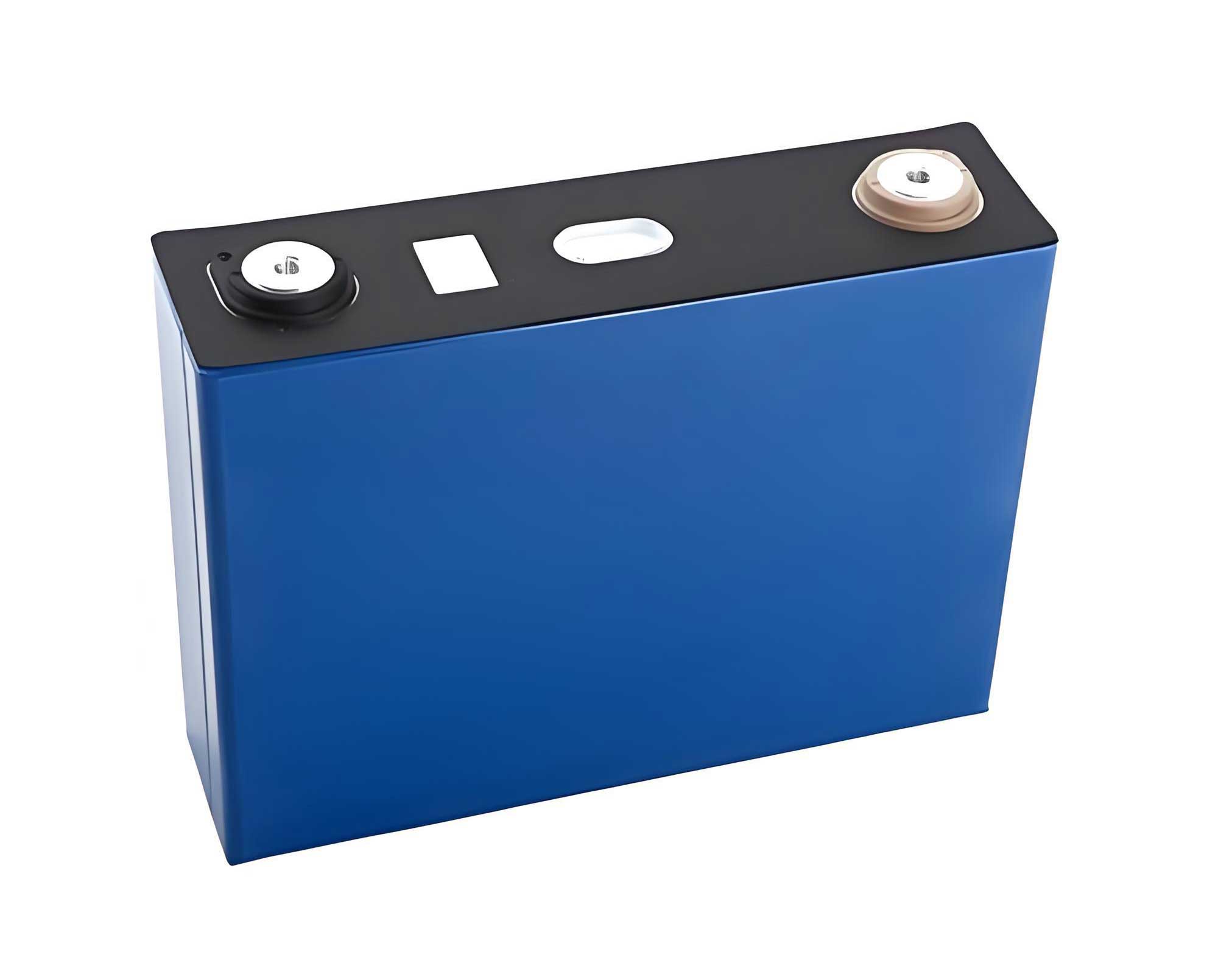
Our experimental platform was constructed within a 1 m × 1 m × 2 m explosion-proof chamber to simulate real-fire scenarios for LiFePO4 battery packs. The setup included a customized heating rod (Φ32 mm × 650 mm, 300 W) to induce external short-circuit conditions, a mass sensor to track weight loss, infrared thermography for flame visualization, K-type thermocouples attached to cell surfaces for temperature monitoring, a ventilation system, a liquid nitrogen spray pipeline, and high-definition cameras. The LiFePO4 battery cells used were 32650-type with a nominal capacity of 6 Ah, arranged in a three-cell configuration (A1, A2, B) as shown in the schematic. Cells A1 and A2 were in direct contact with the heating rod, classified as A-grade risk, while cell B was indirectly heated, termed B-grade. The liquid nitrogen delivery system comprised a self-pressurized cryogenic dewar and stainless-steel tubing, enabling controlled spray durations of 10, 20, and 30 seconds. Thermocouples were positioned on each LiFePO4 battery surface to record temperature profiles, with data acquisition at 1 Hz intervals.
The thermal runaway process in a single LiFePO4 battery cell can be delineated into five distinct phases based on temperature trajectories and visual cues. The temperature curve for a cell typically exhibits an inverted “V” shape, as captured in our experiments. Let \( T(t) \) represent the cell temperature over time \( t \). The phases are characterized as follows:
| Phase | Key Characteristics | Temperature Range |
|---|---|---|
| 1. Passive Heating | Slow temperature rise due to external heating; internal reactions initiate. | \( T < 120^\circ \text{C} \) |
| 2. Safety Valve Venting | Internal pressure threshold reached; brief jet fire and audible pop. | \( T \approx 120-150^\circ \text{C} \) |
| 3. Self-Reaction Acceleration | Stable gaseous flame above valve; accelerated exothermic reactions. | \( T \approx 150-300^\circ \text{C} \) |
| 4. Jet Fire | Massive ejection of electrolytes and gases; intense flame; structural damage. | \( T \text{ peaks at } >500^\circ \text{C} \) |
| 5. Flame Extinction | Visible flame ceases; smoldering and smoke emission continue. | \( T \text{ declines slowly} \) |
For a LiFePO4 battery cell undergoing thermal runaway, the temperature evolution can be modeled piecewise. During heating, the rate follows Newton’s law of cooling with an internal heat generation term:
$$
\frac{dT}{dt} = \frac{hA}{mC_p} (T_{\text{ext}} – T) + \frac{Q_{\text{gen}}}{mC_p}
$$
where \( h \) is the heat transfer coefficient, \( A \) is surface area, \( m \) is mass, \( C_p \) is specific heat, \( T_{\text{ext}} \) is external temperature, and \( Q_{\text{gen}} \) is the heat generation rate from reactions. At venting, \( Q_{\text{gen}} \) increases exponentially, leading to a sharp temperature spike. The peak temperature \( T_{\text{max}} \) for a LiFePO4 battery in jet fire phase can exceed 600°C, as observed in our trials.
In a pack configuration, thermal runaway propagation is driven by heat transfer from a malfunctioning LiFePO4 battery to neighboring cells. Our experiments without intervention showed that cell A1’s jet fire triggered sequential thermal runaway in A2 and B, with reduced intervals between venting and jet fire events due to heat accumulation. The time intervals \( \Delta t \) between safety valve venting and jet fire ignition for adjacent cells decreased, indicating accelerated propagation. Data from uncontrolled tests are summarized below:
| Cell | Venting Time (s) | Jet Fire Time (s) | Interval \( \Delta t \) (s) |
|---|---|---|---|
| A1 | 600 | 989 | 389 |
| A2 | 686 | 1001 | 315 |
| B | 1012 | 1163 | 151 |
The reduction in \( \Delta t \) for cell B underscores the heightened risk in LiFePO4 battery packs, where heat flux from multiple cells synergistically accelerates reactions. The heat transfer between cells can be approximated by Fourier’s law, but in practice, convective and radiative components dominate during jet fires. For a LiFePO4 battery pack, the propagation speed \( v_p \) depends on the thermal conductivity \( k \) and spacing \( d \):
$$
v_p \propto \frac{k \cdot \Delta T}{d \cdot \rho C_p}
$$
where \( \Delta T \) is the temperature difference and \( \rho \) is density. Our aim was to disrupt this propagation using liquid nitrogen spray.
Liquid nitrogen suppression tests were conducted in two scenarios: (1) spraying after safety valve venting in both A-grade cells, and (2) spraying after jet fire initiation in one A-grade cell, with varying durations. The cryogenic action of liquid nitrogen involves rapid vaporization upon contact, absorbing latent heat \( L_v = 199 \, \text{kJ/kg} \) and creating a nitrogen-rich, oxygen-depleted environment. The cooling power \( P_c \) for a spray can be expressed as:
$$
P_c = \dot{m} \left( L_v + C_p \Delta T \right)
$$
where \( \dot{m} \) is the mass flow rate and \( \Delta T \) is the temperature drop. In our setup, \( \dot{m} \) was maintained constant at approximately 0.5 kg/s for consistency.
In the first scenario, with 20-second liquid nitrogen spray initiated after venting of A1 and A2, all LiFePO4 battery cells were cooled below reaction thresholds, preventing jet fires entirely. Temperatures plummeted to as low as -169.7°C for A2, demonstrating effective heat extraction. This aligns with the principle that early intervention during venting phase halts the self-accelerating reactions in a LiFePO4 battery, as the heat generation rate \( Q_{\text{gen}} \) is still manageable. The critical temperature for suppressing a LiFePO4 battery’s thermal runaway is estimated below 80°C, based on our data.
For the second scenario, spraying during jet fire phase yielded differential outcomes based on duration. With 10-second spray, only the visible flame on A1 was extinguished, but cells A2 and B subsequently underwent jet fires due to insufficient cooling. The peak temperature for A1 was reduced to 407°C, compared to 627°C without intervention, per the relation:
$$
T_{\text{max, reduced}} = T_{\text{max, initial}} – \alpha \cdot t_{\text{spray}}
$$
where \( \alpha \) is a cooling coefficient. For 20-second spray, cell A2 did not ignite, but emitted gases, while B vented without jet fire. With 30-second spray, both A2 and B were fully suppressed, with B not even reaching venting phase. The efficacy \( E \) of liquid nitrogen in blocking propagation can be modeled as:
$$
E = 1 – \exp(-\beta \cdot t_{\text{spray}})
$$
where \( \beta \) is an efficacy constant derived from experimental fits. Longer spray durations enhance cooling penetration and nitrogen blanket persistence, crucial for a LiFePO4 battery pack.
Detailed temperature profiles for the jet fire suppression tests are consolidated below, highlighting the impact on each LiFePO4 battery cell:
| Spray Duration | Cell A1 Peak Temp (°C) | Cell A2 Outcome | Cell B Outcome | Propagation Blocked? |
|---|---|---|---|---|
| 10 s | 407 | Jet fire at 1380 s | Jet fire at 1969 s | No |
| 20 s | 364 | Venting, no fire | Venting, no fire | Partial |
| 30 s | 373 | No venting | No venting | Yes |
The data show that 30-second spraying is optimal for complete propagation arrest in a LiFePO4 battery pack. The temperature decay post-spray follows an exponential decay model:
$$
T(t) = T_0 e^{-t/\tau} + T_{\text{amb}}
$$
where \( \tau \) is the time constant influenced by liquid nitrogen application. For a LiFePO4 battery, \( \tau \) decreases with longer spray times, indicating faster stabilization. Moreover, the mass loss \( \Delta m \) during thermal runaway, indicative of electrolyte ejection, was reduced by up to 60% with liquid nitrogen intervention, underscoring its protective role for LiFePO4 battery integrity.
Further analysis of the heat transfer dynamics reveals that liquid nitrogen’s effectiveness stems from both convective cooling and oxygen dilution. The N₂ concentration \( C_{\text{N₂}} \) around the LiFePO4 battery pack post-spray can be estimated using gas diffusion equations, but practically, it creates a locally inert atmosphere with O₂ levels below 15%, inhibiting combustion. The cooling effect on cell surfaces is governed by the Biot number \( Bi = hL/k \), where \( L \) is characteristic length. For a LiFePO4 battery, \( Bi < 0.1 \) suggests uniform cooling, allowing liquid nitrogen to penetrate thermal layers. Our infrared imagery confirmed rapid surface temperature drops exceeding 200°C/s during spray, effectively quelling reactions in adjacent LiFePO4 battery cells.
Comparatively, traditional agents like water or CO₂ offer limited cooling for LiFePO4 battery fires due to higher specific heat or gaseous state. Liquid nitrogen’s dual-phase action—liquid contact followed by gas expansion—provides superior heat absorption per unit mass. The total heat removed \( Q_{\text{removed}} \) during spray can be integrated from temperature data:
$$
Q_{\text{removed}} = \sum_i m_i C_{p,i} \int \Delta T_i \, dt
$$
where \( i \) indexes each LiFePO4 battery cell. Our calculations show \( Q_{\text{removed}} \) values up to 50 kJ for a 30-second spray, sufficient to offset the exothermic energy of a LiFePO4 battery pack estimated at 20-40 kJ per cell during thermal runaway.
In conclusion, liquid nitrogen proves highly effective in suppressing thermal runaway propagation in LiFePO4 battery packs. Key findings include: (1) Thermal runaway in a single LiFePO4 battery follows a five-phase sequence with an inverted “V” temperature curve; (2) Propagation between cells accelerates due to cumulative heat transfer; (3) Early liquid nitrogen application during venting phase prevents jet fires entirely; (4) During jet fire phase, spray duration critically influences outcomes, with 30-second spray fully blocking propagation and reducing peak temperatures by over 40%. These insights advocate for liquid nitrogen systems in LiFePO4 battery storage safety protocols, leveraging its rapid cooling and asphyxiating properties. Future work could optimize spray parameters for larger LiFePO4 battery packs or integrate sensors for automated deployment, enhancing resilience against thermal runaway cascades.
The experimental evidence underscores the viability of cryogenic suppression for LiFePO4 battery hazards. As energy storage expands, such innovations will be pivotal in mitigating risks associated with LiFePO4 battery technologies. The repeated emphasis on LiFePO4 battery in this analysis highlights its centrality to modern energy systems and safety imperatives. Through continued research, we can refine these methods to ensure the reliable and safe operation of LiFePO4 battery packs across diverse applications.