
In recent years, the rapid development of the photovoltaic industry, driven by renewable energy policies, has positioned distributed solar power generation as a major form of photovoltaic energy. Among these systems, solar inverters, particularly micro solar inverters, have seen widespread application. Ensuring the stable operation of these solar inverters is crucial for their safe and reliable integration into the power grid. Traditional analysis methods often rely on state-space averaging (SSA) models to study the stability of solar inverters. However, these conventional models overlook the switching processes of semiconductor devices within the circuit, making it difficult to accurately describe the stability characteristics of solar inverters. To address this issue, this paper proposes a z-s domain modeling approach that explicitly considers the switching dynamics. This method enables a more precise stability analysis in the frequency domain, which is essential for optimizing the performance of solar inverters in practical applications.
The proposed modeling methodology begins with a detailed analysis of the operational modes of solar inverters. Solar inverters typically consist of a front-stage flyback converter for voltage boosting and a rear-stage full-bridge inverter for output waveform generation. By examining each operational mode, discrete iterative equations are derived to capture the system’s behavior at switching instants. These equations are then linearized around steady-state operating points to facilitate frequency-domain analysis. The linearized discrete-time model is transformed into the z-domain to obtain transfer functions, which are subsequently converted to the s-domain using the bilinear transform. This results in a comprehensive z-s domain model that retains the effects of switching dynamics, providing a more accurate foundation for stability assessment compared to traditional SSA models.
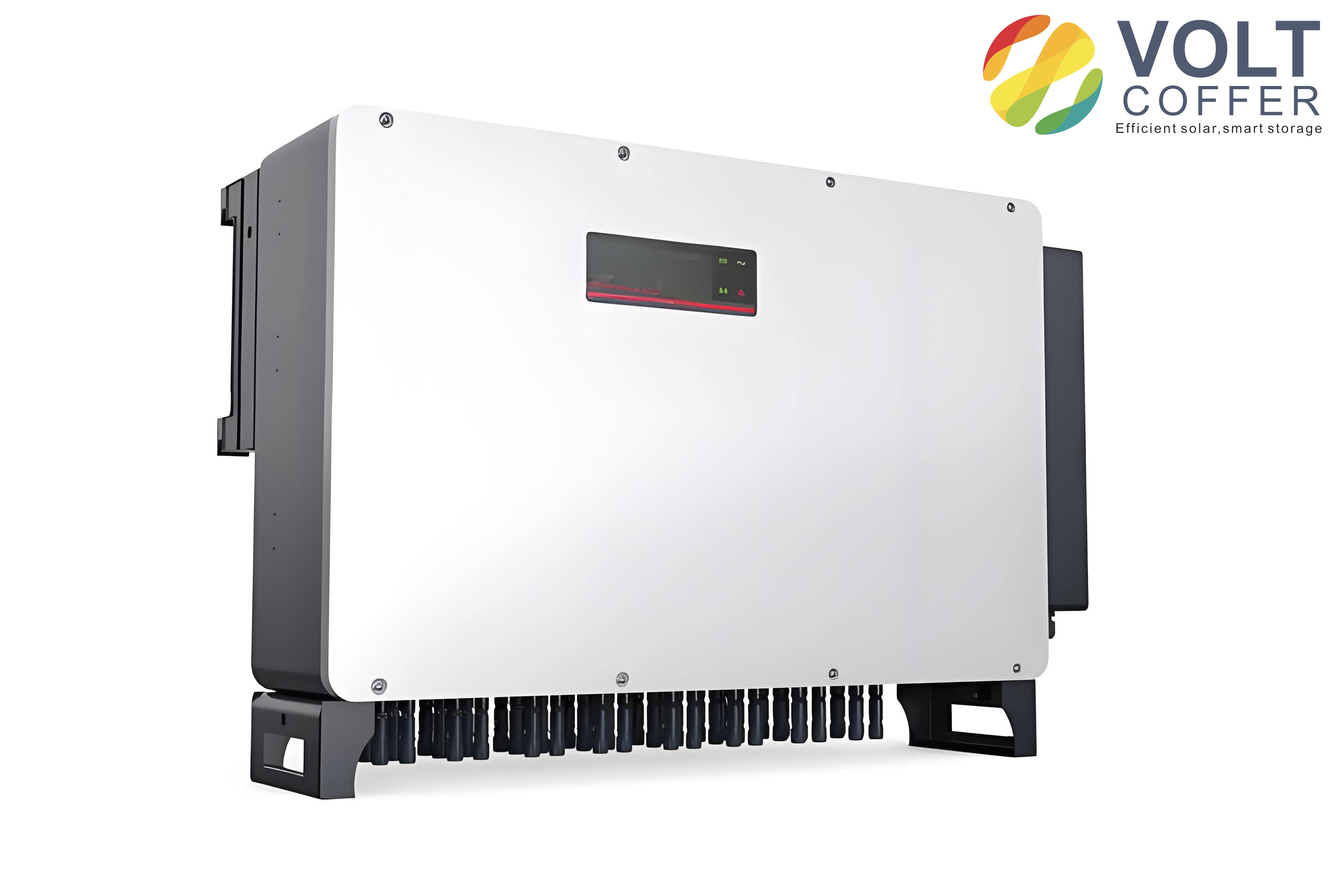
Solar inverters operate in discontinuous conduction mode (DCM) to simplify control and improve efficiency. The key state variables include the magnetizing current, output current, and filter capacitor voltage. The discrete iterative equations for each mode are expressed as:
$$ x_{n,i} = e^{A_i T} x_{n,i-1} + A_i^{-1} (e^{A_i T} – I) B_i $$
where \( x \) represents the state vector, \( A_i \) and \( B_i \) are the state and input matrices for mode \( i \), and \( T \) is the switching period. For a solar inverter operating in DCM, the duty cycles for each mode satisfy:
$$ d_{n,1} + d_{n,2} + d_{n,3} = 1 $$
Linearization is performed by introducing small perturbations around the steady-state values:
$$ x = X + \tilde{x}, \quad d = D + \tilde{d} $$
This yields the linearized discrete iterative model:
$$ \tilde{x}_{n,i} = A_{n,i} \tilde{x}_{n} + B_{n,i} \tilde{d}_{n} $$
The matrices \( A_{n,i} \) and \( B_{n,i} \) are derived from the exponential matrices and steady-state values. The z-domain open-loop transfer function of the solar inverter’s power stage is then obtained as:
$$ G_{id}(z) = F [zI – (A_{n,3a} A_{n,2} A_{n,1} + A_{n,3b} A_{n,1})]^{-1} (A_{n,3a} A_{n,2} B_{n,1} + A_{n,3b} B_{n,1} + A_{n,3a} B_{n,2} + B_{n,3}) $$
where \( F \) is the output matrix. Applying the bilinear transform \( z = \frac{1 + 0.5sT}{1 – 0.5sT} \), the s-domain transfer function is derived:
$$ G_{id}(s) = F \left[ \frac{1 + 0.5sT}{1 – 0.5sT} I – (A_{n,3a} A_{n,2} A_{n,1} + A_{n,3b} A_{n,1}) \right]^{-1} (A_{n,3a} A_{n,2} B_{n,1} + A_{n,3b} B_{n,1} + A_{n,3a} B_{n,2} + B_{n,3}) $$
This z-s domain model allows for stability analysis using Bode plots, which is a standard approach for solar inverters. The inclusion of switching dynamics in the model enhances accuracy, especially when assessing the impact of high-frequency components on system stability.
Stability analysis is conducted by examining the open-loop transfer function of the solar inverter system. A proportional-resonant (PR) controller is commonly used in current-controlled solar inverters to achieve zero steady-state error at the grid frequency. The controller transfer function is:
$$ G_c(s) = K_P + \frac{K_R s}{s^2 + \omega_g^2} $$
where \( \omega_g \) is the grid angular frequency. The overall open-loop transfer function becomes:
$$ G_{ol}(s) = G_c(s) G_{id}(s) $$
Bode plots of \( G_{ol}(s) \) are used to determine stability margins. The gain margin (GM) and phase margin (PM) are critical indicators. A positive GM and PM ensure stable operation, while negative values indicate instability. The proposed z-s domain model provides more realistic stability margins compared to the SSA model, which tends to overestimate stability due to the neglect of switching effects.
To validate the model, simulations and experiments are performed on a micro solar inverter prototype. The system parameters are summarized in Table 1.
| Parameter | Value |
|---|---|
| Input Voltage (\( U_{PV} \)) | 35 V |
| Output Current (\( I_g \)) | 0.707 A (RMS) |
| Transformer Turns Ratio (\( N \)) | 6 |
| Filter Inductance (\( L_f \)) | 10 mH |
| Magnetizing Inductance (\( L_m \)) | 3 μH |
| Filter Capacitance (\( C_f \)) | 1 μF |
| Switching Frequency (Flyback) | 10 kHz |
| Grid Frequency | 50 Hz |
The stability of solar inverters is highly dependent on controller parameters. Table 2 compares the stability margins predicted by the z-s domain model and the SSA model for different PR controller gains.
| Controller Parameters | Model | Gain Margin (dB) | Phase Margin (°) | Stability |
|---|---|---|---|---|
| \( K_P = 0.8, K_R = 50 \) | z-s Domain | 5.58 | 42.9 | Stable |
| SSA | ∞ | 77.1 | Stable | |
| \( K_P = 5, K_R = 500 \) | z-s Domain | -10.4 | -62.6 | Unstable |
| SSA | ∞ | 27.0 | Stable |
As shown in Table 2, the z-s domain model accurately predicts instability for aggressive controller gains, while the SSA model fails to capture this due to its averaging nature. Experimental results confirm that the solar inverter exhibits oscillatory behavior under the unstable condition, validating the proposed model.
The discrete iterative equations for solar inverters are derived based on the state-space representation of each operational mode. The general form of the state-space equation for mode \( i \) is:
$$ \dot{x} = A_i x + B_i u $$
The solution at the end of each mode is given by:
$$ x(t_i) = e^{A_i \Delta t_i} x(t_{i-1}) + A_i^{-1} (e^{A_i \Delta t_i} – I) B_i $$
where \( \Delta t_i \) is the duration of mode \( i \). For the solar inverter operating in DCM, the duty cycles are determined by the control law and the system’s steady-state behavior. The linearization process involves computing the Jacobian matrices of the discrete maps with respect to the state variables and duty cycles. The linearized model is essential for deriving the transfer functions used in stability analysis.
The transformation from the z-domain to the s-domain via the bilinear transform is a key step in obtaining a continuous-time representation of the discrete system. The bilinear transform is given by:
$$ s = \frac{2}{T} \frac{z – 1}{z + 1} $$
This transformation preserves stability and provides a rational transfer function in the s-domain, which is convenient for frequency-domain analysis. The resulting model captures the sampling effects and switching dynamics, making it suitable for designing controllers that ensure robust performance of solar inverters under varying operating conditions.
In practical applications, solar inverters must maintain stability despite disturbances such as grid voltage variations and changes in solar irradiation. The proposed z-s domain model enables a thorough investigation of these effects by providing accurate frequency response characteristics. For instance, the impact of grid impedance on stability can be analyzed by incorporating it into the model. This is particularly important for solar inverters connected to weak grids, where impedance interactions can lead to instability.
Furthermore, the model can be extended to include non-ideal components, such as parasitic resistances and capacitances, which are often neglected in simplified models. The inclusion of these elements enhances the model’s accuracy and provides insights into the design of high-performance solar inverters. The following equations summarize the state matrices for the solar inverter in DCM:
$$ A_1 = \begin{bmatrix} -\frac{r_m + r_s}{L_m} & 0 & 0 \\ 0 & -\frac{r_c + r_L + R_g}{L_f} & \frac{1}{L_f} \\ 0 & -\frac{1}{C_f} & 0 \end{bmatrix}, \quad B_1 = \begin{bmatrix} \frac{U_{PV}}{L_m} \\ 0 \\ 0 \end{bmatrix} $$
$$ A_2 = \begin{bmatrix} -\frac{N^2 r_m + r_{VD} + r_c}{N^2 L_m} & \frac{r_c}{N L_m} & -\frac{1}{N L_m} \\ \frac{r_c}{N L_f} & -\frac{r_c + r_L + R_g}{L_f} & \frac{1}{L_f} \\ \frac{1}{N C_f} & -\frac{1}{C_f} & 0 \end{bmatrix}, \quad B_2 = \begin{bmatrix} 0 \\ 0 \\ 0 \end{bmatrix} $$
$$ A_3 = \begin{bmatrix} 0 & 0 & 0 \\ 0 & -\frac{r_c + r_L + R_g}{L_f} & \frac{1}{L_f} \\ 0 & -\frac{1}{C_f} & 0 \end{bmatrix}, \quad B_3 = \begin{bmatrix} 0 \\ 0 \\ 0 \end{bmatrix} $$
These matrices are used in the discrete iterative equations to compute the state transitions. The steady-state values are obtained by solving the equilibrium conditions of the system. The linearized matrices \( A_{n,i} \) and \( B_{n,i} \) are then derived as functions of the steady-state operating point.
In conclusion, the z-s domain modeling approach presented in this paper offers a significant improvement over traditional methods for analyzing the stability of solar inverters. By accounting for switching dynamics and providing a framework for frequency-domain analysis, it enables more accurate and reliable design of control systems for solar inverters. The methodology is validated through simulations and experiments, demonstrating its effectiveness in predicting stability boundaries and guiding the selection of controller parameters to ensure stable operation of solar inverters in various applications.