
As a researcher in structural wind engineering, I have always been fascinated by the challenges posed by renewable energy infrastructure, particularly solar panels installed on building roofs. The increasing adoption of rooftop solar panels in residential and commercial buildings necessitates a thorough understanding of wind-induced loads, which are highly dynamic and critical for structural safety. In this article, I will share my experiences and findings from a comprehensive full-scale measurement campaign focused on wind pressure loadings on typical rooftop solar panels. The study aims to characterize wind pressure coefficients, analyze their probability distributions using statistical methods, and provide recommendations for design codes. Throughout this work, the term ‘solar panel’ will be emphasized to highlight the focus on these essential energy-harvesting components.
Wind loads on solar panels are complex due to factors such as panel inclination, array configuration, and surrounding terrain. Unlike conventional building structures, solar panels often exhibit unique aerodynamic behaviors, with suction forces typically dominating over pressure forces. This can lead to significant uplift, potentially causing damage or failure if not properly accounted for in design. While wind tunnel tests and computational fluid dynamics simulations are valuable tools, full-scale measurements offer the most accurate representation of real-world conditions, albeit with practical challenges. My investigation involved instrumenting a set of solar panels on a flat roof to collect high-frequency wind pressure and velocity data, followed by extensive statistical analysis to model the wind pressure coefficient distributions.
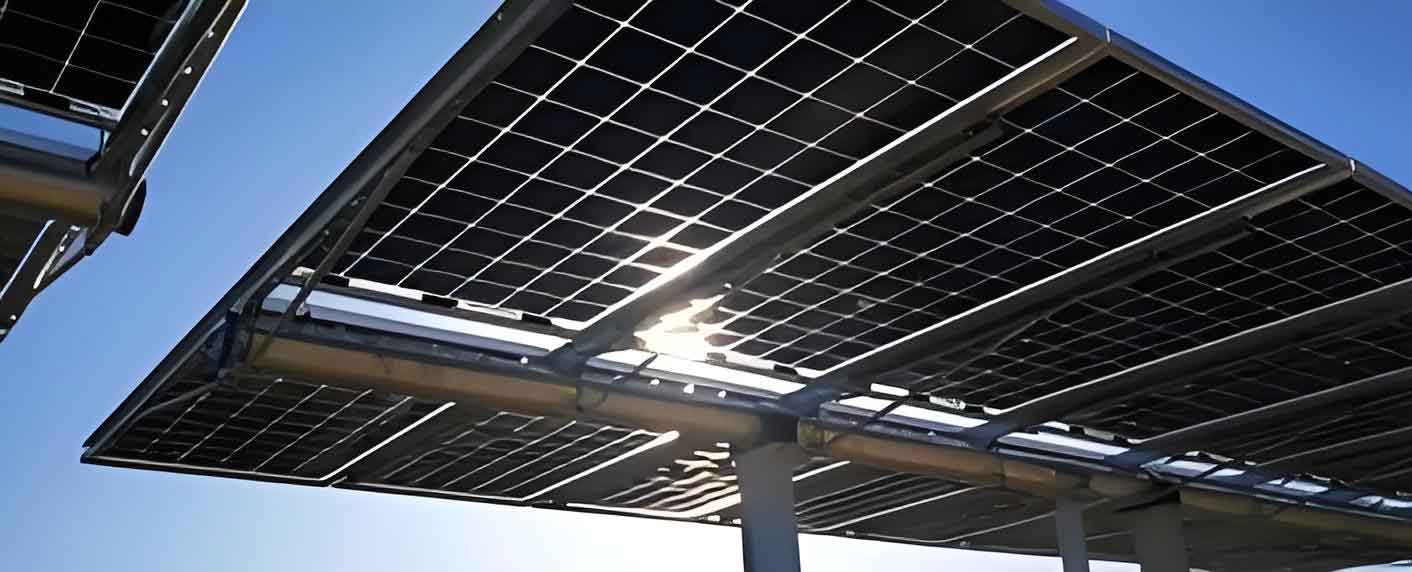
The experimental setup was deployed on a low-rise building located in a suburban area with terrain classified as Category B according to standard wind loading codes. The solar panels were arranged in multiple rows along the roof, each inclined at 25 degrees to optimize solar absorption. We selected 24 individual solar panels for monitoring, each with an area of 1.3 m², and installed 12 wind pressure transducers at strategic locations to capture spatial variations. The transducers measured net pressure differences between the windward and leeward sides of each solar panel, providing direct insights into the effective wind force. Additionally, an ultrasonic anemometer was mounted near the top edge of the solar panel array to record incoming wind speed and direction with minimal interference from the building. Data acquisition was performed at a sampling frequency of 100 Hz over 15-minute intervals, resulting in 90,000 samples per run and a total of 501 samples after multiple measurement sessions. Prior to analysis, the data underwent preprocessing, including smoothing via moving averages and low-pass filtering to remove high-frequency noise, ensuring reliable wind pressure coefficient calculations.
The wind pressure coefficient, a dimensionless parameter, is crucial for relating measured pressures to dynamic wind pressure. For each sampling point on the solar panels, we computed the mean, maximum positive, and minimum negative wind pressure coefficients using the following formulas:
$$C_{P_{max}} = \frac{P_{max} – P_{reference}}{\frac{1}{2}\rho \bar{U}^2}$$
$$C_{P_{min}} = \frac{P_{min} – P_{reference}}{\frac{1}{2}\rho \bar{U}^2}$$
$$C_{P_{mean}} = \frac{P_{mean} – P_{reference}}{\frac{1}{2}\rho \bar{U}^2}$$
Here, $P_{max}$, $P_{min}$, and $P_{mean}$ represent the instantaneous maximum, minimum, and mean wind pressures measured by the transducers on the solar panels, $P_{reference}$ is the reference static pressure, $\rho$ is air density, and $\bar{U}$ is the mean wind speed. These coefficients allow for the normalization of wind loads, facilitating comparisons across different wind conditions and solar panel configurations.
To understand the statistical behavior of wind pressure on solar panels, we analyzed the probability distributions of the wind pressure coefficient time series. The mean wind pressure coefficients exhibited approximately symmetric distributions, prompting the use of unbiased probability density functions such as the Normal distribution, t-distribution, and Logistic distribution. For the peak wind pressure coefficients—both positive maxima and negative minima—we observed skewed distributions, with positive maxima being right-skewed and negative minima left-skewed. Consequently, we employed distributions like the Type I Extreme Value (Gumbel) distribution, Gamma distribution, and Lognormal distribution for fitting. The goodness-of-fit was assessed using nonlinear regression analysis, with coefficients of determination ($R^2$) indicating how well each distribution matched the measured data from the solar panels.
For the mean wind pressure coefficients, the t-distribution provided the best fit due to its heavy-tailed characteristics, which accommodate outliers commonly encountered in wind pressure data from solar panels. The probability density function (PDF) and cumulative distribution function (CDF) for the three-parameter t-distribution are given by:
$$f_X(x) = \frac{\Gamma[(c+1)/2]}{b\sqrt{\pi c}\,\Gamma(c/2)} \left[1 + \frac{(x-a)^2}{b^2 c}\right]^{-(c+1)/2}$$
$$F_X(x) = \int_{-\infty}^{x} \frac{\Gamma[(c+1)/2]}{b\sqrt{\pi c}\,\Gamma(c/2)} \left[1 + \frac{(t-a)^2}{b^2 c}\right]^{-(c+1)/2} dt$$
where $a$ is the location parameter, $b$ is the scale parameter, and $c$ is the degrees of freedom. The Logistic distribution also performed well, with its PDF and CDF defined as:
$$f_X(x) = \frac{1}{\beta} \frac{\exp[(x-\alpha)/\beta]}{\{1 + \exp[(x-\alpha)/\beta]\}^2}$$
$$F_X(x) = \frac{1}{1 + \exp[-(x-\alpha)/\beta]}$$
where $\alpha$ and $\beta$ are the location and scale parameters, respectively. The Normal distribution, while adequate, showed slightly lower fitting accuracy. The results for the mean wind pressure coefficients across the 12 measurement points on the solar panels are summarized in Table 1, which includes parameter estimates with 95% confidence intervals and the corresponding wind pressure coefficient values at the 2.5% tails.
| Sensor ID | Distribution | Parameter Estimates (95% CI) | $R^2$ (%) | $C_{P_{mean}}$ at 2.5% Tails |
|---|---|---|---|---|
| S1 | t-distribution | $a = -0.004 (-0.006, -0.002)$, $b = 0.024 (0.022, 0.027)$, $c = 0.934 (0.718, 1.15)$ | 98.9 | Left: -0.37, Right: 0.37 |
| S2 | t-distribution | $a = -0.014 (-0.015, -0.013)$, $b = 0.022 (0.022, 0.023)$, $c = 1.059 (0.890, 1.229)$ | 99.6 | Left: -0.26, Right: 0.24 |
| S3 | t-distribution | $a = 0.012 (0.012, 0.013)$, $b = 0.020 (0.018, 0.021)$, $c = 1.208 (1.020, 1.397)$ | 99.7 | Left: -0.15, Right: 0.18 |
| S4 | t-distribution | $a = -0.098 (-0.107, -0.089)$, $b = 0.060 (0.048, 0.072)$, $c = 1.046 (0.475, 1.618)$ | 92.8 | Left: -0.79, Right: 0.60 |
| S5 | t-distribution | $a = -0.098 (-0.107, -0.089)$, $b = 0.061 (0.046, 0.076)$, $c = 0.909 (0.402, 1.416)$ | 92.2 | Left: -1.08, Right: 0.89 |
| S6 | t-distribution | $a = -0.091 (-0.099, -0.083)$, $b = 0.058 (0.044, 0.072)$, $c = 0.895 (0.416, 1.374)$ | 92.9 | Left: -1.07, Right: 0.89 |
| S7 | t-distribution | $a = -0.037 (-0.042, -0.032)$, $b = 0.061 (0.043, 0.080)$, $c = 1.037 (0.607, 1.467)$ | 97.1 | Left: -0.75, Right: 0.68 |
| S8 | t-distribution | $a = -0.060 (-0.066, -0.053)$, $b = 0.042 (0.036, 0.048)$, $c = 1.014 (0.575, 1.454)$ | 95.8 | Left: -0.58, Right: 0.46 |
| S9 | t-distribution | $a = -0.034 (-0.037, -0.032)$, $b = 0.028 (0.021, 0.034)$, $c = 0.870 (0.579, 1.161)$ | 97.6 | Left: -0.54, Right: 0.47 |
| S10 | t-distribution | $a = -0.120 (-0.131, -0.108)$, $b = 0.080 (0.062, 0.099)$, $c = 0.949 (0.430, 1.468)$ | 92.5 | Left: -1.28, Right: 1.04 |
| S11 | t-distribution | $a = -0.144 (-0.157, -0.131)$, $b = 0.089 (0.072, 0.107)$, $c = 0.904 (0.464, 1.344)$ | 93.0 | Left: -1.60, Right: 1.32 |
| S12 | t-distribution | $a = -0.154 (-0.168, -0.140)$, $b = 0.092 (0.072, 0.112)$, $c = 0.891 (0.433, 1.349)$ | 92.6 | Left: -1.72, Right: 1.41 |
The table clearly shows that the mean wind pressure coefficients for solar panels are generally negative, indicating suction dominance, with the most negative values occurring at the upper rows of the solar panel array. This pattern is consistent across different distributions, underscoring the importance of considering location effects when designing solar panel installations.
For the peak wind pressure coefficients, we focused on the extreme values that govern structural design. The positive maxima ($C_{P_{max}}$) and negative minima ($C_{P_{min}}$) were analyzed using skewed distributions. The Type I Extreme Value (Gumbel) distribution, commonly used in wind engineering, exhibited excellent fitting performance. Its PDF and CDF for maxima are expressed as:
$$f_X(x) = \alpha \exp[-\alpha(x-\beta) – \exp[-\alpha(x-\beta)]]$$
$$F_X(x) = \exp[-\exp[-\alpha(x-\beta)]]$$
where $\alpha > 0$ is the scale parameter and $\beta$ is the mode. For minima, a symmetry transformation $Y = -X$ was applied to convert left-skewed data to right-skewed, enabling the use of the same distribution form. The Gamma distribution, with PDF and CDF given by:
$$f_X(x) = \frac{x^{\alpha-1} \exp(-x/\beta)}{\beta^\alpha \Gamma(\alpha)}, \quad x > 0$$
$$F_X(x) = \int_0^x \frac{t^{\alpha-1} \exp(-t/\beta)}{\beta^\alpha \Gamma(\alpha)} dt$$
and the Lognormal distribution, with PDF and CDF:
$$f_X(x) = \frac{1}{\sqrt{2\pi}\zeta_X x} \exp\left[-\frac{(\ln x – \lambda_X)^2}{2\zeta_X^2}\right]$$
$$F_X(x) = \Phi\left(\frac{\ln x – \lambda_X}{\zeta_X}\right)$$
where $\Phi$ is the standard normal CDF, also provided good fits. However, the Normal distribution was less suitable due to its inability to capture the skewness inherent in peak wind pressure data from solar panels. Table 2 summarizes the fitting results for the peak wind pressure coefficients, highlighting the best-fitting distributions and their parameters.
| Sensor ID | Peak Type | Best Distribution | Parameter Estimates (95% CI) | $R^2$ (%) | Extreme $C_P$ Value |
|---|---|---|---|---|---|
| S1 | $C_{P_{max}}$ | Type I EVD | $\alpha = 8.33 (7.50, 9.16)$, $\beta = 0.15 (0.14, 0.16)$ | 96.5 | 0.37 |
| S1 | $C_{P_{min}}$ | Type I EVD | $\alpha = 6.67 (5.83, 7.50)$, $\beta = -0.24 (-0.26, -0.22)$ | 95.8 | -0.51 |
| S2 | $C_{P_{max}}$ | Type I EVD | $\alpha = 12.50 (11.25, 13.75)$, $\beta = 0.10 (0.09, 0.11)$ | 97.2 | 0.24 |
| S2 | $C_{P_{min}}$ | Type I EVD | $\alpha = 6.25 (5.42, 7.08)$, $\beta = -0.26 (-0.28, -0.24)$ | 96.0 | -0.50 |
| S3 | $C_{P_{max}}$ | Type I EVD | $\alpha = 8.33 (7.50, 9.16)$, $\beta = 0.18 (0.16, 0.20)$ | 96.8 | 0.41 |
| S3 | $C_{P_{min}}$ | Type I EVD | $\alpha = 7.14 (6.25, 8.03)$, $\beta = -0.21 (-0.23, -0.19)$ | 95.5 | -0.40 |
| S4 | $C_{P_{max}}$ | Type I EVD | $\alpha = 12.50 (11.25, 13.75)$, $\beta = 0.08 (0.07, 0.09)$ | 97.5 | 0.23 |
| S4 | $C_{P_{min}}$ | Type I EVD | $\alpha = 1.64 (1.48, 1.80)$, $\beta = -0.82 (-0.90, -0.74)$ | 93.2 | -1.57 |
| S5 | $C_{P_{max}}$ | Type I EVD | $\alpha = 12.50 (11.25, 13.75)$, $\beta = 0.08 (0.07, 0.09)$ | 97.3 | 0.23 |
| S5 | $C_{P_{min}}$ | Type I EVD | $\alpha = 1.45 (1.31, 1.59)$, $\beta = -0.92 (-1.00, -0.84)$ | 92.8 | -1.78 |
| S6 | $C_{P_{max}}$ | Type I EVD | $\alpha = 12.50 (11.25, 13.75)$, $\beta = 0.08 (0.07, 0.09)$ | 97.4 | 0.22 |
| S6 | $C_{P_{min}}$ | Type I EVD | $\alpha = 1.33 (1.20, 1.46)$, $\beta = -0.98 (-1.06, -0.90)$ | 92.5 | -1.91 |
| S7 | $C_{P_{max}}$ | Type I EVD | $\alpha = 3.45 (3.10, 3.80)$, $\beta = 0.20 (0.18, 0.22)$ | 96.0 | 0.32 |
| S7 | $C_{P_{min}}$ | Type I EVD | $\alpha = 2.13 (1.92, 2.34)$, $\beta = -0.42 (-0.46, -0.38)$ | 93.0 | -1.16 |
| S8 | $C_{P_{max}}$ | Type I EVD | $\alpha = 9.09 (8.18, 10.00)$, $\beta = 0.11 (0.10, 0.12)$ | 96.7 | 0.26 |
| S8 | $C_{P_{min}}$ | Type I EVD | $\alpha = 2.44 (2.20, 2.68)$, $\beta = -0.48 (-0.52, -0.44)$ | 94.2 | -1.11 |
| S9 | $C_{P_{max}}$ | Type I EVD | $\alpha = 10.00 (9.00, 11.00)$, $\beta = 0.11 (0.10, 0.12)$ | 96.9 | 0.27 |
| S9 | $C_{P_{min}}$ | Type I EVD | $\alpha = 2.86 (2.57, 3.15)$, $\beta = -0.43 (-0.47, -0.39)$ | 94.5 | -0.87 |
| S10 | $C_{P_{max}}$ | Type I EVD | $\alpha = 7.14 (6.43, 7.85)$, $\beta = 0.15 (0.14, 0.16)$ | 96.3 | 0.39 |
| S10 | $C_{P_{min}}$ | Type I EVD | $\alpha = 1.27 (1.14, 1.40)$, $\beta = -1.08 (-1.16, -1.00)$ | 91.8 | -2.13 |
| S11 | $C_{P_{max}}$ | Type I EVD | $\alpha = 5.88 (5.29, 6.47)$, $\beta = 0.17 (0.16, 0.18)$ | 95.9 | 0.42 |
| S11 | $C_{P_{min}}$ | Type I EVD | $\alpha = 1.12 (1.01, 1.23)$, $\beta = -1.20 (-1.28, -1.12)$ | 91.5 | -2.39 |
| S12 | $C_{P_{max}}$ | Type I EVD | $\alpha = 6.67 (6.00, 7.34)$, $\beta = 0.16 (0.15, 0.17)$ | 96.1 | 0.40 |
| S12 | $C_{P_{min}}$ | Type I EVD | $\alpha = 1.00 (0.90, 1.10)$, $\beta = -1.30 (-1.38, -1.22)$ | 91.2 | -2.68 |
The data reveal that the most unfavorable wind pressure coefficients for solar panels are controlled by negative minima, with values as low as -2.68, emphasizing the dominance of suction forces on solar panels. These extreme suction forces are particularly pronounced at the upper rows of the solar panel array, likely due to flow separation and edge effects. Such insights are vital for designing robust mounting systems for solar panels to withstand high wind events.
To further assess the overall wind load on solar panels, we performed area-averaging of the wind pressure coefficients. This approach accounts for spatial correlation and provides a more representative value for structural design. The tributary area method was employed, where each measurement point on the solar panels was assigned an equal area, and the area-averaged wind pressure coefficient $C_{P,avg}$ was computed as:
$$C_{P,avg} = \frac{1}{n} \sum_{i=1}^{n} C_{P_i}$$
where $n$ is the number of measurement points, and $C_{P_i}$ is the wind pressure coefficient at point $i$. For the top and bottom sections of the solar panel array, we obtained distinct area-averaged values. The top solar panels, being more exposed, exhibited higher suction coefficients compared to the bottom solar panels. Table 3 summarizes the area-averaged peak wind pressure coefficients for both sections, along with the fitting performance of different distributions.
| Solar Panel Section | Peak Type | Type I EVD $R^2$ (%) | Gamma $R^2$ (%) | Lognormal $R^2$ (%) | Area-Averaged $C_P$ |
|---|---|---|---|---|---|
| Top | $C_{P_{max}}$ | 94.6 | 98.3 | 99.4 | 0.37 |
| Top | $C_{P_{min}}$ | 81.3 | 77.6 | 78.2 | -1.70 |
| Bottom | $C_{P_{max}}$ | 95.2 | 96.7 | 98.6 | 0.22 |
| Bottom | $C_{P_{min}}$ | 92.3 | 93.1 | 95.7 | -1.10 |
The table indicates that the Type I EVD generally offers robust fitting for area-averaged data, though the Lognormal distribution sometimes shows higher $R^2$ values, particularly for positive maxima. However, given the consistency and theoretical justification in wind engineering, the Type I EVD is preferred for deriving design wind pressure coefficients for solar panels. Based on a linear regression analysis with an exceedance probability of 5%, we proposed a design wind pressure coefficient curve for solar panels. For tributary areas ranging from 0.1 m² to 0.9 m², the most unfavorable net wind pressure coefficient is -2.3. This value serves as a recommended shape factor for solar panels installed on flat roofs at a 25-degree inclination, ensuring safety against wind-induced uplift.
In addition to the statistical analysis, we explored the physical mechanisms driving wind pressure on solar panels. The inclination angle of 25 degrees creates a complex flow field, with vortices forming at the edges and gaps between solar panels. These vortices enhance suction pressures, especially on the upper portions of the solar panels. Moreover, the proximity to the roof edge amplifies wind speeds due to flow acceleration, further increasing loads on solar panels. Our full-scale measurements captured these effects, revealing that solar panels in the top row experience significantly higher wind pressures than those in lower rows. This spatial variation must be considered in array design, perhaps through staggered layouts or enhanced anchoring for perimeter solar panels.
To contextualize our findings, we compared them with existing wind loading codes and previous studies. For instance, some international standards provide specific wind load provisions for solar panels, but these often vary based on regional practices. Our measured wind pressure coefficients for solar panels align with values reported in wind tunnel studies, though full-scale data tend to show higher variability due to real-world turbulence. The dominance of suction forces on solar panels is consistent across literature, reinforcing the need for design guidelines that address uplift. By integrating our results, we advocate for updating wind load codes to include explicit clauses for solar panels, incorporating factors such as array density, inclination, and roof zone effects.
Furthermore, we investigated the implications for structural reliability. Using the probability distributions derived for wind pressure coefficients on solar panels, we can estimate failure probabilities under extreme wind events. For example, the cumulative distribution function for negative minima allows calculating the likelihood of exceeding a critical suction threshold. Assuming a design wind speed corresponding to a 50-year return period, the probability of failure for a solar panel system can be assessed using reliability index methods. This probabilistic approach enhances the resilience of solar panel installations, particularly in hurricane-prone regions where wind loads are a major concern.
In terms of practical applications, our research informs the design of mounting systems for solar panels. The recommended wind pressure coefficient of -2.3 can be used to calculate design wind forces, considering the tributary area of each solar panel. For instance, for a solar panel with an area of 1.3 m², the design wind force $F$ can be computed as:
$$F = C_{P,design} \times \frac{1}{2} \rho V^2 \times A$$
where $C_{P,design} = -2.3$, $\rho$ is air density, $V$ is design wind speed, and $A$ is the area of the solar panel. This force should be resisted by clamps, brackets, or ballasts securing the solar panels. Additionally, dynamic effects such as vortex-induced vibrations may necessitate damping devices for tall solar panel arrays, though our study focused on quasi-static pressures.
Looking ahead, future research could expand on this work by examining different solar panel configurations, such as bifacial solar panels or integrated building-applied photovoltaics. The wind pressure characteristics might differ for these systems, warranting separate investigations. Moreover, climate change effects on wind patterns could alter design wind speeds, impacting loads on solar panels. Long-term monitoring of solar panel installations in diverse climates would provide valuable data for adaptive design strategies.
In conclusion, through extensive full-scale measurements and statistical analysis, we have characterized wind pressure coefficients for typical rooftop solar panels. The mean wind pressure coefficients follow approximately symmetric distributions, best fitted by the t-distribution, while peak coefficients are skewed and well-represented by the Type I Extreme Value distribution. The most critical wind loads on solar panels are suction forces, with area-averaged design coefficients reaching -2.3 for specific tributary areas. These findings underscore the importance of considering wind effects in solar panel design and support the development of standardized wind loading provisions for solar panels. By advancing our understanding of wind-structure interaction, we contribute to the safe and sustainable deployment of solar energy systems, ensuring that solar panels continue to harness clean energy without compromising structural integrity.
Throughout this study, the focus on solar panels has been paramount, as these components are increasingly integral to modern energy infrastructure. The insights gained here not only apply to the specific configuration tested but also offer general principles for wind-resistant design of solar panels. As the adoption of solar panels grows globally, such research becomes ever more critical, blending engineering rigor with environmental stewardship to support a renewable energy future.