
The performance of lithium-ion batteries is fundamentally governed by the kinetics of mass and charge transport within their electrodes. Among these processes, the solid-state diffusion of lithium ions within the active material particles is often a rate-limiting step, especially at high current rates or low temperatures. Accurately characterizing this impedance is crucial for material development, state-of-health diagnosis, and performance prediction across various operating conditions. Traditional methods for analyzing low-frequency solid-state diffusion impedance, such as direct electrochemical impedance spectroscopy (EIS), are time-consuming and can be affected by state-of-charge (SOC) drift during measurement. Time-domain measurement (TDM) techniques offer a faster alternative by analyzing the voltage relaxation response after a current pulse.
However, the relaxation voltage contains a superposition of overpotentials from multiple processes: solid-state diffusion in both the positive and negative electrodes, and diffusion in the electrolyte. Isolating and quantifying the contribution from solid-state diffusion is non-trivial. Equivalent circuit models (ECMs) are commonly employed for this deconvolution. While simple RC pairs can fit the data, they lack physical significance, preventing the linkage of model parameters to intrinsic material properties like particle size or diffusion coefficient. Conversely, physically grounded elements like the Warburg impedance have complex expressions that are difficult to transform into the time domain for overvoltage simulation under arbitrary current profiles.
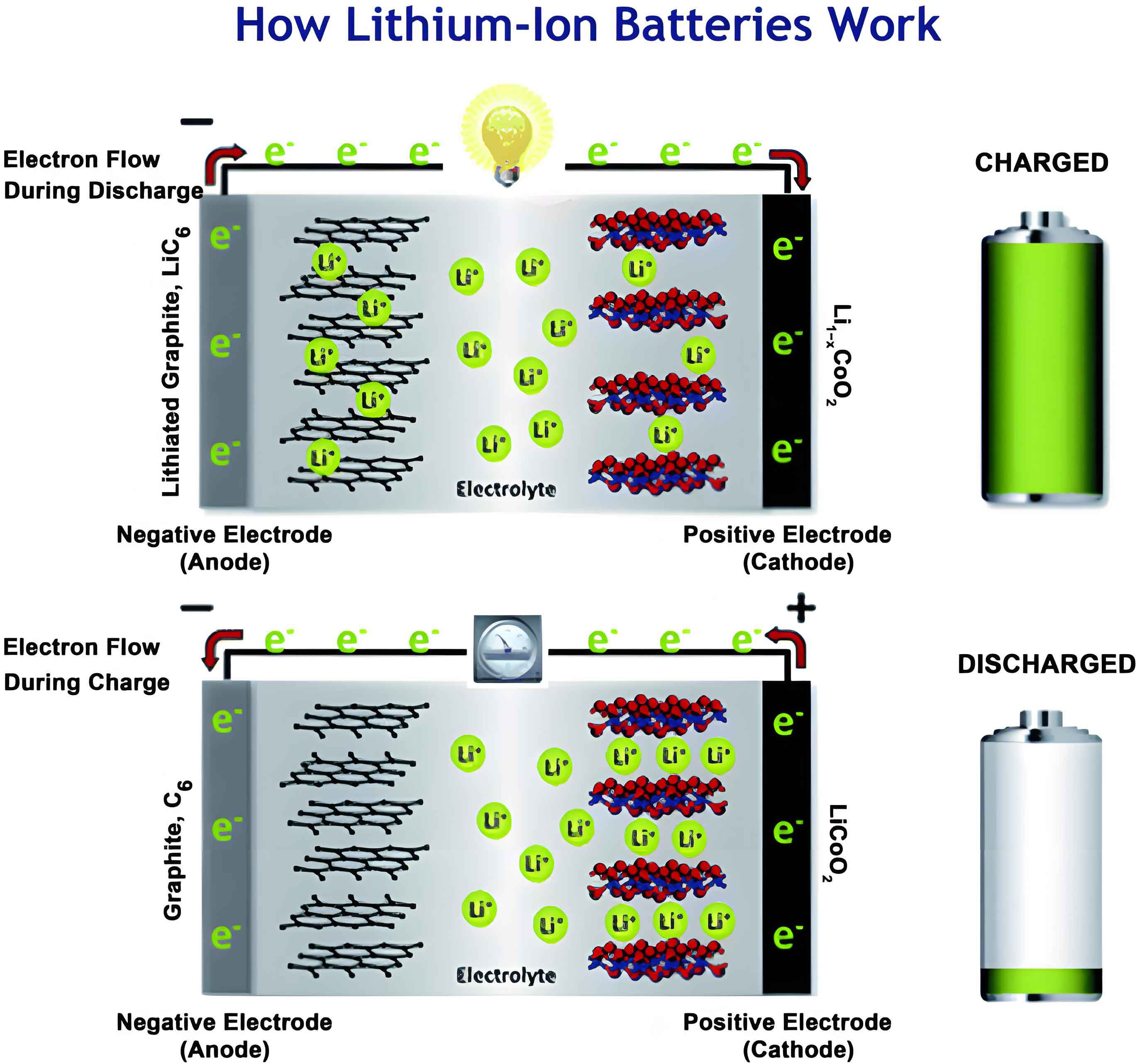
To bridge this gap, we focus on the Voigt model, a lumped-parameter representation derived from the spatial discretization of Fick’s diffusion law. This model offers a compelling compromise: its parameters have a direct physical relationship with electrode properties, and its relatively simple form allows for straightforward time-domain transformation. While prior work has successfully applied Voigt models to electrodes with planar (e.g., some LiFePO₄) or spherical (e.g., NMC) particle geometries, common anode materials like graphite are often better represented by cylindrical particles. Therefore, a comprehensive model set is required for a full-cell analysis, particularly for lithium-ion battery chemistries like lithium iron phosphate (LFP)/graphite where the overpotential from both electrodes is significant and cannot be neglected.
In this study, we extend the Voigt modeling framework to cylindrical particle geometry, completing the toolkit for modeling the solid-state diffusion impedance in a commercial lithium-ion battery. We establish the explicit relationship between the model’s time constants/resistances and key electrode parameters such as particle radius r and solid diffusion coefficient D. The frequency-domain impedance expression is inverted to the time domain to construct an analytical expression for the solid-state diffusion overvoltage. To accurately identify the model parameters from experimental voltage relaxation data, we introduce and employ the Flower Pollination Algorithm (FPA), a global optimization technique, and demonstrate its superiority over conventional local search methods like the Trust-Region-Reflective (TRR) algorithm for this highly nonlinear fitting problem. Finally, we apply the complete methodology to a commercial LFP/graphite lithium-ion battery, identifying the parameters across various SOCs and temperatures, analyzing the trends to infer material property variations, and demonstrating the model’s capability to predict and separate the solid-state diffusion overvoltage of each electrode under different operational scenarios.
Methodology: Model Development and Parameter Identification
1. Extension of the Voigt Model to Cylindrical Particles
The Voigt model for solid-state diffusion is derived by applying the finite volume method to discretize Fick’s second law within a single active material particle. For a cylindrical particle of radius $$r_0$$ and height $$h$$, considering radial diffusion with an impermeable boundary at $$r = r_0$$, the diffusion equation is:
$$
\frac{\partial c(r, t)}{\partial t} = D \frac{1}{r} \frac{\partial}{\partial r} \left( r \frac{\partial c(r, t)}{\partial r} \right)
$$
Discretizing the particle into $$n$$ concentric volume segments, the lithium flux $$J_r A_r$$ between segments is constant. The resistance between the centroid of segment $$k$$ and $$k+1$$, and the capacitance of segment $$k$$ can be derived, leading to a ladder network of RC elements. This high-order network can be reduced through state-space transformation to a simplified Voigt model topology. The Voigt model consists of a terminal diffusion capacitance $$C_{lim}$$ in parallel with a series of $$n$$ RC branches. The impedance in the frequency domain is given by:
$$
Z_{Voigt}(\omega) = \frac{R_D}{1 + j\omega C_{lim} R_D} + \sum_{k=1}^{n} \frac{a_k R_D}{1 + j\omega b_k \tau_D}
$$
Here, $$R_D$$ is the polarization resistance and $$\tau_D$$ is the fundamental diffusion time constant. The coefficients $$a_k$$ and $$b_k$$ depend on the particle geometry and the number of volume segments $$n$$. For spherical and planar geometries, these coefficients are known. For the cylindrical geometry, we compute them via the state-space reduction. A subset of these coefficients for $$n=100$$ is shown in the table below, which is essential for constructing the time-domain response of a lithium-ion battery electrode.
| k | ak (×10-4) | bk (×10-4) | k | ak (×10-4) | bk (×10-4) |
|---|---|---|---|---|---|
| 1 | 1360.000 | 681.000 | 26 | 2.890 | 1.480 |
| 2 | 406.000 | 203.000 | 27 | 2.680 | 1.380 |
| 3 | 193.000 | 96.600 | 28 | 2.490 | 1.280 |
| 4 | 113.000 | 56.300 | 29 | 2.320 | 1.200 |
| 5 | 73.700 | 36.900 | 30 | 2.160 | 1.120 |
The model parameters are linked to the physical properties of the electrode material:
$$
R_D = \frac{-\partial \phi / \partial c|_{r}}{A Z F}
$$
$$
\tau_D = \frac{r^2}{D}
$$
where $$-\partial \phi / \partial c$$ is the thermodynamic factor relating the particle surface potential to the lithium concentration, $$A$$ is the active surface area, $$Z$$ is the charge number, and $$F$$ is Faraday’s constant.
2. Full-Cell ECM and Time-Domain Overvoltage Expression
A real electrode comprises a distribution of particles. To account for the interaction and homogenization effects among particles of varying sizes, a homogenization RC element ($$R_{homo}, \tau_{homo}$$) is connected in series with the single-particle Voigt model. Thus, the full impedance for one electrode’s solid-state diffusion process is:
$$
Z_{electrode}(\omega) = Z_{Voigt}(\omega) + \frac{R_{homo}}{1 + j\omega \tau_{homo}}
$$
For a full lithium-ion battery cell, we consider the contributions from both the positive ($$+$$) and negative ($$-$$) electrodes, plus a separate RC element ($$R_{Diff,e}, \tau_{Diff,e}$$) to represent diffusion in the electrolyte. To simulate the voltage response to a current pulse, we perform an inverse Laplace transform on these impedance expressions. The resulting time-domain impulse responses are:
$$
z_{Voigt}(t) = \sum_{k=1}^{n} \frac{a_k R_D}{b_k \tau_D} e^{-\frac{t}{b_k \tau_D}} \epsilon(t)
$$
$$
z_{homo}(t) = \frac{R_{homo}}{\tau_{homo}} e^{-\frac{t}{\tau_{homo}}} \epsilon(t)
$$
$$
z_{Diff,e}(t) = \frac{R_{Diff,e}}{\tau_{Diff,e}} e^{-\frac{t}{\tau_{Diff,e}}} \epsilon(t)
$$
where $$\epsilon(t)$$ is the Heaviside step function. For a current pulse of magnitude $$I_p$$ starting at $$t_0$$ and ending at $$t_0+T_p$$, the total cell voltage relaxation $$U(t)$$ after the pulse is the sum of the open-circuit voltage (OCV) and the convolution of the current profile with the respective impulse responses:
$$
\begin{aligned}
U(t) = & U_{OCV} + I_p \bigg[ u_{Voigt}^+(t) + u_{homo}^+(t) + u_{Voigt}^-(t) + u_{homo}^-(t) + u_{Diff,e}(t) \bigg] \\
\text{where: } & u_{Voigt}(t) = \sum_{k=1}^{n} a_k R_D \left( 1 – e^{-\frac{t-t_0}{b_k \tau_D}} \right) – \left( 1 – e^{-\frac{t-(t_0+T_p)}{b_k \tau_D}} \right) \\
& u_{homo}(t) = R_{homo} \left( 1 – e^{-\frac{t-t_0}{\tau_{homo}}} \right) – \left( 1 – e^{-\frac{t-(t_0+T_p)}{\tau_{homo}}} \right) \\
& u_{Diff,e}(t) = R_{Diff,e} \left( 1 – e^{-\frac{t-t_0}{\tau_{Diff,e}}} \right) – \left( 1 – e^{-\frac{t-(t_0+T_p)}{\tau_{Diff,e}}} \right)
\end{aligned}
$$
This equation forms the basis for fitting experimental relaxation data to extract the 10 core parameters ($$R_D^\pm, \tau_D^\pm, R_{homo}^\pm, \tau_{homo}^\pm, R_{Diff,e}, \tau_{Diff,e}$$) for the lithium-ion battery model.
3. Parameter Identification Using the Flower Pollination Algorithm (FPA)
Identifying the 10 parameters from a nonlinear voltage relaxation curve is a challenging optimization problem. Traditional gradient-based algorithms like TRR can converge to local minima, especially with poor initial guesses. We employ the Flower Pollination Algorithm (FPA), a nature-inspired metaheuristic, for its robust global search capabilities.
The FPA mimics the pollination process of flowering plants, involving both global pollination (cross-pollination) and local pollination (self-pollination). The algorithm is initialized with a population of random candidate solutions (pollens). In each iteration, a random number determines the pollination type. For global pollination, the new solution $$x_i^{t+1}$$ is generated by:
$$
x_i^{t+1} = x_i^{t} + \gamma L(\lambda) (g_* – x_i^{t})
$$
where $$g_*$$ is the current best solution, $$\gamma$$ is a scaling factor, and $$L(\lambda)$$ is a Lévy flight step size. For local pollination:
$$
x_i^{t+1} = x_i^{t} + \epsilon (x_j^{t} – x_k^{t})
$$
where $$x_j^{t}$$ and $$x_k^{t}$$ are solutions from different flowers of the same plant species, and $$\epsilon$$ is a random number. The switching probability $$p$$ controls the balance between exploration and exploitation. We define the objective function as the sum of squared errors between the measured voltage $$u_i$$ and the model voltage $$\tilde{u}_i$$ at N sampling points:
$$
\min \sum_{i=1}^{N} || u_i – \tilde{u}_i ||^2
$$
The FPA iteratively updates the population to minimize this objective function, effectively searching the parameter space for the global optimum.
4. Experimental Validation on a Commercial LFP/Graphite Lithium-Ion Battery
We test our methodology on a commercial 32700-type lithium iron phosphate (LFP) lithium-ion battery with a nominal capacity of 6.5 Ah. The positive electrode (LFP) is modeled using the planar particle Voigt coefficients, while the negative electrode (graphite) uses the newly derived cylindrical particle coefficients. The experimental procedure involves:
- Setting the cell to a specific SOC (10%, 20%, 40%, 60%, 80%, 95%) at a constant temperature (15, 20, 25, 30, 35 °C) using a 0.2C discharge rate, followed by a 24-hour relaxation.
- Applying a 0.5C (3.25 A) discharge current pulse for 20 seconds.
- Recording the voltage relaxation until it stabilizes.
The relaxation voltage profiles are then fitted using the FPA to extract the model parameters for each SOC and temperature condition.
Results and Discussion
1. Comparative Performance of FPA vs. TRR
We first validated the superiority of the FPA for our specific parameter identification problem. Synthetic relaxation voltage data was generated using a known set of reference parameters. Gaussian noise (0.3 mV std) was added to simulate measurement error. Two distinct sets of initial guesses with large relative errors were used to test robustness.
The fitting results, presented in the table below, demonstrate the clear advantage of the global-search FPA. For both initial guesses, the FPA successfully recovered all reference parameters with 0% error. In contrast, the TRR algorithm, using the same initial guesses, converged to local minima, resulting in significant errors, especially for parameters like $$\tau_{homo}^-$$ where errors exceeded 1000% with the second initial guess. This confirms that the FPA is essential for reliable parameter identification in the complex, multi-parameter model of the lithium-ion battery’s solid-state diffusion process.
| Parameter | Reference Value | Initial Guess 1 | Initial Guess 2 | ||
|---|---|---|---|---|---|
| FPA Result (Error) | TRR Result (Error) | FPA Result (Error) | TRR Result (Error) | ||
| $$\tau_D^+$$ (×105 s) | 1.5 | 1.5 (0%) | 1.2 (20%) | 1.5 (0%) | 0.10 (93%) |
| $$R_D^+$$ (Ω) | 0.80 | 0.80 (0%) | 0.70 (13%) | 0.80 (0%) | 0.21 (74%) |
| $$\tau_{homo}^+$$ (×105 s) | 0.50 | 0.50 (0%) | 0.38 (24%) | 0.50 (0%) | 0.16 (68%) |
| $$R_{homo}^+$$ (Ω) | 0.12 | 0.12 (0%) | 0.16 (33%) | 0.12 (0%) | 0.24 (100%) |
| $$\tau_D^-$$ (×105 s) | 0.12 | 0.12 (0%) | 0.10 (17%) | 0.12 (0%) | 0.44 (270%) |
2. Parameter Identification for the Commercial Lithium-Ion Battery
The FPA was applied to fit the experimental relaxation data from the LFP/graphite lithium-ion battery. The fits were excellent across all SOCs and temperatures, with peak fitting errors consistently below 1 mV, which is on the order of the measurement noise. This validates the combined Voigt model structure and FPA identification approach.
The extracted parameters reveal insightful trends about the electrode materials. For the LFP positive electrode, the parameters ($$R_D^+, \tau_D^+$$) showed irregular variations with SOC and temperature. This is consistent with the known two-phase reaction mechanism of LFP, where lithium intercalation occurs via a moving phase boundary, causing the effective particle size participating in the reaction to change stochastically.
For the graphite negative electrode, clear trends were observed. At a constant temperature of 25°C, the solid diffusion time constant $$\tau_D^-$$ increased dramatically from 450 s at 10% SOC to 1.9×10⁶ s at 95% SOC. Since $$\tau_D = r^2/D$$, and the particle radius $$r$$ is constant, this indicates a significant decrease in the solid-state diffusion coefficient $$D$$ within the graphite as lithiation (SOC) increases. This is a known phenomenon attributed to the staging phase transitions in graphite.
The negative electrode polarization resistance $$R_D^-$$ also exhibited a non-monotonic trend with SOC. It initially increased, then decreased between 40-80% SOC, before rising again at high SOC. Since $$R_D \propto (-\partial \phi / \partial c) / D$$, the dip in $$R_D^-$$ suggests that the thermodynamic factor $$(-\partial \phi / \partial c)$$ is relatively small in that mid-SOC range, likely corresponding to the voltage plateau regions in graphite’s voltage curve, before increasing again in the high-voltage staged phases.
The homogenization process parameters ($$\tau_{homo}^-, R_{homo}^-$$) generally followed the trends of their single-particle counterparts, as expected, since they represent an averaging effect over the particle population.
3. Analysis of Activation Energy
The temperature dependence of the polarization resistances was analyzed using the Arrhenius equation:
$$
\ln(R) = \ln(R_0) + \frac{E_A}{k_B T}
$$
where $$E_A$$ is the activation energy, $$k_B$$ is Boltzmann’s constant, and $$T$$ is the absolute temperature. Plotting $$\ln(R_D^-)$$ and $$\ln(R_{homo}^-)$$ against $$1/T$$ yielded linear relationships for the graphite electrode. The calculated activation energies varied with SOC:
| SOC (%) | EA,Diff (eV) for $$R_D^-$$ | EA,homo (eV) for $$R_{homo}^-$$ |
|---|---|---|
| 10 | 0.44 | 0.19 |
| 20 | 1.60 | 1.40 |
| 40 | 1.70 | 0.88 |
| 60 | 1.00 | 0.42 |
| 80 | 0.83 | 1.20 |
The activation energy for solid diffusion $$E_{A,Diff}$$ peaked around 40-60% SOC, reflecting the increased energy barrier for lithium ion hopping during the phase transitions in graphite. These values provide critical inputs for thermal modeling of the lithium-ion battery.
4. Overvoltage Decomposition and Prediction
A key strength of the identified Voigt model is its ability to decompose the total overvoltage into contributions from individual physical processes. Using the parameters identified at 40% SOC and 25°C, we simulated the separate overvoltages during relaxation. The results show that the negative electrode’s single-particle solid diffusion process contributes the largest overvoltage (~35 mV peak) and is the slowest to decay (on the order of 104 seconds). The positive electrode’s contribution is smaller (~4 mV). The electrolyte diffusion overvoltage decays fastest (within ~10 seconds).
Furthermore, the time-domain model allows for voltage prediction under any current input. We validated this by predicting the cell voltage under a sequence of continuous charge/discharge pulses. The predicted voltage closely matched the measured data, demonstrating the model’s utility for simulating complex real-world operating profiles of a lithium-ion battery. This capability enables performance prediction and can guide targeted material optimization; for instance, if the negative electrode solid diffusion overvoltage is identified as the main limitation at high C-rates, efforts can be focused on increasing the graphite diffusion coefficient $$D$$ or reducing particle size $$r$$.
Conclusion
In this work, we have developed a comprehensive physics-based modeling framework for the solid-state diffusion impedance in lithium-ion batteries. The principal contributions are threefold. First, we extended the physically meaningful Voigt model to cylindrical particle geometry, making it applicable to common anode materials like graphite and completing the model set for full-cell analysis. Second, we successfully implemented the global-search Flower Pollination Algorithm for robust and accurate parameter identification from voltage relaxation data, overcoming the limitations of local search methods. Third, we applied this complete methodology to a commercial LFP/graphite lithium-ion battery, extracting meaningful parameters that reveal the state-dependent behavior of diffusion coefficients and thermodynamic factors.
The identified model serves as a powerful tool. It allows for the prediction and separation of electrode-specific solid-state diffusion overvoltages under arbitrary operating conditions, providing clear insights into performance bottlenecks. The parameter trends offer a non-invasive window into material property changes (e.g., $$D$$, $$(-\partial \phi / \partial c)$$) as functions of SOC and temperature. This methodology provides strong technical support for the development, screening, and optimization of next-generation electrode materials for advanced lithium-ion batteries. Future work will involve applying this model to aged lithium-ion battery cells to investigate the evolution of solid-state diffusion parameters over the cycle life and to predict end-of-life performance, further enhancing the model’s value in battery management and lifetime prediction.