
As a researcher in the field of energy storage materials, I have conducted a comprehensive bibliometric analysis to explore the knowledge evolution and development trends of lithium iron phosphate (LiFePO4) battery materials. The LiFePO4 battery, known for its safety, stability, and cost-effectiveness, has become a cornerstone in applications such as electric vehicles and renewable energy storage. In this study, I utilized visualization tools to map the research landscape, aiming to provide insights into how this technology has progressed over time and where it is heading. The analysis is based on scientific literature, and I will present findings through tables, formulas, and visual representations to summarize key patterns. Throughout this article, I will emphasize the significance of the LiFePO4 battery, highlighting its role in advancing sustainable energy solutions. The integration of data from scholarly publications allows me to trace the trajectory of LiFePO4 battery research, from early development to current innovations, and to identify emerging frontiers that could shape future studies.
To begin, I collected data from the Science Citation Index Expanded (SCI-E) database, covering publications from 1985 to 2022. This dataset includes over 4,000 papers related to LiFePO4 battery materials, ensuring a robust foundation for analysis. I employed CiteSpace6, a visualization software, to construct knowledge maps based on co-citation networks, keyword bursts, and clustering techniques. These methods enable me to detect prominent themes, track temporal shifts, and group related concepts into cohesive clusters. For instance, co-citation analysis helps identify foundational studies that have influenced the field, while burst detection reveals terms that gained sudden attention, indicating research frontiers. Clustering algorithms organize keywords into themes, providing a snapshot of dominant research directions. By combining these approaches, I aim to offer a holistic view of the LiFePO4 battery material domain, supported by quantitative metrics. The use of formulas, such as those for calculating research impact or trend growth, will further elucidate the data. For example, the growth rate of publications can be expressed as: $$r = \frac{N_t – N_{t-1}}{N_{t-1}} \times 100\%$$ where \(r\) is the growth rate, \(N_t\) is the number of publications in year \(t\), and \(N_{t-1}\) is the number in the previous year. This formula helps quantify the expansion of LiFePO4 battery research over time.
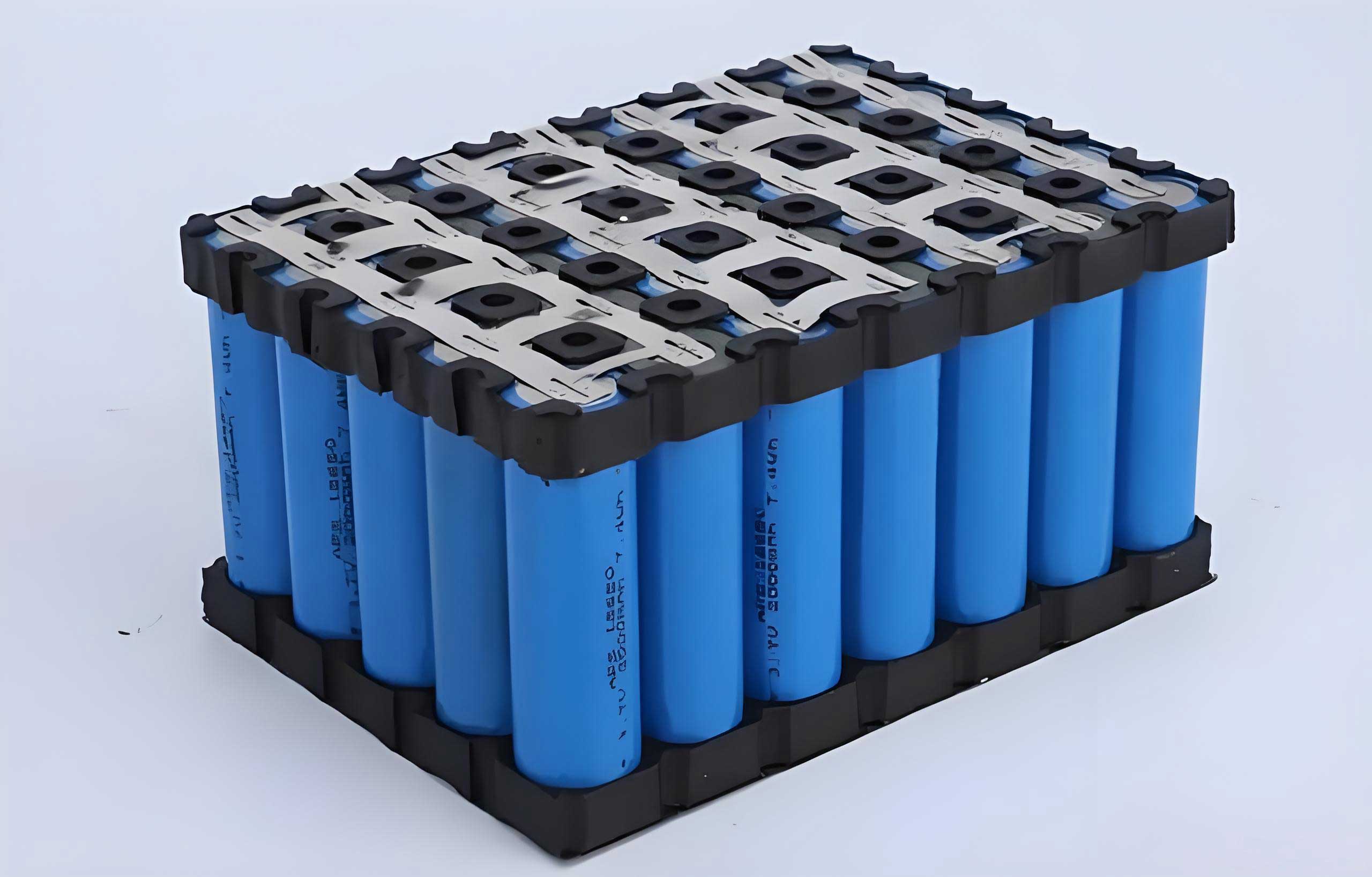
The temporal distribution of publications on LiFePO4 battery materials reveals three distinct phases, as summarized in Table 1. I analyzed the annual publication counts to understand how research interest has evolved. The data shows that studies on LiFePO4 battery materials began in 1997, with a slow start until 2009, followed by a rapid increase from 2010 to 2013, and a stable period from 2014 onward. This pattern reflects the maturation of LiFePO4 battery technology, driven by growing demand for electric vehicles and energy storage systems. In the early phase, researchers focused on synthesizing LiFePO4 battery materials, exploring methods like solid-state reactions and sol-gel processes. The surge in publications during 2010-2013 correlates with advancements in carbon coating and nanostructuring, which enhanced the conductivity and performance of LiFePO4 battery electrodes. Since 2014, the field has entered a consolidation phase, with steady output indicating sustained interest in applications and optimization. This timeline underscores the dynamic nature of LiFePO4 battery research, aligning with global trends in clean energy adoption.
| Phase | Time Period | Number of Publications | Average Annual Publications | Key Characteristics |
|---|---|---|---|---|
| Initial Phase | 1997-2009 | 591 | 46 | Focus on synthesis methods for LiFePO4 battery materials |
| Growth Phase | 2010-2013 | 1,529 | 293 | Rise in carbon coating and performance studies for LiFePO4 battery |
| Stable Phase | 2014-2022 | 2,280 | 253 | Emphasis on applications, recycling, and thermal management of LiFePO4 battery |
Geographically, the research on LiFePO4 battery materials is led by several countries, as depicted in Table 2. I examined the contribution of different nations to assess global collaboration and dominance in this field. China stands out as the top producer of publications, accounting for over 50% of the total, which highlights its strategic focus on electric mobility and battery technology. The United States, South Korea, Japan, and European nations also show significant activity, reflecting worldwide efforts to advance LiFePO4 battery systems. This distribution suggests that the development of LiFePO4 battery materials is a global endeavor, with cross-border knowledge exchange fueling innovation. For instance, collaborations between Chinese and American researchers have led to breakthroughs in cathode design for LiFePO4 battery applications. The concentration of research in certain regions may be influenced by policy support, such as subsidies for electric vehicles, which drive demand for improved LiFePO4 battery performance. Understanding this geographic landscape helps identify hubs of expertise and potential areas for increased international cooperation.
| Country | Number of Publications | Percentage of Total | Notable Contributions |
|---|---|---|---|
| China | 2,294 | 56.8% | Large-scale production and application of LiFePO4 battery |
| United States | 456 | 11.3% | Fundamental studies on conductivity in LiFePO4 battery |
| South Korea | 321 | 7.9% | Innovations in nanostructured LiFePO4 battery electrodes |
| Japan | 298 | 7.4% | Development of high-power LiFePO4 battery systems |
| France | 145 | 3.6% | Research on thermal stability of LiFePO4 battery |
The knowledge evolution of LiFePO4 battery materials can be traced through burst detection analysis, which identifies terms that experienced sudden increases in frequency. I generated a highlight word time zone map to visualize these shifts, revealing how research themes have transitioned over the decades. In the initial phase, burst terms like “coprecipitation,” “sol gel synthesis,” and “pulsed laser deposition” dominated, indicating a focus on synthesis techniques for LiFePO4 battery cathodes. This aligns with the need to develop reliable methods for producing high-quality LiFePO4 battery materials. During the growth phase, terms such as “carbon coated LiFePO4,” “carbothermal reduction,” and “thermal stability” emerged, reflecting efforts to enhance the electronic conductivity and safety of LiFePO4 battery systems. The stable phase saw bursts in “electric vehicle,” “state of charge,” “thermal runaway,” and “recovery,” pointing toward application-oriented studies and sustainability concerns for LiFePO4 battery technology. This evolution mirrors the broader lifecycle of materials research, from discovery to optimization and end-of-life management. For example, the rise of “thermal runaway” underscores growing attention to safety issues in high-density LiFePO4 battery packs, which is critical for electric vehicle adoption.
To quantify the impact of these thematic shifts, I applied formulas to analyze keyword bursts. The burst strength \(S\) for a term can be calculated as: $$S = \frac{f_{\text{peak}} – f_{\text{base}}}{f_{\text{base}}}$$ where \(f_{\text{peak}}\) is the frequency at the peak of the burst, and \(f_{\text{base}}\) is the base frequency. This metric helps prioritize terms that signify major trends in LiFePO4 battery research. For instance, “carbon coated LiFePO4” showed a high burst strength during 2010-2013, correlating with widespread adoption of coating techniques to improve LiFePO4 battery performance. Similarly, “recovery” exhibited a strong burst in recent years, highlighting the importance of recycling spent LiFePO4 battery materials. These insights guide researchers toward areas with growing momentum, such as developing eco-friendly processes for LiFePO4 battery reuse.
Building on the knowledge evolution, I conducted keyword clustering to identify current development trends in LiFePO4 battery materials. Using CiteSpace6, I grouped related keywords into clusters, each representing a research frontier. The analysis yielded several major clusters, with three standing out as particularly influential: performance enhancement of LiFePO4 battery, recycling of spent LiFePO4 battery, and thermal management of LiFePO4 battery. These clusters encapsulate the ongoing efforts to address key challenges in LiFePO4 battery technology, from boosting energy density to ensuring environmental sustainability and safety. In the following sections, I will delve into each trend, supported by tables and formulas to summarize findings. The LiFePO4 battery, as a pivotal energy storage solution, continues to evolve through these interconnected research streams, driving advancements that could reshape the energy landscape.
The first major trend is performance enhancement of LiFePO4 battery, which focuses on improving capacity, rate capability, and cycle life. I analyzed keywords in this cluster, such as “conductive network,” “energy density,” “nanoparticle,” and “rate capability,” which are central to optimizing LiFePO4 battery electrodes. Researchers have explored various strategies, including carbon coating, doping, and nanostructuring, to overcome the intrinsic low conductivity of LiFePO4 battery materials. For example, carbon coating involves adding a conductive layer to LiFePO4 particles, enhancing electron transport and thus the overall efficiency of the LiFePO4 battery. The effect can be modeled using the effective conductivity formula: $$\sigma_{\text{eff}} = \sigma_c \cdot V_c + \sigma_m \cdot V_m$$ where \(\sigma_{\text{eff}}\) is the effective conductivity, \(\sigma_c\) and \(\sigma_m\) are the conductivities of the carbon coating and LiFePO4 matrix, respectively, and \(V_c\) and \(V_m\) are their volume fractions. This approach has led to significant gains in LiFePO4 battery performance, enabling faster charging and longer lifespan. Additionally, nanostructuring reduces ion diffusion paths in LiFePO4 battery cathodes, improving rate capability. The diffusion time \(t\) can be estimated as: $$t = \frac{L^2}{D}$$ where \(L\) is the diffusion length and \(D\) is the diffusion coefficient. By minimizing \(L\) through nano-engineering, researchers have achieved high-power LiFePO4 battery systems suitable for electric vehicles.
| Strategy | Mechanism | Impact on LiFePO4 Battery | Typical Improvement |
|---|---|---|---|
| Carbon Coating | Increases electronic conductivity | Higher rate capability and capacity retention | Up to 10^8-fold increase in conductivity |
| Doping with Metals | Enhances ion diffusion and structural stability | Improved cycle life and thermal stability | Capacity fade reduced by 20% over 500 cycles |
| Nanostructuring | Shortens ion diffusion paths | Faster charging and discharging rates | Discharge capacity of 150 mAh/g at 10C rate |
| Composite Design | Combines multiple materials for synergy | Balanced energy and power density | Energy density increased to 200 Wh/kg |
The second trend is recycling of spent LiFePO4 battery, which addresses environmental and resource concerns. As the adoption of LiFePO4 battery grows, end-of-life management becomes crucial to recover valuable materials like lithium and iron. Keywords in this cluster include “selective recovery,” “spent LiFePO4,” and “valuable metal,” reflecting research on efficient recycling processes. I examined various methods, such as hydrometallurgical leaching and direct regeneration, which aim to reclaim components from used LiFePO4 battery cells. For instance, leaching efficiency \(E\) for lithium recovery can be expressed as: $$E = \frac{C_{\text{leach}}}{C_{\text{total}}} \times 100\%$$ where \(C_{\text{leach}}\) is the concentration of lithium in the leachate, and \(C_{\text{total}}\) is the total lithium content in the spent LiFePO4 battery. Recent studies have achieved efficiencies over 99% using green solvents like organic acids, minimizing waste and energy consumption. Moreover, direct regeneration techniques involve repairing degraded LiFePO4 battery cathodes through thermal or chemical treatments, extending their usability. This trend underscores the circular economy approach for LiFePO4 battery systems, reducing reliance on virgin resources and mitigating environmental impact. The economic viability of recycling can be assessed using cost-benefit analysis, where the net value \(V\) is: $$V = R – C$$ where \(R\) is the revenue from recovered materials, and \(C\) is the processing cost. Advances in recycling technology are making LiFePO4 battery more sustainable, aligning with global sustainability goals.
The third trend is thermal management of LiFePO4 battery, focusing on safety and reliability. Keywords like “thermal runaway,” “heat generation,” and “safety” dominate this cluster, highlighting concerns about overheating in LiFePO4 battery packs. I investigated factors that trigger thermal runaway, such as overcharging or mechanical damage, and mitigation strategies like cooling systems and material modifications. The heat generation rate \(Q\) in a LiFePO4 battery during operation can be modeled using the Bernardi equation: $$Q = I(E – V) – I T \frac{dE}{dT}$$ where \(I\) is the current, \(E\) is the open-circuit voltage, \(V\) is the terminal voltage, and \(T\) is temperature. This formula helps predict thermal behavior, guiding the design of cooling solutions for LiFePO4 battery modules. Researchers have developed advanced thermal management systems, including liquid cooling and phase-change materials, to maintain optimal temperatures and prevent thermal runaway in LiFePO4 battery arrays. Additionally, material innovations, such as flame-retardant electrolytes, enhance the intrinsic safety of LiFePO4 battery cells. This trend is vital for ensuring the widespread deployment of LiFePO4 battery in high-demand applications like electric vehicles, where safety is paramount. By integrating thermal models with real-time monitoring, future LiFePO4 battery systems could achieve proactive safety management, reducing risks and improving user confidence.
| Aspect | Description | Challenges for LiFePO4 Battery | Solutions |
|---|---|---|---|
| Heat Dissipation | Removing excess heat during operation | High energy density leads to concentrated heat | Liquid cooling plates, heat sinks |
| Thermal Runaway Prevention | Avoiding uncontrolled temperature rise | Propagation between cells in packs | Fire-resistant coatings, cell isolation |
| Temperature Monitoring | Real-time tracking of thermal states | Sensor integration and data accuracy | Embedded thermocouples, AI algorithms |
| Material Stability | Ensuring components withstand high temps | Degradation of LiFePO4 cathode at elevated temps | Doped LiFePO4, stable electrolytes |
In synthesizing these trends, I observe that the future of LiFePO4 battery materials lies at the intersection of performance, sustainability, and safety. The ongoing research aims to push the boundaries of LiFePO4 battery technology, making it more efficient, eco-friendly, and reliable. For example, integrating recycling loops into manufacturing processes could create closed-loop systems for LiFePO4 battery production, minimizing waste. Similarly, advances in thermal management could enable higher power densities without compromising safety, expanding the applications of LiFePO4 battery. Mathematical optimization models can guide these efforts, such as multi-objective functions that balance energy density \(E_d\), cost \(C\), and safety factor \(S_f\): $$\text{Maximize } Z = w_1 E_d + w_2 (1/C) + w_3 S_f$$ where \(w_1, w_2, w_3\) are weights assigned to each objective. This holistic approach ensures that innovations in LiFePO4 battery materials address multiple challenges simultaneously, fostering robust development.
In conclusion, my visualization analysis reveals a dynamic and evolving landscape for LiFePO4 battery materials. The knowledge progression from synthesis to application and recycling reflects the maturation of this technology, driven by global research efforts. The identified trends—performance enhancement, recycling, and thermal management—highlight key areas where future studies can yield significant impacts. As a researcher, I believe that continued innovation in LiFePO4 battery systems will play a crucial role in the transition to sustainable energy, supporting electric mobility and grid storage. By leveraging tools like CiteSpace and incorporating quantitative methods, we can navigate the complexities of LiFePO4 battery research, fostering collaborations and accelerating progress. The LiFePO4 battery, with its proven advantages, remains a focal point in the quest for cleaner energy solutions, and its ongoing evolution promises to deliver even greater benefits in the years to come.