
In the pursuit of sustainable energy solutions, photovoltaic (PV) systems have emerged as a cornerstone of modern power generation. The efficiency and reliability of these systems heavily depend on the performance of the solar inverter, which converts DC power from PV panels into AC power for grid integration. Among various inverter topologies, cascaded multilevel inverters offer significant advantages, such as reduced harmonic distortion, lower switching losses, and enhanced voltage levels without the need for bulky transformers. In this context, I present a comprehensive study on a virtual flux direct power control (VF-DPC) strategy tailored for cascaded three-phase solar inverters. This approach aims to simplify system architecture by eliminating grid voltage sensors, thereby improving robustness and reducing costs. Throughout this discussion, the term “solar inverter” will be frequently emphasized to underscore its pivotal role in renewable energy systems.
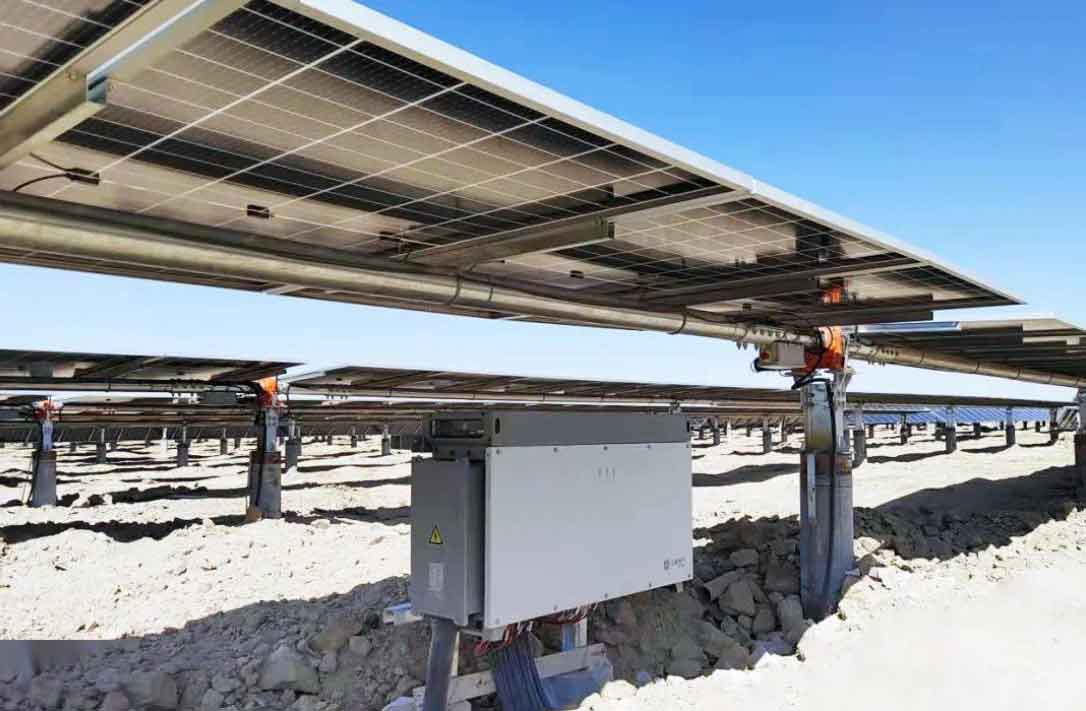
The integration of PV systems into the grid requires sophisticated control mechanisms to ensure stable operation and maximum power extraction. Traditional two-level solar inverters often face limitations in high-power applications due to high switching frequencies and large filter components. Cascaded multilevel solar inverters, however, can overcome these challenges by stacking multiple power modules to produce stepped voltage waveforms that approximate sinusoidal outputs. This not only minimizes waveform distortion but also allows operation at lower switching frequencies, enhancing overall efficiency. The topology under consideration here involves cascading three-phase voltage source converters (VSCs) in a line-voltage configuration, which inherently provides voltage boosting capabilities—eliminating the need for additional DC-DC converters. This modular design is particularly suited for solar inverters, as it accommodates distributed DC sources like PV panels, enabling scalable and flexible grid integration.
To elucidate the system structure, consider a cascaded configuration comprising multiple three-phase solar inverter modules. Each module consists of a standard three-phase VSC connected to a PV array, and their outputs are cascaded to form the grid interface. For instance, with three modules, the line voltages sum up to produce a five-level waveform, effectively doubling the voltage amplitude compared to a single module. This equivalence allows the entire cascaded system to be modeled as a single three-phase solar inverter with enhanced voltage output, simplifying control design. The mathematical representation of this equivalence is crucial for understanding the control strategy. Let the output line voltages of the cascaded solar inverter be defined as follows:
$$u_{AB} = u_{ab1} + u_{bc2}, \quad u_{BC} = u_{bc2} + u_{ca3}, \quad u_{CA} = u_{ca3} + u_{ab1}$$
where \(u_{ab1}\), \(u_{bc2}\), and \(u_{ca3}\) denote the line voltages of individual modules. Assuming identical DC-link voltages \(U_{dc}\) for each module, the equivalent inverter output phase voltages can be derived as:
$$u_A = \frac{U_{dc}}{3} \left( S_{A1} – S_{A3} \right), \quad u_B = \frac{U_{dc}}{3} \left( S_{B2} – S_{B1} \right), \quad u_C = \frac{U_{dc}}{3} \left( S_{C3} – S_{C2} \right)$$
Here, \(S_{A1}\), \(S_{B2}\), etc., represent switching signals from each solar inverter module. This formulation facilitates the application of advanced control techniques, such as VF-DPC, to the equivalent system. The core objective is to regulate active and reactive power delivered to the grid while maintaining unity power factor and maximizing power extraction from PV panels. The following sections delve into the control strategy, emphasizing the solar inverter’s functionality in this cascaded setup.
The proposed VF-DPC strategy for cascaded solar inverters revolves around estimating grid flux without direct voltage measurement, thereby enhancing reliability. In a typical solar inverter system, grid voltage sensors are prone to noise and failures, which can degrade performance. By leveraging virtual flux concepts, I derive flux estimates from measured currents and inverter voltages, enabling sensorless operation. The virtual flux \(\psi\) is defined as the integral of grid voltage \(e\), but to avoid DC offset issues inherent in pure integrators, an improved observer combining low-pass and high-pass filters is employed. For the cascaded solar inverter, the flux components in the stationary \(\alpha\beta\) frame are computed as:
$$\psi_\alpha = \int \left( u_\alpha – L \frac{di_\alpha}{dt} \right) dt, \quad \psi_\beta = \int \left( u_\beta – L \frac{di_\beta}{dt} \right) dt$$
where \(u_\alpha\) and \(u_\beta\) are the equivalent inverter voltages derived from the cascaded switching states, \(i_\alpha\) and \(i_\beta\) are grid currents, and \(L\) is the filter inductance. To mitigate DC drift, the improved observer uses a transfer function:
$$\psi^* = \frac{j\omega}{j\omega + k_1 \omega} \cdot \frac{1}{j\omega + k_2 \omega} \cdot E$$
where \(k_1\) and \(k_2\) are tuning parameters, and \(\omega\) is the grid angular frequency. This ensures accurate flux estimation without saturation, critical for precise power control in solar inverters. The flux angle \(\gamma\) is then obtained as \(\gamma = \arctan(\psi_\beta / \psi_\alpha)\), enabling synchronous reference frame alignment for power calculations.
Power control is paramount for solar inverters to achieve maximum power point tracking (MPPT) and grid compliance. In this strategy, active and reactive powers are directly regulated using PI controllers in the dq frame, where the d-axis is aligned with the virtual flux vector. The instantaneous powers are expressed as:
$$p_s = \omega (\psi_\alpha i_\beta – \psi_\beta i_\alpha), \quad q_s = \omega (\psi_\alpha i_\alpha + \psi_\beta i_\beta)$$
These values are compared with references: \(p_s^*\) from the PV MPPT algorithm and \(q_s^* = 0\) for unity power factor. The power errors drive PI controllers to generate reference voltage components \(v_d\) and \(v_q\), which are decoupled to account for cross-coupling terms. The control law is given by:
$$v_d = – \left( K_p + \frac{K_i}{s} \right) (q_s^* – q_s) – \omega L i_q, \quad v_q = \left( K_p + \frac{K_i}{s} \right) (p_s^* – p_s) + \omega L i_d + e_q$$
where \(K_p\) and \(K_i\) are PI gains, and \(e_q\) is the grid voltage component. This decoupling ensures independent control of active and reactive power, a key feature for high-performance solar inverters. The reference voltages are then transformed back to the \(\alpha\beta\) frame for modulation.
Modulation techniques play a vital role in cascaded solar inverters to generate multilevel outputs while fixing switching frequency. I combine space vector modulation (SVM) with carrier phase-shifting to achieve phase-shifted space vector modulation (PSSVM). For a three-module cascaded solar inverter, each module’s SVM signals are phase-shifted by \(120^\circ\) relative to each other, resulting in a five-level line voltage. The PSSVM approach leverages the equivalence model, where the equivalent switching states are derived to synthesize the desired voltage vector. This method not only reduces harmonic distortion but also distributes switching losses evenly across modules, enhancing the longevity of the solar inverter system. The modulation process can be summarized in a table for clarity:
| Module | Phase Shift Angle | Switching Frequency | Output Level Contribution |
|---|---|---|---|
| 1 | 0° | \(f_s\) | ±U_{dc}, 0 |
| 2 | 120° | \(f_s\) | ±U_{dc}, 0 |
| 3 | 240° | \(f_s\) | ±U_{dc}, 0 |
| Equivalent | N/A | \(3f_s\) | ±2U_{dc}, ±U_{dc}, 0 |
Here, \(f_s\) is the carrier frequency, and the equivalent solar inverter operates at an effective switching frequency of \(3f_s\), improving waveform quality. This modulation strategy is integral to the cascaded solar inverter’s ability to interface seamlessly with the grid.
To validate the proposed VF-DPC strategy for cascaded solar inverters, I conducted extensive simulations using a model with three PV-fed modules. Each solar inverter module is connected to a PV array with a rated voltage of 40 V and current of 8.1 A, and the DC-link voltage is regulated at 400 V via MPPT. The grid voltage is 220 V at 50 Hz, with filter inductances of 5 mH for grid-side and 47 μH for inter-module filtering. The PI parameters for power control are set as \(K_p = 2\) and \(K_i = 10\). The simulation results demonstrate the efficacy of the solar inverter system in various aspects. Firstly, the equivalent switching signals exhibit five discrete levels, confirming the multilevel operation of the cascaded solar inverter. The output line voltage waveform shows a five-level staircase pattern with an amplitude of 800 V, precisely twice the DC-link voltage, as anticipated from the topology. This underscores the voltage-boosting capability of the solar inverter without additional converters.
The improved virtual flux observer proves robust against DC offsets, as shown by the flux waveforms aligning perfectly with ideal references. In contrast, a simple low-pass filter based observer introduces deviations, highlighting the superiority of the proposed method for solar inverter applications. The power control performance is illustrated through active and reactive power trajectories. The active power rapidly tracks the reference value of 4,667 W—derived from PV MPPT—with minimal ripple, while reactive power remains near zero, ensuring unity power factor operation. This is crucial for grid codes compliance and efficient energy transfer via the solar inverter. The grid currents are sinusoidal and balanced, with a total harmonic distortion (THD) of only 2.01%, well within standard limits such as IEEE 519. The following table summarizes key performance metrics of the solar inverter system:
| Parameter | Value | Unit |
|---|---|---|
| Output Power (Active) | 4667 | W |
| Reactive Power | ≈0 | VAR |
| Grid Current THD | 2.01 | % |
| Switching Frequency per Module | 10 | kHz |
| Equivalent Output Voltage Levels | 5 | – |
| Power Factor | ≈1 | – |
These results affirm that the cascaded solar inverter achieves high-performance grid integration while maximizing PV power extraction. The absence of grid voltage sensors does not compromise control accuracy, thanks to the virtual flux estimation. Moreover, the modular design facilitates scalability; for instance, adding more solar inverter modules can increase voltage levels and power rating without altering the control framework. This adaptability is a significant advantage for large-scale PV plants where solar inverters must accommodate varying configurations.
From a theoretical perspective, the dynamics of the solar inverter system can be analyzed through state-space models. Representing the cascaded system as an equivalent inverter in the dq frame, the equations are:
$$\frac{di_d}{dt} = \frac{1}{L} (v_d – R i_d + \omega L i_q – e_d), \quad \frac{di_q}{dt} = \frac{1}{L} (v_q – R i_q – \omega L i_d – e_q)$$
where \(R\) is the resistance. Combining with power equations, the closed-loop transfer functions for power control can be derived. For active power, with PI control and decoupling, the transfer function from reference to actual power is:
$$\frac{p_s(s)}{p_s^*(s)} = \frac{K_p s + K_i}{L s^2 + (R + K_p) s + K_i}$$
This second-order system can be tuned for desired bandwidth and damping, ensuring stable operation of the solar inverter. Similarly, reactive power control exhibits analogous dynamics. The robustness of the VF-DPC strategy to parameter variations is another merit; for example, variations in filter inductance \(L\) can be compensated by adaptive techniques, though this is beyond the current scope. The solar inverter’s ability to maintain performance under grid disturbances, such as voltage sags or harmonics, is also enhanced by the direct power control approach, which responds quickly to power errors.
In practical implementations, the solar inverter system requires careful consideration of protection and monitoring. Overcurrent protection, islanding detection, and thermal management are essential for reliability. The cascaded topology inherently offers redundancy; if one solar inverter module fails, the system can continue operation at reduced capacity, increasing availability. Furthermore, the use of standard three-phase VSC modules simplifies manufacturing and maintenance, as these are widely available components. The control algorithm can be implemented on digital signal processors (DSPs) or microcontrollers, with the virtual flux observer and PSSVM modules optimized for real-time execution. Communication interfaces for monitoring and control, such as Modbus or Ethernet, can be integrated to facilitate smart grid functionalities, aligning with modern trends in solar inverter technology.
The economic aspects of the proposed solar inverter system are noteworthy. By eliminating grid voltage sensors and DC-DC boost converters, the bill of materials is reduced, lowering capital costs. The higher efficiency due to multilevel operation and lower switching losses translates to better energy yield over the system’s lifetime, enhancing return on investment. Moreover, the modular design allows for phased deployment, where additional solar inverter modules can be added as PV capacity expands, providing scalability that benefits both small-scale and utility-scale installations. These advantages make the cascaded solar inverter an attractive solution for diverse PV applications, from residential rooftops to solar farms.
In conclusion, the virtual flux direct power control strategy for cascaded three-phase solar inverters presents a robust and efficient approach for photovoltaic grid integration. By leveraging an improved flux observer and decoupled power control, the system achieves sensorless operation with precise power regulation and unity power factor. The phase-shifted space vector modulation enables multilevel output with fixed switching frequency, reducing harmonics and improving waveform quality. Simulation results validate the strategy’s effectiveness, demonstrating high power quality and maximum power extraction. The modular nature of the cascaded solar inverter enhances scalability and reliability, making it suitable for a wide range of PV systems. As the demand for renewable energy grows, advancements in solar inverter technology, such as the one described here, will play a crucial role in enabling a sustainable energy future. Future work may explore hardware implementation, fault tolerance mechanisms, and integration with energy storage systems to further enhance the capabilities of solar inverters in smart grids.