
In recent years, the rapid commercialization of energy storage power stations has brought safety and fire protection issues to the forefront. As a key component, LiFePO4 batteries are widely used due to their long cycle life and high safety performance. However, under abnormal conditions such as overheating or overcharging, these batteries can undergo thermal runaway, releasing flammable gases that pose significant fire risks. Early detection and warning systems often rely on monitoring characteristic gases emitted during thermal runaway. The diffusion patterns of these gases within energy storage containers directly impact the accuracy of such systems. Ventilation conditions—including rate, size, and location—play a critical role in gas dispersion, yet comprehensive studies on this topic are limited. This article, from my perspective as a researcher in the field, explores the influence of ventilation on gas diffusion in LiFePO4 battery energy storage containers through experimental and numerical approaches, aiming to provide theoretical insights for optimizing gas detection and warning strategies.
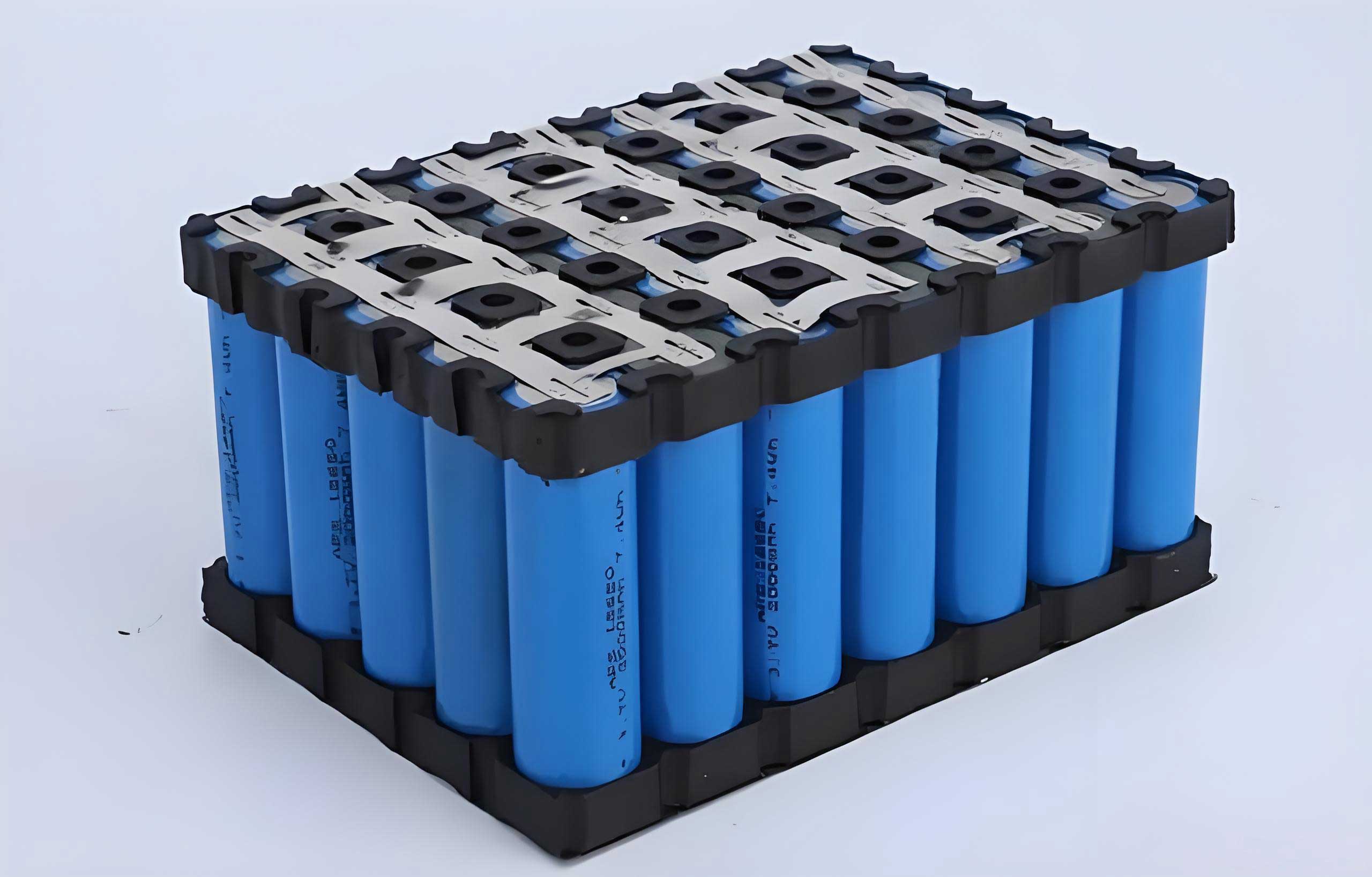
Energy storage systems are essential for enabling flexible and interactive power usage, serving as a vital pathway for intelligent energy distribution and addressing energy crises. Electrochemical energy storage power stations, particularly those using LiFePO4 batteries, are increasingly deployed to alleviate grid load peaks and overloads. These stations consist of numerous lithium-ion battery cells, and while LiFePO4 batteries are known for their stability, they are not immune to failure. When operated outside specified temperature ranges or charge-discharge rates, internal exothermic reactions can lead to thermal runaway, igniting surrounding combustible materials and causing fires. The mass, quantity, and energy density of these batteries further influence the likelihood and severity of incidents. For grid-side applications with minimal on-site personnel, delayed detection or improper handling can trigger cascading failures, compromising local grid stability. Given that thermal runaway releases large volumes of flammable gases, understanding their diffusion within containers is paramount. Previous research has focused on thermal management and消防 system design, but gaps remain regarding ventilation effects. Thus, I combined physical experiments with numerical simulations to investigate how ventilation parameters affect gas diffusion patterns.
The experimental phase involved a lithium-ion battery thermal runaway test platform. A 109 Ah LiFePO4 battery was charged to 100% state-of-charge (SOC) and subjected to controlled heating to induce thermal runaway. The setup included a heating system with a metal plate and insulation to minimize heat loss, along with data acquisition for weight, temperature, and gas composition. Gases were collected and analyzed using an ABB MBGAS-3000TM Fourier-transform infrared spectrometer, which measured species like CO₂, CO, CH₄, and C₂H₄. Heat release rates were calculated based on oxygen consumption principles. During testing, the battery’s voltage dropped to zero at around 23 minutes and 30 seconds, with the front surface temperature reaching 356°C and the rear at 109°C. Thermal runaway, defined by a temperature rise rate exceeding 1°C/s, occurred at 27 minutes, followed by ignition and a flame duration of 4 minutes and 30 seconds. The propagation from front to rear took approximately 137 seconds. The gas analysis revealed four primary characteristic gases, with volume fractions as follows:
| Gas Species | Peak Volume Fraction (×10⁻⁶) | Percentage Composition |
|---|---|---|
| CO₂ | 2688.0 | 98.0% |
| CO | 19.2 | 0.7% |
| CH₄ | 20.5 | 0.7% |
| C₂H₄ | 16.7 | 0.6% |
These findings indicate that LiFePO4 battery thermal runaway produces significant amounts of CO₂, along with combustible gases like CH₄, CO, and C₂H₄. Notably, a flame blow-off phenomenon was observed, where rapid gas production extinguished the fire, allowing gases to accumulate and increase explosion risks. This underscores the importance of timely detection, with CH₄ being a promising candidate due to its faster diffusion relative to other gases.
For numerical analysis, I developed a full-scale model of an energy storage container using computational fluid dynamics (CFD). The container dimensions were 5.9 m × 2.4 m × 2.3 m, with a grid resolution as specified below:
| Axis | Min (m) | Max (m) | Grid Count |
|---|---|---|---|
| X | 0.0 | 5.9 | 118 |
| Y | 0.0 | 2.4 | 48 |
| Z | 0.0 | 2.3 | 46 |
A ventilation opening of 0.4 m × 0.4 m was placed on the side, opposite an exhaust vent of the same size. Inside, battery modules measuring 0.4 m × 0.6 m × 0.3 m were arranged in two rows. The gas source was defined on the top surface of a central module, simulating thermal runaway emission. A gas detector was positioned at the container ceiling (y = 1.2 m, x = 3 m) to record the time for gases to reach it. Boundary conditions included adiabatic walls except for the vents, with simulations run for 1200 seconds. I varied ventilation parameters—location, size, and rate—to assess their impact on diffusion times for each characteristic gas. The diffusion process can be described by the advection-diffusion equation:
$$ \frac{\partial C}{\partial t} + \mathbf{u} \cdot \nabla C = D \nabla^2 C + S $$
where \( C \) is gas concentration, \( t \) is time, \( \mathbf{u} \) is velocity vector, \( D \) is diffusion coefficient, and \( S \) is source term. For LiFePO4 battery emissions, \( S \) represents the gas release rate during thermal runaway, which depends on factors like temperature and SOC.
The results showed that ventilation significantly alters gas dispersion. First, I examined ventilation location by shifting the opening from position 1 to 9 along the container side. The detection times for each gas at the ceiling detector were recorded, with position 3 yielding the shortest times. This suggests that mid-height ventilation, coupled with the exhaust, creates optimal airflow to accelerate vertical diffusion. The times followed Graham’s law of diffusion, where lighter gases diffuse faster. For instance, CH₄ (molar mass 16 g/mol) reached the detector quicker than CO₂ (44 g/mol). The relationship can be expressed as:
$$ \frac{r_1}{r_2} = \sqrt{\frac{M_2}{M_1}} $$
where \( r \) is diffusion rate and \( M \) is molar mass. Applying this to LiFePO4 battery gases, CH₄ diffuses approximately \( \sqrt{44/16} \approx 1.66 \) times faster than CO₂ under similar conditions.
| Ventilation Position | Detection Time for CH₄ (s) | Detection Time for CO₂ (s) | Detection Time for CO (s) | Detection Time for C₂H₄ (s) |
|---|---|---|---|---|
| 1 (Bottom) | 65 | 90 | 70 | 72 |
| 3 (Mid-height) | 35 | 60 | 45 | 47 |
| 9 (Top) | 50 | 80 | 55 | 58 |
Next, I varied the ventilation opening size relative to the exhaust area (0.16 m²). The ratio ranged from 0.5 to 3.0, with position 3 fixed. Detection times decreased initially, reaching a minimum at a ratio of 1.8 (ventilation area = 0.288 m²), then increased. This nonlinear trend arises from flow interactions: larger openings enhance inflow but may disrupt pressure balances, reducing effective convection. The optimal size can be derived from continuity and Bernoulli equations:
$$ Q = A_v v_v = A_e v_e $$
$$ \Delta P = \frac{1}{2} \rho (v_e^2 – v_v^2) $$
where \( Q \) is volumetric flow rate, \( A \) is area, \( v \) is velocity, subscript \( v \) denotes ventilation, \( e \) denotes exhaust, \( \rho \) is gas density, and \( \Delta P \) is pressure difference. For LiFePO4 battery containers, a ratio near 1.8 minimizes resistance and maximizes gas entrainment.
| Ventilation Area Ratio (to Exhaust) | Detection Time for CH₄ (s) | Detection Time for CO₂ (s) | Detection Time for CO (s) | Detection Time for C₂H₄ (s) |
|---|---|---|---|---|
| 0.5 | 55 | 75 | 60 | 62 |
| 1.0 | 40 | 65 | 50 | 52 |
| 1.8 | 30 | 55 | 40 | 42 |
| 2.5 | 45 | 70 | 55 | 57 |
| 3.0 | 60 | 85 | 65 | 68 |
Finally, I adjusted the ventilation rate from 0.1 m/s to 2.0 m/s, with position 3 and area ratio 1.8. Detection times dropped as velocity increased, plateauing at 0.6 m/s before rising slightly at higher rates. Excessive velocities can cause turbulence that hinders stratified gas movement toward the detector. The optimal rate aligns with achieving laminar-to-turbulent transition for enhanced mixing without overwhelming the exhaust. The Reynolds number (\( Re \)) helps assess this:
$$ Re = \frac{\rho v L}{\mu} $$
where \( L \) is characteristic length (ventilation opening height) and \( \mu \) is dynamic viscosity. For LiFePO4 battery container conditions, \( Re \) around 4000 (transition region) at 0.6 m/s promotes efficient diffusion.
| Ventilation Rate (m/s) | Detection Time for CH₄ (s) | Detection Time for CO₂ (s) | Detection Time for CO (s) | Detection Time for C₂H₄ (s) |
|---|---|---|---|---|
| 0.1 | 50 | 70 | 55 | 57 |
| 0.6 | 25 | 50 | 35 | 37 |
| 1.0 | 30 | 55 | 40 | 42 |
| 1.5 | 35 | 60 | 45 | 47 |
| 2.0 | 40 | 65 | 50 | 52 |
To contextualize these findings, consider the energy density and thermal properties of LiFePO4 batteries. The heat generation during thermal runaway follows an Arrhenius-type equation:
$$ q = A \exp\left(-\frac{E_a}{RT}\right) $$
where \( q \) is heat release rate, \( A \) is pre-exponential factor, \( E_a \) is activation energy, \( R \) is gas constant, and \( T \) is temperature. For LiFePO4 batteries, \( E_a \) is typically high, indicating stability, but localized overheating can trigger exponential heat rise. The gas release rate correlates with \( q \), influencing source term \( S \) in the diffusion equation. From my experiments, the total gas volume from a 109 Ah LiFePO4 battery was estimated at 0.5 m³ under standard conditions, with composition as above.
Moreover, the container geometry affects gas accumulation. Using the ideal gas law, partial pressures of each species can be calculated:
$$ P_i = \frac{n_i RT}{V} $$
where \( P_i \) is partial pressure, \( n_i \) is moles of gas \( i \), and \( V \) is container volume (≈32.6 m³). For CH₄ from a single LiFePO4 battery, \( n_{CH₄} \) is about 0.004 mol, giving \( P_{CH₄} \approx 0.03 \) Pa. While low, cumulative emissions from multiple batteries can reach flammable limits (5-15% volume for CH₄), emphasizing the need for rapid detection.
In practice, ventilation systems in LiFePO4 battery energy storage containers should be designed based on these insights. I recommend positioning vents at mid-height, with areas 1.8 times the exhaust size, and maintaining airflow rates around 0.6 m/s. This configuration reduces detection times for all characteristic gases, especially CH₄, which serves as an early warning indicator. Additionally, gas sensors should be placed near the ceiling where lighter gases accumulate first, as shown by the vertical concentration profiles from simulations.
The implications extend beyond fire safety to system reliability. Efficient gas dispersion minimizes local concentrations that could corrode components or trigger secondary reactions. For LiFePO4 batteries, which are less prone to thermal runaway than other chemistries, proactive ventilation design can further enhance safety margins. Future work could explore dynamic ventilation control based on real-time gas sensing, integrating CFD with machine learning for predictive management.
In summary, this study demonstrates that ventilation parameters critically influence gas diffusion in LiFePO4 battery energy storage containers. Through experiments and numerical simulations, I found that thermal runaway of LiFePO4 batteries releases CO₂, CO, CH₄, and C₂H₄, with CH₄ diffusing fastest due to its low molar mass. Optimizing ventilation location to mid-height, size to 1.8 times the exhaust area, and rate to 0.6 m/s significantly accelerates gas detection, providing valuable guidelines for improving early warning systems. These findings underscore the importance of tailored ventilation strategies in safeguarding LiFePO4 battery-based energy storage infrastructure.