
As the global energy crisis intensifies and environmental pollution worsens, the demand for clean energy solutions has grown exponentially. Among these, photovoltaic (PV) power generation stands out as a key renewable technology, attracting worldwide attention for its potential to provide sustainable electricity. In remote or off-grid areas, where traditional grid infrastructure is absent or unreliable, household small-scale off-grid solar systems offer an independent and flexible approach to addressing power shortages. These off-grid solar systems combine solar panels with energy storage units to enable self-sufficient energy generation, reducing reliance on external grids. However, comprehensive research on the economic viability, reliability, and environmental benefits of such off-grid solar systems remains limited. In this article, I aim to delve into the multifaceted value of household small-scale off-grid solar systems, providing insights that can guide their promotion and optimization. By examining technical design, economic returns, environmental impacts, and policy incentives, I hope to contribute to the broader adoption of clean energy and support global sustainability goals.
The design and implementation of a household small-scale off-grid solar system are critical to its performance and longevity. These off-grid solar systems typically consist of solar panels, storage batteries, inverters, and control systems, each playing a vital role in energy capture, storage, and distribution. Solar panels, as the primary energy harvesters, must be selected based on efficiency and local climatic conditions. For instance, in regions with high solar irradiance, high-efficiency monocrystalline panels are preferable, while polycrystalline panels might suffice in areas with moderate sunlight. The orientation and tilt angle of the panels are optimized using formulas that account for latitude and seasonal variations. For example, the optimal tilt angle θ can be calculated as: $$ \theta = \phi + \delta $$ where φ is the local latitude, and δ is the solar declination angle, which varies throughout the year. This ensures maximum energy yield, making the off-grid solar system more effective.
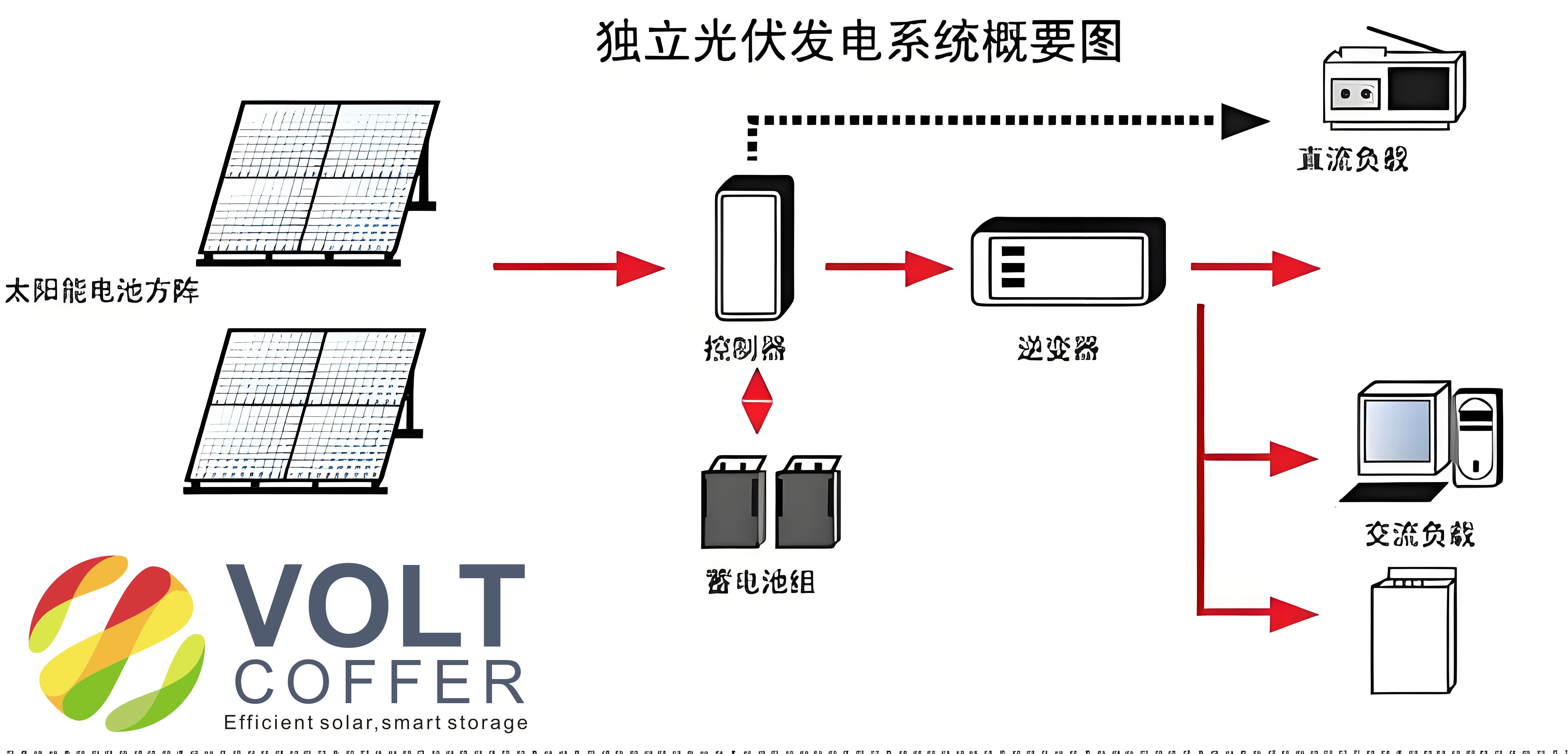
Energy storage is another cornerstone of these off-grid solar systems, with battery capacity tailored to daily energy consumption and solar availability. Lithium-ion batteries are commonly used due to their high energy density and long cycle life, though lead-acid batteries remain a cost-effective alternative. The battery capacity C_batt (in kWh) can be determined using: $$ C_{\text{batt}} = \frac{E_{\text{daily}} \times D_{\text{autonomy}}}{\eta_{\text{batt}} \times \text{DOD}} $$ where E_daily is the average daily energy consumption, D_autonomy is the number of days of autonomy required, η_batt is the battery efficiency, and DOD is the depth of discharge. This ensures that the off-grid solar system can provide reliable power even during periods of low sunlight. Inverters, which convert DC power from the panels and batteries to AC power for household use, must have high conversion efficiency (typically above 95%) to minimize losses. Moreover, intelligent control systems integrate sensors and algorithms to monitor energy flow, predict demand based on weather forecasts, and optimize charging and discharging cycles. For example, a predictive control algorithm might use historical data to adjust energy distribution, enhancing the overall efficiency of the off-grid solar system.
Safety and reliability are paramount in the design of these off-grid solar systems. Electrical protections, such as overcurrent, short-circuit, and ground-fault interrupters, are integrated to prevent hazards. Physical security measures, including robust mounting structures and tamper-resistant enclosures, protect against environmental damage and theft. Regular maintenance, such as cleaning panels and checking connections, further ensures longevity. Environmental adaptability is also considered; components are made from durable, weather-resistant materials to withstand extreme temperatures, humidity, and UV exposure. From a sustainability perspective, the use of recyclable materials and end-of-life recycling plans minimize the ecological footprint of these off-grid solar systems. Table 1 summarizes the key components and their specifications in a typical household small-scale off-grid solar system.
| Component | Specification | Typical Value | Role in System |
|---|---|---|---|
| Solar Panels | Efficiency, Power Output | 18-22%, 300-400 W per panel | Converts sunlight to DC electricity |
| Battery Storage | Capacity, Cycle Life | 5-20 kWh, 2000-6000 cycles | Stores excess energy for later use |
| Inverter | Efficiency, Output Type | 95-98%, AC 110/220V | Converts DC to AC for appliances |
| Control System | Monitoring, Algorithm Type | Real-time data, Predictive control | Optimizes energy flow and system health |
Moving to the economic aspects, the initial investment in a household small-scale off-grid solar system can be substantial, but long-term savings and incentives often justify the cost. The total initial investment CI includes installation costs C_install and equipment costs C_equipl, as expressed by: $$ CI = C_{\text{install}} + C_{\text{equipl}} $$ Annual operating costs CO encompass maintenance C_maint and potential component replacements C_replace: $$ CO = C_{\text{maint}} + C_{\text{replace}} $$ The annual energy savings CS are derived from the difference between PV-generated energy E_PV and grid-purchased energy E_grid, multiplied by the market electricity price P_market: $$ CS = (E_{\text{PV}} – E_{\text{grid}}) \times P_{\text{market}} $$ The payback period TPBP, a key metric for investors, is calculated as: $$ TPBP = \frac{CI}{CS – CO} $$ For instance, if CI is $10,000, CS is $1,500 per year, and CO is $200 per year, the payback period would be approximately 7.7 years. This makes the off-grid solar system an attractive investment over time, especially as technology costs decline. Table 2 illustrates a sample cost-benefit analysis for a typical off-grid solar system in a remote household, highlighting how components contribute to overall economics.
| Cost/Benefit Item | Amount (USD) | Notes |
|---|---|---|
| Initial Investment (CI) | $8,000 – $15,000 | Includes panels, batteries, inverter, installation |
| Annual Operating Cost (CO) | $100 – $300 | Maintenance and occasional replacements |
| Annual Energy Savings (CS) | $1,000 – $2,000 | Based on local electricity rates and energy production |
| Payback Period (TPBP) | 5 – 12 years | Varies with usage and incentives |
| Lifetime Savings (20 years) | $10,000 – $30,000 | Net savings after accounting for costs |
Self-generation of electricity through these off-grid solar systems offers significant economic benefits by reducing dependence on external grids. In areas with unstable grid power or high electricity prices, an off-grid solar system provides energy security and cost stability. For example, during peak demand periods when grid tariffs spike, the off-grid solar system can supply power independently, avoiding high costs. Additionally, excess energy stored in batteries can be used for backup or even sold back to the grid in some regions, creating revenue streams. This flexibility enhances the economic resilience of households, particularly in remote locations where grid extension is costly. The off-grid solar system not only cuts electricity bills but also empowers users with greater control over their energy consumption, aligning with broader trends in energy democratization.
Policy incentives play a crucial role in accelerating the adoption of household small-scale off-grid solar systems. Governments worldwide offer financial support, such as subsidies, tax credits, and low-interest loans, to lower the initial investment barrier. For instance, a 30% subsidy on equipment costs can reduce CI significantly, shortening the payback period. Tax incentives, like deductions on income tax for renewable energy investments, further improve the return on investment. These policies not only make off-grid solar systems more affordable but also stimulate market growth and technological innovation. In many cases, public awareness campaigns and educational programs highlight the benefits of off-grid solar systems, encouraging community uptake. By fostering a supportive regulatory environment, policymakers can drive the transition to clean energy, making off-grid solar systems a mainstream solution for sustainable living.
The environmental benefits of household small-scale off-grid solar systems are profound, contributing to global efforts against climate change. By harnessing solar energy, these systems avoid greenhouse gas emissions associated with fossil fuel-based power generation. The carbon footprint reduction ΔC can be estimated using: $$ \Delta C = E_{\text{PV}} \times EF_{\text{grid}} $$ where E_PV is the annual energy generated by the off-grid solar system, and EF_grid is the emission factor of the displaced grid electricity (e.g., in kg CO₂/kWh). For example, if an off-grid solar system produces 4,000 kWh annually and EF_grid is 0.5 kg CO₂/kWh, the annual emission reduction is 2,000 kg CO₂. Over the system’s lifetime, this accumulates to substantial environmental gains. Moreover, off-grid solar systems minimize land and water use compared to conventional power plants, preserving natural habitats and biodiversity. The use of recyclable materials in components like panels and batteries further reduces waste, promoting a circular economy. Thus, the off-grid solar system not only provides clean energy but also supports ecological conservation.
In terms of sustainability, the lifecycle assessment of an off-grid solar system reveals a low environmental impact from production to disposal. Advances in manufacturing have reduced the energy payback time—the period required for a system to generate the energy used in its production—to as little as 1-2 years for modern panels. Additionally, end-of-life recycling programs for batteries and panels recover valuable materials like silicon and lithium, minimizing resource depletion. The off-grid solar system exemplifies a sustainable energy model that aligns with the United Nations Sustainable Development Goals, particularly those related to affordable and clean energy (SDG 7) and climate action (SDG 13). By decentralizing power generation, these off-grid solar systems also enhance energy access in underserved communities, fostering social equity and resilience.
To promote the widespread adoption of household small-scale off-grid solar systems, a combination of financial incentives and educational initiatives is essential. Subsidies and tax breaks, as mentioned, lower upfront costs, while public campaigns raise awareness about the long-term benefits. For example, community workshops can demonstrate how an off-grid solar system operates, addressing common misconceptions and building trust. Governments and NGOs can collaborate to provide technical support and financing options, making it easier for households to invest. Moreover, integrating off-grid solar systems with emerging technologies like smart grids and Internet of Things (IoT) devices can enhance their functionality, allowing for real-time monitoring and demand response. This holistic approach ensures that off-grid solar systems become an integral part of the energy landscape, driving both economic and environmental progress.
In conclusion, the value of household small-scale off-grid solar systems extends far beyond mere electricity generation. From a technical standpoint, these off-grid solar systems are designed for efficiency, reliability, and adaptability, incorporating advanced components and intelligent controls. Economically, they offer attractive returns through energy savings and policy incentives, with payback periods that improve as costs decline. Environmentally, off-grid solar systems significantly reduce carbon emissions and support sustainability by minimizing resource use and promoting recycling. Socially, they empower communities with energy independence and resilience. As I reflect on the potential of these off-grid solar systems, it is clear that they represent a pivotal solution in the global shift toward clean energy. By continuing to innovate and promote off-grid solar systems, we can accelerate the transition to a sustainable future, where energy is accessible, affordable, and environmentally friendly for all.
Looking ahead, the evolution of off-grid solar systems will likely involve greater integration with digital technologies and energy storage advancements. For instance, the development of solid-state batteries could further enhance the efficiency and lifespan of these off-grid solar systems. Additionally, global cooperation on standards and recycling protocols will ensure that off-grid solar systems remain a sustainable choice. As an advocate for renewable energy, I believe that investing in research and policy support for off-grid solar systems is crucial to unlocking their full potential. Ultimately, the widespread deployment of household small-scale off-grid solar systems can play a key role in mitigating climate change, fostering economic development, and improving quality of life worldwide.