
The pursuit of sustainable and cost-effective energy storage solutions has positioned sodium-ion batteries (SIBs) as a compelling alternative to their lithium-ion counterparts. With advantages rooted in the abundance of sodium resources, lower projected costs, and inherent safety characteristics, SIBs hold significant promise for large-scale applications such as grid storage and electric vehicles. However, the path to widespread commercialization is hindered by a critical performance bottleneck: severe capacity fade, reduced charge acceptance, and sluggish kinetics under low-temperature (e.g., -20°C to -40°C) operating conditions. This performance degradation fundamentally limits the reliability of sodium-ion battery systems in climates with seasonal winters or specific industrial environments. The core of this challenge often lies with the cathode, the host material responsible for the reversible (de)intercalation of sodium ions. This article delves into the research progress on modifying high-energy-density cathode materials for sodium-ion batteries to enhance their low-temperature viability, analyzing failure mechanisms and systematically exploring strategic material engineering pathways.
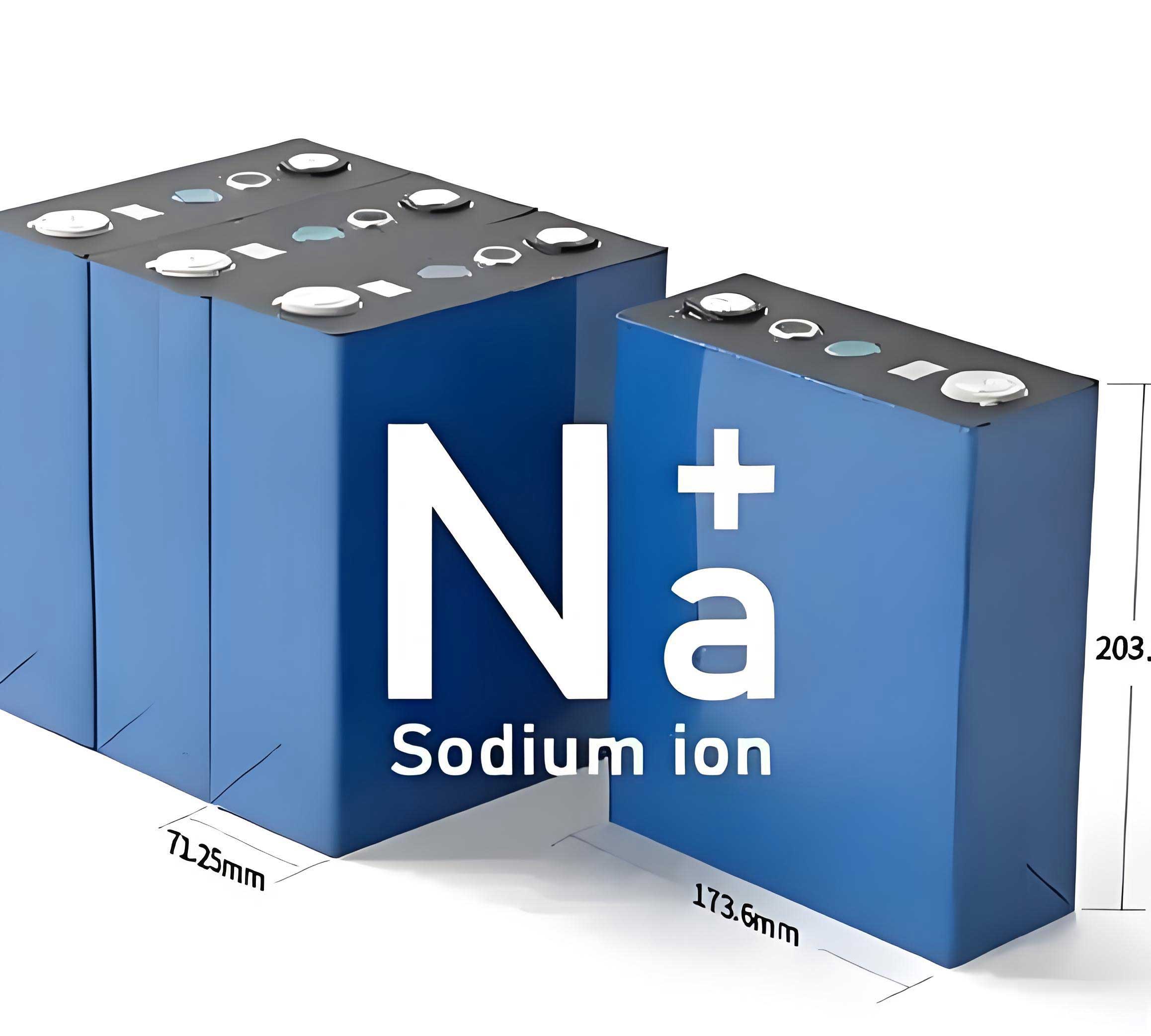
Low-Temperature Failure Mechanisms in Sodium-Ion Batteries
The performance decay of a sodium-ion battery at low temperatures is not attributable to a single factor but is a consequence of synchronized kinetic limitations across the entire cell. Understanding these intertwined mechanisms is essential for designing effective mitigation strategies.
- Electrolyte Viscosity and Ionic Conductivity: The transport of sodium ions through the electrolyte is a thermally activated process. As temperature drops, the viscosity of the liquid electrolyte increases dramatically. This heightened viscosity directly impedes the mobility of Na⁺ ions, slowing their diffusion from one electrode to the other. The temperature dependence of ionic conductivity (σ) is often described by the Arrhenius equation:
$$ \sigma = A \exp\left(-\frac{E_a}{k_B T}\right) $$
where \(A\) is the pre-exponential factor, \(E_a\) is the activation energy for ion conduction, \(k_B\) is the Boltzmann constant, and \(T\) is the absolute temperature. The exponential relationship means that even a modest decrease in temperature causes a precipitous drop in conductivity, leading to significant polarization and capacity loss, especially at higher rates. - Cathode Material Structural Contraction and Kinetic Barriers: The cathode material itself undergoes detrimental changes. Crystalline lattices tend to contract at lower temperatures, which can narrow the diffusion pathways and channels through which sodium ions must travel. This increased diffusion barrier severely slows down the solid-state ion diffusion within the cathode host, a process critical for charge and discharge. For some materials, phase transitions that are benign or reversible at room temperature can become incomplete or hysteretic at low temperatures, further trapping sodium ions and reducing accessible capacity.
- Interfacial Impedance Growth: The interface between the cathode particle surface and the electrolyte, known as the cathode-electrolyte interphase (CEI), becomes a major bottleneck. Charge transfer across this interface, a necessary step for ions to enter or leave the solid cathode, is thermally activated. Lower temperatures exponentially increase the charge transfer resistance (\(R_{ct}\)). Furthermore, the formation and properties of the CEI layer can be altered, often becoming less ionically conductive and more resistive. The combination of high bulk electrolyte resistance and soaring interfacial impedance consumes most of the applied voltage, leaving little for useful work and causing premature voltage cut-offs during discharge.
The interplay of these factors creates a feedback loop of performance decay. The increased resistances lead to larger overpotentials. To meet voltage cut-offs, the cell operates over a smaller range of its theoretical capacity. In extreme cases, the overpotential during charging can drive the cathode potential beyond the electrolyte’s stability window, triggering deleterious side reactions that further degrade the interface and consume active sodium.
Landscape of Cathode Materials and Their Low-Temperature Limitations
The choice of cathode material defines the fundamental energy density, voltage profile, and stability of a sodium-ion battery. Each major class of materials presents unique challenges that are exacerbated in cold environments.
| Material Class | General Formula / Examples | Key Advantages | Low-Temperature Challenges |
|---|---|---|---|
| Layered Transition Metal Oxides (TMOs) | NaxMO2 (M = Ni, Mn, Fe, Co, etc.; P2 or O3 type) | High theoretical capacity, good energy density, versatile chemistry. | Pronounced lattice contraction, increased charge transfer resistance, possible Jahn-Teller distortion (Mn³⁺), transition metal dissolution at the interface. |
| Polyanionic Compounds | NaxMy(XO4)z (X = P, S, Si, etc.; e.g., Na3V2(PO4)3) | High operating voltage, excellent structural and thermal stability, long cycle life. | Intrinsically low electronic conductivity, sluggish Na⁺ diffusion in 3D framework, large polarization at low temperature. |
| Prussian Blue Analogues (PBAs) | NaxM[M'(CN)6] (M, M’ = Transition metals) | Open 3D framework with large ionic channels, potential for high rate capability. | [Fe(CN)6] vacancies and coordinated water hinder ion transport, poor electronic conductivity, interfacial instability. |
Strategic Modification for Enhanced Low-Temperature Performance
To combat the low-temperature challenges, targeted material engineering strategies are employed, focusing on the cathode’s bulk structure, surface chemistry, and electronic network.
1. Surface Coating: Shielding the Interface
Applying a nanoscale protective layer on cathode particles is a primary strategy to stabilize the vulnerable electrode-electrolyte interface, a major source of resistance at low temperatures.
- Function: The coating acts as a physical barrier, minimizing direct contact between the active material and the electrolyte. This suppresses parasitic side reactions, reduces transition metal dissolution (e.g., Mn²⁺), and mitigates undesirable surface reconstruction. A good coating can also provide a more stable and ionically conductive interface layer, lowering the charge transfer resistance (\(R_{ct}\)).
- Material Examples: Coatings can be ionic conductors (e.g., Al2O3, AlOx, NaTi2(PO4)3), electronic conductors (e.g., carbon, graphene), or mixed conductors.
- Impact: For instance, an amorphous AlOx coating on O3-NaMn0.6Al0.4O2 was shown to provide a fast-ion conducting interface. The coated material retained 83.2% of its capacity after 100 cycles at -20°C, significantly outperforming its uncoated counterpart. Similarly, carbon coating on tunnel-type Na2Ti6O13 nanowires reduced the activation energy for Na⁺ transport, enabling a full sodium-ion battery to maintain ~60% of its room-temperature capacity at -20°C.
2. Ion Doping: Tuning the Bulk Lattice
Incorporating heteroatoms into the crystal lattice of the cathode material is a powerful method to intrinsically improve its structural stability and ionic/electronic transport properties.
- Function: Doping can expand the interlayer spacing in layered oxides, creating wider channels for Na⁺ diffusion. It can also stabilize the crystal structure against phase transitions and lattice distortion during cycling. Furthermore, certain dopants can alter the electronic band structure, enhancing electronic conductivity, or create favorable defects that act as Na⁺ migration pathways.
- Impact: A quintessential example is Nb-doped P2-Na0.75Ni0.31Mn0.67Nb0.02O2. The Nb⁵⁺ dopant not only stabilizes the structure but also creates a Na⁺-rich surface layer and reduces both electronic bandgap and ion migration barriers. This material demonstrated exceptional performance at -40°C, maintaining 76% capacity after 1,800 cycles at a high current density. Similarly, K⁺ doping into the Na sites of Na3V2(PO4)3 expanded the lattice, improving ionic diffusion and enabling a capacity of 72 mAh/g at -25°C.
3. Microstructural and Composite Engineering
This strategy focuses on optimizing the physical architecture of the cathode at the particle and electrode level to shorten diffusion lengths and ensure efficient percolation networks.
- Nanostructuring & Morphology Control: Reducing particle size to the nanoscale drastically shortens the diffusion path length for Na⁺ ions within the solid. This is crucial for maintaining capacity at low temperatures where diffusion is slow. Morphologies like nanowires, nanosheets, or porous microspheres offer high surface area and facilitate electrolyte infiltration.
Microstructural Feature Benefit for Low-Temperature Kinetics Example Material Single-crystal particles with exposed active facets Reduces grain boundaries, provides direct diffusion pathways, minimizes surface side reactions. Single-crystal O3-NaCrO2 with (010) facets showed 97.2% capacity retention after 100 cycles at -20°C. Porous or hollow structures Increases contact area with electrolyte, accommodates volume strain, shortens solid-state diffusion distance. Hollow Prussian blue cubes prepared via precipitation conversion exhibited high rate capability. - Constructing Conductive Composites: Intimately combining the active cathode material with conductive additives like carbon nanotubes (CNTs), graphene, or carbon nanofibers creates a robust 3D electronic network. This is vital for materials with poor intrinsic conductivity (e.g., polyanion types, PBAs). For example, a Prussian Blue/CNT composite with a “necklace” structure maintained a capacity of 52 mAh/g at a 6C rate and -25°C, where the bare PB material failed completely.
4. Defect Engineering
Intentionally introducing or controlling vacancies and defects in the crystal lattice can create beneficial effects for ion transport.
- Function: Certain cationic or anionic vacancies can act as additional storage sites for Na⁺ or create low-energy migration pathways that circumvent normal high-barrier routes. Defect engineering can also tune the local electronic structure.
- Impact: Engineering a controlled number of [Fe(CN)6] vacancies in Prussian blue analogues optimizes sodium content and ionic conductivity. Materials with tailored S-vacancies in transition metal dichalcogenide-based composites have shown enhanced Na⁺/K⁺ diffusion kinetics, maintaining 76 mAh/g after 1000 cycles at -15°C.
Quantitative Comparison of Modification Strategies
The effectiveness of various strategies can be summarized by key performance metrics under low-temperature testing.
| Modification Strategy | Cathode Material Example | Low-Temperature Test Condition | Key Performance Metric |
|---|---|---|---|
| Surface Coating | O3-NaMn0.6Al0.4O2@AlOx | -20°C, cycling | 83.2% capacity retention after 100 cycles. |
| Surface Coating | Na3MnZr(PO4)3@C-rGO | -15°C, long-term cycling | 79.6% capacity retention after 1,500 cycles. |
| Ion Doping | P2-Na0.75Ni0.31Mn0.67Nb0.02O2 | -40°C, 368 mA/g | 76% capacity retention after 1,800 cycles. |
| Ion Doping | Na2KV2(PO4)3 | -25°C | Discharge capacity of 72 mAh/g. |
| Microstructure Control | Single-crystal O3-NaCrO2 (active facets) | -20°C, cycling | 97.2% capacity retention after 100 cycles. |
| Composite Engineering | Prussian Blue / Carbon Nanotube | -25°C, 6C rate | Discharge capacity of 52 mAh/g. |
Conclusion and Future Perspectives
Significant strides have been made in understanding and improving the low-temperature performance of sodium-ion battery cathodes. The consensus is that no single strategy is sufficient; a holistic approach is required. Surface coating directly addresses the high-impedance interface problem, ion doping enhances bulk transport and stability, while microstructural and composite engineering ensures efficient electronic and ionic percolation throughout the electrode. The synergistic combination of these strategies—for example, a doped material with a conductive coating and optimal morphology—holds the greatest promise for developing cathodes that perform reliably across a wide temperature range.
However, critical challenges remain on the path to all-climate sodium-ion batteries:
- Electrolyte Compatibility: Cathode modifications must be paired with advanced electrolyte formulations designed for low temperatures. These electrolytes need low viscosity, high ionic conductivity, and the ability to form stable, low-resistance interphases on both electrodes. Research into new salts, solvents, and additives is paramount.
- Full-Cell Integration and Long-Term Stability: Performance demonstrated in half-cells (vs. Na metal) does not always translate directly to practical full-cells with realistic anodes (e.g., hard carbon). Long-term cycling stability under low-temperature conditions, considering factors like sodium plating on the anode, requires more extensive validation.
- Cost and Scalability of Modification Processes: Many advanced synthesis and modification techniques (e.g., atomic layer deposition for perfect coatings, complex doping processes) must be evaluated for their scalability and cost implications for mass production of sodium-ion battery cathodes.
Future research directions will likely involve deeper interdisciplinary efforts: the co-design of cathodes and compatible low-temperature electrolytes; the exploration of multi-ion (co-)doping to achieve synergistic effects; and the application of advanced characterization and computational modeling to precisely unravel degradation mechanisms at cold temperatures. By systematically addressing these challenges, the vision of high-energy, durable, and all-climate sodium-ion batteries can move closer to reality, unlocking their full potential for the future global energy storage landscape.