
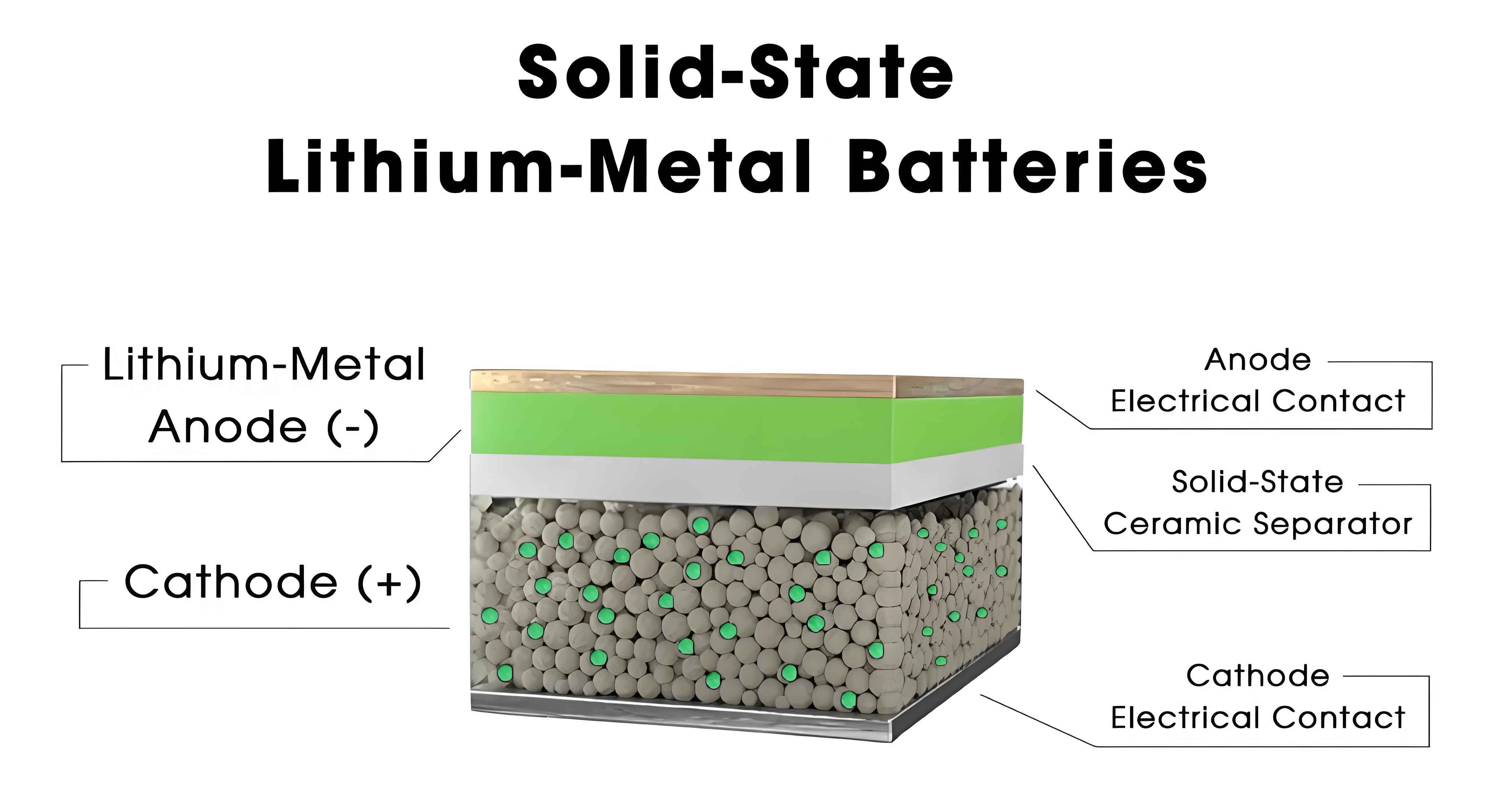
The relentless pursuit of higher energy density and enhanced safety in electrochemical energy storage has positioned solid-state batteries at the forefront of next-generation battery technology. Replacing the flammable liquid electrolyte with a solid-state electrolyte promises to mitigate risks of leakage, thermal runaway, and lithium dendrite penetration, while potentially enabling the use of high-voltage cathodes and lithium metal anodes. Despite significant progress in developing solid-state electrolytes with impressive ionic conductivities, optimizing interfaces, and designing composite electrodes, the journey toward commercially viable, high-performance solid-state batteries remains fraught with fundamental challenges. A critical, often overlooked, aspect is the holistic efficiency of lithium-ion movement throughout the entire cell architecture during operation.
Conventional metrics like ionic conductivity, area-specific capacity, or cycling rate, while valuable, often provide a fragmented view. A high-conductivity electrolyte may still yield poor performance if the interfaces are resistive, and a thick electrode with high areal capacity might fail at practical current densities. To bridge this gap and provide a more integrated performance descriptor, I propose and emphasize the concept of Lithium-Ion Transport Throughput, denoted as $\Phi_{Li^+}$. This metric quantifies the total molar flux of lithium ions passing through the electrode/electrolyte interface per unit area per hour during charge or discharge. It is defined as:
$$ \Phi_{Li^+} = \frac{1000 \times C_{\text{area}}}{C_{Li} \cdot M_{Li} \cdot t} $$
where $C_{\text{area}}$ is the practical areal capacity (mA·h·cm-2), $C_{Li}$ is the theoretical specific capacity of lithium metal (3860 mA·h·g-1), $M_{Li}$ is the molar mass of lithium (6.941 g·mol-1), and $t$ is the charge or discharge time (hours). The resulting unit is mol·m-2·h-1. Crucially, $\Phi_{Li^+}$ synthesizes information on both energy density (via $C_{\text{area}}$) and power capability (via $t$, inversely related to C-rate), offering a more accurate reflection of the actual electrochemical processes within the solid-state battery than external electrical parameters alone.
Evaluating contemporary research through this lens reveals a performance landscape. While liquid electrolyte-based lithium-metal batteries currently lead in $\Phi_{Li^+}$, advancements in various solid-state battery systems are closing the gap. Achieving high $\Phi_{Li^+}$ requires a concerted, system-level optimization targeting three interconnected domains: (1) bulk ion transport within the solid-state electrolyte, (2) interfacial ion transfer across electrode/electrolyte boundaries, and (3) synergistic ion and electron transport within dense, thick composite electrodes.
1. Engineering the Bulk: Enhancing Ionic Conductivity of Solid-State Electrolytes
The foundational element for high $\Phi_{Li^+}$ is a solid-state electrolyte with intrinsically fast Li+ conduction. Research has evolved beyond simple composition discovery toward sophisticated structural engineering.
Crystal Structure Engineering: Ion transport in crystalline inorganic solid-state electrolytes is governed by the energy landscape of Li+ migration pathways. Introducing compositional complexity via high-entropy doping creates local structural disorder, which can widen and overlap the energy distribution of adjacent Li+ sites. When these low-energy pathways form a percolating network, long-range ionic diffusion is dramatically accelerated. This principle has led to sulfide solid-state electrolytes with room-temperature conductivity rivaling liquids (~32 mS·cm-1). Similar strategies in halide and oxide systems also yield significant conductivity boosts, as shown in Table 1.
Amorphous and Glassy Phases: Disordered solid-state electrolytes, lacking long-range crystalline order, can offer isotropic, grain-boundary-free transport with abundant vacant sites. Recent breakthroughs in halide-based amorphous solid-state electrolytes have demonstrated unexpectedly high ionic conductivities (>7 mS·cm-1). Characterizing their short-range order—often involving a distribution of LiClx polyhedra—is key to understanding and optimizing their transport mechanisms.
Composite and Polymer-Based Electrolytes: For flexible solid-state battery designs, composite solid-state electrolytes (CSEs) blending polymers with inorganic fillers are paramount. The ion transport mechanism here is complex, involving bulk polymer, bulk filler, and critical organic-inorganic interfaces. A pivotal finding is that to leverage the high conductivity of the filler, a continuous, percolating inorganic network must be established. Alternatively, when fillers are discrete, designing the interfacial chemistry to promote rapid Li+ exchange between phases is essential. For instance, incorporating specific ionic liquids or dielectric materials can mitigate space-charge layer effects and catalyze interfacial Li+ hopping, significantly enhancing the overall conductivity of the CSE.
| Electrolyte Type | Example Composition | Room-Temp. Ionic Conductivity (S·cm-1) | Key Design Principle |
|---|---|---|---|
| High-Entropy Sulfide | Li9.54[Si0.6Ge0.4]1.74P1.44S11.1Br0.3O0.6 | 3.2 × 10⁻² | Configurational entropy-induced disorder |
| Amorphous Halide | Li–Ta–Cl based glass | ~7 × 10⁻³ | Short-range order with distributed polyhedra |
| Polymer Composite | PEO/LPSC with Ionic Liquid | ~2.5 × 10⁻⁴ | Catalyzed interfacial Li+ exchange |
| Vacancy-Rich Nitride | β-Li3N (vacancy-rich) | 2.14 × 10⁻³ | Abundant vacancies for facile hopping |
2. Bridging the Divide: Optimizing Electrode/Electrolyte Interfaces
Even with a superionic solid-state electrolyte, high $\Phi_{Li^+}$ is unattainable if lithium ions cannot cross the solid-solid interfaces efficiently. These interfaces are plagued by poor physical contact, chemical instability, and space-charge layer effects.
Anode Interface Engineering: The Li metal/solid-state electrolyte interface is dynamic and prone to dendrite initiation and contact loss. Strategies focus on creating interlayers that are either:
i) Lithiophilic and Mixed-Conducting: Porous or composite layers that promote uniform Li+ flux and electronic current distribution, reducing local stress and preventing pore formation. For example, mixed ionic-electronic conducting garnet scaffolds enable stable cycling at exceptionally high current densities.
ii) Alloy-Based: Thin layers of elements like Mg, Si, Al, or Bi react with Li to form ion-conducting Li-M alloys in situ. These alloys improve wettability, act as a buffer against volume changes, and often form beneficial secondary phases (e.g., Li3Bi, Li-Mg) that stabilize the interface.
Cathode Interface Engineering: The cathode/solid-state electrolyte interface must withstand high voltages. Coatings such as LiNbO3, Li2ZrO3, or halides are applied to suppress mutual degradation, reduce interfacial resistance, and facilitate Li+ transfer. The ideal coating is chemically stable, has good ionic conductivity, and forms an intimate contact with both materials.
The effectiveness of an interface can be quantified by the critical current density (CCD) for stable Li plating/stripping in symmetric cells, which directly correlates with the achievable $\Phi_{Li^+}$ in a full cell. Advanced interlayer designs have pushed the CCD for oxide-based solid-state batteries to 10 mA·cm-2 and beyond, a crucial step for high-power solid-state batteries.
3. Architecting the Electrode: Enabling Transport in Thick, Dense Composites
The ultimate goal for high-energy-density solid-state batteries is to use thick electrodes with high active material loadings (>30 mg·cm-2). Here, $\Phi_{Li^+}$ is limited by sluggish ion and electron transport through the tortuous, particle-based composite structure.
Building 3D Ion-Conducting Networks: Simply mixing active material, solid-state electrolyte, and conductive carbon leads to inefficient, random pathways. A paradigm shift involves deliberately constructing continuous, low-tortuosity ion transport highways within the electrode. This can be achieved by:
• Aligning 1D Nanomaterials: Using magnetic fields or other techniques to orient ion-conductive nanowires (e.g., LLTO, LATP) vertically, creating direct “expressways” for Li+ from the current collector to the bulk of the electrode.
• Employing Multi-Functional Additives: Incorporating materials that serve dual purposes, such as carbon-coated ionic conductors that provide both electron and ion pathways, or additives that plasticize the polymer binder to enhance local ion mobility.
Integrated Electrode-Electrolyte Designs: The most radical approach to eliminating interfacial resistance is to fuse the electrode and electrolyte into a single, bi-continuous structure. For example, using a redox-active solid-state electrolyte (e.g., Li3TiCl6) that also functions as the active cathode material or an ionic-electronic “dual-carrier” framework creates a monolithic electrode with minimized internal interfaces and highly efficient transport.
The benefit of these architectural innovations is most apparent in the performance of high-loading electrodes. Where conventional composite electrodes see rapid capacity fade at rates above 0.1C, electrodes with engineered 3D networks can maintain significant capacity at 1C or higher, directly translating to a higher achievable $\Phi_{Li^+}$ for the solid-state battery.
4. Quantitative Landscape and Future Directions
Calculating $\Phi_{Li^+}$ for recent state-of-the-art solid-state batteries provides a clear, quantitative comparison of system-level performance, as summarized in Table 2.
| Cell Configuration | Areal Capacity (mA·h·cm-2) | Rate (C) | $\Phi_{Li^+}$ (mol·m-2·h-1) | Electrolyte Class |
|---|---|---|---|---|
| NCM811 || Li (Liquid) | 1.25 | 6 | 2.80 | Liquid |
| LiCoO2 || Li–In | 1.23 | 0.5 | 0.23 | Halide |
| NCM811 || Li | 0.26 | 5 | 0.49 | Polymer Composite |
| NCM || Si-C Composite | 1.06 | 5 | 1.98 | Sulfide |
| LiCoO2 || Li (with MIEC layer) | 1.85 | 1 | 0.69 | Oxide |
| High-Loading NCM || Li | 3.00 | 0.1 | 0.11 | Polymer Composite |
This analysis shows that while the best liquid systems still hold an advantage, advanced sulfide and polymer-based solid-state batteries are achieving remarkable $\Phi_{Li^+}$ values, especially when paired with optimized anodes (e.g., Si composites) or interface layers. Oxide systems show great promise with interface engineering.
Looking forward, elevating $\Phi_{Li^+}$ to the levels required for competitive electric vehicles and grid storage necessitates a holistic, co-design approach:
1. Material Discovery & Understanding: Continue developing ultra-high conductivity solid-state electrolytes (especially cost-effective ones) and employ advanced characterization (solid-state NMR, operando spectroscopy, neutron scattering) and multi-scale modeling to fully decipher Li+ transport mechanisms in bulk and at interfaces.
2. Intelligent Interface Architecture: Design multi-functional, gradient, or self-healing interlayers that dynamically adapt to interfacial changes during cycling, maintaining low impedance and uniform flux over thousands of cycles.
3. Electrode Structuring at Scale: Develop scalable, cost-effective manufacturing techniques (e.g., freeze-tape casting, magnetically assisted printing) to produce thick electrodes with vertically aligned or otherwise engineered low-tortuosity channels for simultaneous fast ion and electron delivery.
4. System Integration and Diagnostics: Implement $\Phi_{Li^+}$ as a standard diagnostic tool during cell development and use operando imaging techniques to map Li+ flux distribution, identifying and rectifying local bottlenecks within the solid-state battery.
In conclusion, the path to high-performance solid-state batteries is not merely about finding a better solid-state electrolyte. It is about orchestrating the entire ion journey—from the bulk of the electrolyte, across often recalcitrant interfaces, and through the dense electrode composite—with the singular goal of maximizing the lithium-ion transport throughput. By adopting this integrated, throughput-centric perspective, research can transition from optimizing isolated components to engineering complete, robust, and high-performing solid-state battery systems ready for the demands of a sustainable energy future.