
As the global demand for renewable energy solutions accelerates, energy storage lithium batteries have emerged as a cornerstone technology for achieving carbon neutrality and energy security. These systems, characterized by their high energy density and scalability, are integral to stabilizing power grids and enabling the widespread adoption of clean energy. However, the inherent risks associated with transporting energy storage lithium batteries, such as thermal runaway, fire, and explosion, necessitate stringent international regulations and standards. In this article, I will explore the critical safety requirements for transporting energy storage lithium batteries, drawing from key international frameworks like the United Nations Recommendations on the Transport of Dangerous Goods (TDG) and regional directives. By examining safety testing protocols, labeling and packaging specifications, structural design criteria, and quality management systems, I aim to provide a comprehensive guide for stakeholders to enhance transport safety and compliance. Throughout this discussion, I will emphasize the importance of energy storage lithium battery technologies in the global energy transition, while addressing the multifaceted challenges in their logistics chain.
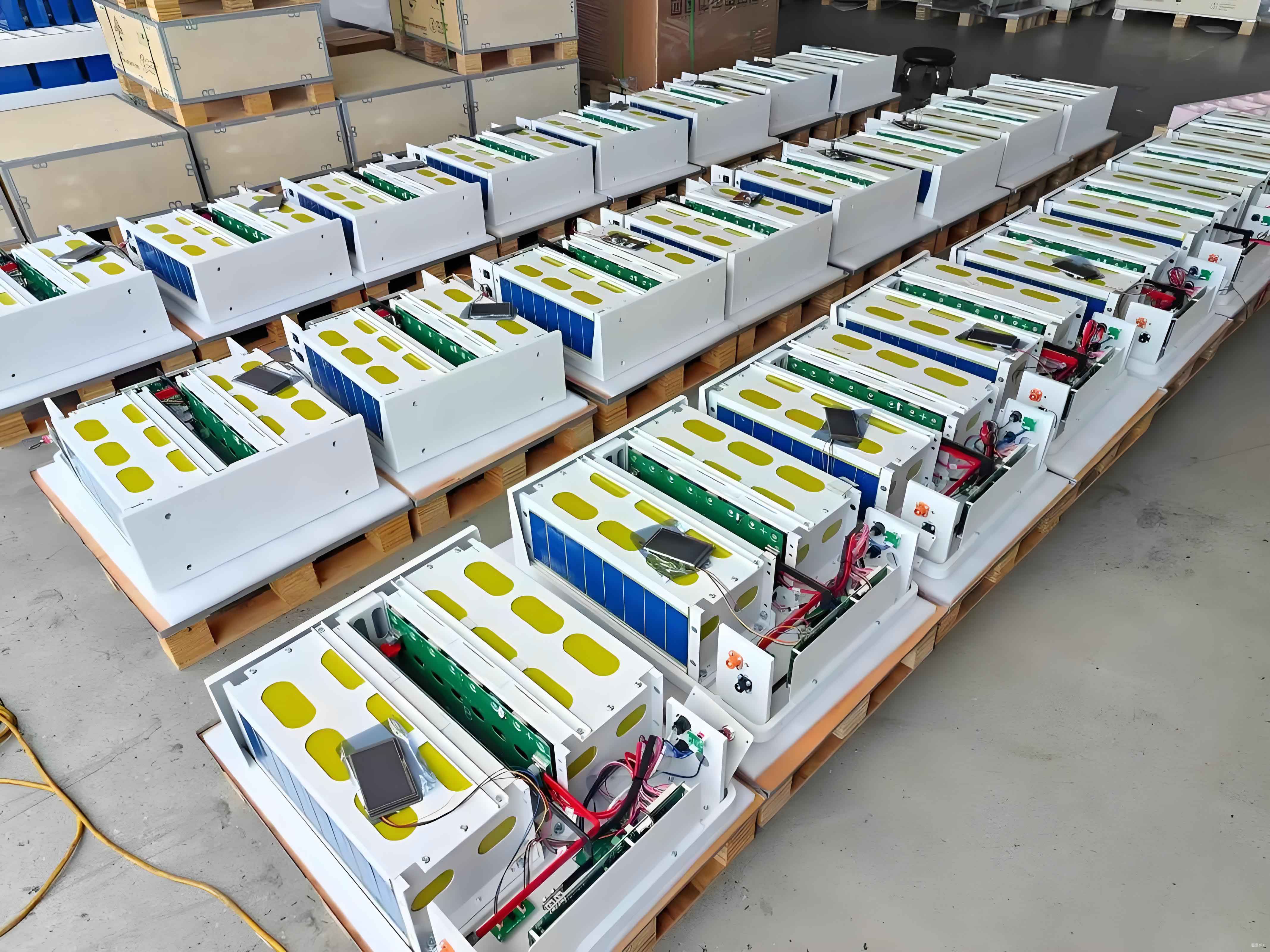
The transportation of energy storage lithium batteries is governed by a complex web of international and regional regulations, which are essential for mitigating risks during transit. These frameworks, including the TDG Model Regulations, IATA Dangerous Goods Regulations (DGR), and IMDG Code, establish baseline requirements for safety testing, hazard communication, and packaging. For instance, the energy storage lithium battery must undergo rigorous testing as per the UN Manual of Tests and Criteria to simulate transport conditions. This ensures that the energy storage lithium battery can withstand environmental stresses such as vibration, shock, and temperature extremes. In the following sections, I will delve into specific aspects of these requirements, using tables and formulas to summarize key data and facilitate understanding. The proliferation of energy storage lithium battery deployments underscores the urgency of harmonizing these standards to prevent accidents and promote sustainable energy infrastructure.
Safety Testing Requirements for Energy Storage Lithium Batteries
Safety testing is a prerequisite for the transport of energy storage lithium batteries, as it validates their ability to endure the rigors of logistics operations. According to the UN Manual of Tests and Criteria, Section 38.3, a series of tests must be conducted on battery cells, modules, and larger assemblies like battery packs or clusters. These tests assess parameters such as mechanical integrity, electrical performance, and thermal stability. For example, the high-altitude simulation test (T1) replicates conditions at 15,000 meters to evaluate pressure tolerance, while the temperature cycling test (T2) subjects the energy storage lithium battery to extreme temperatures ranging from -40°C to 72°C. The formula for temperature cycling can be expressed as a function of time and temperature: $$T(t) = T_{\text{min}} + (T_{\text{max}} – T_{\text{min}}) \cdot \sin^2(\omega t)$$ where \(T(t)\) is the instantaneous temperature, \(T_{\text{min}} = -40^\circ\text{C}\), \(T_{\text{max}} = 72^\circ\text{C}\), and \(\omega\) is the angular frequency governing the cycle. This ensures the energy storage lithium battery maintains stability under fluctuating environmental conditions.
Additionally, tests like T5 (external short-circuit at elevated temperatures) and T6 (crush/impact) evaluate the risk of internal short circuits and mechanical failure. For energy storage lithium battery modules, the tests must include validation of protection circuits, such as overcharge and over-discharge safeguards. The table below summarizes the core safety tests required for different configurations of energy storage lithium batteries, highlighting the specific criteria and pass/fail standards. These tests are critical for ensuring that the energy storage lithium battery does not pose a hazard during transport, thereby supporting the broader adoption of energy storage lithium battery systems in global markets.
| Test Code | Description | Applicable to Energy Storage Lithium Battery Type | Key Parameters |
|---|---|---|---|
| T1 | High-altitude simulation (15,000 m) | Cells, modules | Pressure ≤ 11.6 kPa, no leakage or rupture |
| T2 | Temperature cycling (-40°C to 72°C) | Cells, modules, packs | 10 cycles, no mass loss > 1% |
| T3 | Vibration simulation | Modules, clusters | Frequency sweep 7–200 Hz, no disassembly |
| T4 | Shock simulation | Modules, clusters | Peak acceleration 150 m/s², no internal damage |
| T5 | External short-circuit at 55°C | Cells, modules | Resistance ≤ 0.1 Ω, no fire or explosion |
| T6 | Crush or impact test | Cells, modules | Force ≥ 13 kN, no thermal runaway |
| T7 | Overcharge test (if applicable) | Modules, clusters | Charge at 2× rated current, no hazard |
| T8 | Forced discharge test | Cells, modules | Discharge at 3× rated current, no reversal |
Furthermore, for energy storage lithium battery clusters exceeding 6,200 Wh, additional validation of protection systems is mandatory. This includes verifying the effectiveness of short-circuit, overcharge, and over-discharge protections through empirical testing. The cumulative effect of these tests can be modeled using a reliability function: $$R(t) = e^{-\lambda t}$$ where \(R(t)\) is the reliability over time \(t\), and \(\lambda\) is the failure rate derived from test outcomes. By adhering to these protocols, manufacturers can demonstrate that their energy storage lithium battery products are resilient enough for international transport, reducing the likelihood of incidents that could undermine confidence in energy storage lithium battery technologies.
Hazard Classification and Labeling for Energy Storage Lithium Batteries
Proper hazard classification and labeling are vital for the safe transport of energy storage lithium batteries, as they enable quick identification and appropriate handling by logistics personnel. Under the TDG regulations, energy storage lithium batteries are assigned specific UN numbers based on their configuration and application. The most common classifications are UN 3480 for lithium-ion batteries and UN 3536 for batteries installed in freight containers. Each classification requires distinct labeling to communicate risks, such as the Class 9 hazard label for miscellaneous dangerous goods. For example, the energy storage lithium battery under UN 3480 must bear a TDG 9A label during sea or road transport, with dimensions of at least 100 mm × 100 mm, while air transport necessitates an additional “Cargo Aircraft Only” label. The label must include the UN number in black characters, and the background color should contrast sharply with the label for visibility.
In the case of UN 3536, which applies to containerized energy storage lithium battery systems, labeling options include integrating the UN number into the Class 9 label or using a separate orange rectangular placard. The table below outlines the labeling requirements for different transport modes and UN numbers, emphasizing the importance of clear marking to prevent mishandling. Energy storage lithium battery shipments must also display the proper shipping name, such as “Lithium Ion Batteries” for UN 3480, and ensure that labels are affixed on opposite sides of the packaging for redundancy. This approach minimizes the risk of misidentification during multimodal transport, which is common for energy storage lithium battery exports.
| UN Number | Transport Name | Applicable Transport Mode | Label Type | Dimensions |
|---|---|---|---|---|
| UN 3480 | Lithium Ion Batteries | Sea, Road | TDG 9A Label | ≥ 100 mm × 100 mm |
| UN 3480 | Lithium Ion Batteries | Air | 9A Label + Cargo Aircraft Only | ≥ 100 mm × 100 mm each |
| UN 3536 | Lithium Batteries Installed in Cargo Transport Unit | Sea, Road, Rail | Class 9 Label with UN or Orange Placard | ≥ 250 mm × 250 mm or 120 mm × 300 mm |
The labeling process must account for environmental factors, such as exposure to moisture or UV radiation, which could degrade adhesive materials. A formula for label durability under adverse conditions can be expressed as: $$D = k \cdot e^{-E_a / RT}$$ where \(D\) is the degradation rate, \(k\) is a constant, \(E_a\) is the activation energy, \(R\) is the gas constant, and \(T\) is the temperature. By optimizing label materials and placement, stakeholders can ensure that energy storage lithium battery shipments remain compliant and safe throughout the supply chain. This is particularly crucial for large-scale energy storage lithium battery projects, where any labeling oversight could lead to regulatory penalties or safety incidents.
Packaging Specifications for Energy Storage Lithium Batteries
Packaging plays a critical role in safeguarding energy storage lithium batteries during transit, as it provides physical protection against impacts, vibrations, and environmental hazards. The TDG regulations specify packaging requirements based on the battery’s size, weight, and UN classification. For instance, energy storage lithium batteries under UN 3480 with a volume not exceeding 3 m³ and a net weight under 400 kg must use packaging that meets Packing Group II standards, such as materials like 4G (fiberboard) or 4H2 (plastic). These packages must include adequate cushioning and blocking to prevent movement within the container, reducing the risk of short circuits or damage. For larger energy storage lithium battery systems, such as those over 3 m³, the packaging must consist of a robust, impact-resistant outer casing that can withstand handling stresses, as verified by drop tests from 1.2 meters height.
The mechanical strength of packaging for energy storage lithium batteries can be quantified using stress-strain relationships. For example, the maximum stress \(\sigma_{\text{max}}\) that a package can endure during impact is given by: $$\sigma_{\text{max}} = \frac{F}{A} = E \cdot \epsilon$$ where \(F\) is the force applied, \(A\) is the cross-sectional area, \(E\) is the Young’s modulus of the material, and \(\epsilon\) is the strain. This ensures that the energy storage lithium battery is protected under dynamic loading conditions. The table below compares packaging requirements for different categories of energy storage lithium batteries, including examples of acceptable materials and testing criteria. Proper packaging not only enhances safety but also supports the scalability of energy storage lithium battery deployments by facilitating efficient logistics.
| Battery Category | UN Number | Packaging Type | Material Examples | Testing Requirements |
|---|---|---|---|---|
| Small batteries (≤ 3 m³, ≤ 400 kg) | UN 3480 | Packing Group II | 4G, 4H2, 4D | Drop test, stack test |
| Large batteries (≤ 3 m³, > 400 kg) | UN 3480 | Large packaging | 50C, 50D, 50F | 1.2 m drop test, bottom lift test |
| Battery systems (> 3 m³) | UN 3480 | Sturdy outer casing | Metal enclosures, reinforced plastic | JT/T 1543-2025 compliance |
| Containerized systems | UN 3536 | Fixed in freight container | Steel frames, locking mechanisms | Ship class certification, load testing |
For UN 3536 energy storage lithium battery systems, which are integrated into freight containers, the packaging involves securing the batteries to the container’s internal structure using bolts or brackets to prevent displacement. This must withstand vibrational forces during transport, which can be modeled as a harmonic oscillation: $$m \ddot{x} + c \dot{x} + kx = F_0 \sin(\omega t)$$ where \(m\) is the mass, \(c\) is the damping coefficient, \(k\) is the stiffness, and \(F_0\) is the force amplitude. By adhering to these packaging standards, stakeholders can mitigate the risks associated with transporting energy storage lithium batteries, ensuring they arrive intact and operational. This is essential for maintaining the reliability of energy storage lithium battery systems in critical applications like grid stabilization and renewable energy integration.
Structural Design and Quality Management for Energy Storage Lithium Batteries
The structural design of energy storage lithium batteries directly influences their transport safety, as it determines their resistance to mechanical and electrical failures. Key design requirements include the incorporation of pressure relief valves to prevent rupture, insulation to avoid external short circuits, and reverse current protection for parallel circuits. For instance, the energy storage lithium battery must be marked with its rated watt-hour (Wh) capacity on the exterior, which is calculated using the formula: $$\text{Wh} = V \times \text{Ah}$$ where \(V\) is the voltage and \(\text{Ah}\) is the ampere-hour rating. This labeling aids in proper handling and classification during transport. Additionally, larger energy storage lithium battery systems, such as those exceeding 3 m³, must feature robust enclosures that can endure impacts and environmental stresses, as validated through standardized tests.
Moreover, the integration of battery management systems (BMS) is crucial for monitoring parameters like voltage, temperature, and state of charge. The BMS ensures that the energy storage lithium battery operates within safe limits during transit, reducing the risk of thermal runaway. The effectiveness of a BMS can be evaluated using a control theory model: $$G(s) = \frac{K}{1 + \tau s}$$ where \(G(s)\) is the transfer function, \(K\) is the gain, and \(\tau\) is the time constant. This model helps optimize the response time of protection mechanisms. For containerized energy storage lithium battery systems under UN 3536, the design must include secure mounting to the container’s structure, with no unauthorized hazardous materials onboard, to comply with TDG provisions.
Beyond product design, a comprehensive quality management system (QMS) is mandatory for energy storage lithium battery manufacturers to ensure consistency and traceability. Standards such as ISO 9001 provide a framework for documenting design controls, inspection procedures, and employee training. The QMS must cover aspects like document control, non-conformance management, and record retention, as outlined in TDG Section 2.9.4(e). The table below summarizes the core elements of a QMS for energy storage lithium battery production, highlighting how each component contributes to transport safety. By implementing a robust QMS, manufacturers can demonstrate that their energy storage lithium battery products meet regulatory requirements and maintain high reliability throughout their lifecycle.
| QMS Element | Description | Impact on Energy Storage Lithium Battery Safety |
|---|---|---|
| Design Control | Procedures for product development and validation | Ensures structural integrity and compliance |
| Inspection and Testing | Regular checks and safety tests | Verifies performance under transport conditions |
| Documentation | Records of specifications and changes | Facilitates traceability and audits |
| Training | Employee education on safety protocols | Reduces human error during manufacturing |
| Non-conformance Management | Processes for addressing defects | Prevents faulty batteries from entering transport |
In conclusion, the safe transport of energy storage lithium batteries relies on a multifaceted approach that integrates rigorous testing, precise labeling, durable packaging, sound structural design, and effective quality management. As the adoption of energy storage lithium battery technologies continues to grow, stakeholders must prioritize compliance with international standards to mitigate risks and support the global energy transition. By leveraging the insights and frameworks discussed in this article, including the use of tables and formulas for clarity, industry players can enhance the safety and efficiency of energy storage lithium battery logistics, ultimately contributing to a more sustainable and secure energy future.