
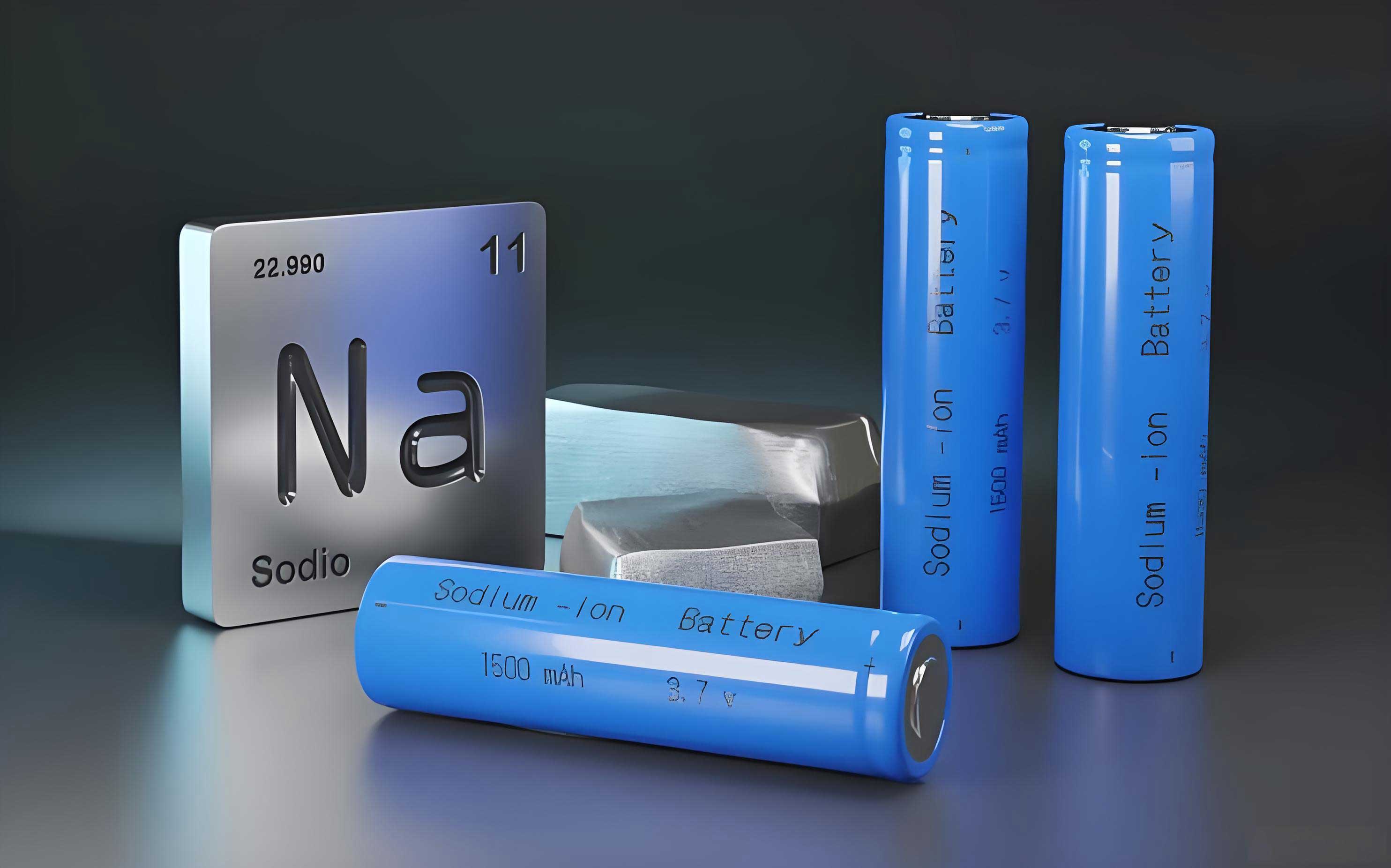
The relentless growth in global energy demand, coupled with the imperative for sustainable and grid-scale energy storage solutions, has intensified the search for alternatives to the ubiquitous lithium-ion battery. While highly successful, lithium-based technologies face challenges related to the geographical concentration and limited natural abundance of lithium reserves, which impact long-term cost and supply chain security. In this context, the sodium-ion battery has emerged as a compelling candidate. Sodium shares similar physicochemical properties with lithium but is orders of magnitude more abundant and evenly distributed in the Earth’s crust, promising significant cost reductions and enhanced sustainability for large-scale energy storage applications. The core challenge lies in developing electrode materials that can efficiently and reversibly host the larger and heavier Na+ ion (1.02 Å ionic radius) compared to Li+ (0.76 Å).
Among the myriad of materials explored, two-dimensional (2D) MXenes have garnered tremendous attention. Since the seminal discovery of Ti3C2Tx in 2011, this family of transition metal carbides, nitrides, and carbonitrides has demonstrated a unique combination of properties: metallic conductivity, hydrophilic surfaces, mechanical flexibility, and rich surface chemistry. The general formula is Mn+1XnTx, where M is an early transition metal (e.g., Ti, V, Nb, Mo), X is carbon and/or nitrogen, and Tx represents surface functional groups (-O, -OH, -F) introduced during the synthesis process. Ti3C2Tx, as the most studied MXene, exemplifies these traits. Its layered structure provides accessible interlayer galleries for ion intercalation, while its high electronic conductivity ensures efficient charge collection. However, its performance as a standalone anode in sodium-ion batteries is often hindered by issues like restacking of nanosheets, limited interlayer spacing for Na+ accommodation, and insufficient active sites. This article delves into the recent research progress on engineering Ti3C2Tx to overcome these limitations, focusing on modification strategies and composite architectures specifically tailored for enhancing its electrochemical performance in sodium-ion battery applications.
Intrinsic Structure and Properties of Ti3C2Tx
The properties of Ti3C2Tx are intrinsically linked to its atomic structure. It is derived from the MAX phase Ti3AlC2 by selectively etching the Al layers, resulting in accordion-like multilayers of Ti3C2 terminated with functional groups. The atomic stacking follows a sequence of Ti(1)-C-Ti(2)-C-Ti(1), and theoretical studies have identified stable configurations for the terminated surfaces. The most stable configuration features the functional groups (-F or -OH) attached to the outer Ti(1) atoms. This structure imparts several key characteristics crucial for electrochemical applications.
Electronic Conductivity: Ti3C2Tx exhibits metallic conductivity, a cornerstone for its use in electrodes. The conductivity is highly dependent on synthesis conditions and surface terminations. For instance, highly conductive films (∼6,500 S/cm) can be achieved with methods that minimize structural defects. Furthermore, post-synthesis annealing can remove some surface groups, increasing the carrier concentration and thereby enhancing conductivity. The high conductivity facilitates rapid electron transport during the charge/discharge cycles of a sodium-ion battery.
Mechanical and Chemical Stability: While the 2D sheets are mechanically robust, they are susceptible to oxidation in aqueous environments, gradually transforming into TiO2. Stability can be improved by optimizing etching parameters to minimize edge defects or by storing dispersions in controlled, low-temperature conditions. For long-term cycling in a sodium-ion battery, preventing oxidative degradation is vital.
Interlayer Spacing and Surface Chemistry: The interlayer distance (c-lattice parameter) in multilayer Ti3C2Tx is not fixed. It depends on the intercalated species (water, ions, molecules) and the nature of the surface terminations. This tunable interlayer spacing is a critical parameter for Na+ storage. The hydrophilic -O and -OH groups also enable easy dispersion in water and provide active sites for surface redox reactions (pseudocapacitance), which can contribute significantly to charge storage, especially at high rates.
Sodium Storage Mechanisms in Ti3C2Tx
Understanding how Na+ ions interact with the Ti3C2Tx host is fundamental to guiding material design. The storage mechanism is a combination of intercalation and surface-mediated processes.
Intercalation: Na+ ions insert into the interlayer galleries between MXene sheets. The process can be described by a diffusion equation. The steady-state flux \( J \) of Na+ ions is governed by Fick’s first law:
$$ J = -D \frac{\partial c}{\partial x} $$
where \( D \) is the diffusion coefficient and \( \frac{\partial c}{\partial x} \) is the concentration gradient. A larger interlayer spacing (increasing the effective \( x \) path) and a favorable chemical potential gradient reduce diffusion barriers. First-principles calculations reveal that the insertion path and binding energy of Na+ are strongly influenced by the surface terminations. Fewer or optimized functional groups generally lead to lower diffusion barriers and more reversible intercalation.
Surface Redox (Pseudocapacitance): In addition to bulk intercalation, fast surface redox reactions involving the transition metal (Ti) sites contribute to charge storage. This process is non-diffusion-limited and follows a current (i) – scan rate (v) relationship characteristic of surface-controlled behavior:
$$ i = a v^b $$
where \( b \) approaches 1. This contribution is particularly valuable for high-power sodium-ion battery applications, enabling rapid charging and discharging.
Co-Intercalation: In certain electrolytes, solvated Na+ ions can co-intercalate with solvent molecules, leading to a substantial expansion of the interlayer spacing. Upon first insertion, this can permanently “pillar” the layers, creating a stable, expanded structure for subsequent cycles where desolvated Na+ intercalation dominates. The total stored charge \( Q_{total} \) can thus be approximated as the sum of intercalation and pseudocapacitive contributions:
$$ Q_{total} = Q_{intercalation} + Q_{pseudocapacitance} $$
Maximizing both components is key to achieving high capacity and rate performance.
Modification Strategies for Enhanced Sodium-Ion Battery Performance
To overcome the natural restacking and limited active sites of pristine Ti3C2Tx, direct modification strategies have been developed. These aim to increase the interlayer spacing, create porosity, or exfoliate the multilayers into few-layer sheets.
Intercalation and Delamination: Organic molecules or ions can be inserted between the layers to act as spacers. For example, using tetraalkylammonium hydroxides (like TMAOH) not only intercalates but can also fully delaminate multilayer Ti3C2Tx into single or few-layer flakes suspended in colloidal solutions. These delaminated nanosheets, when reassembled into films, have a more open architecture. The increased specific surface area and reduced diffusion path length for Na+ lead to improved capacity and rate capability. The relationship between capacity (C) and effective surface area (A) can be conceptualized as:
$$ C \propto A \cdot \Gamma $$
where \( \Gamma \) is the surface site density for Na+ adsorption/intercalation.
Pore Engineering: Creating in-plane pores or 3D macroporous structures within Ti3C2Tx assemblies drastically enhances performance. Methods include using sacrificial templates (e.g., polymer spheres, gas bubbles) or selective etching. A porous 3D MXene foam, for instance, can be fabricated by mixing Ti3C2Tx with a polymer template, followed by freeze-drying and annealing to remove the template. This structure offers multiple advantages for the sodium-ion battery anode: (1) abundant active sites for Na+ storage, (2) short ion diffusion distances, (3) efficient electrolyte penetration, and (4) buffer space to accommodate volume changes during cycling.
| Strategy | Method/Agent | Key Structural Change | Impact on Na+ Storage |
|---|---|---|---|
| Intercalation/Delamination | TMAOH, DMSO, etc. | Increased interlayer spacing; Few-layer nanosheets | Higher accessible surface area; Enhanced rate performance |
| In-Plane Pore Creation | Controlled oxidation or sulfur template etching | Introduction of nanopores within MXene sheets | More exposed edges and active sites; Faster ion kinetics |
| 3D Macroporous Assembly | Template-assisted assembly (e.g., PMMA spheres) | 3D interconnected porous network | Maximized electrolyte contact; Excellent cycling stability |
Ti3C2Tx-Based Composites for Sodium-Ion Battery Anodes
Compositing Ti3C2Tx with other active materials is a powerful strategy to create synergistic effects. In such composites, Ti3C2Tx often serves as a highly conductive, mechanically stable, and confining scaffold, while the second phase provides additional capacity through alloying, conversion, or other mechanisms.
Composites with Elemental Materials
Carbon/Ti3C2Tx: Integrating carbon (e.g., from pyrolyzed dopamine, carbon nanotubes) forms a conductive 3D network that prevents MXene restacking and enhances overall electronic conductivity. The carbon coating can also improve structural stability during long-term cycling in a sodium-ion battery.
Phosphorus/Ti3C2Tx: Black phosphorus (BP) has a high theoretical capacity for sodium storage but suffers from huge volume expansion. Confining BP nanosheets between Ti3C2Tx layers via electrostatic self-assembly can effectively buffer the volume change, prevent aggregation, and facilitate charge transfer, leading to significantly improved cyclability.
Composites with Metal Oxides
Metal oxides like TiO2, VO2, and Sb2O3 can be grown in situ on MXene surfaces. The composite benefits from the combined properties: the oxide contributes additional capacity, while MXene provides conductivity and structural support.
For instance, VO2 nanobelts grown on Ti3C2Tx form a 3D heterostructure. The metallic nature of VO2 above its phase transition temperature boosts conductivity, and the open structure facilitates electrolyte access, yielding excellent rate performance for the sodium-ion battery.
Composites with Metal Sulfides
Metal sulfides (e.g., MoS2, SnS, Bi2S3) generally offer higher conductivity and more favorable reaction kinetics with Na+ compared to their oxide counterparts. Constructing hierarchical composites is highly effective.
Intercalated MoS2/Ti3C2Tx: By pre-expanding the MXene interlayers with surfactants, MoS2 nanocrystals can be grown between the Ti3C2Tx sheets. This intimate contact maximizes the interface, shortens ion diffusion paths, and stabilizes the structure, resulting in high capacity and outstanding rate capability for the sodium-ion battery anode.
SnS/Ti3C2Tx: SnS nanoparticles uniformly anchored on MXene sheets create a “sandwich-like” structure. The MXene layers not only conduct electrons but also confine the SnS, mitigating its pulverization during the alloying/dealloying reactions with Na+.
| Composite Type | Specific Example | Key Synergistic Effect | Typical Electrochemical Performance |
|---|---|---|---|
| Carbon Composite | C/Ti3C2Tx Foam | 3D conductive network; prevents restacking | >90% capacity retention after 3000 cycles |
| Elemental P Composite | BP/Ti3C2Tx | MXene confines BP, buffers volume expansion | ~658 mAh/g after 2000 cycles at 1 A/g |
| Metal Oxide Composite | VO2/Ti3C2Tx 3D Flower | Metallic VO2 enhances conductivity; open 3D structure | Excellent rate performance (206 mAh/g at 1.6 A/g) |
| Metal Sulfide Composite | Intercalated MoS2/Ti3C2Tx | Maximized active interface; shortened ion path | High capacity (450 mAh/g at 0.05 A/g) and good rate |
| Metal Sulfide Composite | SnS/Ti3C2Tx | MXene confines SnS, enhances conductivity | ~412 mAh/g at 0.1 A/g; ~256 mAh/g at 1 A/g |
Conclusion and Future Perspectives
Ti3C2Tx MXene has established itself as a highly versatile and promising platform material for next-generation sodium-ion battery anodes. Its intrinsic metallic conductivity, tunable interlayer spacing, and rich surface chemistry provide a solid foundation. Research has conclusively shown that its electrochemical performance, particularly in terms of specific capacity, rate capability, and cycling stability, can be dramatically enhanced through strategic modifications and compositing. Delamination and pore engineering directly address kinetic and morphological limitations, while composites with various active materials leverage synergistic effects to combine high capacity with structural integrity.
Looking forward, the design principles for Ti3C2Tx-based sodium-ion battery electrodes must evolve beyond simply mimicking strategies successful for lithium-ion batteries. The distinct chemistry of the Na+ ion demands more targeted optimization:
- Termination Engineering: Precisely controlling or transforming the surface -O, -OH, -F groups to species that lower the Na+ diffusion barrier and increase the binding affinity is crucial. Theoretical screening followed by synthetic realization (e.g., via thermal treatment, chemical substitution) will be key.
- Electrolyte and Interphase Design: The performance is intimately linked to the solid-electrolyte interphase (SEI) formed. Developing electrolytes (e.g., high-concentration, localized) that form a stable, thin, and ionically conductive SEI on MXene surfaces is essential for long cycle life.
- Advanced Composite Architectures: Future work should focus on designing composites at the atomic/molecular level, such as single-atom catalysts on MXene surfaces or precisely controlled heterojunctions, to optimize the reaction kinetics and pathway for sodium storage.
- Beyond the Anode: Exploring the use of Ti3C2Tx and other MXenes as conductive additives, current collectors, or even as hosts for cathode materials (e.g., for sodium-sulfur batteries) could broaden their impact in the full cell configuration of the sodium-ion battery.
In conclusion, the journey of Ti3C2Tx in sodium-ion batteries is a testament to the power of nanomaterial engineering. By continuing to develop Na+-specific optimization strategies, MXene-based materials are poised to play a significant role in making low-cost, high-performance, and sustainable sodium-ion battery technology a commercial reality for large-scale energy storage.