
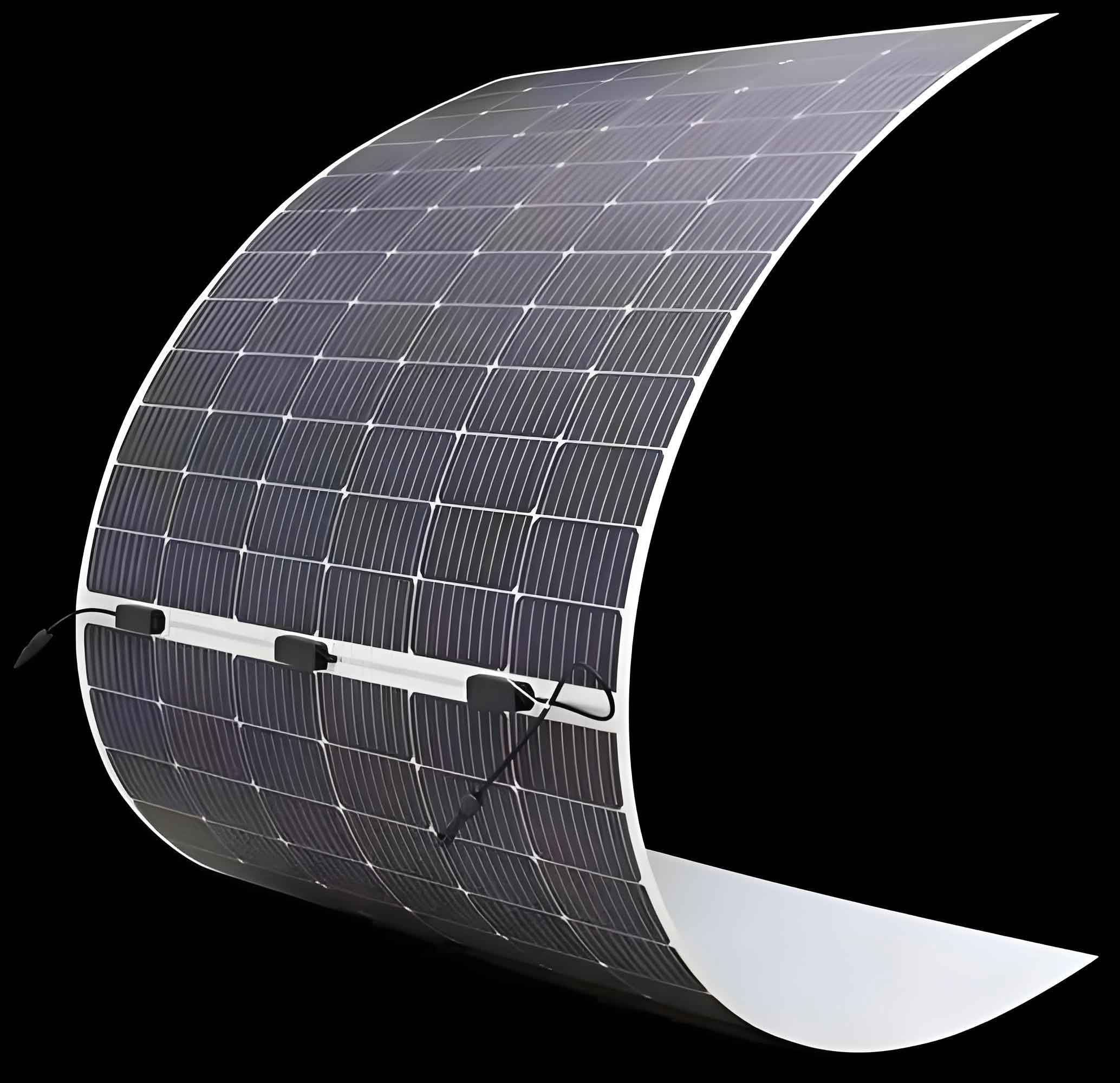
The sun represents the most abundant and exploitable source of energy available to humanity. The primary device for converting this radiant energy into electrical power is the solar cell, often termed the “solar chip” or “photovoltaic cell.” Currently, a significant majority of nations globally are engaged in the widespread application of solar photovoltaic technology. My country initiated practical exploration into solar cells several decades ago, and the industry has since evolved through phases of rapid expansion and strategic consolidation. Within this broader photovoltaic landscape, thin film solar panel technology has emerged as a pivotal alternative, offering the potential to alleviate energy security concerns and enable novel applications due to its unique properties such as flexibility, light weight, and suitability for building integration. National energy development plans have explicitly set ambitious targets for distributed photovoltaic capacity, signaling a major transformation in the industry’s structure where thin film modules are poised to play an increasingly prominent role. Therefore, this article adopts the dual lenses of bibliometric analysis and patent intelligence to conduct a systematic and quantitative investigation into the research and development activities surrounding thin film solar panel technology within my country. By employing various analytical methods, this study aims to dynamically track research frontiers, forecast future developmental trajectories, and offer insights to inform further research and practical application in this critical field.
The analysis of scholarly literature and patent documents relies on established methodologies including statistical analysis, bibliometrics, co-word network analysis, and content analysis to efficiently extract high-value information and trace disciplinary frontiers. The process generally involves stages of data retrieval, cleaning and processing, term extraction, and statistical examination. For the literature component, the CNKI database was selected as the primary source. The search was conducted with the article title set to “薄膜太阳能电池” (thin film solar cell/battery) using a fuzzy matching strategy, covering the period from 1980 to 2018. The initial search yielded 7,194 records. To ensure focus and relevance, non-Chinese publications were excluded, resulting in 2,015 documents. Further rigorous data cleaning was performed to remove non-research items such as conference notices, news commentaries, and technical briefs, culminating in a final corpus of 2,015 valid research articles. For the patent analysis, the Incopat global patent database was queried to identify patent filings related to thin film solar panel technology. Analytical tools including Excel, network analysis software, and CNKI’s built-in visualization system were utilized to perform deep mining and visualization from multiple dimensions: publication volume trends, prolific authors, research hotspots, core journals, institutional contributions, and patent filing landscapes.
Statistical Analysis of Research Publications
Annual Publication Volume
The temporal distribution of publications serves as a key indicator of research activity and interest in the thin film solar panel domain. Analysis reveals that the earliest relevant research article recorded in CNKI dates back to 1980, pioneered by a major national research institute. The overall trend can be segmented into three distinct phases, as illustrated in the data below.
- Phase 1 (1980–2002): A period of foundational exploration and low-volume research output.
- Phase 2 (2003–2011): A phase of steady and gradual growth in publication numbers, reflecting increasing academic and institutional attention.
- Phase 3 (2012–2018): A period characterized by rapid acceleration in research output. This surge aligns closely with the national emphasis on an innovation-driven development strategy, indicating that the field of thin film solar panel research possesses significant vitality and is responding to strategic priorities. It is anticipated that, against the backdrop of industrial transformation and upgrading, the volume of literature in this field will continue to grow at a robust pace.
Analysis of Prolific Authors and Core Research Groups
Identifying key contributors is essential for mapping the intellectual structure of a field. The data shows a degree of concentration among authors. The most prolific author in this domain published 101 papers. However, approximately 50% of all authors contributed only a single paper. According to Price’s Law, the minimum number of publications (m) required to be considered a core author can be calculated as:
$$m = 0.749 \times \sqrt{n_{max}}$$
where \(n_{max}\) is the publication count of the most productive author. With \(n_{max} = 101\), the threshold \(m \approx 7.53\). Therefore, authors with 8 or more publications form the potential core author group.
To provide a more nuanced view beyond simple publication counts, a weighted statistical method was applied to quantify the influence of the top authors. The weighting considers factors like journal impact and citation frequency associated with each author’s work. The following table contrasts the rankings based on simple publication count versus the weighted metric.
| Rank (Arithmetic) | Author Name | Paper Count | Rank (Weighted) | Author Name | Weighted Score |
|---|---|---|---|---|---|
| 01 | Zhao Y | 101 | 01 | Zhao Y | 16.36 |
| 02 | Sun Y | 63 | 02 | Zhang X.D | 13.83 |
| 03 | Zhang X.D | 59 | 03 | Sun Y | 11.42 |
| 04 | Xiong S.Z | 58 | 04 | Lin H.S | 9.25 |
| 05 | Geng X.H | 57 | 05 | Dai S.Y | 8.91 |
| 06 | Dai S.Y | 43 | 06 | Xiong S.Z | 7.44 |
| 07 | Li C.J | 42 | 07 | Wu S.X | 7.06 |
| 08 | Zhang J.Q | 39 | 08 | Xu Y | 6.83 |
| 09 | He Q | 39 | 09 | Li C.J | 6.12 |
| 10 | Wu L.L | 38 | 10 | Zhang R.F | 5.63 |
A stable core author group is considered formed when the collective output of core authors accounts for approximately 50% of the total literature. Calculation shows that the top 50 authors collectively contributed to 69.76% of all publications, significantly exceeding the 50% threshold. This confirms the formation of a stable and productive core research community dedicated to advancing thin film solar panel technology.
Analysis of High-Frequency Keywords and Research Hotspots
Keywords encapsulate the core themes of research articles. After standardizing synonyms (e.g., “solar cell” and “solar battery”), a total of 1,530 unique keywords were identified from 2,007 articles. Filtering for keywords with a frequency of 30 or more reveals the central research foci within the thin film solar panel domain.
| Keyword | Frequency | Keyword | Frequency |
|---|---|---|---|
| Solar Cell | 458 | CdS | 72 |
| Solar Battery | 341 | Photoelectric Conversion Efficiency | 69 |
| Thin Film Solar Cell | 198 | CdTe | 69 |
| CIGS | 134 | Conversion Efficiency | 67 |
| Thin Film | 116 | Amorphous Silicon (a-Si) | 67 |
| Thin Film Solar Battery | 105 | Dye-Sensitized | 64 |
| Thin Film Battery | 89 | Perovskite | 57 |
| Dye-Sensitized Solar Cell (DSSC) | 83 | Polycrystalline Silicon Thin Film | 46 |
| Magnetron Sputtering | 74 | Perovskite Solar Cell | 38 |
| … | … | Copper Zinc Tin Sulfide (CZTS) | 35 |
The analysis clearly identifies several enduring and emerging hotspots. Established thin film solar panel technologies like amorphous silicon (a-Si), copper indium gallium selenide (CIGS), and cadmium telluride (CdTe) remain central to research, with a strong focus on fabrication techniques such as magnetron sputtering and PECVD. Critical performance parameters, especially conversion efficiency (η), are a perpetual theme. The formula for photovoltaic conversion efficiency is fundamental:
$$\eta = \frac{P_{max}}{P_{in}} \times 100\% = \frac{V_{oc} \times I_{sc} \times FF}{P_{in}} \times 100\%$$
where \(P_{max}\) is the maximum power output, \(P_{in}\) is the incident solar power, \(V_{oc}\) is the open-circuit voltage, \(I_{sc}\) is the short-circuit current, and \(FF\) is the fill factor. Furthermore, emerging materials systems are prominently featured, including perovskite solar cells and copper zinc tin sulfide (CZTS, or kesterite) absorbers, indicating the dynamic evolution of the field beyond first- and second-generation thin film solar panel technologies.
Core Journals and Funding Landscape
The distribution of publications across journals helps identify the primary academic communication channels for thin film solar panel research. Of the 1,745 journal articles, they were disseminated across 484 different journals. The distribution is highly skewed, with a small number of journals publishing a large proportion of the work. The core journals, defined as those with the highest publication counts in this field, are listed below.
| Rank | Journal Name | Frequency | Rank | Journal Name | Frequency |
|---|---|---|---|---|---|
| 1 | Acta Energiae Solaris Sinica | 106 | 7 | Journal of Synthetic Crystals | 31 |
| 2 | Solar Energy | 62 | 8 | Acta Physica Sinica | 26 |
| 3 | Chinese Journal of Power Sources | 50 | 9 | Journal of The Chinese Ceramic Society | 22 |
| 4 | Journal of Synthetic Crystals | 41 | 10 | Materials Review | 21 |
| 5 | Acta Physica Sinica | 40 | 11 | Journal of Functional Materials | 20 |
| 6 | Materials Review | 39 | 12 | … | 20 |
The journals can be categorized into four tiers based on publication volume, each tier containing a similar total number of articles (~400-478), demonstrating a broad yet structured dissemination platform for thin film solar panel research.
Institutional Distribution of Research
The analysis of contributing institutions reveals the organizational ecosystem driving thin film solar panel research. The landscape is overwhelmingly dominated by universities, supplemented by research institutes. The top 16 institutions, primarily prestigious universities and national research academies, account for a substantial share of the total publication output. This underscores the fundamental research role played by the academic sector in advancing thin film solar panel science and technology.
Patent Analysis and Technological Development Trends
Patent documents are a vital source of competitive technical intelligence, often disclosing new technological information years before related products appear on the market. A comprehensive search of the Incopat database for patents related to thin film solar panel technology filed in my country between 2000 and 2018 yielded 4,801 patent applications. This figure surpasses the application volumes of other major innovating nations like Japan, the United States, and South Korea for the same technology domain within this jurisdiction, with a peak filing year observed in 2012.
Geographical and Applicant Distribution of Patents
The geographical distribution of patent applications within the country highlights regional innovation clusters. The top regions are economically developed coastal provinces and major metropolitan centers, indicating a correlation between regional industrial capacity, R&D investment, and thin film solar panel innovation output.
| Region | Share of Applications |
|---|---|
| Jiangsu | 14.55% |
| Guangdong | 10.18% |
| Beijing | 9.91% |
| Shanghai | 9.43% |
| Zhejiang | 6.20% |
| Anhui | 4.37% |
| Sichuan | 4.37% |
| Henan | 3.66% |
| Fujian | 3.14% |
| Taiwan (China) | 3.02% |
In stark contrast to the literature landscape, the patent domain is led by corporate entities. The top ten patent applicants are predominantly companies, with a few universities and research institutes appearing on the list. This reflects the market-oriented, applied nature of patenting activity, where firms seek to protect their investments in thin film solar panel manufacturing processes, device architectures, and material compositions. The primary types of granted patents are Utility Model Patents and Invention Patents.
Technology Focus Based on International Patent Classification (IPC)
The International Patent Classification (IPC) system categorizes patents by technological area. The distribution of thin film solar panel patents across IPC sections reveals a overwhelming concentration in Section H (“Electricity”), which covers basic electronic elements and semiconductor devices. This is consistent with the core nature of photovoltaic devices. Significant activity is also found in Section C (“Chemistry”), pertaining to material composition and chemical processes for depositing thin films, and Section B (“Performing Operations; Transporting”), which includes apparatus and processes for manufacturing. The detailed distribution for the top technology codes is presented below, highlighting specific areas like semiconductor devices (H01L), coating processes (C23C), and systems for PV energy generation (H02S, H02J).
Synthesis of Research Hotspots and Future Trajectories
Integrating the findings from the literature and patent analyses provides a holistic view of the current state and future direction of thin film solar panel technology. The knowledge mapping derived from high-frequency keywords and IPC codes converges on several interconnected themes.
Core Material Systems and Performance: Research and development remain intensely focused on the major thin film solar panel families: amorphous and microcrystalline silicon (a-Si/µc-Si), cadmium telluride (CdTe), and copper indium gallium selenide (CIGS). The quest for higher and more stable conversion efficiency (η) is the universal driver. For instance, the efficiency of a multi-junction thin film solar panel can be conceptually modeled by considering the bandgap (Eg) of each absorber layer to better match the solar spectrum:
$$\eta_{multi} = f(E_{g1}, E_{g2}, …)$$
where the optimal combination of bandgaps minimizes thermalization and transmission losses.
Fabrication and Process Technology: Keywords like “magnetron sputtering,” “PECVD” (Plasma-Enhanced Chemical Vapor Deposition), and “electrodeposition” point to the critical importance of deposition techniques. The goal is to develop processes that are scalable, cost-effective, and capable of producing high-quality, uniform thin films with optimal electronic properties. Patent activity heavily features innovations in these manufacturing domains, crucial for reducing the cost per watt of thin film solar panel modules.
Emerging and Next-Generation Technologies: The strong presence of “perovskite solar cell” and “copper zinc tin sulfide (CZTS)” in recent literature signals a vibrant frontier. Perovskite photovoltaics, in particular, have witnessed an unprecedented rise in efficiency in laboratory settings, sparking massive global research interest into their application in tandem architectures or as standalone thin film solar panel options. CZTS represents a actively researched, non-toxic, and earth-abundant alternative to CIGS.
Component and Interface Engineering: Terms like “buffer layer” (e.g., CdS in CIGS and CdTe cells), “heterojunction,” and “TiO2” (in DSSCs) underscore the significance of interface control and device architecture optimization. The performance of a thin film solar panel is not solely determined by the absorber but by the quality of all interfaces and transport layers, which manage charge extraction and minimize recombination losses.
Future Development Trends
Globally, while crystalline silicon continues to dominate the market, significant resources are being directed towards advancing thin film solar panel technologies, with CIGS achieving laboratory efficiencies exceeding 20%. Domestically, the production capacity for thin film modules has shown consistent growth. Looking forward, the development trajectory for thin film solar panel technology will likely emphasize the following aspects:
- Process Simplification and Cost Reduction: Developing deposition and manufacturing techniques that require lower capital investment, simpler infrastructure, and lower material waste is paramount for achieving grid parity and broader adoption.
- Enhanced Stability and Longevity: For many emerging thin film solar panel technologies, especially perovskites, long-term operational stability under real-world conditions (light, heat, moisture) is the primary challenge that must be solved for commercialization.
- Pursuit of Higher Efficiency with Eco-Friendly Materials: The dual goals of pushing the Shockley-Queisser limit for single-junction and tandem thin film solar panels while avoiding toxic or scarce elements (like Cd, In, Te) will guide material innovation. The formula for the detailed balance limit serves as a constant reference:
$$ \eta_{max} = \frac{\int_{E_g}^{\infty} \frac{E}{q} \phi_{sun}(E) dE – \int_{E_g}^{\infty} \frac{E}{q} \phi_{BB}(E) dE}{\int_{0}^{\infty} E \phi_{sun}(E) dE} $$
where \(\phi_{sun}\) is the solar spectral flux and \(\phi_{BB}\) is the blackbody radiation flux from the cell. - Niche Application Expansion: Leveraging inherent advantages such as flexibility, lightweight, and semi-transparency, thin film solar panel technology is poised to expand into building-integrated photovoltaics (BIPV), portable electronics, vehicle-integrated PV, and other innovative applications where traditional rigid panels are unsuitable.
Conclusion and Discussion
This integrated bibliometric and patent analysis of the thin film solar panel research landscape within my country reveals a field that is both mature in its established domains and dynamically evolving at its frontiers. The analysis of publications from 1980 to 2018 demonstrates sustained and accelerating research interest, the formation of a robust core author community, and a diversified set of research hotspots ranging from foundational work on a-Si, CIGS, and CdTe to cutting-edge investigations into perovskites and kesterites. The scholarly discourse is channeled through a set of well-defined core journals and is primarily driven by universities. In parallel, the patent analysis unveils a strong, commercially-oriented innovation engine led by corporate entities, with significant activity concentrated in technologically advanced regions. The technological focus, as seen through IPC codes, aligns closely with the research themes, emphasizing semiconductor device physics, chemical deposition processes, and system integration.
The convergence of literature and patent data points to a future where advancements in thin film solar panel technology will be judged on a holistic set of criteria: not just conversion efficiency, but also manufacturing simplicity, long-term durability, environmental sustainability, and cost-effectiveness. As the global energy transition accelerates, thin film solar panel technology, with its unique value propositions, is well-positioned to move beyond a niche role and contribute significantly to a diversified and resilient photovoltaic energy mix. Future analyses could benefit from incorporating broader international datasets and more granular citation network analyses to further elucidate knowledge flows and the global competitive position in this vital technological arena.