
As a promising energy storage system, sodium-ion batteries have garnered significant attention due to the abundance of sodium resources and their cost advantages, particularly for large-scale energy storage and low-speed electric vehicle applications. With the ongoing development of the sodium-ion battery industry, safety remains a paramount concern, often linked to thermal runaway initiated by heat generation within the cell. In this work, we conduct a systematic investigation into the safety factors of sodium-ion batteries, focusing on the thermal stability of hard carbon anode materials, the effects of over-discharge, standard safety tests (such as crush and nail penetration), and thermal runaway characteristics using accelerated rate calorimetry.
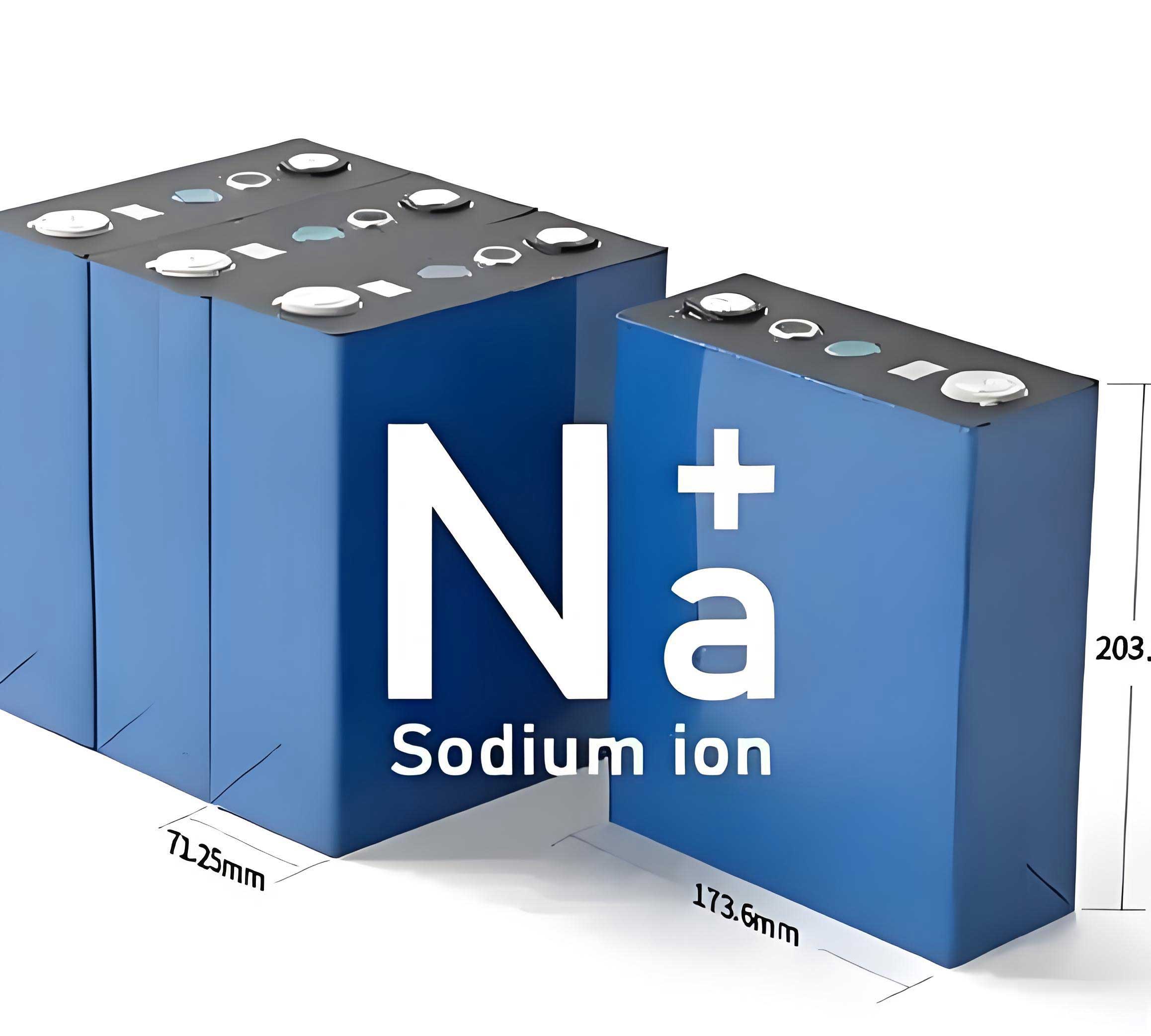
The performance and safety of a sodium-ion battery are intrinsically linked to the properties of its electrode materials and their interfaces. Hard carbon (HC) stands as the most viable anode material for sodium-ion battery applications, offering a competitive reversible capacity and a suitable operating potential versus Na+/Na. The sodium storage mechanism in hard carbon is generally described by a two-step process: sodium adsorption on the disordered surfaces and pores (sloping region above ~0.1 V) followed by sodium insertion into the graphitic-like interlayers (low-voltage plateau near 0.01 V). The formation and stability of the Solid Electrolyte Interphase (SEI) on the hard carbon surface during the initial cycles are critical for long-term cyclability and thermal safety.
The thermal stability of the anode material, especially in its sodiated state, is a fundamental safety parameter. We investigated the thermal behavior of hard carbon at different sodiation levels, corresponding to specific discharge cut-off potentials: 0.9 V (pre-SEI formation), 0.5 V (during/after SEI formation), 0.15 V (end of sloping region), and 0.01 V (fully sodiated, end of plateau). The differential scanning calorimetry (DSC) profiles were analyzed both with and without the presence of a standard carbonate-based electrolyte (0.8 mol/L NaPF6 in PC/EMC with 2% FEC).
Without electrolyte, the DSC curves for samples discharged to 0.9 V, 0.5 V, and 0.15 V showed no sharp exothermic peaks but exhibited varying baseline slopes, indicating gradual reactions. The sample discharged to 0.01 V, however, showed a distinct exothermic peak near 250°C, corresponding to the decomposition of the highly sodiated hard carbon. The presence of electrolyte drastically altered the thermal response. All sodiated samples with electrolyte showed a minor exothermic event around 100°C, attributed to the decomposition of the SEI layer. For the fully sodiated hard carbon (0.01 V), two intense, sharp exothermic peaks appeared at approximately 150°C and 200°C. These peaks signify violent reactions between the intercalated sodium within the carbon matrix and the organic electrolyte, following the breakdown of the protective SEI layer. This highlights that the electrolyte presence significantly reduces the thermal stability of the sodiated anode, and the heat release intensifies with the degree of sodiation.
The SEI composition at different sodiation depths was analyzed via X-ray Photoelectron Spectroscopy (XPS). The results indicated that the SEI layer formed at 0.15 V was richer in organic carbonate species (e.g., ROCO2Na) and covalent-bonded fluorine compounds, whereas the layer at 0.5 V contained more fluorinated polymeric species (e.g., CF2-CH2 from FEC decomposition) and NaF. The more inorganic/organic hybrid structure at lower potential (0.15 V) might contribute differently to the interfacial thermal stability. The decomposition kinetics of the SEI layer can be conceptually described by an Arrhenius-type equation:
$$ k_{SEI} = A \exp\left(-\frac{E_{a, SEI}}{RT}\right) $$
where \(k_{SEI}\) is the decomposition rate constant, \(A\) is the pre-exponential factor, \(E_{a, SEI}\) is the apparent activation energy for SEI breakdown, \(R\) is the universal gas constant, and \(T\) is the absolute temperature. The subsequent exothermic reaction between the intercalated sodium (NaxHC) and the electrolyte solvent (Solv) can be represented as:
$$ \text{Na}_x\text{HC} + \delta \text{Solv} \rightarrow \text{HC} + \text{Na-solvates} + \text{Heat} $$
The total heat flow (\( \dot{Q}_{anode} \)) detected in DSC is a superposition of these sequential and possibly overlapping reactions.
| Sodiation State (Cut-off Voltage) | Major DSC Feature without Electrolyte | Major DSC Features with Electrolyte | Inferred Reaction |
|---|---|---|---|
| 0.9 V (Low Na) | Broad exotherm >300°C | Very minor exotherm ~100°C | SEI decomposition; minor reaction. |
| 0.5 V (Medium Na) | Gradual baseline shift | Exotherm ~100°C | SEI decomposition. |
| 0.15 V (High Na) | Gradual baseline shift | Exotherm ~100°C | SEI decomposition. |
| 0.01 V (Full Na) | Sharp exotherm ~250°C | Exotherm ~100°C, Strong exotherms ~150°C & ~200°C | SEI decomposition followed by violent Na-electrolyte reaction. |
Beyond material-level analysis, the safety of a complete sodium-ion battery cell must be evaluated under various electrical and mechanical abuse conditions. We fabricated 1 Ah pouch cells using a NaNi1/3Fe1/3Mn1/3O2 cathode, a hard carbon anode, and the aforementioned electrolyte. The cells were subjected to deep discharge (over-discharge) tests to understand the resilience of the sodium-ion battery system. Cells were cycled at 1C rate, with specific cycles (100th, 200th, 300th, 400th, 500th) including a deep discharge step to 0 V at either 0.1C or 1C rate, before resuming normal cycling.
Remarkably, the cells recovered their capacity after each over-discharge event. The long-term cycling performance (over 500 cycles) of the over-discharged cells was nearly identical to that of a control cell that was never discharged below the normal cut-off of 1.5 V. The current rate used for the over-discharge (0.1C vs. 1C) had no significant impact on this recovery behavior. Electrochemical Impedance Spectroscopy (EIS) revealed a temporary increase in charge-transfer resistance (\(R_{ct}\)) immediately after deep discharge, which gradually decreased upon subsequent cycling, aligning with the observed capacity recovery. This robustness can be attributed to the aluminum current collector used for both electrodes in a sodium-ion battery, which does not alloy with sodium, thus avoiding the catastrophic copper dissolution that can occur in over-discharged lithium-ion batteries. The capacity fade over cycling can be modeled empirically:
$$ C_n = C_0 \cdot \exp(-\beta n) – \sum \Delta C_{OD, i} \cdot \exp(-k_{rec} \cdot \Delta n_i) $$
where \(C_n\) is the capacity at cycle \(n\), \(C_0\) is the initial capacity, \(\beta\) is the baseline fade rate, \(\Delta C_{OD, i}\) is the capacity loss after the \(i\)-th over-discharge event, \(k_{rec}\) is a recovery rate constant, and \(\Delta n_i\) is the number of cycles since that event. Our data suggests \(k_{rec}\) is sufficiently high for \(\Delta C_{OD, i}\) to become negligible quickly.
Standard safety tests, including crush and nail penetration, were performed on fully charged (100% SOC) pouch cells. The tests were conducted according to common safety standards. The results demonstrated excellent safety performance of the sodium-ion battery under these abuse conditions.
| Safety Test | Test Condition | Observation | Result |
|---|---|---|---|
| Crush Test | 32 mm diameter hemispherical head; applied until significant deformation. | Severe deformation of the pouch cell. No thermal event observed during or after crushing. | No Fire, No Explosion. |
| Nail Penetration | 3 mm diameter steel nail; penetration at a speed of 8 mm/s. | Nail fully penetrated the cell. No thermal reaction observed during or after penetration. | No Fire, No Explosion. |
The successful passage of these tests indicates a degree of inherent safety in the studied sodium-ion battery chemistry under mechanical abuse, likely related to the thermal stability of the materials and the relatively lower energy density compared to high-nickel lithium-ion systems.
To quantitatively assess the thermal runaway propensity, Accelerating Rate Calorimetry (ARC) tests were conducted on pouch cells at various States of Charge (SOC: 0%, 30%, 40%, 50%, 60%, 80%). ARC provides adiabatic conditions, allowing measurement of the cell’s self-heating rate as a function of temperature. Key parameters are the onset temperature of self-heating (\(T_0\)) and the thermal runaway temperature (\(T_c\), where dT/dt > 1°C/min continuously).
The ARC data revealed a non-monotonic relationship between SOC and thermal stability. The onset temperature \(T_0\) was highest for the cell at 30% SOC (166.6°C), suggesting this is a particularly stable state for transport or storage. For other SOCs, \(T_0\) ranged between 128.2°C (40% SOC) and 138.6°C (0% SOC). Notably, a full thermal runaway event, characterized by a sharp, uncontrolled temperature rise, was only triggered in the cell at 80% SOC, with a \(T_c\) of 240.9°C. Cells at lower SOCs exhibited self-heating but did not escalate into runaway under the test conditions.
The overall heat generation in a cell leading to runaway is a complex sum of reactions from anode, cathode, and electrolyte. The self-heating rate (dT/dt) can be expressed as:
$$ \frac{dT}{dt} = \frac{1}{m C_p} \sum_i \Delta H_i \frac{d\alpha_i}{dt} $$
where \(m C_p\) is the heat capacity of the cell, \(\Delta H_i\) is the reaction enthalpy, and \(d\alpha_i/dt\) is the rate of progress for reaction \(i\) (e.g., SEI decomposition, anode-electrolyte reaction, cathode decomposition, electrolyte decomposition). Thermal runaway occurs when the heat generation rate exceeds the heat dissipation rate, leading to auto-accelerating reactions. The threshold condition can be described by the Frank-Kamenetskii parameter for a given geometry and activation energy. Our ARC data for the sodium-ion battery indicates a high threshold for thermal runaway, achieved only at high SOC.
| State of Charge (SOC) | Onset Temperature \(T_0\) (°C) | Thermal Runaway Temperature \(T_c\) (°C) | Observations |
|---|---|---|---|
| 80% | 136.6 | 240.9 | Clear thermal runaway event observed. |
| 60% | 131.6 | — | Self-heating detected, no runaway. |
| 50% | 136.3 | — | Self-heating detected, no runaway. |
| 40% | 128.2 | — | Self-heating detected, no runaway. |
| 30% | 166.6 | — | Self-heating detected at highest T0, no runaway. |
| 0% | 138.6 | — | Self-heating detected, no runaway. |
In conclusion, this comprehensive study on the safety of sodium-ion batteries, from material to cell level, yields several key findings. The thermal stability of the hard carbon anode is strongly dependent on its sodiation level and is significantly reduced by the presence of electrolyte, with exothermic reactions initiating around 100°C (SEI breakdown) and intensifying at 150-200°C for the fully sodiated state. At the cell level, the sodium-ion battery demonstrates remarkable tolerance to over-discharge down to 0 V, with no permanent capacity loss, attributable to the use of aluminum anode current collectors. Standard crush and nail penetration tests confirm the high safety of the pouch cell design under mechanical abuse. Finally, ARC testing quantifies the thermal runaway behavior, identifying 30% SOC as the most thermally stable state (highest \(T_0\)) and indicating that full thermal runaway in this cell chemistry is only triggered at high SOC (80% in this case) under adiabatic conditions. These results provide critical data for the safety assessment and design of sodium-ion battery systems, supporting their potential for safe large-scale energy storage applications.