
Under the global “dual carbon” strategy, electrochemical energy storage technology has become a core pillar of the energy transition. However, the uneven geographical distribution and volatile pricing of lithium resources pose significant constraints on the sustainable development of lithium-ion batteries. Sodium-ion batteries, leveraging advantages such as abundant reserves, fast charge/discharge rates, long cycle life, and superior low-temperature performance, have carved out distinct application niches in areas like low-speed electric vehicles, grid-scale energy storage, and backup power systems. The cathode material is a critical factor determining the performance and cost of sodium-ion batteries. Current research and industrial applications primarily revolve around three cathode material systems: layered oxides, polyanionic compounds, and Prussian blue analogues. Nonetheless, Prussian blue analogues face substantial practical challenges due to key technical bottlenecks like residual crystal water and lattice structure defects. Consequently, the large-capacity sodium-ion batteries achieving mass production today are predominantly based on layered oxide and polyanionic cathode materials. While layered oxide cathodes offer higher energy density, polyanionic materials exhibit excellent structural stability and long cycle life.
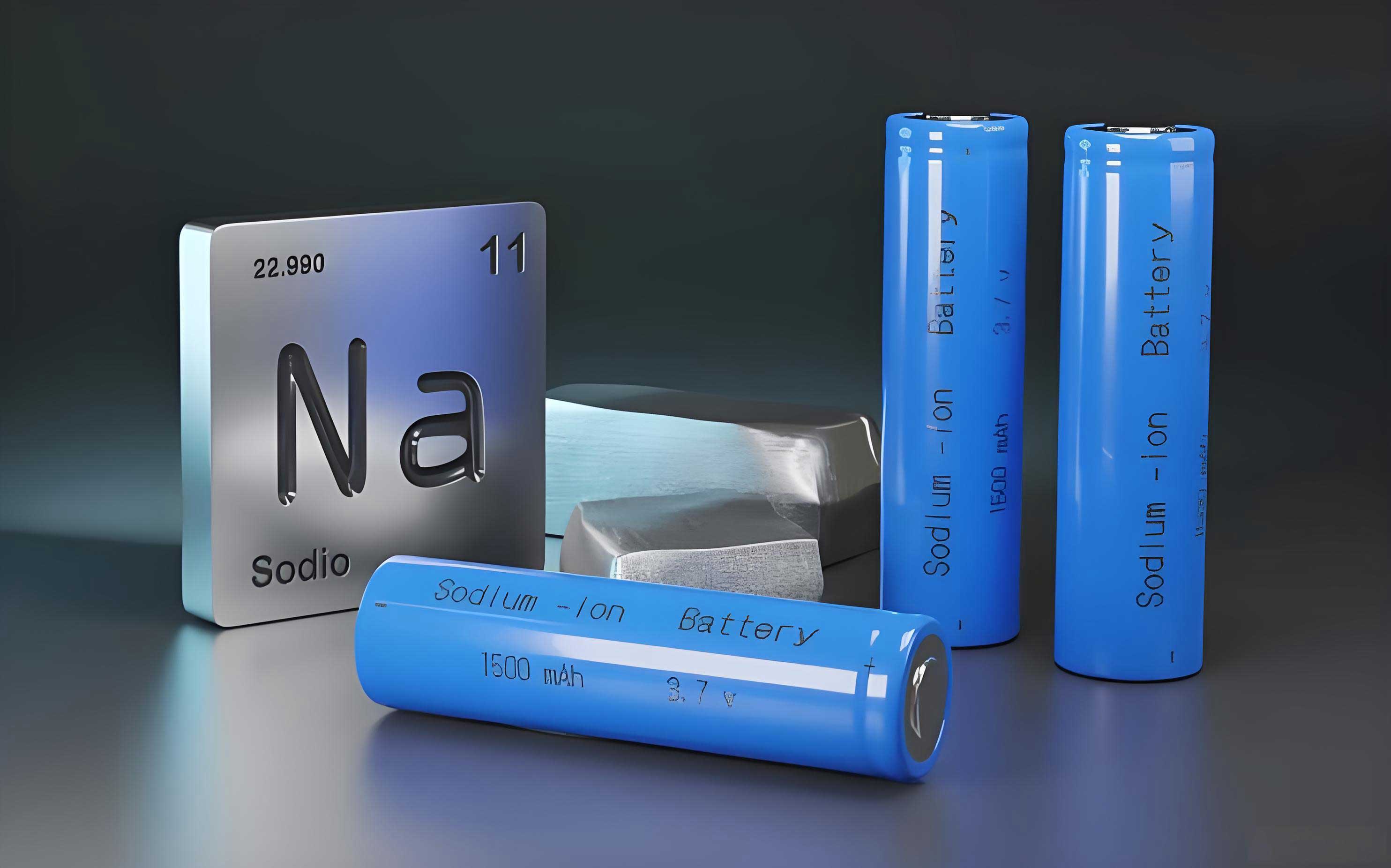
Similar to lithium-ion batteries, sodium-ion batteries can undergo thermal runaway under mechanical, thermal, and electrical abuse conditions, releasing large volumes of flammable, explosive, toxic, and harmful gases during the process. However, sodium-ion batteries with different cathode materials exhibit significant variations in their thermal runaway behavior. Most safety research on thermal runaway has focused on layered oxide systems, whereas studies on the thermal safety characteristics of large-capacity polyanionic sodium-ion batteries remain relatively scarce. This knowledge gap necessitates dedicated investigation to inform safe design and application.
This study focuses on a 160 Ah large-capacity polyanionic sodium-ion battery. Utilizing an adiabatic accelerating rate calorimeter (ARC) and a 320 L sealed pressure vessel experimental system, we investigate the thermal runaway and gas generation characteristics of the battery under adiabatic conditions, external heating abuse, and 0.5C overcharge abuse. The experimental results provide crucial data and theoretical insights for the thermal safety design and fire safety strategy formulation of polyanionic sodium-ion batteries in practical applications.
1. Experimental Design
1.1 Sample Battery
The subject of this study is a prismatic aluminum-cased 160 Ah sodium-ion battery cell. The energy density of this sodium-ion battery is approximately 98 Wh/kg. The fundamental parameters of the battery are detailed in Table 1, and a physical image is provided in the introduction.
| Parameter | Value / Specification |
|---|---|
| Cathode Material | Na4M3(PO4)2P2O7 (M = Transition Metal, e.g., Sodium Iron Phosphate Pyrophosphate) |
| Anode Material | Hard Carbon |
| Dimensions (Width × Height × Thickness) | (174 ± 0.5) mm × (207 ± 0.5) mm × (72 ± 0.8) mm |
| Nominal Capacity | 160 Ah |
| Nominal Energy | 450 Wh |
| Nominal Voltage | 3.0 V |
| Charge Cut-off Voltage | 3.45 V |
| Discharge Cut-off Voltage | 1.5 V |
| Weight | 4600 ± 100 g |
| State of Charge (SOC) for Test | 100% |
1.2 Apparatus and Test Protocols
(1) Adiabatic Accelerating Rate Calorimetry (ARC) Experiment
An ARC was used to study the “self-heating → venting → thermal runaway” process of the sodium-ion battery under adiabatic conditions. The apparatus was set with a maximum temperature limit of 315 °C, a self-heating detection threshold of 0.02 °C/min, and a temperature step of 5.0 °C. Prior to testing, the sample sodium-ion battery was conditioned to 100% SOC using a battery cycler. Thermocouples were attached to the battery surface to record temperature evolution. The cell was secured using metal clamping plates on its two large faces.
(2) Single Cell Thermal Runaway Test under Abuse Conditions
A sealed pressure vessel with an internal volume of 320 L was employed to trigger thermal runaway via external heating or overcharge. The vessel is integrated with a vacuum system, nitrogen filling system, heating system, gas sampling system, pressure sensors, and multi-channel thermocouples for data acquisition (battery surface temperature, voltage, vessel pressure). For the heating test, two heating plates (140 mm × 180 mm × 2 mm) were placed against the two large faces of the sodium-ion battery. Thermocouples beneath the heating plates provided feedback for temperature control. Additional thermocouples were placed on the battery surfaces, sides, and near the terminals and safety valve. To eliminate interference from atmospheric components, the vessel was evacuated and then purged with nitrogen prior to each test, creating an inert atmosphere for gas analysis. The heating rate was programmed at 7 °C/min. For the overcharge test, the sodium-ion battery was charged at a constant current of 80 A (0.5C) beyond its cut-off voltage using a power supply, without external heaters.
2. Results and Discussion
2.1 Thermal Runaway Characteristics under Adiabatic Conditions
Figure 1a illustrates the evolution of the battery surface temperature and its derivative during adiabatic thermal runaway. The process can be segmented into three stages demarcated by three characteristic temperature points: the self-heating onset temperature (Tonset), the thermal runaway trigger temperature (Ttr), and the thermal runaway maximum temperature (Tmax). Self-heating onset is defined when the self-heating rate reaches 0.02 °C/min. For this polyanionic sodium-ion battery, Tonset was 100.94 °C, with a corresponding self-heating rate of 0.021 °C/min. At this point, the battery voltage was 3.25 V, a minor drop from the initial 3.29 V, indicating stable cathode structure and absence of internal short circuit from separator melt (typical for polyolefin separators >~130 °C). This onset temperature aligns with the reported decomposition range (80-120 °C) of the solid electrolyte interphase (SEI) layer on hard carbon anodes. Therefore, this initial stage is attributed to the exothermic decomposition of the SEI, exposing the highly active anode and triggering further reductive reactions with the electrolyte.
As temperature rose, internal chemical reactions generated gas, and electrolyte evaporation increased internal pressure. At 2778.21 min, the safety valve opened upon reaching its pressure limit. The venting temperature (Tsv) was 143.07 °C. Due to the Joule-Thomson effect, venting gas caused a brief temperature drop from 143.07 °C to 142.09 °C, temporarily halting self-heating. The ARC switched to heating mode until self-heating recommenced at 151.62 °C. Subsequent electrolyte decomposition and electrode reactions released substantial heat, accelerating the temperature rise and creating a positive feedback loop. At 3165.75 min, the temperature reached approximately 180 °C, and the voltage plummeted from 3.11 V to 0.03 V within seconds (Figure 1a), while the self-heating rate surged to 2855.28 °C/min (Figure 1b). This voltage collapse and explosive heating rate are direct indicators of a large-scale internal short circuit within the sodium-ion battery. High temperature caused separator melt and shrinkage, loss of electronic insulation, leading to direct contact between the cathode and anode. The massive joule heat from the short circuit, combined with intensified electrolyte decomposition and electrode reactions, formed a positive feedback loop culminating in full thermal runaway. As the cell contained two jellyrolls, their thermal runaway was slightly staggered, resulting in two peaks in the self-heating rate curve: 2855.28 °C/min and 2343.62 °C/min. The thermal runaway culminated at 3183.54 min with Tmax = 247.02 °C. This maximum temperature is significantly lower than reported values for LiFePO4 batteries of similar format, highlighting a key thermal safety attribute of this polyanionic sodium-ion battery chemistry. Figure 1b further plots the self-heating rate against temperature, showing the peak rate of 2855.28 °C/min occurred at 209.56 °C.
The maximum temperatures at other locations (cathode side, anode side, near terminals) ranged from 238.1 °C to 254.0 °C. The use of aluminum for both current collectors in this sodium-ion battery resulted in similar thermal profiles near the terminals. Post-test weighing indicated a mass loss of 20.01%.
2.2 Thermal Runaway and Gas Generation under External Heating
Figure 2 shows the temperature profiles of the sodium-ion battery during the heating test. The heating plates increased the battery temperature steadily. At 1447 s, a slight pressure increase (102.9 to 106.2 kPa) and a small temperature dip at the sides indicated safety valve opening. The temperatures at the large face thermocouples (T3, T4) were 123.23 °C and 125.86 °C, respectively. Thermal runaway was triggered at 1456 s, marked by a rapid temperature rise exceeding the heating rate. The maximum temperatures recorded at the large faces (T3, T4) were both approximately 252.4 °C. The peak temperature near the positive terminal (T7) was 273.32 °C. Post-test mass loss was 20.12%.
The pressure evolution inside the 320 L vessel is shown in Figure 3a. During thermal runaway of the sodium-ion battery, the pressure rose rapidly to a peak of 174.1 kPa before stabilizing at 129.7 kPa. The total gas released was calculated using the ideal gas law, comparing the gas moles at initial conditions (101.3 kPa, 25 °C) and post-thermal runaway stable conditions (129.7 kPa, 25 °C):
$$n = \frac{PV}{RT}$$
Where \(n\) is the number of moles, \(P\) is pressure (kPa), \(V\) is volume (L), \(R\) is the gas constant (8.3145 L·kPa/mol·K), and \(T\) is temperature (K). The calculated gas release was 3.8 mol, corresponding to 93.1 L at 25 °C. The normalized gas yield was 0.58 L/Ah, comparable to values reported for large-format LiFePO4 batteries under similar abuse.
Gas composition analysis via gas chromatography (Figure 3b) revealed that CO2 (37.97%), H2 (31.25%), CO (11.41%), and C3H6 (propylene, 9.38%) were the primary components, collectively accounting for over 89.99% of the total gas generated by the sodium-ion battery during thermal runaway. This composition is consistent with findings for other polyanionic sodium-ion batteries under heating abuse.
2.3 Thermal Runaway and Gas Generation under Overcharge Abuse
Figure 4 presents the temperature and voltage curves for the sodium-ion battery during 0.5C overcharge. As overcharge proceeded, voltage and temperature increased. At 2007 s, the voltage spiked to 30.04 V, with cell temperatures between 74-95 °C. Thermal runaway initiated at 2080 s. The maximum temperature recorded was 272.04 °C. The total overcharged capacity was 47.91 Ah, corresponding to an overcharge SOC of 29.94%. Post-test mass loss was 21.19%.
The pressure curve (Figure 5a) shows a peak of 181.40 kPa during the thermal runaway event of the sodium-ion battery, stabilizing at 136.80 kPa. The calculated total gas release was 107.8 L, higher than under heating conditions. This increase is attributed to electrochemical abuse-specific side reactions like intensive electrolyte oxidation at the cathode and sodium plating/decomposition at the anode. Gas composition analysis (Figure 5b) showed H2 (43.09%), CO2 (27.68%), CO (10.87%), and C3H6 (6.55%) as the dominant species (~88.18% combined). The higher proportion of H2 under overcharge, compared to heating, likely stems from vigorous reductive decomposition of electrolyte at the anode driven by the extremely low potential caused by excessive sodium plating. The specific gas composition and volume from a sodium-ion battery are influenced by a complex interplay of electrochemical and thermal reactions dependent on the abuse condition and cell chemistry.
2.4 Comparative Analysis of Thermal Runaway for Different Sodium-Ion Battery Cathodes
To elucidate the impact of cathode material on thermal safety, the results for this 160 Ah polyanionic sodium-ion battery are compared with literature data for a similarly sized 180 Ah layered oxide sodium-ion battery. The data, summarized in Tables 2-4, reveal stark differences.
The polyanionic sodium-ion battery demonstrated significantly lower thermal runaway temperatures under all conditions. Its adiabatic Tmax of 247.02 °C is markedly lower than the 444.82 °C for the layered oxide cell. This trend holds for abuse conditions, with the polyanionic cell’s peak temperatures (~272 °C) far below those of the layered oxide cell (>484 °C). Furthermore, the total gas release and mass loss rate for the polyanionic sodium-ion battery were lower. Its overcharge gas volume (107.8 L) was less than half that of the layered oxide cell (200.26 L). However, regarding overcharge tolerance, the layered oxide sodium-ion battery exhibited superior resilience, withstanding an overcharge SOC of 190.84% before thermal runaway, vastly exceeding the 29.94% threshold for the polyanionic cell. This comparison underscores a fundamental trade-off: the polyanionic sodium-ion battery benefits from the stable crystal structure of its cathode, leading to lower inherent thermal reactivity and mitigated thermal runaway severity. In contrast, the layered oxide sodium-ion battery offers higher overcharge tolerance but undergoes a much more violent thermal runaway with greater associated hazards.
| Battery Type | Tonset (°C) | Ttr (°C) | Tmax (°C) |
|---|---|---|---|
| 160 Ah Polyanionic Sodium-Ion Battery (This work) | 100.94 | 180.51 | 247.02 |
| 180 Ah Layered Oxide Sodium-Ion Battery (Reference) | 115.92 | 201.30 | 444.82 |
| Battery Type | Total Gas (L) | Peak Temp. (°C) | Main Gas Components (vol%) |
|---|---|---|---|
| 160 Ah Polyanionic Sodium-Ion Battery | 93.10 | 273.32 | CO2 (37.97%), H2 (31.25%), CO (11.41%), C3H6 (9.38%) |
| 180 Ah Layered Oxide Sodium-Ion Battery | 123.25 | 484.51 | H2 (35.39%), CO2 (30.95%), CO (19.16%), C2H4 (4.34%) |
| Battery Type | Total Gas (L) | Peak Temp. (°C) | Overcharge SOC (%) | Main Gas Components (vol%) |
|---|---|---|---|---|
| 160 Ah Polyanionic Sodium-Ion Battery | 107.80 | 272.04 | 129.94 | H2 (43.09%), CO2 (27.68%), CO (10.87%), C3H6 (6.55%) |
| 180 Ah Layered Oxide Sodium-Ion Battery | 200.26 | 573.60 | 190.84 | CO2 (29.08%), H2 (28.10%), CO (20.79%), C2H4 (14.43%) |
3. Conclusion
This study comprehensively investigated the thermal runaway behavior of a 160 Ah polyanionic sodium-ion battery under adiabatic, external heating, and 0.5C overcharge conditions. Key findings are summarized as follows:
- Under adiabatic conditions, the characteristic temperatures for the sodium-ion battery were determined: self-heating onset Tonset = 100.94 °C, safety venting Tsv = 143.07 °C, thermal runaway trigger Ttr = 180.51 °C, and maximum temperature Tmax = 247.02 °C. The peak self-heating rate reached 2855.28 °C/min.
- Under external heating, the sodium-ion battery reached a peak temperature of 273.32 °C. The total gas released was 93.1 L (0.58 L/Ah), primarily composed of CO2 (37.97%), H2 (31.25%), CO (11.41%), and C3H6 (9.38%). The mass loss was 20.12%.
- Under 0.5C overcharge, the sodium-ion battery underwent thermal runaway after an overcharge of 29.94% SOC. The peak temperature was 272.04 °C. The total gas release was 107.8 L, with H2 (43.09%) and CO2 (27.68%) as the dominant components. The mass loss was 21.19%.
- Comparative analysis with layered oxide sodium-ion batteries reveals distinct safety profiles. The polyanionic sodium-ion battery leverages its robust crystal structure to achieve significantly lower thermal runaway temperatures, offering advantages in intrinsic thermal stability and mitigated reaction violence. Conversely, the layered oxide sodium-ion battery exhibits a higher overcharge capacity tolerance but undergoes a far more severe thermal runaway with greater associated hazards. Critically, for the studied polyanionic sodium-ion battery, the proportion of flammable gases (H2, CO, C3H6) in the vent gas consistently exceeded 50% across abuse conditions, indicating that despite lower temperatures, a significant combustion and explosion risk remains upon thermal runaway.
This work provides essential experimental data and insights into the thermal safety characteristics of large-capacity polyanionic sodium-ion batteries, serving as a valuable reference for their safety design and risk assessment in practical energy storage applications.