
In the field of energy storage, LiFePO4 batteries have gained widespread adoption due to their inherent safety characteristics, including thermal stability and resistance to thermal runaway. However, operational conditions such as float charging—a method used to maintain battery capacity by compensating for self-discharge—can pose risks when voltages exceed nominal levels. This study focuses on the thermal safety of soft-pack LiFePO4 batteries subjected to high-voltage float charging, an area that remains underexplored despite its practical implications for battery management systems in energy storage applications. We investigate the effects of elevated float voltages on battery integrity, thermal runaway behavior, and material stability, aiming to provide insights for safer battery operation.
Float charging is commonly employed in stationary energy storage systems to keep batteries at full charge over extended periods. While typical float voltages are set within safe limits, anomalies in battery management systems can lead to overvoltage conditions, potentially triggering degradation mechanisms. Previous research has highlighted issues like electrolyte decomposition, gas evolution, and lithium plating under high-voltage stress, but comprehensive studies on thermal safety post-float charging are limited. Our work addresses this gap by examining LiFePO4 batteries—specifically, 21 Ah soft-pack cells—under float voltages of 4.05 V, 4.25 V, 4.50 V, and 5.0 V at 25°C for 24 hours. We analyze changes in battery morphology, performance during thermal runaway tests, and the thermal stability of internal components using accelerated rate calorimetry and thermal analysis techniques.
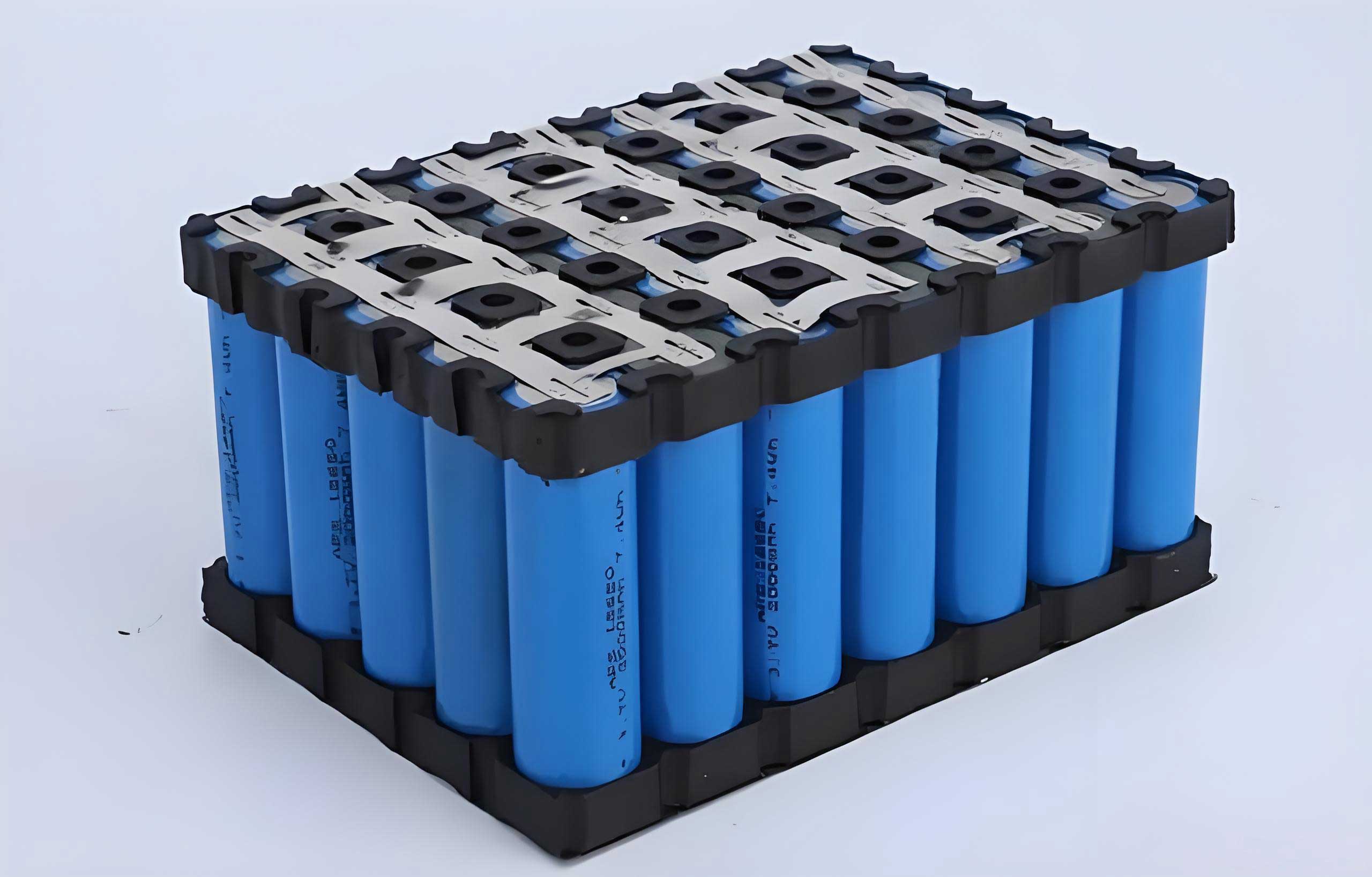
The LiFePO4 battery, with its olivine structure, offers advantages such as low cost, long cycle life, and environmental friendliness, but its safety under abusive conditions warrants thorough evaluation. In this study, we adopt a first-person perspective to detail our experimental approach and findings. We begin by describing the battery specifications and float charging protocol, followed by thermal runaway testing using an adiabatic calorimeter. Material analysis is conducted via thermogravimetric analysis to assess the stability of electrodes and separators. Our results reveal that high-voltage float charging induces swelling, lithium deposition, and material dissolution, which exacerbate thermal instability. The LiFePO4 battery, while robust, shows degraded safety margins when subjected to voltages above 4.25 V, emphasizing the need for precise voltage control in energy storage systems.
To quantify the effects, we present data in tables and derive formulas to model thermal behavior. For instance, the energy release during thermal runaway can be approximated using the equation for heat generation: $$Q = m \cdot C_p \cdot \Delta T$$ where \(Q\) is the heat energy, \(m\) is the mass, \(C_p\) is the specific heat capacity, and \(\Delta T\) is the temperature rise. Additionally, the Arrhenius equation describes the temperature dependence of reaction rates in battery materials: $$k = A \exp\left(-\frac{E_a}{RT}\right)$$ where \(k\) is the rate constant, \(A\) is the pre-exponential factor, \(E_a\) is the activation energy, \(R\) is the gas constant, and \(T\) is the temperature. These concepts help explain the observed thermal runaway characteristics in LiFePO4 batteries after float charging.
Our experimental setup involved commercially available soft-pack LiFePO4 batteries with a nominal capacity of 21 Ah. The cells were first activated through standard charge-discharge cycles (0.2 C charge, 0.5 C discharge) to ensure consistent performance. Float charging was performed at constant voltages of 4.05 V, 4.25 V, 4.50 V, and 5.0 V for 24 hours in a temperature-controlled environment at 25°C. Post-float charging, we observed physical changes such as swelling and measured the charge input. The LiFePO4 battery at 5.0 V exhibited severe swelling and rupture, indicating critical failure. For thermal runaway analysis, we used an adiabatic accelerating rate calorimeter (ARC) operating in “Heat-Wait-Search” mode. The battery was heated from 35°C to 250°C with step increments of 5°C, and we monitored temperature, voltage, and pressure until thermal runaway occurred. Key parameters like rupture temperature (\(T_r\)), voltage drop temperature (\(T_d\)), thermal runaway trigger temperature (\(T_s\)), and maximum temperature (\(T_m\)) were recorded. Material samples from disassembled cells were analyzed using thermogravimetric analysis (TGA) to determine decomposition temperatures and weight loss profiles.
The results from float charging are summarized in Table 1. As the float voltage increased, the LiFePO4 battery showed progressive swelling, with the most severe case at 5.0 V leading to rupture. The charge input during float charging also rose, particularly at 5.0 V, suggesting accelerated side reactions. The LiFePO4 battery at lower voltages (4.05 V) remained intact, while higher voltages induced gas evolution from electrolyte decomposition and lithium plating. This aligns with known mechanisms where overvoltage promotes oxidative reactions at the cathode and reductive processes at the anode, generating gases like CO₂ and hydrocarbons. The LiFePO4 battery’s internal structure was compromised at 5.0 V, with negative electrode dissolution and copper current collector exposure, highlighting the risks of high-voltage float charging.
| Float Voltage (V) | Charge Input (Ah) | Swelling Observation | Physical Condition |
|---|---|---|---|
| 4.05 | ~0.5 | None | Intact |
| 4.25 | ~0.6 | Moderate | Swollen |
| 4.50 | ~0.7 | Severe | Swollen |
| 5.00 | 2.615 | Extreme | Ruptured |
Thermal runaway testing revealed significant differences in safety parameters. The LiFePO4 battery subjected to 4.05 V float charging exhibited a rupture temperature of 132.76°C, while at 4.50 V, it dropped to 125.56°C, indicating that pre-swelling weakens the battery structure. Interestingly, the thermal runaway trigger temperature increased with float voltage: 249.86°C for 4.05 V, 275.68°C for 4.25 V, and 278.65°C for 4.50 V. This suggests that early gas release and pressure relief might delay the onset of thermal runaway, but the overall safety is not improved. The maximum temperature during thermal runaway escalated from 484.67°C to 516.08°C as float voltage rose, and the maximum heating rate increased from 298.67°C/min to 315.08°C/min. The time from trigger to peak temperature shortened, implying more violent reactions. These findings underscore that high-voltage float charging degrades the thermal stability of LiFePO4 batteries, making them more prone to intense thermal events.
| Float Voltage (V) | Rupture Temperature, \(T_r\) (°C) | Voltage Drop Temperature, \(T_d\) (°C) | Thermal Runaway Trigger, \(T_s\) (°C) | Maximum Temperature, \(T_m\) (°C) | Max Heating Rate (℃/min) | Time \(T_s\) to \(T_m\) (s) |
|---|---|---|---|---|---|---|
| 4.05 | 132.76 | 144.46 | 249.86 | 484.67 | 298.67 | 39 |
| 4.25 | 131.41 | 149.82 | 275.68 | 520.55 | 305.35 | 36 |
| 4.50 | 125.56 | 152.73 | 278.65 | 516.08 | 315.08 | 28 |
Material thermal stability analysis provided further insights. The LiFePO4 battery components—positive electrode, negative electrode, and separator—were examined after 5.0 V float charging. The positive electrode, made of LiFePO4, showed no significant decomposition up to 600°C, with only minor weight loss (4.58%) attributed to residual electrolyte evaporation between 50.02°C and 139.63°C. This confirms the inherent thermal robustness of the LiFePO4 cathode material, which is a key safety feature. The negative electrode, composed of graphite, exhibited an endothermic peak at 80.15°C due to SEI layer decomposition, with a heat absorption of 102.54 J/g. Beyond 313.87°C, gradual weight loss occurred, but no major decomposition was observed, indicating good stability. The separator, however, displayed critical transitions: a phase change melt at 148.10°C (with heat absorption of 141.71 J/g) and decomposition starting at 367.06°C, leading to 83.77% weight loss by 520.61°C. The heat flow curve showed a peak at 487.73°C with 961.18 J/g absorption. These results highlight that the separator is the weakest link in the LiFePO4 battery under thermal abuse, while the electrodes remain stable.
The degradation mechanisms in LiFePO4 batteries under high-voltage float charging can be modeled using electrochemical principles. For instance, the overpotential during float charging drives side reactions such as electrolyte oxidation at the cathode and lithium plating at the anode. The current density for lithium deposition can be expressed by the Butler-Volmer equation: $$i = i_0 \left[\exp\left(\frac{\alpha n F \eta}{RT}\right) – \exp\left(-\frac{(1-\alpha) n F \eta}{RT}\right)\right]$$ where \(i\) is the current density, \(i_0\) is the exchange current density, \(\alpha\) is the transfer coefficient, \(n\) is the number of electrons, \(F\) is Faraday’s constant, and \(\eta\) is the overpotential. At high voltages, \(\eta\) increases, promoting lithium plating and gas generation. The gas production rate can be correlated with float voltage, leading to swelling. Additionally, the heat generation rate during thermal runaway is influenced by internal short circuits and exothermic reactions. We can approximate this using a simplified energy balance: $$\frac{dT}{dt} = \frac{1}{m C_p} \left( I^2 R + \sum Q_{rxn} \right)$$ where \(I\) is the current, \(R\) is the internal resistance, and \(Q_{rxn}\) represents heat from chemical reactions. For the LiFePO4 battery, the exothermic reactions include electrolyte decomposition, SEI layer breakdown, and electrode-electrolyte interactions.
Our discussion extends to the implications for energy storage systems. The LiFePO4 battery is often favored in grid storage due to its safety, but our findings show that voltage management is crucial. Float charging above 4.25 V can induce swelling and lithium deposition, which not only reduces cycle life but also increases thermal runaway severity. In battery packs, such effects could propagate, leading to cascading failures. Therefore, battery management systems must incorporate strict voltage limits and monitoring for float charging applications. For example, algorithms can be designed to adjust float voltage based on temperature and state of charge, using formulas like the Nernst equation to estimate equilibrium potentials: $$E = E^0 – \frac{RT}{nF} \ln Q$$ where \(E\) is the cell voltage, \(E^0\) is the standard potential, and \(Q\) is the reaction quotient. This can help maintain safe operating windows for the LiFePO4 battery.
To further analyze the thermal runaway data, we can derive empirical relationships. For instance, the correlation between float voltage and thermal runaway trigger temperature appears nonlinear. A polynomial fit might be used: $$T_s = a V^2 + b V + c$$ where \(V\) is the float voltage, and \(a\), \(b\), \(c\) are constants. From our data, \(T_s\) increases with \(V\), but the trend may plateau at higher voltages due to material limitations. Similarly, the maximum temperature \(T_m\) can be related to the energy stored in the LiFePO4 battery, which is a function of float charge input. Assuming the energy release is proportional to the charge, we have: $$T_m \propto Q_{float}$$ where \(Q_{float}\) is the charge during float charging. This aligns with our observation that 5.0 V float charging, with higher charge input, led to more severe thermal runaway, though the battery ruptured before testing.
The material analysis underscores the importance of component selection for enhancing safety. The LiFePO4 battery’s positive electrode stability is a key asset, but the separator’s low melting point poses a risk. Advanced separators with ceramic coatings or higher melt integrity can be integrated to improve thermal performance. Additionally, electrolyte additives that suppress gas formation and lithium plating could mitigate float charging effects. For example, additives like vinylene carbonate or fluoroethylene carbonate can stabilize the SEI layer, reducing side reactions at high voltages. The LiFePO4 battery, with its robust cathode, can benefit from such modifications to extend its safety margin in float charging scenarios.
In conclusion, our study demonstrates that high-voltage float charging compromises the thermal safety of soft-pack LiFePO4 batteries. Voltages above 4.25 V induce swelling, material degradation, and intensified thermal runaway. While the LiFePO4 battery exhibits inherent stability in electrodes, the separator remains vulnerable. We recommend stringent voltage control in float charging applications to prevent abusive conditions. Future work could explore temperature effects, cycle life impacts, and pack-level safety. The LiFePO4 battery, as a cornerstone of energy storage, requires continuous optimization to ensure reliable and safe operation in evolving grid environments.
The LiFePO4 battery’s role in renewable energy integration makes this research timely. By understanding the thermal responses post-float charging, we can design better protection strategies and advance battery management technologies. Our findings contribute to the broader goal of enhancing energy storage safety, supporting the transition to sustainable power systems. The LiFePO4 battery, with its balance of performance and safety, remains a promising candidate, but only when operated within defined parameters. We hope this work inspires further investigations into abuse tolerance and material innovations for the LiFePO4 battery and related energy storage devices.