
The pursuit of higher energy density in lithium-ion batteries is intrinsically linked to a critical challenge: managing their inherent thermal instability. While offering superior performance, these electrochemical devices operate within a narrow thermal window. Exceeding these bounds, particularly under abusive conditions like overcharging, can trigger a catastrophic self-accelerating exothermic reaction known as thermal runaway (TR). This event, characterized by rapid temperature escalation often exceeding 500°C, venting of flammable gases, and potential fire or explosion, represents a fundamental safety hazard for electric vehicles and large-scale energy storage systems. Consequently, developing robust Battery Thermal Management Systems (BTMS) is paramount not only for performance and longevity but, more critically, for safety assurance.
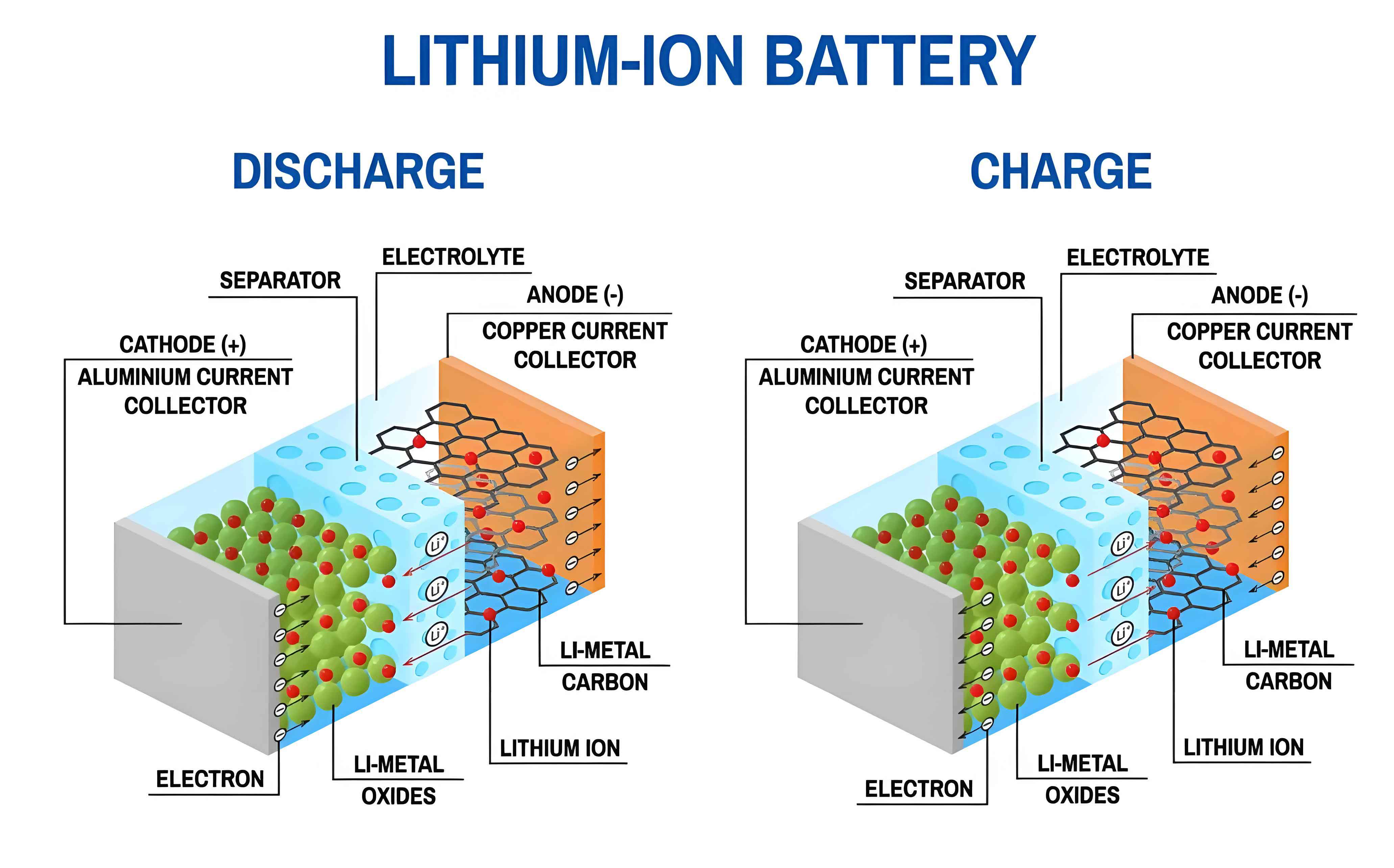
Among various BTMS strategies, direct liquid immersion cooling has emerged as a highly effective solution. By submerging battery cells directly into a dielectric coolant, it eliminates interfacial thermal resistance between the cell surface and the cooling medium. This creates a uniform, high-heat-capacity thermal pathway, enabling superior heat dissipation compared to air or indirect liquid cooling. Beyond its exceptional cooling efficiency for operational management, immersion cooling holds significant promise for mitigating thermal runaway. The coolant’s high heat capacity can absorb substantial thermal energy during the initial stages of failure, potentially delaying or preventing the cell from reaching critical trigger temperatures. Furthermore, if a cell ruptures, the dielectric fluid can permeate the internals, suppressing internal short circuits and isolating flammable ejecta from oxygen, thereby inhibiting fire and thermal propagation within a module.
While the cooling performance of immersion systems under high-discharge rates is well-documented, its specific efficacy in suppressing abuse-induced thermal runaway, particularly from overcharging, requires deeper investigation. This study aims to comprehensively evaluate the impact of single-phase immersion cooling on the thermal runaway characteristics of a lithium-ion battery subjected to overcharge at varying rates. By contrasting experimental results under adiabatic conditions—which represent a worst-case scenario with no heat loss—against those under immersion cooling, we quantify the cooling system’s capability to prevent or mitigate thermal runaway and its propagation.
1. Experimental Methodology
1.1 Materials: Cell and Coolant
A commercial pouch-type lithium-ion battery was selected for this investigation. Its key specifications are summarized in Table 1. The positive electrode active material is LiCoO2 (LCO), and the negative electrode is graphite, representing a common chemistry where thermal runaway risks are pronounced.
| Parameter | Value |
|---|---|
| Dimensions (mm) | 65 × 35 × 9.5 |
| Mass (g) | 39.5 ± 0.5 |
| Nominal Capacity | 2.2 Ah |
| Nominal Voltage | 3.7 V |
| Charge Cut-off Voltage | 4.2 V |
| Discharge Cut-off Voltage | 3.0 V |
The chosen coolant was Enasolv FS49, a hydrofluoroether (HFE). HFEs offer a compelling combination of properties ideal for immersion cooling: high dielectric strength, chemical inertness, low viscosity, and non-flammability. The relevant thermophysical properties of FS49 are listed in Table 2. Its relatively low boiling point (~49°C) is suitable for single-phase cooling in the expected temperature range of this study, while its low viscosity promotes natural convective heat transfer.
| Property | Value |
|---|---|
| Density, $\rho$ (kg m-3) | ~1601.8 |
| Specific Heat Capacity, $c_p$ (J kg-1 K-1) | ~1103 |
| Thermal Conductivity, $k$ (W m-1 K-1) | ~0.059 |
| Dynamic Viscosity, $\mu$ (mPa s) | ~0.64 (at 25°C) |
| Boiling Point | ~49 °C |
1.2 Adiabatic Overcharge Testing
To establish the baseline thermal runaway behavior without any heat dissipation, overcharge tests were conducted inside an Accelerating Rate Calorimeter (ARC). The ARC chamber maintains an adiabatic environment by tracking the cell’s surface temperature and adjusting the chamber wall temperature to match it, thereby minimizing heat loss. A single lithium-ion battery was suspended in the chamber. A constant-current overcharge protocol was applied using a battery cycler, with no upper voltage limit. Three distinct charging rates (C-rates) were investigated: 0.5 C (1.1 A), 1 C (2.2 A), and 2 C (4.4 A), based on the cell’s nominal capacity of 2.2 Ah. The cell surface temperature and voltage were recorded at high frequency. Each test was repeated to ensure consistency. The onset of thermal runaway ($T_{onset}$) was identified as the point where the self-heating rate exceeded 1 °C/s.
1.3 Immersion Cooling Overcharge Testing
The immersion cooling test setup was designed to evaluate both single-cell thermal runaway suppression and module-level propagation prevention. A transparent polycarbonate container was filled with FS49 coolant. A module of six identical lithium-ion batteries was fully submerged, with approximately 5 mm spacing between cells. Crucially, only the first cell (Cell #1) was electrically connected and subjected to overcharging, simulating a single-cell failure within a module. The other five cells were instrumented only with thermocouples to monitor thermal propagation. K-type thermocouples were attached to the center of the front surface of each cell (T1 to T6) and at two locations in the fluid bulk. The same overcharge protocols (0.5 C, 1 C, 2 C constant current) were applied to Cell #1. All tests began from an initial thermal equilibrium state at ambient temperature (~25°C). The experiments continued until either thermal runaway occurred, the charging process was terminated by the cycler reaching its voltage limit (10 V), or the system temperatures stabilized for an extended period post-failure.
2. Results and Discussion
2.1 Thermal Runaway Under Adiabatic Conditions
All adiabatic overcharge tests resulted in violent thermal runaway, accompanied by jet fire, significant gas venting, and complete destruction of the lithium-ion battery. The voltage and temperature profiles exhibited consistent patterns, which can be generically described by a four-stage model, as illustrated for the 1 C case.
Stage I (Lithium Intercalation & Initial Overcharge): Voltage rises steadily from the nominal full-charge voltage (4.2 V) to a characteristic inflection point voltage, $V_i$. The temperature increase is mild. This stage corresponds to the completion of reversible lithium intercalation into graphite and the onset of lithium plating on the anode surface. The overall heat generation $Q_{gen,I}$ is a combination of reversible reaction heat, Joule heating, and the onset of minor side reactions:
$$ Q_{gen,I} = I(V – U_0) + I^2 R_{int} + \dot{Q}_{side,I} $$
where $I$ is the charge current, $V$ is the terminal voltage, $U_0$ is the equilibrium potential, and $R_{int}$ is the internal resistance.
Stage II (Severe Lithium Plating & Electrolyte Oxidation): Voltage rises sharply to a peak value, $V_{peak}$. Temperature rise accelerates. Cell swelling becomes visible due to gas generation from electrolyte decomposition and reactions involving plated lithium. The intense lithium plating drastically increases anode polarization and heat generation from side reactions ($\dot{Q}_{side,II}$), which follow an Arrhenius dependence:
$$ \dot{Q}_{side,II} = A \cdot \exp\left(-\frac{E_a}{RT}\right) $$
where $A$ is a pre-exponential factor, $E_a$ is the activation energy, $R$ is the universal gas constant, and $T$ is the absolute temperature.
Stage III (Internal Short Circuit Precursor): Voltage plateaus and then begins to decrease from $V_{peak}$ to a local minimum, $V_{min}$. This voltage drop is associated with accelerated electrolyte decomposition and the beginning of exothermic reactions between the delithiated cathode and the electrolyte. The temperature rise rate increases further. The separator begins to soften and shrink as it approaches its melting temperature.
Stage IV (Thermal Runaway): A sharp, drastic drop in voltage occurs as the separator collapses ($T \approx 120-150°C$ for polyethylene), leading to a massive internal short circuit. This releases a large amount of Joule heat ($I_{short}^2 R_{short}$) in a very short time, causing the temperature to skyrocket to a maximum, $T_{max}$, often above 600°C. Combustible gases (e.g., CO, CH4, H2) generated in previous stages ignite, resulting in a jet fire.
The key parameters extracted from the adiabatic tests are consolidated in Table 3. The data clearly shows the influence of C-rate: higher overcharge currents lead to a shorter time to failure ($t_{TR}$), a slightly lower thermal runaway onset temperature ($T_{onset}$), and a higher characteristic voltage $V_i$. This is because higher currents intensify lithium plating and Joule heating, accelerating the chain of exothermic reactions.
| Test Condition | $V_i$ (V) | $V_{peak}$ (V) | $T_{onset}$ (°C) | $T_{max}$ (°C) | $t_{TR}$ or $t_{fail}$ (s) | Outcome |
|---|---|---|---|---|---|---|
| Adiabatic 0.5C | ~4.85 | ~5.04 | ~83.3 | > 500 | ~5805 | Full TR with Fire |
| Adiabatic 1C | ~5.15 | ~5.36 | ~81.3 | > 600 | ~2626 | Full TR with Fire |
| Adiabatic 2C | ~5.27 | ~5.63 | ~76.2 | > 600 | ~1298 | Full TR with Fire |
| Immersion 0.5C | ~5.10 | ~5.59 | N/A | 26.4 (Cell), 41.5 (Module) | > 5200* | No TR, Safe Failure |
| Immersion 1C | ~5.46 | ~6.03 | N/A | 30.5 (Cell), 45.7 (Module) | > 3000* | No TR, Safe Failure |
| Immersion 2C (Run 1 & 2) | ~5.73 | ~6.41 | Observed | 103.7 & 388.8 (Cell #1), <49 (Others) | ~1387 & ~1250 | Single-Cell TR, No Propagation |
| Immersion 2C (Run 3) | ~5.70 | ~6.38 | N/A | 43.4 (Cell), <49 (Module) | > 1400* | No TR, Safe Failure |
*Time to charging termination or system stabilization; TR was not reached.
2.2 Thermal Management and Failure Suppression Under Immersion Cooling
The results under immersion cooling presented a stark and positive contrast to the adiabatic cases. The presence of the dielectric fluid fundamentally altered the failure progression of the lithium-ion battery.
2.2.1 Suppression at Low and Moderate Overcharge Rates (0.5 C & 1 C)
For the 0.5 C and 1 C overcharge tests, thermal runaway was completely prevented. The voltage profiles followed a similar four-stage pattern initially, but the temperature evolution was dramatically different. The surface temperature of the overcharged lithium-ion battery (Cell #1) remained remarkably low throughout the process, reaching a maximum of only 26.4°C and 30.5°C for 0.5 C and 1 C, respectively, before charging was terminated. This can be attributed to the highly efficient heat removal by the immersion coolant. The heat balance for the cell under immersion is governed by:
$$ m_{cell} c_{p,cell} \frac{dT}{dt} = Q_{gen}(I, V, T) – h A_s (T – T_{coolant}) $$
where $m_{cell}$ and $c_{p,cell}$ are the cell’s mass and specific heat, $Q_{gen}$ is the total heat generation rate (Joule + side reactions), $h$ is the effective heat transfer coefficient, $A_s$ is the wetted surface area, and $T_{coolant}$ is the local coolant temperature.
In these low-rate tests, the generated heat $Q_{gen}$ was effectively dissipated by the convective term $h A_s (T – T_{coolant})$, keeping the cell temperature far below the critical thresholds needed to trigger key exothermic reactions like substantial SEI decomposition (≥ 90°C) or separator meltdown. The cell underwent “safe failure”: it swelled, vented gas through a formed rupture, and its internal structure was compromised (evidenced by voltage fluctuations and eventual open-circuit), but no thermal runaway, fire, or significant temperature spike occurred. After the initial failure, continued overcharging led only to a gradual temperature increase in the module, with the maximum temperature stabilizing below the coolant’s boiling point (~45°C), as residual heat was continuously absorbed by the fluid’s large thermal mass.
2.2.2 Behavior at High Overcharge Rate (2 C) and Propagation Prevention
The 2 C overcharge tests under immersion revealed a boundary condition for suppression. Out of three repeat tests, two resulted in thermal runaway of the single overcharged lithium-ion battery (Cell #1), while one did not. This indicates that at this high current, the rate of internal heat generation can, in some instances, temporarily outpace the rate of heat removal by the static immersion system, allowing the cell to reach its critical thermal runaway onset temperature.
However, even when the single cell underwent thermal runaway, the outcomes were profoundly mitigated compared to the adiabatic case. The peak temperature of Cell #1 was significantly lower (388.8°C vs. >600°C). Most importantly, thermal propagation was entirely prevented. The adjacent cells (Cell #2 to Cell #6) experienced only a mild temperature rise, with their maximum temperatures remaining below 49°C (the coolant’s boiling point). This demonstrates the excellent thermal isolation and heat sinking capability of the immersion bath. The heat flux from the failing cell to its neighbors, $q”_{prop}$, is dissipated by the coolant:
$$ q”_{prop} = k_{coolant} \frac{\Delta T}{\delta} $$
where $k_{coolant}$ is the fluid’s thermal conductivity and $\delta$ is the gap between cells. The low thermal conductivity of the HFE, while a minor drawback for operational cooling, actually helps localize the heat from a failing cell. Combined with the fluid’s high heat capacity which absorbs the energy, it prevents adjacent lithium-ion batteries from reaching their own trigger points.
Furthermore, the open flame observed in adiabatic tests was absent. Any sparks or ignition of vented gases were immediately quenched by the surrounding oxygen-free, non-flammable dielectric fluid, eliminating the fire hazard. The physical damage to the triggered cell was also less severe.
The third repeat test at 2 C, where thermal runaway did not occur, highlights the role of stochastic factors like slight variations in internal resistance or precise rupture timing. In this case, the heat dissipation balance held, and the cell failed “safely” at a very low temperature (~43°C), similar to the 0.5 C and 1 C results.
3. Conclusion
This experimental investigation unequivocally demonstrates the profound effectiveness of single-phase immersion cooling in enhancing the safety of lithium-ion battery systems against overcharge-induced thermal runaway. The key findings are:
- Complete Suppression at Lower Overcharge Rates: For overcharge rates of 0.5 C and 1 C, the immersion cooling system successfully prevented thermal runaway in the lithium-ion battery altogether. The cells failed in a benign, controlled manner with maximum temperatures below 31°C, as the coolant’s heat removal capacity exceeded the internal heat generation rate, suppressing all chain exothermic reactions.
- Mitigation and Containment at Higher Rates: At a 2 C overcharge rate, the system reached a borderline condition. While single-cell thermal runaway could occur, its severity was drastically reduced (lower peak temperature, no sustained fire), and crucially, thermal propagation to neighboring cells was completely arrested. All adjacent lithium-ion batteries in the module remained below 49°C, demonstrating perfect propagation prevention.
- Dual Safety Mechanism: The immersion coolant provides a dual safety function: (a) Thermal Sinking: Its high heat capacity absorbs abuse-related heat, delaying or preventing temperature escalation. (b) Hazard Isolation: It acts as an oxygen-deprived, fire-suppressing barrier that quenches flames and isolates a failing cell, preventing secondary fires and module-wide cascade failure.
The study underscores that for a given lithium-ion battery and immersion coolant, there exists a critical abuse power input (e.g., overcharge C-rate) below which thermal runaway can be reliably prevented. Even above this threshold, the technology offers vital second-line defense by containing the failure to a single cell, thereby transforming a potentially catastrophic module event into a manageable single-point failure. These results provide strong experimental support for the adoption of direct immersion cooling as a robust thermal management and safety solution for high-risk or high-value energy storage applications utilizing lithium-ion batteries.