
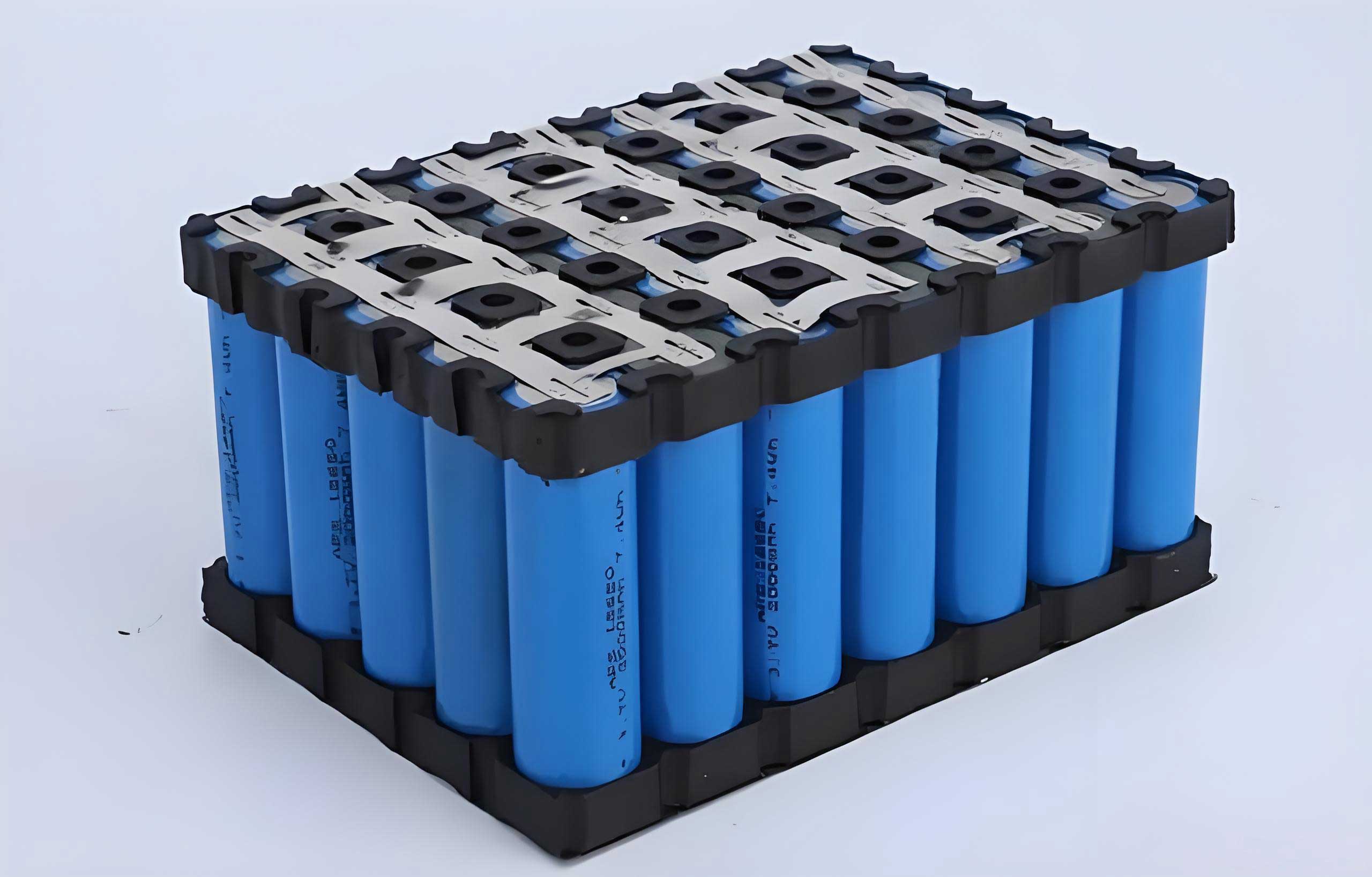
The proliferation of electrochemical energy storage systems, pivotal for enabling the transition to renewable energy and achieving carbon neutrality goals, has brought lithium-ion battery technology to the forefront. Among various chemistries, the lithium iron phosphate (lifepo4 battery) is widely adopted for stationary energy storage due to its inherent thermal stability, long cycle life, and cost-effectiveness. However, under conditions of thermal, electrical, or mechanical abuse, even a lifepo4 battery can undergo a catastrophic failure mode known as thermal runaway (TR). This self-sustaining, exothermic reaction chain releases immense heat and flammable, toxic gases, posing severe fire and explosion hazards. The quest for effective suppression agents beyond conventional options like water or gaseous chemicals has led to the investigation of liquid nitrogen (LN2). LN2 offers a unique combination of extreme cooling capacity (high latent heat of vaporization, $$r_{LN2} \approx 199 \, \text{kJ/kg}$$) and inerting properties (generating nitrogen gas). This study presents a detailed experimental investigation into the effectiveness of LN2 in suppressing thermal runaway in a large-format, commercially relevant lifepo4 battery.
1. Experimental Configuration and Methodology
1.1 Battery Specifications and Preparation
The test subject was a prismatic lifepo4 battery with a nominal capacity of 65 Ah and a mass of 1.73 kg. All tests were conducted at a 100% State of Charge (SOC), representing the worst-case scenario for thermal hazard severity. Prior to testing, each lifepo4 battery underwent standardized charge-discharge cycles using professional battery test equipment to ensure consistency.
1.2 Test Apparatus
The experimental setup was designed to safely initiate and monitor TR under controlled conditions and to apply LN2 precisely. A schematic overview of the key components is provided below.
| Component | Description |
|---|---|
| Combustion Chamber | A sealed metal chamber to contain ejected material, flames, and the LN2 atmosphere, equipped with viewing ports. |
| Heating System | A 450 W electrical heating plate, affixed to one side of the lifepo4 battery via a clamp, to provide the external thermal abuse trigger. |
| Liquid Nitrogen Delivery System | A pressurized LN2 dewar connected to a solenoid valve and a 15 mm diameter nozzle positioned directly above the battery’s safety vent. |
| Data Acquisition | Eight K-type thermocouples (TCs): one on the heated side (TC1), five distributed on the opposite face (TC2-TC6), and two monitoring ambient chamber temperature (TC7, TC8). |
The battery’s average surface temperature, a critical parameter for analysis, is defined as the mean of the five readings from the non-heated side (TC2 to TC6):
$$T_{avg}(t) = \frac{1}{5} \sum_{i=2}^{6} T_{TC_i}(t)$$
Thermal runaway onset was defined as the moment when the average temperature rise rate sustained a value greater than 0.2 °C/s, indicating the transition from external heating to self-accelerating internal reactions.
1.3 Test Protocol
First, a baseline or “blank” test was conducted without any LN2 suppression to characterize the inherent TR behavior of this specific lifepo4 battery model. This established key temperature benchmarks for defining LN2 injection strategies.
Two main series of suppression tests were then performed:
Series A: Effect of Injection Timing. LN2 was injected at three distinct stages of the TR process, determined from the baseline test. The heating plate was powered off simultaneously with the start of LN2 injection.
| Test Case | Injection Trigger (TTC_max) | TR Phase Description | LN2 Mass [kg] |
|---|---|---|---|
| A1 | 90 °C | Pre-Vent Opening (Heating Phase) | 1.2 |
| A2 | 135 °C | Early-Stage TR (Post-Vent, Pre-runaway) | 1.2 |
| A3 | 135 °C | Early-Stage TR (Post-Vent, Pre-runaway) | 6.7 |
| A4 | 320 °C | Severe / Fully Developed TR | 7.2 |
Series B: Effect of Injection Quantity. LN2 was injected during the early-stage TR phase (135°C) with varying masses to establish a dosage-response relationship.
| Test Case | Injection Trigger | LN2 Mass [kg] |
|---|---|---|
| B1 | 135 °C | 6.2 |
| B2 (≡A3) | 135 °C | 6.7 |
| B3 | 135 °C | 8.0 |
2. Results and Discussion
2.1 Baseline Thermal Runaway Characteristics of the LiFePO4 Battery
The baseline test delineated the classical four-stage TR progression for this 65 Ah lifepo4 battery, as shown in the temperature profile.
Stage 1: External Heating. Temperature rise is driven solely by the 450 W heater. The safety vent opened at a non-heated side temperature of ~98°C due to internal gas generation from Solid Electrolyte Interphase (SEI) decomposition, causing a momentary temperature dip.
Stage 2: Self-heating. Internal exothermic reactions (e.g., anode-electrolyte reactions) contribute to heating. Vigorous jetting of electrolyte vapor and particulates commences.
Stage 3: Thermal Runaway. The critical chain reaction begins, characterized by a rapid, exponential temperature rise. The cathode material (LiFePO4) decomposes, and electrolyte combusts if ignited. The peak average temperature $$T_{avg, max}$$ reached 375.8 °C, with a maximum temperature rise rate of 10.85 °C/s at 293.1 °C. This underscores the significant energy release and hazard potential of a failing large-format lifepo4 battery.
Stage 4: Smoldering and Cooling. Active materials are depleted, and the cell cools via thermal dissipation.
This characterization provided the critical temperature milestones (90°C, 135°C, 320°C) used to define the LN2 injection timings.
2.2 Phenomenological Observations of LN2 Suppression
During tests where TR gases ignited, the application of LN2 resulted in rapid and dramatic effects. Upon injection, the LN2 stream caused immediate flame expansion due to mechanical disturbance and rapid vaporization. The subsequent massive generation of inert nitrogen gas effectively inerted the chamber atmosphere, leading to flame extinguishment within seconds without re-ignition. Concurrently, the intense cooling from LN2 vaporization caused visible condensation and frost formation on the battery and chamber walls. The primary suppression mechanism for an unignited runaway lifepo4 battery is this profound cooling effect, which aims to quench the internal chemical reactions by absorbing heat faster than it is generated.
2.3 Analysis of Injection Timing (Series A)
The timing of LN2 intervention proved to be a decisive factor for successful suppression, especially when using limited agent quantities.
Case A1 (Pre-Vent, 1.2 kg LN2): Injection at 90°C, before any significant internal gas generation, was highly effective. The average battery temperature dropped from 78.4°C to 44.5°C. Post-injection, the temperature only recovered to 58°C, and the temperature rise rate never sustainably exceeded the 0.2 °C/s TR threshold. This demonstrates that preventive cooling can successfully abort the TR chain reaction in its infancy for a lifepo4 battery.
Case A2 (Early TR, 1.2 kg LN2): This test highlighted the challenge of intervening once self-heating reactions have gained momentum. The same 1.2 kg dose that was preventive in A1 now proved insufficient. The cooling provided was transient, and the internal heat generation quickly overpowered it, leading to a full, though slightly mitigated, TR event with a peak $$T_{avg, max}$$ ~71°C lower than the baseline but with a significant rise rate of 3.03 °C/s.
Case A3 (Early TR, 6.7 kg LN2): Increasing the LN2 mass by a factor of ~5.6 at the same early-stage trigger led to complete suppression. The lifepo4 battery temperature plunged from 132.6°C to a minimum of -155°C (surface) and an average of 4.7°C. After injection stopped, the temperature stabilized at a safe level (~67°C) with no sustained high rise rate.
Case A4 (Severe TR, 7.2 kg LN2): Even during the violent, high-temperature phase of TR (~320°C), a sufficiently large LN2 dose (7.2 kg) could suppress the event. The temperature dropped from 313.1°C to 75.6°C and stabilized post-injection. Notably, there was a brief temperature rise immediately after LN2 application before cooling commenced, attributed to the initial contact of LN2 primarily with the top of the cell, while intense reactions continued momentarily in other parts.
The key conclusion is that while early intervention is vastly more efficient, a determined and sufficient quantity of LN2 can suppress a lifepo4 battery TR even at a developed stage. This underscores the critical importance of early detection and alarm systems in energy storage installations.
2.4 Quantitative Analysis of Injection Quantity (Series B)
Focusing on the early-stage intervention scenario, the relationship between LN2 mass and suppression efficacy was quantified using a simplified lumped-mass thermal model. We define several key metrics:
1. Total Accumulated Heat (Q_total): The theoretical heat content of the battery from its initial state to its peak temperature during the LN2 application period.
$$Q_{total} = c_b \cdot m_b \cdot (T_{max} – T_i)$$
where $$c_b \approx 1.1 \, \text{kJ/(kg·K)}$$ is the specific heat of the lifepo4 battery, $$m_b = 1.73 \, \text{kg}$$ is its mass, $$T_{max}$$ is the maximum average temperature reached after LN2 injection begins, and $$T_i$$ is the initial temperature at the start of heating.
2. Theoretical LN2 Heat Absorption (Q_LN2): The maximum heat the injected LN2 could absorb upon vaporization.
$$Q_{LN2} = m_{LN2} \cdot r_{LN2}$$
where $$m_{LN2}$$ is the mass of LN2 and $$r_{LN2} = 199 \, \text{kJ/kg}$$.
3. Actual Heat Extracted from Battery (Q_b): The heat removed from the battery by the LN2, calculated from the temperature drop from its peak to its peak recovery value after injection stops.
$$Q_b = c_b \cdot m_b \cdot (T_{max} – T_{re,peak})$$
4. Cooling Efficiency (η_c): The fraction of the battery’s accumulated heat that was actually removed by the LN2.
$$\eta_c = \frac{Q_b}{Q_{total}} \times 100\%$$
5. LN2 Utilization Efficiency (η_e): The fraction of the LN2’s theoretical cooling capacity that was effectively used to cool the battery.
$$\eta_e = \frac{Q_b}{Q_{LN2}} \times 100\%$$
The calculated results for the three dosage tests are summarized below.
| Parameter | Case B1 (6.2 kg) | Case B2/A3 (6.7 kg) | Case B3 (8.0 kg) |
|---|---|---|---|
| $$T_{max}$$ [°C] | 117.7 | 132.6 | 132.4 |
| $$T_{re,peak}$$ [°C] | 100.1 | 66.7 | 28.7 |
| $$Q_{total}$$ [kJ] | 75.2 | 125.4 | 124.6 |
| $$Q_{LN2}$$ [kJ] | 1233.8 | 1333.3 | 1592.0 |
| $$Q_b$$ [kJ] | 33.4 | 125.4 | 197.3 |
| $$\eta_c$$ (Cooling Efficiency) | 44.4% | 100.0%* | 158.4%* |
| $$\eta_e$$ (Utilization Efficiency) | 2.7% | 9.4% | 12.4% |
| Suppression Outcome | Failed (TR continued) | Success | Success |
*Values >100% for η_c in Cases B2 & B3 indicate that the LN2 extracted more heat than was contained in the battery at $$T_{max}$$, meaning it also removed heat being generated in real-time by ongoing reactions and cooled the battery to a temperature below its state at the start of heating.
The analysis reveals several critical insights:
1. Dose-Dependent Cooling Power: The actual heat extracted from the lifepo4 battery ($$Q_b$$) increased substantially with LN2 mass, from 33.4 kJ with 6.2 kg to 197.3 kJ with 8.0 kg. The cooling effect of 8.0 kg LN2 was approximately 5.9 times greater than that of 6.2 kg.
2. Threshold for Success: For this specific lifepo4 battery under early-stage TR, a threshold between 6.2 kg (failure) and 6.7 kg (success) exists. The marginal increase of 0.5 kg was enough to cross the critical cooling rate needed to outpace internal heat generation.
3. Law of Diminishing Returns in Utilization: While more LN2 provides more cooling, the utilization efficiency ($$\eta_e$$) remains low (<15%) and does not increase proportionally. Most of the LN2’s cooling capacity is “wasted” on cooling the massive steel chamber, the air, and through other losses. This highlights a significant engineering challenge: optimizing delivery (e.g., targeted spray, encapsulation) to maximize heat transfer to the failing lifepo4 battery itself.
3. Conclusion
This extensive experimental investigation systematically evaluates the potential of liquid nitrogen as a suppressing agent for thermal runaway in large-format LiFePO4 energy storage batteries. The primary findings are:
1. Proactive Suppression is Highly Efficient: Applying a relatively small quantity of LN2 (1.2 kg) to a lifepo4 battery in the pre-vent, heating phase can completely prevent the onset of thermal runaway by interrupting the reaction chain before it becomes self-sustaining.
2. Reactive Suppression Requires Significant Agent Mass: Once the battery enters the self-heating or thermal runaway phase, the required LN2 mass increases dramatically. For the 65 Ah lifepo4 battery tested, 6.7 kg was the minimum effective dose for early-stage suppression, while 7.2 kg could suppress even a fully developed, high-temperature runaway event.
3. Cooling Efficacy Scales with Dose, but Utilization is Low: The total heat extracted from the battery scales with the amount of LN2 applied. However, the utilization efficiency of the LN2’s theoretical cooling capacity is inherently low (<15%), indicating most of the agent is used to cool the surroundings rather than the battery core. This points to a critical area for future system design: improving the direct application and heat transfer efficiency to the failing lifepo4 battery module.
4. Practical Implications: For energy storage system safety design, these results advocate for integrated, early detection systems that can trigger LN2 suppression at the very first signs of off-normal heating, thereby minimizing the required agent inventory. For firefighting scenarios, the study confirms that LN2 is a potent suppressing agent capable of handling severe lifepo4 battery fires, but it must be applied in sufficient volume and with an understanding of its primary cooling and inerting mechanisms.
In summary, liquid nitrogen presents a viable and effective last-line defense against thermal runaway in LiFePO4 battery systems. Its success is contingent upon a combination of early detection and the application of an adequate mass, with system optimization focusing on improving the direct coupling between the cryogenic agent and the failing cell to enhance overall efficiency.