
With the rapid global transition to renewable energy, large-scale energy storage stations are facing critical safety challenges. Thermal runaway (TR) in lithium-ion batteries, characterized by uncontrolled temperature rise and the release of flammable gases like H2, CO, and CH4, can trigger electric arcs due to their high-temperature, high-energy properties. These arcs, with temperatures reaching up to 6000 K, significantly exacerbate fire and explosion risks in energy storage systems. This article provides a comprehensive review of the mechanisms, hazards, and modeling of arc faults induced by thermal runaway in energy storage lithium battery systems, emphasizing multi-path coupling effects and mitigation strategies. The integration of tables and formulas will summarize key findings, and the keyword “energy storage lithium battery” will be reiterated to highlight its relevance.
Electric arc formation in energy storage systems is a complex process driven by multiple factors, primarily categorized into three types: insulation failure, thermal runaway byproducts, and structural degradation. The core mechanisms involve the breakdown of electrical insulation under thermal, mechanical, or chemical stress, leading to gaseous discharge or conductive pathways. For instance, when the safe electrical clearance falls below the critical breakdown distance—such as 1 mm/kV in air—arcs can ignite, propagating thermal runaway and causing cascading failures. The following sections delve into each type, supported by experimental data and theoretical models.
The first type, insulation failure-induced arcing, occurs due to material degradation under high voltages and temperatures. Common insulation materials in energy storage lithium battery systems, such as mica paper, bubble film, structural adhesive, and battery blue film, undergo significant resistance changes when exposed to heat. For example, at 400°C, the resistance of mica paper increases to approximately 5.20 × 10^11 Ω, while structural adhesive melts and loses its insulating properties. This failure reduces the safe distance between conductors, leading to arc formation. The relationship between temperature and insulation resistance can be modeled using the Arrhenius equation: $$R(T) = R_0 \exp\left(\frac{E_a}{kT}\right)$$ where \(R(T)\) is the resistance at temperature \(T\), \(R_0\) is the initial resistance, \(E_a\) is the activation energy, and \(k\) is Boltzmann’s constant. A summary of insulation material resistance under various temperatures is provided in Table 1.
| Material | Resistance at 200°C (Ω) | Resistance at 300°C (Ω) | Resistance at 400°C (Ω) |
|---|---|---|---|
| Mica Paper | 3.04 × 10^9 | 2.91 × 10^11 | 5.20 × 10^11 |
| Bubble Film | 2.94 × 10^9 | 1.21 × 10^11 | 1.59 × 10^11 |
| Structural Adhesive | 1.40 × 10^12 | — | — |
| Battery Blue Film | 3.17 × 10^9 | 1.73 × 10^10 | 1.40 × 10^11 |
The second type, particle-induced arcing, results from the ejection of high-temperature particles and gases during thermal runaway in energy storage lithium battery systems. These byproducts, including metal fragments and graphite-based particles, reduce the insulation strength of the surrounding medium. Experimental studies show that particles with diameters greater than 100 μm can lower the breakdown voltage to 0.9%–2.3% of that in pure air. For instance, in Li(Ni0.8Co0.1Mn0.1)O2 batteries, the critical breakdown voltage for arcs induced by particles is as low as (99 ± 5) V at a 1 mm electrode gap, compared to air’s breakdown voltage. The critical voltage \(U_c\) for arc initiation can be expressed as: $$U_c = k \cdot d^2$$ where \(d\) is the electrode gap distance and \(k\) is a constant dependent on particle size and composition. Table 2 summarizes the relationship between electrode gap, particle size, and critical breakdown voltage.
| Electrode Gap (mm) | Particle Size (μm) | Critical Breakdown Voltage (V) |
|---|---|---|
| 1 | >100 | 99 ± 5 |
| 4 | >100 | 155 ± 5 |
| 8 | >100 | >400 (No arc) |
The third type, electrolyte-induced arcing, involves the leakage of electrolyte during thermal runaway, which can form conductive paths under high voltage. In energy storage lithium battery systems, electrolytes like EC/DEC have a conductivity of approximately 13.45 mS/cm, which is significantly lower than metals but can still lead to arcing when vaporized or decomposed. Experiments with aluminum electrodes and electrolyte show that arcs can ignite at voltages as low as 235 V, accompanied by temperatures up to 6000 K and violent reactions. The energy released during such events can be calculated using: $$E = \int I(t) V(t) \, dt$$ where \(I(t)\) and \(V(t)\) are the current and voltage over time. This type of arcing is particularly hazardous in large-capacity energy storage lithium battery systems, where electrolyte leakage can trigger chain reactions.
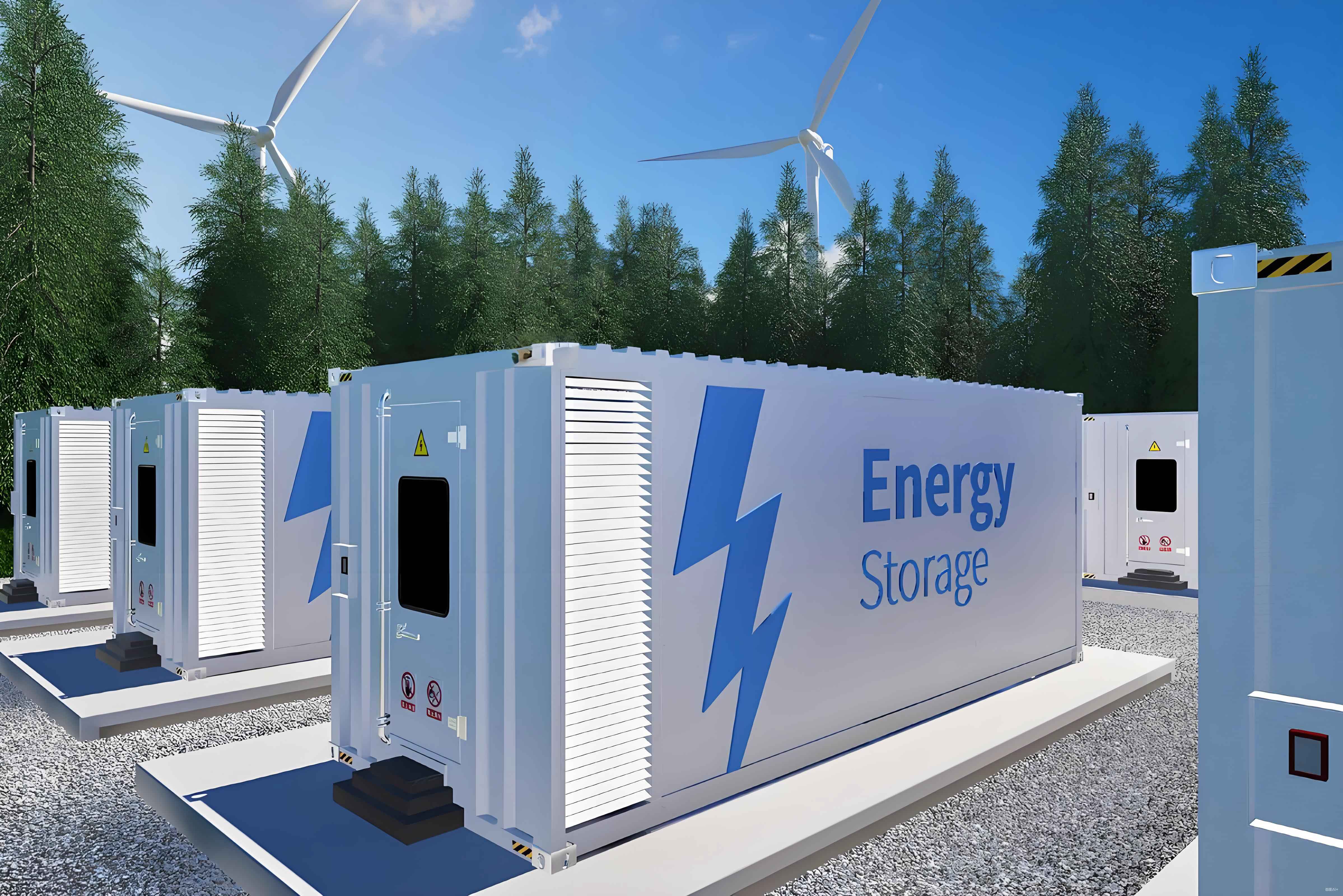
The hazards of arcing in energy storage lithium battery systems are profound, as demonstrated by experimental studies on series arc faults. These arcs can cause severe damage to battery terminals, induce thermal runaway, and lead to fires or explosions. Factors such as state of charge (SOC), circuit voltage, current, and electrode gap significantly influence arc behavior. For example, higher SOC levels shorten the time to arc-induced failure and increase the severity of disasters. In tests, a 100% SOC battery experienced arc-induced thermal runaway in just a few seconds, with flames and mass loss. The relationship between SOC and arc initiation time \(t\) can be modeled as: $$t = A \cdot \exp(-B \cdot \text{SOC})$$ where \(A\) and \(B\) are constants derived from experimental data. Table 3 outlines the impact of SOC on arc characteristics.
| SOC (%) | Time to Failure (s) | Severity (Flame/Explosion) |
|---|---|---|
| 0 | No failure | Minimal |
| 30 | 10.1 | Smoke leakage |
| 60 | 5.7 | Flame jetting |
| 100 | 4.4 | Violent explosion |
Additionally, circuit parameters play a crucial role in arc dynamics. For a fixed current of 20 A, increasing the voltage from 40 V to 50 V extends the arc duration from 2.8 s to 7.1 s, while higher currents (e.g., 40 A) reduce the arc initiation time due to greater power dissipation. The arc voltage \(U_{\text{arc}}\) can be described by: $$U_{\text{arc}} = U_0 – I R_0$$ where \(U_0\) is the source voltage, \(I\) is the current, and \(R_0\) is the load resistance. Similarly, larger electrode gaps require more energy to sustain arcs, shortening their duration. These insights are vital for designing safer energy storage lithium battery systems.
Modeling arc behavior in energy storage lithium battery systems is essential for predicting and mitigating risks. Current approaches include black-box models, magnetohydrodynamics (MHD) models, and microscopic particle models. Black-box models, like Cassie and Mayr, simplify arc external characteristics but ignore internal complexities. The Cassie model is given by: $$\frac{dg}{dt} = \frac{1}{\tau} \left( \frac{I^2}{U_0^2} – g \right)$$ where \(g\) is the arc conductance, \(\tau\) is the time constant, \(I\) is the current, and \(U_0\) is the steady-state voltage. MHD models, however, simulate multi-physics coupling—such as temperature, magnetic fields, and fluid dynamics—using equations like: $$\nabla \cdot (\rho \mathbf{v}) = 0$$ $$\rho (\mathbf{v} \cdot \nabla) \mathbf{v} = -\nabla p + \mathbf{J} \times \mathbf{B} + \nabla \cdot \mathbf{\tau}$$ where \(\rho\) is density, \(\mathbf{v}\) is velocity, \(p\) is pressure, \(\mathbf{J}\) is current density, and \(\mathbf{B}\) is magnetic flux density. These models help analyze arc temperature distributions, which can exceed 6000 K, and flow velocities in battery systems. Despite advances, simulating dynamic arc initiation during thermal runaway remains challenging due to the complex “thermal-electrical-mechanical-chemical” couplings in energy storage lithium battery systems.
Future research should focus on developing integrated multi-physics models that account for real-world scenarios in energy storage lithium battery systems. For instance, combining finite element analysis with experimental data can improve predictions of arc-induced thermal runaway propagation. Key parameters to include are material properties, environmental conditions, and electrical configurations. The formula for critical safety spacing to prevent arcing could be refined as: $$d_{\text{safe}} = C \cdot \frac{U_{\text{system}}}{E_{\text{breakdown}}}$$ where \(C\) is a safety factor, \(U_{\text{system}}\) is the system voltage, and \(E_{\text{breakdown}}\) is the dielectric strength of the medium. This approach will enhance the safety design of energy storage lithium battery systems, reducing the likelihood of catastrophic failures.
In conclusion, arcing induced by thermal runaway poses a significant threat to energy storage lithium battery systems, driven by insulation failure, particle ejection, and electrolyte leakage. Experimental evidence shows that factors like SOC, voltage, current, and electrode gaps critically influence arc behavior, while modeling efforts highlight the need for advanced multi-physics simulations. By understanding these mechanisms and implementing robust safety measures—such as optimized insulation materials and arc detection systems—the reliability of energy storage lithium battery systems can be improved. Continued innovation in this field is essential to support the global expansion of renewable energy and ensure the safe operation of large-scale storage facilities.