
In the context of global energy transition towards green and low-carbon alternatives, electrochemical energy storage, particularly using LiFePO4 battery technology, has emerged as a pivotal enabler for large-scale renewable energy integration. The LiFePO4 battery, known for its inherent safety, long cycle life, and cost-effectiveness, has become the mainstream choice for grid-side energy storage stations, distributed energy systems, and commercial-industrial storage applications. However, with the exponential growth in the deployment of LiFePO4 battery systems and the rapid scaling of cell capacities from 100 A·h to 280 A·h and beyond, safety concerns related to thermal runaway (TR) have intensified. Thermal runaway in LiFePO4 battery units can be triggered by various factors, including mechanical abuse, electrical overstress, thermal management failures, and material degradation due to temperature fluctuations. A critical yet often overlooked aspect is electrolyte leakage, which poses a significant risk in operational LiFePO4 battery energy storage systems (ESS). Electrolyte components such as LiPF6, diethyl carbonate, and ethyl methyl carbonate are flammable and explosive; their leakage can lead to uncontrolled incidents, compromising system integrity. In practical scenarios, LiFePO4 battery packs may experience casing deformation due to transportation vibrations or internal pressure buildup from electrode expansion during cycling, leading to seal failure and electrolyte seepage. Without robust monitoring algorithms in battery management systems (BMS), early-stage leakage may go undetected, resulting in localized current density spikes, accelerated corrosion, and electrolyte depletion. This can elevate the critical temperature for thermal runaway, transforming a manageable seal failure into a catastrophic thermal propagation event. This article, from my experimental perspective, investigates the behavioral evolution of a LiFePO4 battery-based ESS under simulated electrolyte leakage conditions, focusing on thermal, electrochemical, and insulation responses until BMS intervention.
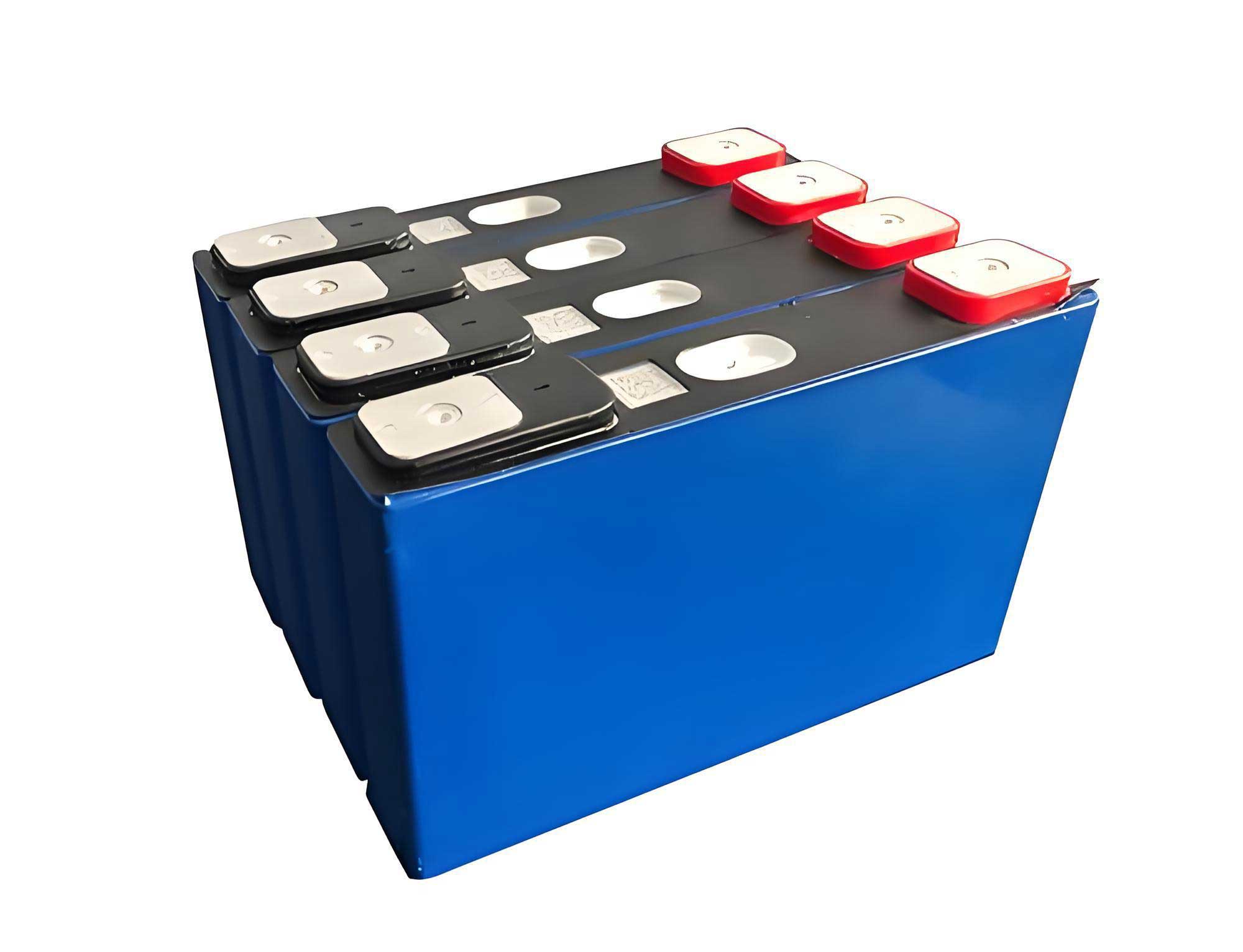
To systematically study this phenomenon, we designed an experiment centered on a commercial 280 A·h LiFePO4 battery cell, with LiFePO4 as the cathode material and graphite as the anode. The LiFePO4 battery sample exhibited a nominal voltage of 3.2 V and an operating voltage range of 2.5–3.65 V, as detailed in Table 1. The standard charge-discharge current was specified at 0.5 C, and the cell’s internal impedance ranged from 0.1 to 0.3 mΩ. For context, a visual representation of a typical LiFePO4 battery cell is provided below, illustrating its compact design and aluminum casing, which is common in energy storage applications.
| Parameter | Specification |
|---|---|
| Nominal Voltage | 3.2 V |
| Operating Voltage Range | 2.5–3.65 V |
| Internal Impedance | 0.1–0.3 mΩ |
| Weight | 5.27 ± 0.16 kg |
| Cycle Life (80% DOD) | ≥ 6,000 cycles |
| Maximum Pulse Current | 560 A (for 60 s, SOC ≥ 20%) |
| Standard Charge/Discharge Current | 0.5 C (140 A) |
In our experimental setup, we configured a 16-cell LiFePO4 battery pack module, welded in series, to mimic a typical ESS unit. The pack was integrated with a BMS, air-cooling thermal management, and enclosed in a standardized cabinet. To simulate electrolyte leakage—a common issue in LiFePO4 battery systems due to casing stress—we intentionally drilled a 2 mm diameter hole on the side of one cell (designated Cell-8) at a height of 2 cm from the base. This aperture represented mechanical damage from挤压 or aging, allowing controlled electrolyte loss. The system was then subjected to various operational profiles, including charge-discharge cycles and idle periods, reflecting real-world ESS conditions. Data acquisition involved continuous monitoring of cell voltages, temperatures at multiple points (e.g., T-8 for Cell-8 and adjacent Cell-7), pack current, and insulation resistance. Signals were logged at 1-minute intervals via a power analyzer and cloud database, ensuring comprehensive tracking of the LiFePO4 battery’s response. The initial phase involved normal operation to establish baseline performance, followed by leakage simulation under diverse scenarios.
The electrochemical behavior of a LiFePO4 battery under electrolyte leakage can be modeled using fundamental principles. The cell voltage (V) during discharge is given by:
$$V = E_0 – \eta_{\text{act}} – \eta_{\text{conc}} – I R_{\text{ohm}}$$
where \(E_0\) is the open-circuit potential, \(\eta_{\text{act}}\) is the activation overpotential, \(\eta_{\text{conc}}\) is the concentration overpotential, \(I\) is the current, and \(R_{\text{ohm}}\) is the ohmic resistance. Electrolyte leakage reduces the effective electrode-electrolyte interface area, increasing \(\eta_{\text{conc}}\) and \(R_{\text{ohm}}\). This leads to accelerated polarization, which we observed in our LiFePO4 battery experiment. Additionally, the heat generation rate (\(\dot{Q}\)) in a LiFePO4 battery cell, crucial for thermal runaway analysis, is expressed as:
$$\dot{Q} = I^2 R_{\text{total}} + I T \frac{\partial E_0}{\partial T} + Q_{\text{side}}$$
Here, \(I^2 R_{\text{total}}\) represents Joule heating, \(I T \frac{\partial E_0}{\partial T}\) accounts for reversible entropic heat, and \(Q_{\text{side}}\) denotes heat from side reactions. In a leaking LiFePO4 battery, \(R_{\text{total}}\) rises due to electrolyte depletion, amplifying Joule heating and triggering thermal feedback loops.
Our data analysis revealed distinct phases in the LiFePO4 battery’s degradation post-leakage. Initially, the system maintained functionality despite electrolyte loss, owing to internal compensation mechanisms. However, as leakage persisted during idle periods, Cell-8 exhibited a dramatic voltage collapse at 4,631 minutes, plummeting from 3.3 V to 0.17 V by 4,637 minutes. This “cliff-like” drop indicated severe internal short-circuiting and electrochemical imbalance, characteristic of thermal runaway in LiFePO4 battery cells. Concurrently, temperature monitoring showed that T-8 began rising at 4,601 minutes, peaked at 125°C by 4,623 minutes, and triggered a BMS alarm, which cut off all circuits. The adjacent Cell-7, unaffected by leakage, saw a temperature increase to 60.5°C due to heat conduction, but its voltage remained stable, underscoring the localized nature of the failure in the LiFePO4 battery pack. These trends are summarized in Table 2, highlighting the correlation between electrolyte loss and thermal escalation in LiFePO4 battery systems.
| Time (min) | Cell-8 Voltage (V) | Cell-8 Temperature (°C) | Cell-7 Voltage (V) | Cell-7 Temperature (°C) | Event |
|---|---|---|---|---|---|
| 4,600 | 3.30 | 25.0 | 3.29 | 24.8 | Baseline |
| 4,601 | 3.29 | 26.5 | 3.29 | 25.0 | Temperature rise onset |
| 4,623 | 2.10 | 125.0 | 3.28 | 45.2 | BMS alarm triggered |
| 4,631 | 1.05 | 125.0 | 3.28 | 55.8 | Voltage cliff in Cell-8 |
| 4,637 | 0.17 | 124.5 | 3.27 | 60.5 | Cell-8 internal short-circuit |
The insulation resistance of the LiFePO4 battery pack provided further insights. As shown in Figure 10 (simulated via data plot), the resistance dropped abruptly from 2,613 kΩ to 0 kΩ between 4,620 and 4,621 minutes, indicating a direct conductive path formed by leaked electrolyte contacting the pack’s steel baseplate. This aligns with the formula for insulation resistance (\(R_{\text{ins}}\)) in a LiFePO4 battery system:
$$R_{\text{ins}} = \frac{V_{\text{test}}}{I_{\text{leak}}}$$
where \(V_{\text{test}}\) is the applied test voltage and \(I_{\text{leak}}\) is the leakage current. The near-zero resistance signified a critical fault. Interestingly, after circuit disconnection, \(R_{\text{ins}}\) recovered to 4,005 kΩ by 4,635 minutes, likely due to electrolyte decomposition or evaporation, which altered conductivity. This fluctuation underscores the dynamic risk posed by electrolyte leakage in LiFePO4 battery ESS, necessitating real-time BMS surveillance.
To mitigate such risks in LiFePO4 battery-based energy storage, we propose a multi-faceted protection strategy. First, structural optimizations for LiFePO4 battery cells are essential. Enhancing casing geometry and using advanced sealing materials (e.g., fluoropolymers) can improve mechanical integrity. The stress-strain relationship for battery casing under external pressure can be modeled as:
$$\sigma = E \epsilon$$
where \(\sigma\) is stress, \(E\) is Young’s modulus, and \(\epsilon\) is strain. By selecting materials with higher \(E\) and optimizing weld points, deformation-induced leakage in LiFePO4 battery units can be minimized. Second, electrolyte formulation adjustments for LiFePO4 battery technology can bolster thermal stability. Incorporating flame-retardant additives (e.g., organophosphates) and tuning Li salt concentrations reduce volatility. The electrolyte conductivity (\(\kappa\)) as a function of temperature (\(T\)) follows:
$$\kappa = A e^{-E_a / (RT)}$$
where \(A\) is a pre-exponential factor, \(E_a\) is activation energy, and \(R\) is the gas constant. Modifying \(E_a\) through additive engineering can maintain performance while curbing leakage-related hazards in LiFePO4 battery systems. Third, electrode material modifications, such as surface coating LiFePO4 particles with conductive carbon or doping with metal ions, enhance corrosion resistance and thermal tolerance. The diffusion coefficient of Li⁺ (\(D_{\text{Li}}\)) in coated electrodes is given by:
$$D_{\text{Li}} = D_0 \exp\left(-\frac{\Delta G}{RT}\right)$$
where \(D_0\) is a constant and \(\Delta G\) is activation free energy. Improved \(D_{\text{Li}}\) mitigates polarization during electrolyte depletion in LiFePO4 battery cells. Fourth, BMS upgrades for LiFePO4 battery packs should integrate advanced sensors and machine learning algorithms to detect anomalies early. For instance, a Kalman filter can estimate state-of-charge (SOC) and state-of-health (SOH) from voltage and current data:
$$\hat{x}_{k|k-1} = F_k \hat{x}_{k-1|k-1} + B_k u_k$$
where \(\hat{x}\) is the state estimate, \(F\) is the state transition matrix, \(B\) is control input matrix, and \(u\) is input. By monitoring deviations, BMS can preemptively flag leakage in LiFePO4 battery modules. Finally, system-level protections, including compartmentalization, active cooling, and fire suppression, create defense-in-depth for LiFePO4 battery ESS. A summary of these strategies is presented in Table 3, emphasizing their relevance to LiFePO4 battery safety.
| Strategy Category | Specific Measures | Impact on LiFePO4 Battery Safety |
|---|---|---|
| Structural Optimization | Reinforced casing, improved seals, stress-dispersing design | Reduces mechanical failure and leakage incidence in LiFePO4 battery cells |
| Electrolyte Formulation | Flame-retardant additives, high-boiling-point solvents | Enhances thermal stability and reduces flammability in LiFePO4 battery systems |
| Electrode Material Modification | Surface coatings, doping, gradient structures | Improves corrosion resistance and maintains performance under leakage in LiFePO4 battery |
| BMS Enhancement | Multi-sensor fusion, AI-based anomaly detection | Enables early leakage detection and预警 in LiFePO4 battery packs |
| System-Level Protections | Thermal barriers, venting mechanisms, fire extinguishers | Contains and mitigates thermal runaway propagation in LiFePO4 battery ESS |
In conclusion, our experimental investigation into electrolyte leakage-induced thermal runaway in LiFePO4 battery energy storage systems elucidates the critical interplay between electrochemical degradation and thermal escalation. The LiFePO4 battery cell subjected to simulated leakage exhibited a rapid voltage drop, temperature spike, and insulation failure, culminating in BMS intervention. These findings underscore the vulnerability of LiFePO4 battery technology to seal breaches, necessitating robust countermeasures. Through structural, material, and systemic innovations—such as optimized casing for LiFePO4 battery units, advanced electrolytes, smart BMS, and integrated safety designs—the reliability of LiFePO4 battery-based ESS can be significantly enhanced. Future work should focus on developing predictive models for leakage risk assessment in LiFePO4 battery packs, leveraging real-time data analytics. As the global energy landscape evolves, ensuring the safety of LiFePO4 battery systems remains paramount for sustainable storage solutions, driving continued research and development in this field. The LiFePO4 battery, with its inherent advantages, can thus achieve even greater adoption when coupled with comprehensive safety protocols, ultimately supporting a resilient and green energy infrastructure.
To further contextualize our results, we can consider the thermodynamic aspects of thermal runaway in a LiFePO4 battery. The heat balance equation during a failure event is:
$$m C_p \frac{dT}{dt} = \dot{Q}_{\text{gen}} – \dot{Q}_{\text{diss}}$$
where \(m\) is mass, \(C_p\) is specific heat capacity, \(T\) is temperature, \(\dot{Q}_{\text{gen}}\) is heat generation rate, and \(\dot{Q}_{\text{diss}}\) is heat dissipation rate. For a leaking LiFePO4 battery, \(\dot{Q}_{\text{gen}}\) dominates due to increased internal resistance and exothermic side reactions, leading to thermal runaway if \(\dot{Q}_{\text{diss}}\) is insufficient. This underscores the importance of thermal management in LiFePO4 battery packs. Additionally, the Arrhenius equation describes the temperature dependence of reaction rates in a LiFePO4 battery:
$$k = A e^{-E_a/(RT)}$$
where \(k\) is the rate constant. As temperature rises in a compromised LiFePO4 battery cell, \(k\) increases exponentially, accelerating decomposition reactions and perpetuating thermal feedback. Hence, early detection of anomalies in LiFePO4 battery systems is crucial to prevent cascading failures.
From a broader perspective, the integration of LiFePO4 battery technology into smart grids requires harmonizing safety with performance. Advanced monitoring techniques, such as electrochemical impedance spectroscopy (EIS), can assess the health of LiFePO4 battery cells by measuring impedance spectra. The Nyquist plot for a typical LiFePO4 battery exhibits semicircles corresponding to charge-transfer resistance and diffusion processes. Electrolyte leakage alters these spectra, providing diagnostic clues. Moreover, computational models like finite element analysis (FEA) can simulate stress distributions in LiFePO4 battery casings under mechanical load, informing design improvements. For instance, von Mises stress (\(\sigma_v\)) can be calculated as:
$$\sigma_v = \sqrt{\frac{(\sigma_1 – \sigma_2)^2 + (\sigma_2 – \sigma_3)^2 + (\sigma_3 – \sigma_1)^2}{2}}$$
where \(\sigma_1, \sigma_2, \sigma_3\) are principal stresses. Minimizing \(\sigma_v\) through geometry optimization reduces leakage risks in LiFePO4 battery modules. In summary, safeguarding LiFePO4 battery energy storage systems demands a holistic approach, blending experimental insights with theoretical modeling to address electrolyte leakage and its consequences effectively.