
The pursuit of sustainable and electrified transportation has placed the li ion battery at the forefront of energy storage technology. This is particularly true in the ambitious field of aviation, where the shift towards “more-electric” and “all-electric” aircraft promises significant reductions in emissions and operating costs. The high energy density and performance characteristics of modern li ion battery chemistries make them a prime candidate for powering these next-generation vehicles. However, this promise is tempered by persistent safety concerns. The inherent electrochemical energy within a li ion battery can, under certain abuse conditions such as thermal, electrical, or mechanical stress, be released in an uncontrolled and catastrophic manner through a process known as thermal runaway.
Thermal runaway is a complex, self-accelerating exothermic reaction cascade within the battery cell. It is typically triggered when the internal heat generation rate surpasses the cell’s ability to dissipate heat to its surroundings. This leads to a rapid temperature rise, which sequentially drives the decomposition of the solid-electrolyte interphase (SEI), reaction between the anode and electrolyte, breakdown of the electrolyte itself, and finally, the violent decomposition of the cathode material. A critical and highly hazardous consequence of this process is the massive generation of flammable and toxic gases. These gases include hydrogen (H₂), carbon monoxide (CO), methane (CH₄), and various organic solvent vapors from the electrolyte, such as ethylene carbonate (EC), dimethyl carbonate (DMC), and ethyl methyl carbonate (EMC). In the confined spaces typical of aircraft battery bays or electric vehicle battery packs, the accumulation of these gases presents a severe risk of explosion, compounding the primary hazard of intense heat and potential projectile ejection.
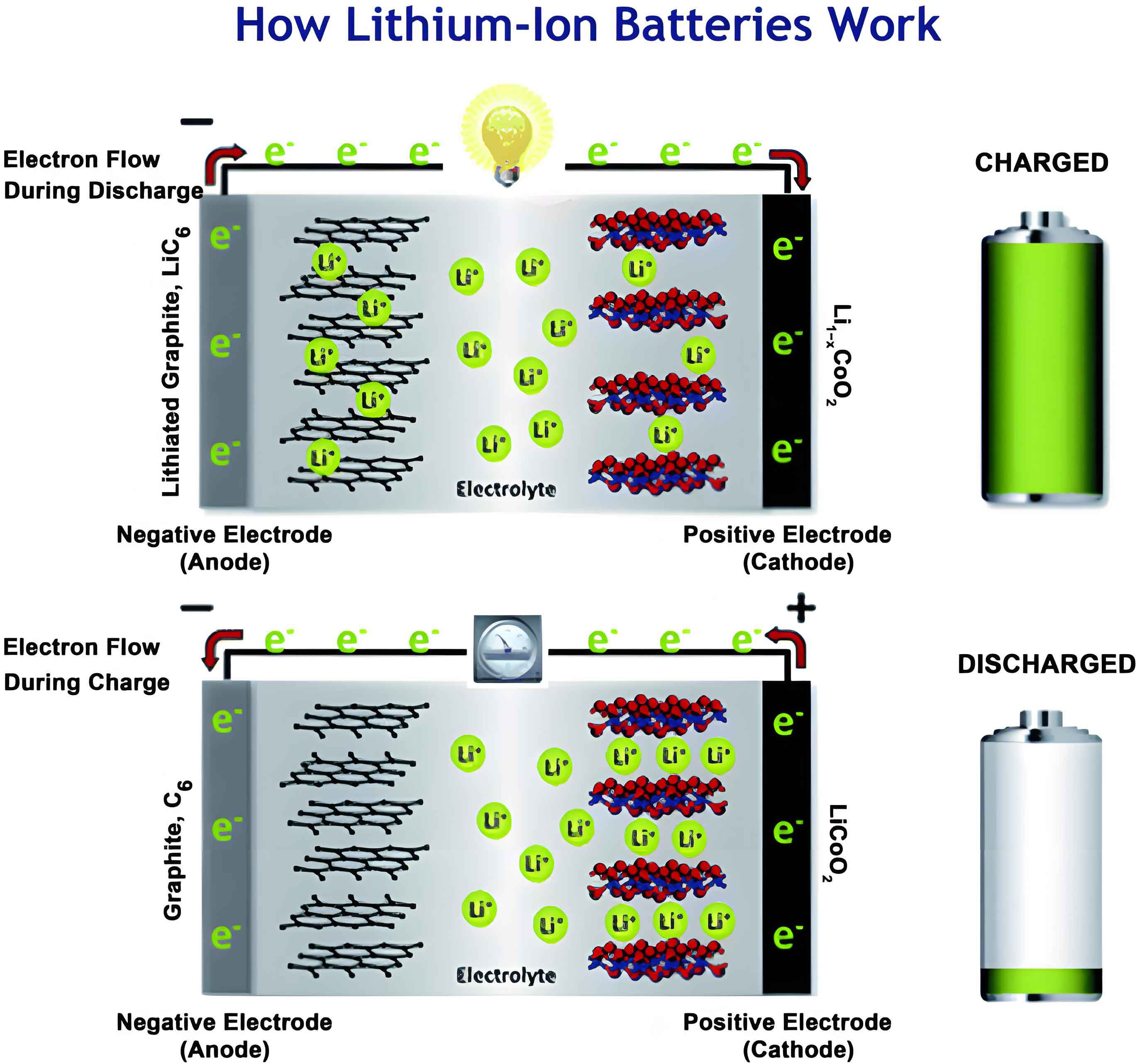
While significant research has been devoted to understanding the thermal runaway behavior of fresh li ion battery cells, a critical gap exists concerning batteries that have undergone operational aging. In real-world applications, every li ion battery experiences gradual degradation through charge-discharge cycles. This aging process leads to irreversible physicochemical changes: loss of active lithium, growth of the SEI layer, structural disordering of electrode materials, and electrolyte depletion. These changes inevitably alter the cell’s thermal stability, its internal resistance, and the mechanics of its internal components. Consequently, the propensity for thermal runaway, the gas generation profile, and the resultant explosion hazard of a cyclically aged li ion battery may differ substantially from that of a new cell. Ensuring safety over the entire lifecycle of a li ion battery system, therefore, necessitates a deep understanding of how aging influences its worst-case failure modes.
This work presents an integrated experimental methodology to correlate the internal structural degradation of cyclically aged li ion battery cells with the explosive hazard of their thermal runaway gases. We employ non-destructive X-ray computed tomography (CT) scanning to visualize and quantify internal mechanical deformations resulting from different levels of cyclic aging. Subsequently, we subject aged cells to thermal abuse to trigger thermal runaway and employ a novel in-situ gas sampling and explosion testing platform to accurately determine the flammability limits and explosion severity of the generated gases without the artifacts introduced by traditional gas collection methods. The primary objectives are: 1) to quantify the evolution of internal structural damage with cycle number, 2) to measure the Lower Explosion Limit (LEL) and Upper Explosion Limit (UEL) of thermal runaway gases from aged cells, 3) to assess the explosion overpressure and temperature, and 4) to establish a preliminary link between observable structural degradation and the resulting gas explosion hazard.
1. Experimental Methodology
The experimental workflow was designed to systematically progress from cell conditioning and non-destructive evaluation to failure testing and hazard analysis. The core philosophy was to maintain the integrity of the gas sample from the moment of generation to the point of ignition, thereby obtaining accurate and representative explosion characteristics.
1.1 Cell Specifications and Aging Protocol
The test subject was a commercial 18650 cylindrical li ion battery with a nominal capacity of 3500 mAh and a nominal voltage of 3.635 V. The cell chemistry consisted of a LiNi0.8Co0.1Mn0.1O2 (NCM811) cathode, a graphite-based anode, and a LiPF6 salt in a mixture of organic carbonate solvents (DMC, EMC). A cohort of fresh cells was first stabilized by performing three formation cycles. Following this, cells were divided into four groups, each subjected to a different number of full charge-discharge cycles (0, 40, 80, and 120 cycles) at a standardized 0.5C rate within a controlled temperature environment. All cells were maintained at 100% State of Charge (SOC) prior to the final abusive testing to represent a worst-case scenario for gas generation.
1.2 Non-Destructive Structural Analysis via X-ray CT
Prior to destructive thermal abuse testing, cells from each aging group underwent X-ray Computed Tomography (CT) scanning. This technique provides high-resolution, three-dimensional visualizations of a cell’s internal structure without disassembly or damage. The principle is based on measuring the attenuation of X-rays passing through the object from multiple angles; a mathematical reconstruction algorithm then generates cross-sectional slices and 3D models. For a li ion battery, CT is exceptionally effective at revealing mechanical deformations such as electrode layer delamination, jellyroll buckling, and the development of voids or cracks. By comparing scans from cells with different cycle counts, we could qualitatively and quantitatively assess the progression of mechanical degradation induced by repeated lithium insertion/de-insertion and associated volume changes.
1.3 In-situ Thermal Runaway Gas Explosion Test Platform
A critical innovation in this study was the design of an in-situ explosion test apparatus. Traditional methods involve collecting thermal runaway gases in a bag or chamber, allowing them to cool, and then transferring an aliquot to an explosion vessel. This process inevitably leads to the condensation of high-boiling-point organic electrolyte vapors (e.g., EMC boils at ~107°C), altering the gas mixture’s composition and thus its flammability properties.
To overcome this, we developed a system that directly transfers the hot gases from the thermal runaway event into a heated explosion vessel. The key components and procedure are as follows:
- Thermal Runaway Trigger Chamber: An aged li ion battery cell at 100% SOC is placed inside a sealed, pressure-rated chamber. Thermal runaway is induced by a programmable heating jacket wrapped around the cell.
- Heated Transfer Line: A valve connects the trigger chamber to the explosion vessel via a transfer line. The entire gas pathway, including the valve and line, is jacketed and maintained at 110°C by heating tapes to prevent vapor condensation.
- Explosion Vessel: A spherical or cylindrical vessel with internal ignition electrodes, a high-frequency pressure transducer, and multiple K-type thermocouples positioned to measure flame temperature at different points (e.g., center, left, right, rear). The vessel walls are also heated to 110°C.
- Gas Mixing & Testing Procedure: After thermal runaway completes and pressure stabilizes in the trigger chamber, a calculated volume of hot gas $V_{TR}$ is injected into the pre-evacuated explosion vessel. A complementary volume of dry air $V_{air}$ is then injected to create a homogeneous mixture at atmospheric pressure. The mixture concentration is given by:
$$E = \frac{V_{TR}}{V_{air} + V_{TR}} \times 100\%$$
where $E$ is the volume percentage of thermal runaway gas in the mixture. The mixture is allowed to homogenize for 30 seconds before a high-energy spark ignites it. - Determination of Explosion Limits (LEL/UEL): The Lower Explosion Limit (LEL) and Upper Explosion Limit (UEL) are determined using a binary search algorithm. If a mixture at concentration $E_a$ ignites and propagates a flame, and a mixture at $E_b$ does not, the next test is conducted at $(E_a + E_b)/2$. This process iterates until the boundary between flammable and non-flammable mixtures is identified with a precision better than 0.5 vol.%.
2. Results and Discussion
2.1 Electrochemical and Structural Degradation with Aging
Electrochemical Impedance Spectroscopy (EIS) conducted on cells from different aging groups provided the first evidence of degradation. The Nyquist plots showed a systematic increase in impedance with cycle number. The equivalent circuit model for a li ion battery, comprising ohmic resistance ($R_s$), SEI layer resistance ($R_{SEI}$), charge transfer resistance ($R_{ct}$), and Warburg diffusion element ($Z_w$), was used to interpret the data. The increase was attributed primarily to the continuous growth and repair of the SEI layer (increasing $R_{SEI}$) and the degradation of electrode particle contacts and electrolyte properties (increasing $R_{ct}$).
The CT scan results provided a stark visual confirmation of mechanical aging. While the 0-cycle and 40-cycle cells showed intact, uniformly wound jellyroll structures, pronounced deformation was evident from the 80-cycle point onward. The most common failure mode observed was inward buckling or “kinking” of the electrode layers near the central mandrel void. This deformation intensifies with further cycling (120 cycles), leading to severe distortion of the anode and cathode layers. This structural damage has direct safety implications: it can accelerate localized heating, promote internal short circuits, and alter the venting dynamics during thermal runaway. The table below summarizes the qualitative structural observations.
| Cycle Count | Jellyroll Structural Integrity | Observable Deformation |
|---|---|---|
| 0 | Excellent | None |
| 40 | Good | Minor or none |
| 80 | Compromised | Clear inward buckling/kinking |
| 120 | Severely Degraded | Pronounced distortion and layer misalignment |
2.2 Thermal Runaway Trigger Characteristics
Thermal abuse tests revealed distinct differences in the thermal response of fresh versus aged li ion battery cells. Although the peak thermal runaway temperature was highest for the fresh cell (~629°C), the aging cells exhibited a significantly shorter time to the onset of thermal runaway. This indicates that a cyclically aged li ion battery requires less external heat input to initiate the self-sustaining failure sequence. This can be explained by the accumulated degradation: the thickened SEI and plated lithium (from capacity fade) are more thermally unstable and begin exothermic decomposition at lower temperatures, effectively lowering the thermal abuse threshold. This finding is critical for safety design, as it implies that aged battery packs may have a reduced margin for error before a single cell’s failure propagates.
| Cycle Count | Time to Thermal Runaway | Peak Temperature |
|---|---|---|
| 0 | Longest | ~629 °C |
| 40 | Reduced | ~444 °C |
| 80 | Further Reduced | ~509 °C |
| 120 | Shortest | ~490 °C |
2.3 Explosion Limits of Thermal Runaway Gases
The in-situ explosion limit testing yielded crucial data on the flammability of gases produced by aged li ion battery cells. The results, plotted in the figure below, show a clear trend: the explosion range (the region between LEL and UEL) narrows with increasing cycle count. This narrowing is primarily driven by a significant rise in the Lower Explosion Limit (LEL).
- The fresh (0-cycle) li ion battery produced gases with an LEL of ~8.6% and a UEL of ~52%.
- For the 40-cycle cell, the LEL increased to ~10.1%.
- A more substantial jump occurred for the 80-cycle cell, with an LEL of ~14.0%.
- The UEL remained relatively constant across all aging levels.
This increase in LEL signifies that the gas mixture becomes less flammable; a higher concentration of thermal runaway gas is now required in air to support flame propagation. The underlying cause is linked to the changing gas composition. Aging alters the cell’s internal chemistry—more electrolyte is consumed in side reactions, and the decomposition pathways of the cathode and anode materials may shift. This likely results in a lower relative concentration of highly flammable components like hydrogen and light hydrocarbons in the gas mixture from an aged li ion battery, while the proportion of non-flammable or less-flammable gases like carbon dioxide (CO₂) increases.
2.4 Explosion Overpressure and Temperature
Measuring the consequences of an explosion is as important as knowing its likelihood. The maximum explosion overpressure and flame temperature at the LEL concentration (the most probable scenario for a lean mixture explosion in a ventilated space) were recorded.
| Cycle Count | Max. Explosion Overpressure (MPa) | Max. Flame Temperature (°C) |
|---|---|---|
| 0 | 0.4585 | 203.4 |
| 40 | 0.2646 | 174.4 |
| 80 | 0.3424 | 184.3 |
| 120 | 0.3669 | 191.4 |
The data shows a substantial mitigation of explosion violence for aged cells compared to the fresh li ion battery. The 40-cycle cell produced the weakest explosion, with pressure and temperature reductions of approximately 42% and 14%, respectively, compared to the fresh cell. This correlates with the highest LEL, indicating a less reactive gas mixture. Interestingly, for the 80-cycle and 120-cycle cells, while the LEL remained high (indicating lower flammability), the explosion severity saw a slight rebound. This non-linear behavior may be explained by the competing effects of gas composition changes and the physical venting process influenced by severe internal structural damage (as seen in CT scans). The distorted jellyroll in a highly aged li ion battery might create irregular flow paths, potentially leading to less complete combustion in the trigger chamber but allowing more unreacted, intermediate-flammability species to enter the test vessel, affecting the explosion dynamics.
The flame temperatures were consistently highest at the center and rear of the vessel, corresponding to the propagation direction of the flame front initiated by the central spark igniter. The general formula for estimating the adiabatic flame temperature, though complex for such a mixture, is governed by the heat release of the combustion reactions. The reduced temperatures for aged cell gases align with a lower overall heat of combustion per unit volume of gas mixture.
3. Conclusion and Engineering Implications
This integrated study demonstrates a vital link between the operational history, structural state, and ultimate gas explosion hazard of a li ion battery. The combination of non-destructive CT evaluation and in-situ gas testing provides a powerful framework for assessing safety risks throughout a battery’s lifecycle.
The key findings are:
- Structural Degradation: Cyclic aging causes progressive mechanical deformation of the li ion battery jellyroll, visible via CT scan, which becomes severe beyond 80 cycles.
- Thermal Stability: Aged li ion battery cells exhibit a reduced time to thermal runaway under thermal abuse, indicating a lower trigger threshold.
- Flammability Hazard: The explosion range of thermal runaway gases narrows with aging, primarily due to a significant increase in the Lower Explosion Limit (LEL). This suggests the gas mixture from an aged li ion battery is intrinsically less flammable than that from a fresh one.
- Explosion Severity: The maximum explosion overpressure and temperature are markedly lower for gases from aged cells, indicating a reduction in the potential for catastrophic secondary events, though a slight rebound occurs at very high cycle counts.
These results have direct implications for the design and safety management of li ion battery systems in aviation and other high-consequence applications:
- Prognostic Health Monitoring: Techniques like CT scanning, or more practical inline methods that infer mechanical state, could be used to identify cells with advanced internal deformation for pre-emptive replacement, acting as a safety-centric state-of-health metric.
- Hazard Assessment and Mitigation: Safety engineering for battery enclosures must account for the evolving gas hazard. While aged batteries might present a lower explosion risk in terms of ignition sensitivity and violence, the reduced time to thermal runaway necessitates faster-acting detection and suppression systems. Ventilation and gas evacuation design can be informed by the measured LEL/UEL data.
- Certification and Testing: Safety standards and certification tests for li ion battery systems, especially in aviation, should consider incorporating aged or cycle-degraded cells into their abuse testing protocols to represent realistic end-of-life hazard scenarios.
In conclusion, the safety profile of a li ion battery is not static. It evolves with use, and this evolution must be factored into risk assessments. The methodology and data presented here contribute to a more comprehensive understanding of full-lifecycle li ion battery safety, moving beyond the analysis of pristine cells to the more realistic and critical evaluation of aged energy storage devices.