
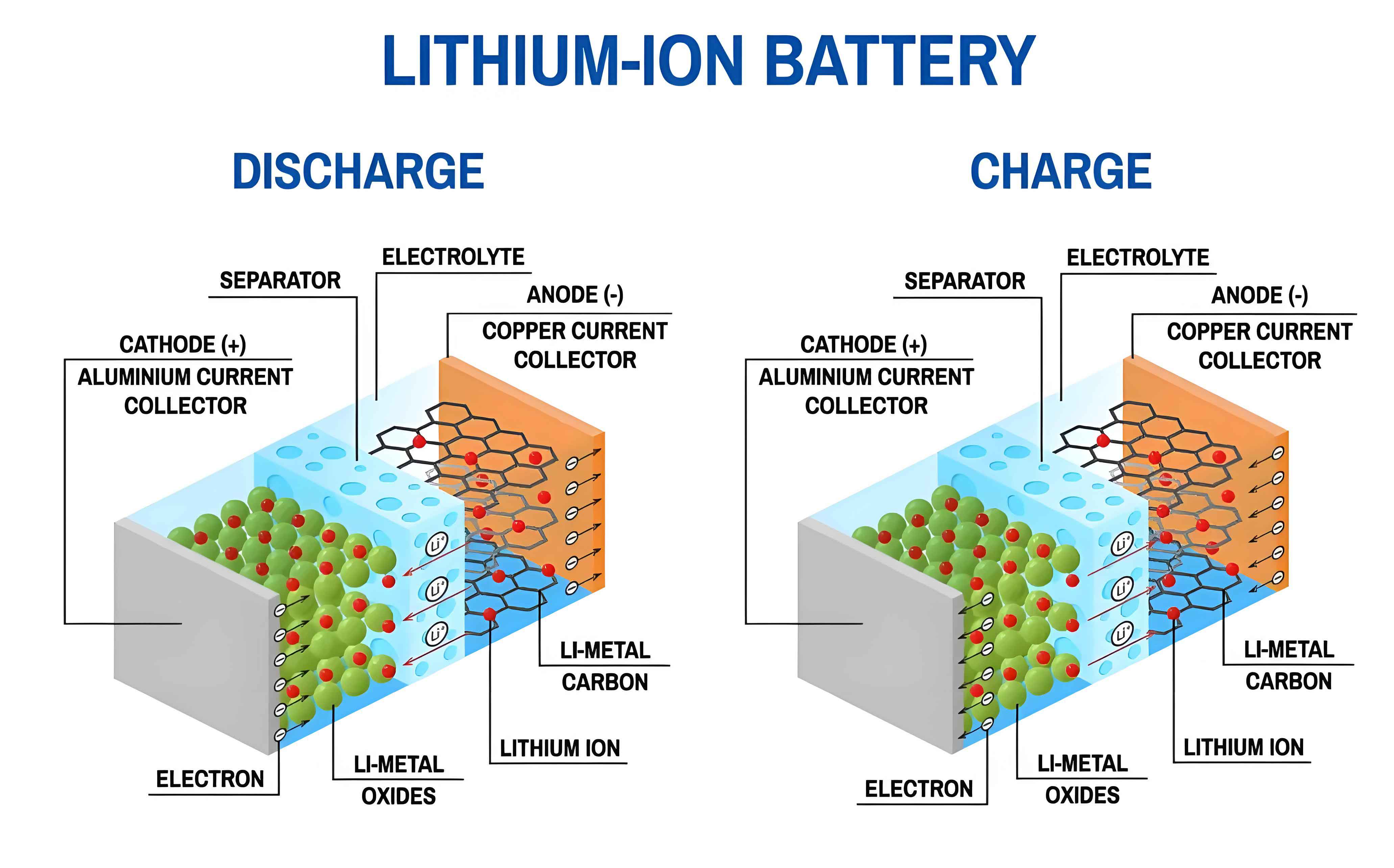
The widespread adoption of lithium-ion battery technology across electric vehicles, consumer electronics, and grid-scale energy storage is a testament to its superior energy density, long cycle life, and decreasing cost. However, the safety risks associated with thermal runaway (TR) remain a critical barrier to even broader application and public confidence. Thermal runaway in a lithium-ion battery is a complex, self-accelerating exothermic process often triggered by mechanical damage, electrical abuse, or internal short circuits. This process leads to the decomposition of electrode materials and electrolytes, generating intense heat and ejecting a large volume of toxic, flammable gases. These gases not only pose immediate asphyxiation and toxicity hazards but also significantly increase the risk of fire and explosion when mixed with air and ignited. Consequently, developing reliable early warning systems for thermal runaway is paramount for the safe design and operation of lithium-ion battery systems at both the cell and pack levels.
Traditional battery management systems (BMS) primarily rely on monitoring surface temperature and voltage. While effective for many operational faults, these parameters often provide late-stage warnings for impending thermal runaway. The search for earlier, more reliable indicators has led to significant research into alternative signals such as internal pressure, expansion force, and internal temperature. Among these, gas detection stands out as a highly promising approach. The venting of characteristic gases is an intrinsic part of the lithium-ion battery failure sequence, often preceding significant temperature spikes or voltage collapse. Effectively monitoring these gases can provide a critical time buffer for initiating safety countermeasures, such as activating fire suppression systems, isolating modules, or alerting users.
This work presents a comprehensive investigation into gas-based early warning for thermal runaway, spanning from fundamental cell-level gas analysis to practical validation within commercial battery packs. Our research is structured in two primary phases. First, we employ real-time, in-situ laser Raman spectroscopy to identify and quantify the gas species evolved during thermal runaway in commercial lithium-ion battery cells with different chemistries and states of charge (SOC). This phase establishes the foundational knowledge of which gases serve as reliable markers. Second, based on these findings, we implement and validate a gas sensing system within actual LFP and NCM battery packs, comparing the response times of gas sensors against traditional BMS voltage and temperature signals under different abuse conditions.
Experimental Methodology
Cell-Level Gas Analysis Setup
To analyze the gas generation process from a single lithium-ion battery, a custom-built, sealed reaction chamber system was constructed. The core component is a high-pressure, high-temperature resistant stainless-steel vessel with a volume of approximately 82 L. The cell under test, equipped with a heating plate on one side for thermal abuse triggering, is placed inside this chamber. The chamber is initially evacuated and purged with high-purity nitrogen to create an inert atmosphere, preventing secondary combustion of ejected gases. Key parameters monitored throughout the experiment include the cell surface temperature ($T_{cell}$), cell voltage ($U$), internal gas temperature ($T_{gas}$), and chamber pressure ($p$).
The gas analysis is performed using a laser Raman spectroscopy (LRS) system. Gases produced during the cell’s thermal runaway are continuously extracted from the chamber, passed through a filter to remove particulates and electrolyte vapors, and fed into the LRS at a controlled flow rate. Raman spectroscopy is ideal for this application as it allows for simultaneous, non-contact, and real-time quantitative analysis of multiple gas species, including homonuclear diatomic molecules like H₂ which are invisible to FTIR. The concentration of each gas species is calculated from its characteristic Raman peak intensity. The tested cells were commercial prismatic batteries: a 52 Ah Lithium Iron Phosphate (LFP) and a 50 Ah Nickel Cobalt Manganese (NCM) lithium-ion battery, each tested at 50% and 100% SOC.
Pack-Level Gas Sensing Validation
Building on the cell-level findings, the early warning capability was validated in two commercial battery packs. A composite gas sensor module, capable of detecting CO₂ via non-dispersive infrared (NDIR) and CO/H₂/Hydrocarbons (HC) via a metal-oxide semiconductor (MOS) sensor, was integrated into the battery management system (BMS). These sensors were strategically placed at different locations within the pack to study the effect of distance from the trigger point.
- LFP Pack Test: A 42 kWh pack composed of 44 series-connected 300 Ah LFP cells was used. Thermal runaway was triggered in a target cell via an external heater. Gas sensors were positioned at four locations (L1-L4). The BMS recorded cell voltages, cover temperatures, and gas concentrations.
- NCM Pack Test: A 17 kWh pack composed of 84 series-connected 55 Ah NCM cells was used. Thermal runaway was triggered via overcharging a target cell at a 1C rate. Gas sensors were positioned at two locations (L5, L6). The BMS recorded module temperatures, all cell voltages, and gas concentrations.
The response times of the gas sensors were meticulously compared with the traditional BMS warnings based on over-temperature and over/under-voltage alarms.
Results and Discussion
Thermal Runaway Behavior of LFP and NCM Cells
The progression of thermal runaway for both cell types showed a strong dependence on SOC. Key events include the opening of the safety vent (SV) and the onset of full thermal runaway (TR), characterized by a sudden voltage drop and rapid temperature rise.
The data, summarized in Table 1, reveals clear trends. For both chemistries, a higher SOC leads to earlier venting and thermal runaway, a shorter time interval ($\Delta t_{SV-TR}$) between these events, and more severe outcomes including higher peak temperatures, pressures, and mass loss. This indicates a greater stored energy leading to more violent reactions. Comparing the two chemistries, the NCM lithium-ion battery consistently exhibits earlier thermal runaway and more extreme conditions (e.g., peak pressure of 239.2 kPa for 100% SOC NCM vs. 39.4 kPa for LFP) at the same SOC, confirming its lower thermal stability. Crucially, the LFP cell displays a significantly longer $\Delta t_{SV-TR}$, providing a potentially wider time window for gas-based detection and intervention before the catastrophic stage.
| Cell Type & SOC | Vent Time (s) | TR Time (s) | $\Delta t_{SV-TR}$ (s) | Peak $T_{cell}$ (°C) | Peak Pressure (kPa) | Mass Loss (%) |
|---|---|---|---|---|---|---|
| 52 Ah LFP (50% SOC) | 558 | 1228 | 670 | 240.7 | 29.5 | 16.5 |
| 52 Ah LFP (100% SOC) | 403 | 700 | 297 | 259.2 | 39.4 | 18.0 |
| 50 Ah NCM (50% SOC) | 696 | 730 | 34 | 308.8 | 84.0 | 19.3 |
| 50 Ah NCM (100% SOC) | 432 | 439 | 7 | 408.9 | 239.2 | 32.9 |
Real-Time Gas Evolution from Single Cells
Laser Raman spectroscopy successfully provided a time-resolved concentration profile for the major gas species generated during thermal runaway. The primary gases detected were H₂, CO, CO₂, CH₄, and C₂H₄ for both LFP and NCM lithium-ion battery cells, aligning with established literature. The concentration evolution for all gases followed a sigmoidal pattern: a baseline (pure N₂), a rapid increase phase, and a final stable plateau.
The key finding lies in the timing of gas release relative to the safety vent (SV) and thermal runaway (TR) events, as illustrated in Figure 1 and summarized below.
For LFP Cells: Gas detection consistently occurred in the interval between venting and thermal runaway. Even for the most severe 100% SOC case, the fastest-responding gas (CO₂) was detected 228 seconds before TR, while the slowest (CO) was detected 85 seconds before TR. This confirms the strong potential for gas-based early warning for LFP lithium-ion battery cells. The stable gas concentrations post-TR (Table 2) show that higher SOC leads to more total gas (lower N₂%) and higher concentrations of H₂, CO, CH₄, and C₂H₄.
For NCM Cells: The gas release profile was markedly different due to the very short $\Delta t_{SV-TR}$. For the 100% SOC NCM cell, the first gas signals (H₂, CO₂, C₂H₄) appeared only 3-4 seconds before TR, essentially concurrent with the event. The majority of gas was released explosively immediately after TR onset. Therefore, while gas detection may not provide a substantial pre-TR warning for a single NCM cell, the extremely rapid and high-concentration gas release makes it an excellent indicator for confirming a TR event and monitoring its propagation.
The difference in gas generation can be attributed to the underlying decomposition reactions. The decomposition of the NCM cathode releases oxygen:
$$ \text{LiNi}_x\text{Co}_y\text{Mn}_{1-x-y}\text{O}_2 \rightarrow \text{MO} + \frac{1}{2}\text{O}_2 \uparrow $$
This oxygen then reacts exothermically with the organic electrolyte, producing more CO₂ and heat, accelerating the process. In contrast, the LFP cathode is more stable, releasing gases primarily from sequential electrolyte decomposition and anode reactions, resulting in a more gradual gas release profile.
| Component | 50% LFP | 100% LFP | 50% NCM | 100% NCM |
|---|---|---|---|---|
| N₂ | 89.42% | 82.36% | 83.88% | 49.57% |
| H₂ | 3.69% | 9.77% | 6.15% | 13.69% |
| CO | 0.18% | 0.48% | 3.97% | 14.37% |
| CO₂ | 3.96% | 3.26% | 5.65% | 13.80% |
| CH₄ | 2.19% | 3.21% | ~0.00% | 4.45% |
| C₂H₄ | 0.56% | 0.93% | 0.35% | 4.12% |
Gas-Based Early Warning in Battery Packs
The pack-level experiments aimed to translate the cell-level insights into a practical warning system. The integrated gas sensor/BMS setup successfully captured the evolution of gas concentrations during triggered thermal runaway events.
1. Correlation with Distance: A clear inverse relationship was observed between sensor response time and its distance from the failing lithium-ion battery. In the LFP pack, sensors L2 and L3 (closest to the heater) detected trace amounts of CO/H₂/HC gases even before the safety vent of the trigger cell opened, likely due to the permeation of small H₂ molecules through sealing interfaces. This represents the earliest possible warning. The farthest sensor (L1) still provided a CO₂ warning 578 seconds before TR.
2. Sensor Type Response: Across all locations, the MOS-based CO/H₂/HC sensor consistently responded faster than the NDIR-based CO₂ sensor. This can be attributed to the higher sensitivity (lower detection limit) of MOS sensors to reducing gases at ppm levels, allowing them to detect the initial trace releases. The CO₂ sensor, while slightly slower, provided robust and quantifiable confirmation.
3. Comparison with BMS Signals: The effectiveness of gas warning is best evaluated against traditional methods. The results are summarized in Table 3. For the heater-triggered LFP pack, the closest gas sensor (L3) provided a warning 970 seconds before TR, significantly earlier than the BMS over-temperature alarm (849 seconds before TR). The voltage alarm was virtually useless, triggering only 2 seconds before TR. This demonstrates gas sensing’s superior early warning capability in a thermal abuse scenario, especially when temperature sensors are not directly on the failing cell.
For the overcharge-triggered NCM pack, the BMS voltage alarm was the fastest indicator, as expected, since overcharge directly affects cell voltage. However, the gas sensors (L5, L6) still provided warnings 892 and 854 seconds before TR, respectively, which were substantially earlier than the BMS over-temperature alarm (158 seconds before TR). This highlights that gas sensing remains a highly competitive and timely warning method even when compared to a direct electrical abuse signal, and it is far superior to sparse temperature monitoring for pinpointing the onset of catastrophic failure.
| Test Case & Warning Signal | Warning Time Before TR (s) | Notes |
|---|---|---|
| LFP Pack (Heater Trigger) | ||
| BMS: Over-Temperature | 849 s | Trigger cell surface temperature. |
| BMS: Under-Voltage | 2 s | Late-stage indicator. |
| Gas Sensor L3 (CO/H₂/HC) | 970 s | Earliest warning, before cell venting. |
| Gas Sensor L1 (CO₂) | 578 s | Warning from farthest sensor. |
| NCM Pack (Overcharge Trigger) | ||
| BMS: Over-Voltage | 1645 s | Earliest signal, specific to overcharge. |
| BMS: Over-Temperature | 158 s | From a module-level NTC sensor. |
| Gas Sensor L5 (CO/H₂/HC) | 892 s | Timely warning independent of trigger type. |
| Gas Sensor L6 (CO₂) | 673 s | Robust confirmation from a distant point. |
The warning time advantage ($\Delta t_{warning}$) provided by gas sensors can be conceptually modeled as a function of the failure propagation mechanism:
$$ \Delta t_{warning} = t_{TR} – t_{gas,alarm} $$
where $t_{TR}$ is the time of thermal runaway and $t_{gas,alarm}$ is the time the gas concentration crosses a predefined alarm threshold. For a sensor at a distance $d$ from the failing lithium-ion battery, $t_{gas,alarm}$ depends on the gas generation rate $G(t)$, the pack’s internal free volume $V$, effective diffusion/convection coefficients, and the alarm threshold $C_{alarm}$.
Conclusion
This work systematically demonstrates the feasibility and effectiveness of gas detection as an early warning strategy for thermal runaway in lithium-ion battery systems. The two-phase approach, from fundamental analysis to pack-level validation, provides strong evidence for the practicality of this technology.
At the cell level, laser Raman spectroscopy confirmed that H₂, CO, CO₂, CH₄, and C₂H₄ are the primary gaseous products of thermal runaway for both LFP and NCM lithium-ion battery chemistries. The timing of gas release is chemistry-dependent: LFP cells release gases gradually between venting and thermal runaway, offering a clear window for pre-failure warning, while NCM cells release gases in a more explosive manner near or after the TR event, making gas an excellent confirmation and propagation tracking signal.
At the pack level, the integration of compact, composite gas sensors with the BMS proved highly successful. The key findings are: (1) Gas warning times are inversely related to the distance between the sensor and the failing cell, with the closest sensors providing the earliest alerts. (2) MOS-based CO/H₂/HC sensors respond faster than NDIR CO₂ sensors due to higher sensitivity, but even the slower CO₂ sensors at remote locations provided warnings several minutes before thermal runaway. (3) Compared to traditional BMS monitoring, gas sensing offers a highly competitive warning time. It can surpass temperature-based warnings, especially when temperature sensors are not colocated with the initiation point, and it provides a vital, timely warning independent of the specific abuse trigger (thermal or electrical).
In summary, gas sensing technology presents a powerful, practical, and proactive layer of safety for lithium-ion battery packs. By monitoring the characteristic gases generated during early failure stages, it can provide critical advance notice of impending thermal runaway, enabling safer battery system design and potentially preventing catastrophic fires and explosions. Future work should focus on optimizing sensor placement algorithms, developing robust multi-gas fusion algorithms for alarm decision-making, and evaluating long-term sensor stability and reliability within the harsh environment of an operating lithium-ion battery pack.