
In the context of global energy transformation, lithium-ion batteries have emerged as a cornerstone for energy storage systems, particularly in grid-scale applications. Among various chemistries, the LiFePO4 battery is widely adopted due to its inherent safety, long cycle life, and environmental benignity. However, as energy storage stations proliferate, safety incidents involving thermal runaway—a catastrophic failure mode—have raised concerns. Understanding the thermal runaway behavior of large-format LiFePO4 batteries under adiabatic conditions is critical for designing safer energy storage systems. In this study, I investigate the thermal runaway characteristics of a 280 Ah LiFePO4 battery using an adiabatic calorimetry approach, focusing on temperature profiles, kinetic parameters, and heat release. The findings aim to fill a gap in the literature regarding large-capacity LiFePO4 batteries and provide insights for fire and explosion prevention in energy storage facilities.
The LiFePO4 battery, with its olivine-type structure, offers thermal stability compared to other cathode materials, but it is not immune to thermal runaway. Under abusive conditions such as overcharge, short circuit, or external heating, exothermic reactions within the battery can lead to self-heating, gas generation, and eventually thermal runaway. In confined spaces like battery enclosures, adiabatic or near-adiabatic conditions can exacerbate these reactions, leading to severe consequences. Previous studies have primarily focused on small cylindrical LiFePO4 batteries, but large prismatic LiFePO4 batteries, commonly used in energy storage, exhibit distinct behaviors due to their mass, geometry, and internal construction. Thus, I embarked on this experimental investigation to elucidate the thermal runaway process of a 280 Ah LiFePO4 battery under adiabatic environments.
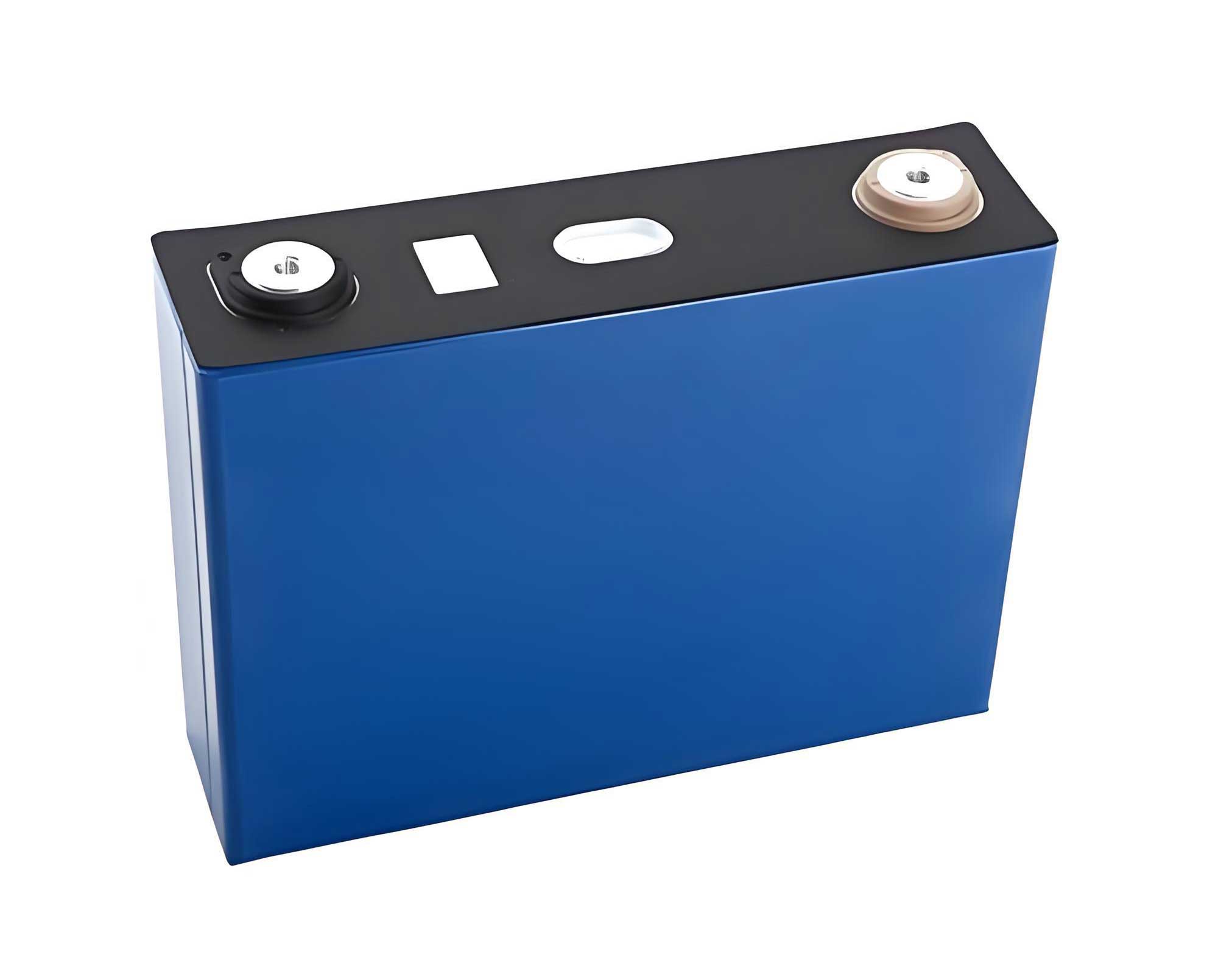
The sample used in this study is a commercial 280 Ah prismatic LiFePO4 battery, typical of those deployed in stationary energy storage. The LiFePO4 battery has a nominal voltage of 3.2 V and an operating voltage range of 2.5 V to 3.65 V. With a mass of 5435 g and dimensions of 173.7 mm in width, 72 mm in thickness, and 207.5 mm in height, this LiFePO4 battery represents a high-energy-density unit. Before testing, the LiFePO4 battery was charged to 100% state-of-charge (SOC) using a constant-current-constant-voltage protocol to ensure consistency. The specific heat capacity of the LiFePO4 battery is approximately 1029.49 J/(kg·°C), and its thermal conductivity varies with direction, but for simplicity, I used an average value in calculations.
To simulate adiabatic conditions, I employed an extended volume adiabatic accelerated calorimeter (EV-ARC). This instrument operates on a “heat-wait-search” principle, where the sample is heated incrementally, and if its self-heating rate exceeds a threshold (0.02 °C/min in this case), the chamber temperature tracks the sample temperature to maintain adiabaticity. The EV-ARC allows for precise measurement of temperature and pressure, but in this study, I focused on thermal parameters. The LiFePO4 battery was instrumented with multiple thermocouples on its surface, including a primary point at the center of the large face and auxiliary points on the back, sides, and terminals. Voltage was also monitored throughout the test. The initial temperature was set to 50 °C, with a stepwise heating approach until thermal runaway occurred.
The thermal runaway process of the LiFePO4 battery can be divided into three stages based on key temperature points: the onset of self-heating (T1), the thermal runaway trigger temperature (T2), and the maximum temperature (T3). During the test, the LiFePO4 battery exhibited a gradual self-heating phase, followed by a rapid temperature escalation. The temperature profile revealed that T1 was 70.26 °C, indicating that the LiFePO4 battery began to generate heat internally at a relatively low temperature. This is attributed to the decomposition of the solid-electrolyte interphase (SEI) on the graphite anode, which is an exothermic reaction. As temperature increased, other reactions, such as electrolyte decomposition and cathode breakdown, contributed to heat generation. The LiFePO4 battery reached T2 at 200.65 °C, where thermal runaway was triggered, characterized by a sharp voltage drop and venting. Finally, T3 peaked at 340.72 °C, after which the temperature declined due to heat dissipation and reaction cessation.
The temperature rise rate during thermal runaway showed two distinct peaks: 3.59 °C/s and 1.28 °C/s. This bimodal behavior is likely due to the internal structure of the LiFePO4 battery, which contains two jelly rolls or windings that may undergo thermal runaway at slightly different times. The voltage drop occurred at 168.91 °C, before the safety valve opened, suggesting that internal short circuits had already initiated, leading to accelerated reactions. The adiabatic environment ensured that all heat generated was retained within the LiFePO4 battery, thus providing a worst-case scenario for heat accumulation. To summarize the temperature characteristics, I present the following table comparing this LiFePO4 battery with other LiFePO4 batteries from literature:
| Battery Type | Capacity (Ah) | T1 (°C) | T2 (°C) | T3 (°C) | Test Method |
|---|---|---|---|---|---|
| Prismatic LiFePO4 | 280 | 70.26 | 200.65 | 340.72 | EV-ARC |
| Cylindrical LiFePO4 | 3.8 | 200.00 | N/A | 399.00 | ARC |
| Cylindrical LiFePO4 | 3.0 | 100.20 | N/A | 455.00 | ARC |
| Prismatic LiFePO4 | 243 | N/A | 188.40 | 492.10 | External Heating |
The lower T1 for the large LiFePO4 battery may be due to its higher mass, which allows for more active material to participate in exothermic reactions at lower temperatures. Additionally, the adiabatic condition minimizes heat loss, enabling earlier detection of self-heating. The T3 for this LiFePO4 battery is relatively lower than some smaller cells, possibly because of limited oxygen availability in the sealed chamber, which suppresses combustion-related reactions. The LiFePO4 battery’s chemistry involves less oxygen release from the cathode during decomposition compared to layered oxides, further reducing the intensity of thermal runaway under oxygen-limited conditions.
To quantify the self-heating kinetics, I applied the Arrhenius equation to the temperature data during the self-heating stage. The rate of temperature rise can be expressed as:
$$\frac{dT}{dt} = \Delta T_{ad} \cdot A \cdot \exp\left(-\frac{E_a}{k_b \cdot T}\right) \cdot (1 – x)^n$$
where \(\Delta T_{ad}\) is the adiabatic temperature rise, \(A\) is the pre-exponential factor, \(E_a\) is the activation energy, \(k_b\) is the Boltzmann constant, \(x\) is the extent of reaction, and \(n\) is the reaction order. Assuming that \((1-x)^n\) is relatively constant or negligible in the early stages, the equation simplifies to:
$$\ln\left(\frac{dT}{dt}\right) = \ln(\Delta T_{ad} \cdot A) – \frac{E_a}{k_b \cdot T}$$
By plotting \(\ln(dT/dt)\) versus \(1000/T\), I obtained a linear relationship for temperatures above 130 °C, as shown in the data analysis. However, for temperatures below 130 °C, the data were scattered, indicating complex reaction mechanisms or measurement noise. The linear regression for the higher temperature region yielded an activation energy \(E_a\) of 0.254 eV and a pre-exponential factor \(A\) of 38.038 min-1. These kinetic parameters are specific to this LiFePO4 battery and can be used in modeling thermal runaway propagation. The table below summarizes the kinetic analysis:
| Stage | SOC (%) | Mass (g) | Ea (eV) | A (min-1) | ΔTad (°C) |
|---|---|---|---|---|---|
| Self-heating | 100 | 5435 | 0.254 | 38.038 | 46.79 |
The total heat released during thermal runaway of the LiFePO4 battery was calculated using the formula:
$$Q = M \cdot C_p \cdot (T_3 – T_1)$$
where \(M\) is the mass, \(C_p\) is the specific heat capacity, and \(T_3 – T_1\) is the temperature rise. Substituting the values: \(M = 5435 \, \text{g} = 5.435 \, \text{kg}\), \(C_p = 1029.49 \, \text{J/(kg·°C)}\), and \(T_3 – T_1 = 340.72 – 70.26 = 270.46 \, \text{°C}\), we get:
$$Q = 5.435 \times 1029.49 \times 270.46 \approx 1,511,284 \, \text{J} \approx 1.51 \, \text{MJ}$$
This energy release is equivalent to approximately 51.09 g of TNT, highlighting the destructive potential of a single large LiFePO4 battery undergoing thermal runaway. In an energy storage system with multiple such LiFePO4 batteries, cascading failure could lead to catastrophic events.
Post-test examination revealed that the LiFePO4 battery casing had ruptured, with jelly roll fragments dispersed inside the calorimeter chamber. This violent failure is attributed to the rapid gas generation and pressure build-up during thermal runaway. The LiFePO4 battery’s safety valve opened at around 200 °C, but the internal pressure likely exceeded the valve’s capacity, causing disintegration. The gas composition from LiFePO4 batteries typically includes hydrogen, carbon dioxide, carbon monoxide, and hydrocarbons, which are flammable and can contribute to explosions in confined spaces. The adiabatic environment exacerbated this by containing the gases, leading to overpressure. This observation underscores the importance of pressure relief design in LiFePO4 battery modules for energy storage.
To further analyze the thermal behavior, I considered the heat transfer dynamics within the LiFePO4 battery. The Fourier heat conduction equation can be applied in simplified form:
$$\rho C_p \frac{\partial T}{\partial t} = \nabla \cdot (k \nabla T) + \dot{q}$$
where \(\rho\) is density, \(k\) is thermal conductivity, and \(\dot{q}\) is the heat generation rate per volume. For the LiFePO4 battery under adiabatic conditions, the conduction term is negligible, so the equation reduces to:
$$\rho C_p \frac{dT}{dt} = \dot{q}$$
This aligns with the calorimetry measurements, where \(\dot{q}\) is derived from the self-heating reactions. The heat generation rate peaks during thermal runaway, correlating with the temperature rise rate peaks observed. For instance, at the first peak of 3.59 °C/s, the instantaneous heat generation rate can be estimated as:
$$\dot{q} = \rho C_p \frac{dT}{dt} = 2118 \, \text{kg/m}^3 \times 1029.49 \, \text{J/(kg·°C)} \times 3.59 \, \text{°C/s} \approx 7.83 \times 10^6 \, \text{W/m}^3$$
This intense heat generation underscores the severity of thermal runaway in a large LiFePO4 battery.
In comparison to other lithium-ion chemistries, the LiFePO4 battery exhibits a more gradual thermal runaway, which can be advantageous for safety systems to intervene. However, the large capacity of this LiFePO4 battery means that the total energy release is substantial, posing challenges for thermal management. Strategies such as phase change materials, cooling plates, and fire suppression systems must be designed considering the kinetics and heat output of LiFePO4 batteries. Additionally, state-of-charge management is crucial, as lower SOC can delay or mitigate thermal runaway. Future work could involve testing this LiFePO4 battery at different SOCs under adiabatic conditions to develop a comprehensive safety profile.
The implications of this study for energy storage stations are profound. The LiFePO4 battery, while safer than many alternatives, still requires rigorous safety protocols. Adiabatic scenarios can occur in densely packed battery racks or during fire incidents where ventilation is limited. Therefore, understanding the thermal runaway characteristics of LiFePO4 batteries under such conditions is essential for risk assessment. Design improvements for LiFePO4 battery modules could include enhanced venting, thermal barriers, and early detection systems based on temperature and gas sensors. Moreover, the kinetic parameters derived here can be integrated into computational fluid dynamics models to simulate thermal runaway propagation in LiFePO4 battery arrays.
In conclusion, this investigation into the thermal runaway behavior of a 280 Ah LiFePO4 battery under adiabatic conditions has revealed key temperature thresholds, kinetic parameters, and heat release data. The LiFePO4 battery showed a self-heating onset at 70.26 °C, a trigger temperature at 200.65 °C, and a maximum temperature of 340.72 °C, with bimodal temperature rise rates. The activation energy for self-heating was 0.254 eV, and the total heat release was approximately 1.51 MJ. The violent rupture of the LiFePO4 battery highlights the need for robust containment and pressure management in energy storage systems. These findings contribute to the growing body of knowledge on LiFePO4 battery safety and can inform standards and regulations for large-scale energy storage. As the adoption of LiFePO4 batteries continues to grow, ongoing research into their failure modes will be vital for ensuring a sustainable and safe energy future.
To expand on the methodology, the EV-ARC used for testing the LiFePO4 battery is a powerful tool for simulating worst-case thermal scenarios. The instrument’s ability to maintain adiabaticity ensures that all exothermic reactions are captured, providing conservative estimates for safety planning. During the test, the LiFePO4 battery was monitored for voltage and temperature simultaneously, allowing for correlation between electrical and thermal events. The voltage drop prior to venting suggests that internal short circuits are a key driver of thermal runaway in LiFePO4 batteries, possibly due to separator shrinkage or meltdown. This insight can guide material improvements for separators in LiFePO4 batteries to enhance thermal stability.
Furthermore, the gas production from the LiFePO4 battery, though not quantified in this study, is a critical aspect. Literature indicates that LiFePO4 batteries generate less flammable gas than nickel-rich cathodes, but the volume can still be significant. In adiabatic conditions, gas accumulation increases pressure, potentially leading to rupture, as observed. Future experiments could integrate gas analysis to characterize the ejecta from the LiFePO4 battery during thermal runaway. This data would be valuable for designing ventilation systems in energy storage containers housing LiFePO4 batteries.
The thermal runaway propagation between cells in a module is another area of concern. A single LiFePO4 battery undergoing thermal runaway can heat neighboring cells, initiating cascading failures. The heat release rate calculated here can be used as an input for propagation models. For instance, the heat flux from a failing LiFePO4 battery can be estimated using Stefan-Boltzmann law for radiation and Newton’s law for convection, but in confined spaces, conduction may dominate. The thermal conductivity of the LiFePO4 battery and its components affects how heat spreads. Advanced modeling techniques, such as finite element analysis, can simulate these scenarios, but they require accurate material properties and boundary conditions derived from experiments like this one on a LiFePO4 battery.
In terms of practical applications, the results suggest that thermal monitoring of LiFePO4 batteries should focus on the 70-200 °C range, where self-heating accelerates. Early warning systems could trigger cooling or isolation measures before thermal runaway occurs. Additionally, the relatively lower T3 for this large LiFePO4 battery implies that fire suppression agents may be more effective, as the temperature is below the ignition point of many materials. However, the high heat release demands efficient cooling to prevent re-ignition. For energy storage system designers, these insights emphasize the importance of integrating thermal runaway detection and mitigation specifically tailored for LiFePO4 batteries.
Finally, this study underscores the need for standardized testing protocols for large-format LiFePO4 batteries. While small cells are well-characterized, the scaling effects—such as heat dissipation, internal resistance, and mechanical constraints—can alter thermal runaway behavior. Regulatory bodies should consider adiabatic tests as part of safety certifications for LiFePO4 batteries used in grid storage. Collaborative efforts between researchers, manufacturers, and policymakers can drive the development of safer LiFePO4 battery technologies, ensuring that energy storage contributes reliably to the renewable energy transition.
In summary, the LiFePO4 battery remains a promising choice for energy storage, but its thermal runaway characteristics under adiabatic conditions warrant careful attention. Through detailed experimentation and analysis, this work has provided valuable data on the 280 Ah LiFePO4 battery, contributing to enhanced safety in the growing energy storage industry. As we continue to deploy LiFePO4 batteries at scale, such research will be instrumental in preventing incidents and building public trust in this critical technology.