
This study investigates the thermal runaway characteristics of energy storage lithium-ion batteries with lithium iron phosphate (LiFePO4) and ternary LiNi0.5Co0.2Mn0.3O2 (NCM523) cathode systems under external heating conditions. The results reveal significant differences in thermal stability, gas emissions, and voltage response between the two battery types, providing critical insights for early warning systems and safety management.
Experimental Methodology
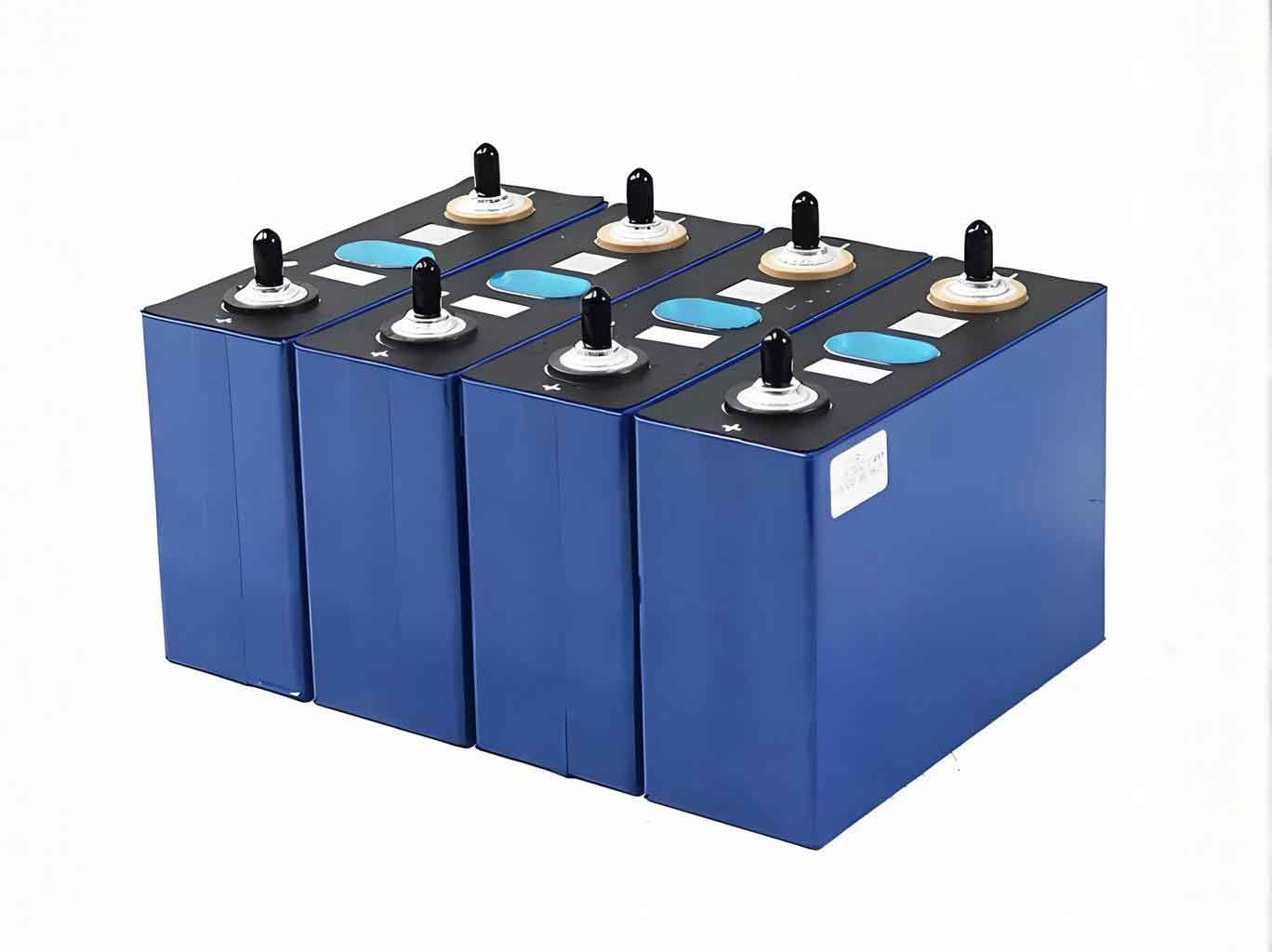
Two commercial batteries were tested:
- 3.2 V 100 Ah LiFePO4 battery
- 3.6 V 90 Ah NCM523 battery
Thermal runaway was induced using 500 W heating plates while monitoring temperature, voltage, gas composition, and heat release parameters. Key measurement points included:
$$T_{surface} = \frac{1}{6}\sum_{i=1}^{6} T_{C_i}$$
where \(T_{C_i}\) represents temperatures at six critical locations.
Thermal Behavior Analysis
The lithium iron phosphate battery demonstrated superior thermal stability:
| Parameter | LiFePO4 | NCM523 |
|---|---|---|
| Peak Temperature (°C) | 534.2 | 1,052.4 |
| Time to TR (s) | 2,610 | 1,995 |
| Total Heat Release (MJ) | 0.162 | 3.147 |
The heat release rate (HRR) followed distinct patterns:
$$P_{HRR} = E \cdot (m_{O_2}^0 – m_{O_2})$$
where \(E = 13.1\ \text{kJ/g}\), \(m_{O_2}^0\) and \(m_{O_2}\) represent initial and remaining oxygen mass flow rates.
Gas Emission Profiles
Both battery types released similar gas compositions despite different thermal behaviors:
| Gas Component | LiFePO4 (%) | NCM523 (%) |
|---|---|---|
| H2 | 38.2 | 32.7 |
| CO2 | 29.5 | 41.8 |
| CO | 18.4 | 12.9 |
| Hydrocarbons | 13.9 | 12.6 |
Voltage Response Characteristics
Both battery types exhibited two-stage voltage collapse:
- Initial drop (electrode dissolution)
- Final collapse (separator failure)
$$V_{drop} = \frac{V_{initial} – V_{final}}{t_{collapse}}$$
For lithium iron phosphate batteries:
$$V_{drop}^{LFP} = \frac{3.388 – 0}{408} = 0.0083\ \text{V/s}$$
For NCM523 batteries:
$$V_{drop}^{NCM} = \frac{4.154 – 0}{12} = 0.346\ \text{V/s}$$
Early Warning Indicators
Key parameters for thermal runaway prediction:
| Signal Type | LiFePO4 Lead Time | NCM523 Lead Time |
|---|---|---|
| Voltage | 373 s | 46 s |
| Gas (H2) | 294 s | 7 s |
| Temperature | 0 s (baseline) | 0 s (baseline) |
Safety Implications
The lithium iron phosphate battery’s inherent stability makes it preferable for stationary storage applications:
- Lower maximum temperature (534.2°C vs 1,052.4°C)
- Reduced heat release (0.162 MJ vs 3.147 MJ)
- Gradual failure progression (215-311 s vs 7-148 s)
Conclusion
This comparative analysis demonstrates that lithium iron phosphate batteries exhibit significantly better thermal stability than NCM523 batteries under heating conditions. The multi-parameter monitoring approach combining voltage, gas, and temperature signals provides a robust framework for early thermal runaway detection. These findings emphasize the importance of cathode material selection and integrated safety systems in energy storage applications.