
As the demand for high-energy-density storage solutions grows, lithium-ion batteries, particularly lithium iron phosphate (LiFePO4) batteries, have become pivotal in applications such as electric vehicles and grid-scale energy storage. However, safety concerns stemming from thermal runaway (TR) incidents—often triggered by mechanical, electrical, or thermal abuse—pose significant risks, including fires and explosions. In real-world applications, LiFePO4 batteries are typically housed within module boxes, which can influence TR dynamics and propagation due to confined spaces affecting heat transfer, gas dispersion, and oxygen availability. While prior studies have explored TR in open or semi-open environments, research on LiFePO4 battery behavior in actual module box spaces remains limited. This study aims to bridge that gap by examining the TR and propagation characteristics of 86 Ah prismatic LiFePO4 batteries under thermal abuse conditions, comparing outcomes between module box spaces and open environments. Through detailed experimental analysis, I seek to elucidate how confinement impacts temperature gradients, heat transfer mechanisms, and propagation timelines, thereby informing safer battery module design and TR mitigation strategies.
The experimental setup involved 86 Ah LiFePO4 batteries, each with a nominal voltage of 3.65 V and a discharge cutoff of 2.5 V. Prior to testing, all LiFePO4 batteries were charged to 100% state-of-charge (SOC) using a constant current-constant voltage protocol and stabilized for 24 hours. The module box, replicating practical energy storage systems, measured 0.6 m × 0.42 m × 0.25 m, with internal spaces filled with heat-resistant material to simulate realistic conditions. For TR triggering, a 500 W heating plate was attached to one battery surface, insulated with 5 mm thermal padding to minimize lateral heat loss. Temperature data were collected via K-type thermocouples, with layouts tailored for single-cell and propagation tests. In single-cell experiments, seven thermocouples monitored battery surfaces and internal module spaces along the height axis; in propagation tests, fourteen thermocouples tracked temperatures across three LiFePO4 batteries arranged in a 1×3 array, plus ambient points. All trials were conducted in a combustion chamber with an active exhaust system to manage toxic gas emissions, and high-definition video recording captured TR behaviors. The heating plate was deactivated upon significant TR temperature rise to observe natural cooling. Comparative experiments were performed in both module box spaces and open spaces to assess confinement effects.
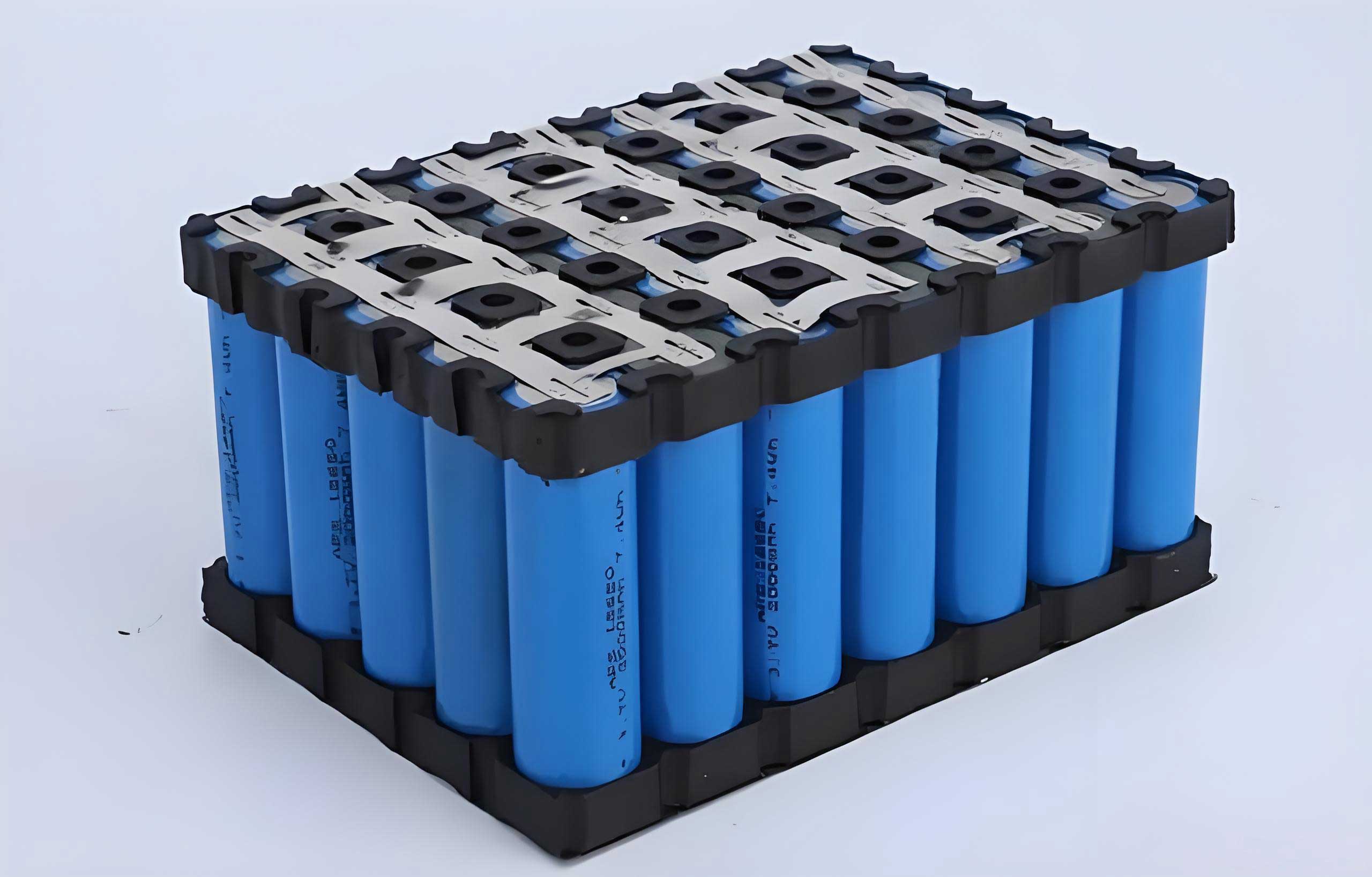
Single-cell TR experiments within the module box revealed distinct behavioral phases. Initially, during the heating phase, the LiFePO4 battery temperature increased steadily, with minor white smoke emission from plastic film decomposition. Upon reaching critical internal reaction thresholds, the TR intensified, leading to safety vent opening and rapid ejection of high-temperature gases and electrolytes—characteristic of LiFePO4 battery failure without combustion. Post-venting, temperatures spiked due to exothermic reactions before gradually declining. Key temperature profiles highlighted significant gradients within the module box; for instance, the top thermocouple (T5) near the battery surface peaked at 139.8°C, while the bottom point (T7) lagged, reaching only 40°C, yielding a maximum vertical differential of 118.4°C. This underscores how TR-generated gases accumulate in upper regions, creating stratified thermal environments that could influence adjacent LiFePO4 batteries in multi-cell setups. The average module space temperature reached 85.5°C, emphasizing the pervasive heat retention in confined areas.
Propagation experiments compared open-space and module-box scenarios for three LiFePO4 batteries. In both settings, TR initiated in the first battery (Cell #1) and sequentially spread to Cells #2 and #3. However, confinement altered heat transfer modalities. In open spaces, ejected gases and electrolytes dissipated quickly, limiting heat exposure to neighboring LiFePO4 batteries. Conversely, in module boxes, gases and sprayed electrolytes were trapped, enhancing convective and radiative heat transfer to adjacent cells. Temperature data corroborated this: the upper surfaces of Cells #1–#3 in module spaces exhibited peak temperatures 12°C to 150°C higher than in open spaces. Ambient thermocouples also recorded elevated readings, with side ambient temperatures in module boxes exceeding open-space values by 208°C. Despite increased heat exposure, TR peak temperatures for individual LiFePO4 batteries were lower in module boxes by 33°C to 145°C, attributed to limited oxygen supply slowing internal exothermic reactions. This deceleration extended propagation timelines; complete TR spread required 979 s in module boxes versus 766 s in open spaces, a 213 s (28%) delay. Mass loss rates for LiFePO4 batteries remained consistent at ~20%, aligning with prior studies on fully charged LiFePO4 systems.
Heat transfer analysis between LiFePO4 batteries during propagation was quantified using fundamental principles. The total heat transferred from the TR battery (Cell #1) to adjacent cells (Cells #2 and #3) was computed via the formula:
$$ Q = c M \Delta T $$
where \( Q \) is heat energy (J), \( c \) is specific heat capacity (1.1 J·g⁻¹·K⁻¹ for LiFePO4 batteries), \( M \) is mass (~1975 g per LiFePO4 battery), and \( \Delta T \) is temperature rise (K). Calculations considered two phases: Phase 1 from experiment start to Cell #1 venting, and Phase 2 from venting to peak temperatures of recipient cells. Results, summarized in Table 1, show that in module box spaces, Cell #1 transferred 225 kJ more heat to Cell #2 and 44.4 kJ more to Cell #3 than in open spaces. Cell #2, being directly adjacent, received approximately four times the heat of Cell #3 in both settings. Phase 2 contributions dominated in module boxes due to trapped gases and electrolytes, accounting for 70–78% of total heat transfer, whereas open-space phases were more balanced. This highlights the critical role of confinement in amplifying heat flux between LiFePO4 batteries, even as oxygen limitation moderates reaction intensities.
| Parameter | Open Space | Module Box Space |
|---|---|---|
| Heat to Cell #2 (kJ) | 180.5 | 405.5 |
| Heat to Cell #3 (kJ) | 45.1 | 89.5 |
| Phase 2 Contribution to Cell #2 (%) | 52 | 78 |
| Phase 2 Contribution to Cell #3 (%) | 48 | 70 |
To further dissect heat transfer modes, I applied classical equations for conduction, convection, and radiation, which govern interactions between LiFePO4 batteries in arrays. Conductive heat flux between battery surfaces can be expressed as:
$$ q_{\text{cond}} = -\lambda \frac{(T_1 – T_2)}{\delta} $$
where \( \lambda \) is thermal conductivity (W·m⁻¹·K⁻¹), \( T_1 \) and \( T_2 \) are temperatures of adjacent LiFePO4 battery surfaces, and \( \delta \) is separation distance. Convective heat transfer from gases and electrolytes is modeled as:
$$ q_{\text{conv}} = h (T_1 – T_2) $$
with \( h \) as the convective coefficient (W·m⁻²·K⁻¹). Radiative exchange, significant at high TR temperatures, follows:
$$ q_{\text{rad}} = \frac{\sigma (T_1^4 – T_2^4)}{\frac{1-\varepsilon_1}{\varepsilon_1 A_1} + \frac{1}{A_1 F_{12}} + \frac{1-\varepsilon_2}{\varepsilon_2 A_2}} $$
where \( \sigma \) is the Stefan-Boltzmann constant (5.67×10⁻⁸ W·m⁻²·K⁻⁴), \( \varepsilon \) is emissivity, \( A \) is surface area, and \( F_{12} \) is view factor. In module boxes, \( q_{\text{conv}} \) and \( q_{\text{rad}} \) increase due to gas accumulation and surface wetting from electrolytes, elevating overall \( Q \) values for LiFePO4 batteries. However, reduced oxygen concentrations lower reaction heats, modifying \( T_1 \) and \( T_2 \) dynamics. This interplay explains why module boxes exhibit heightened heat transfer but subdued TR temperatures relative to open spaces.
Temperature evolution curves for LiFePO4 batteries during propagation underscore these phenomena. As shown in Figure 1 (representative data), Cell #1 in open spaces reached a TR peak of 397°C at 1209 s, whereas in module boxes, it peaked at 364°C at 1247 s. Cells #2 and #3 followed similar patterns, with open-space peaks at 513°C and 572°C, respectively, versus 402°C and 427°C in confinement. The sequential temperature rise in both settings indicates heat accumulation from prior TR events, but the moderated peaks in module boxes reflect oxygen-starved reactions. Ambient thermocouples further illustrated environmental disparities: in module boxes, T13 (above batteries) peaked 89°C higher than in open spaces, and T14 (side) was 15°C higher, confirming gas entrapment. Such data are vital for modeling LiFePO4 battery pack safety, as they quantify how confinement alters thermal boundaries.
| Cell | Open Space TR Peak (°C) | Module Box TR Peak (°C) | Mass Loss (%) |
|---|---|---|---|
| #1 | 397 | 364 | 20.2 |
| #2 | 513 | 402 | 19.7 |
| #3 | 572 | 427 | 19.7 |
The role of oxygen availability in LiFePO4 battery TR cannot be overstated. In open spaces, continuous oxygen supply fuels exothermic reactions like electrolyte combustion and cathode decomposition, accelerating temperature spikes. Conversely, module boxes, with limited ventilation, deplete oxygen quickly, suppressing combustion and slowing reaction rates. This is modeled via the Arrhenius equation for reaction kinetics:
$$ k = A e^{-E_a / (RT)} $$
where \( k \) is rate constant, \( A \) is pre-exponential factor, \( E_a \) is activation energy, \( R \) is gas constant, and \( T \) is temperature. For LiFePO4 batteries, oxygen-dependent reactions have higher \( E_a \) under hypoxia, reducing \( k \) and thus heat generation. Experimental data align with this: the 213 s propagation delay in module boxes correlates with diminished \( k \) values. Additionally, gas composition analysis—though not detailed here—would show higher concentrations of pyrolytic gases (e.g., CO, HF) in confined spaces, further affecting LiFePO4 battery safety profiles.
Practical implications for LiFePO4 battery module design emerge from this work. Enhanced heat transfer in module boxes necessitates robust thermal barriers between cells—such as ceramic or phase-change materials—to mitigate propagation risks. The observed temperature gradients suggest vertical ventilation strategies could dissipate gases more effectively, reducing stratification. Moreover, oxygen limitation, while slowing TR, may not prevent it; thus, inert gas injection or sealed systems could be explored for high-risk applications. These insights are particularly relevant for grid storage, where LiFePO4 battery arrays are densely packed in enclosures. Future studies should vary SOC, spacing, and trigger methods to refine models. For instance, extending the heat transfer formula to include mass loss effects:
$$ Q_{\text{total}} = c M \Delta T + \dot{m} L $$
where \( \dot{m} \) is electrolyte ejection rate and \( L \) is latent heat, could improve accuracy for LiFePO4 batteries under abuse.
In conclusion, this experimental investigation delineates how module box confinement influences TR and propagation in LiFePO4 batteries. Key findings include pronounced vertical temperature gradients up to 118.4°C, increased heat transfer to adjacent LiFePO4 batteries by 225 kJ and 44.4 kJ compared to open spaces, and reduced TR peak temperatures due to oxygen limitation, which prolongs propagation by 213 s. These results underscore the dual nature of confinement: it exacerbates heat exposure via gas and electrolyte entrapment yet attenuates reaction severity through oxygen deprivation. For engineers designing LiFePO4 battery modules, this implies a need for balanced approaches—enhancing heat dissipation while managing atmospheric composition. As LiFePO4 battery adoption expands, such safety-oriented research will be crucial in preventing catastrophic failures and fostering reliable energy storage solutions.