
As a researcher focused on energy storage safety, I have extensively studied the thermal runaway behavior of LiFePO4 batteries, which are widely used in grid-scale applications due to their long cycle life and inherent stability. However, the risk of thermal runaway remains a critical concern, as it can lead to fires or explosions in energy storage systems. In this article, I present a detailed investigation into the internal evolution of LiFePO4 battery components during thermal runaway, using a novel fixed-point cooling experiment. This approach allows us to “freeze” the battery at key temperature stages, enabling microscopic analysis of material changes. The findings aim to provide foundational data for early warning systems and safety protocols in LiFePO4 battery energy storage stations.
The importance of LiFePO4 batteries in modern energy storage cannot be overstated. They offer high energy density, low self-discharge, and excellent thermal stability compared to other lithium-ion chemistries. Yet, under abusive conditions such as overcharging, external heating, or internal shorts, LiFePO4 batteries can undergo thermal runaway—a self-accelerating exothermic reaction that causes rapid temperature rise, gas generation, and potentially catastrophic failure. Understanding the sequential material transformations during this process is vital for developing effective mitigation strategies. My research employs an accelerating rate calorimeter (ARC) to simulate adiabatic conditions, coupled with post-mortem analysis using scanning electron microscopy (SEM) and X-ray photoelectron spectroscopy (XPS). The focus is on identifying the onset temperatures and associated chemical changes in the anode, cathode, separator, and electrolyte.
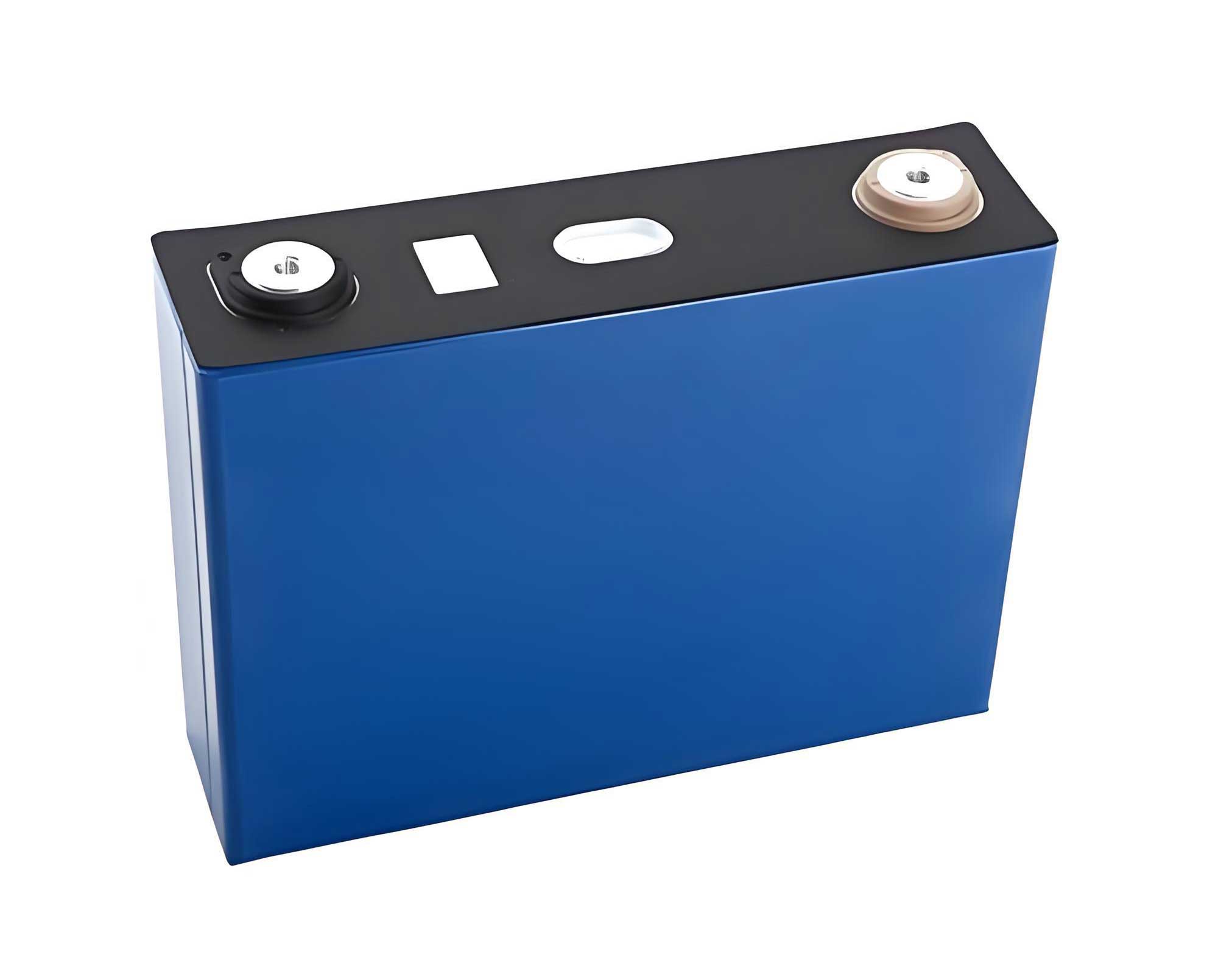
To begin, I designed a fixed-point cooling thermal runaway experiment for a commercial 24 Ah LiFePO4 battery. The battery specifications are summarized in Table 1. The ARC operated in “Heat-Wait-Seek” (H-W-S) mode, where the battery is heated until self-heating is detected (defined as a temperature rise rate ≥0.02 °C/min), after which it enters an adiabatic tracking phase. At four critical temperature points—self-heating onset temperature (T0), thermal runaway onset temperature (T1, where temperature rise rate ≥1 °C/min), vent opening temperature (T2), and maximum temperature (Tmax)—the experiment was manually stopped, and the battery was rapidly cooled using liquid nitrogen. This process preserved the internal state at each stage for subsequent dissection and analysis.
| Parameter | Value |
|---|---|
| Electrochemical System | Lithium Iron Phosphate (LiFePO4) |
| Battery Format | Prismatic Aluminum Case |
| Nominal Capacity | 24 Ah |
| Dimensions (L × W × H) | 27 mm × 70 mm × 135 mm |
| Weight | Approximately 550.97 g |
| Open Circuit Voltage | 3.414 V |
The thermal runaway curves for the four fixed-point cooling conditions are shown in Figure 1. Each curve illustrates the temperature evolution over time, highlighting the key stages. The critical temperatures were consistent across multiple tests, indicating good repeatability. For instance, T0 ranged from 116 to 126 °C, T1 from 138 to 147 °C, T2 from 177 to 182 °C, and Tmax reached approximately 417 °C. These values are characteristic of LiFePO4 battery thermal runaway and serve as benchmarks for safety thresholds.
Upon cooling, the batteries were dissected in an inert atmosphere to prevent oxidation or contamination. The external appearance showed progressive swelling and charring as thermal runaway advanced. For example, at T0, the battery case remained intact with minor deformation, while at Tmax, severe bulging and soot deposition were evident. Internal components—anode, cathode, and separator—were carefully separated and examined. Table 2 summarizes the basic parameters of the batteries at each stage, including mass, voltage, internal resistance, and thickness. The data reveal a gradual mass loss due to electrolyte vaporization and gas ejection, a sharp voltage drop at T1 indicating internal short circuits, and increased internal resistance from material degradation.
| Sample ID | Temperature Stage | Mass (g) | Voltage (V) | Internal Resistance (mΩ) | Center Thickness (mm) |
|---|---|---|---|---|---|
| 1-1 | T0 (Self-heating Onset) | 551.1 | 3.319 | 0.99 | 30.79 |
| 1-2 | T1 (Thermal Runaway Onset) | 550.3 | 0.216 | 40.03 | 36.35 |
| 1-3 | T2 (Vent Opening) | 493.4 | 0.650 | — | 48.05 |
| 1-4 | Tmax (Maximum Temperature) | 450.9 | — | — | 46.05 |
The anode surface morphology, analyzed via SEM, showed distinct changes. At T0, graphite particles were visible, covered by a thin solid-electrolyte interphase (SEI) layer. At T1, a deposit layer from electrolyte decomposition obscured the particles. By T2, the deposit decomposed, revealing graphite again, but at Tmax, the surface became amorphous due to oxidation. XPS analysis provided chemical insights: at T0, carbon species included C–F, C=O, –CO3, C–O, and C–C, indicative of SEI components like lithium alkyl carbonates and poly(ethylene oxide) oligomers. As temperature increased, C–O and C–F proportions rose, suggesting intensified side reactions. At Tmax, the anode primarily consisted of graphitized carbon, Li2CO3, LiF, and Al2O3 from separator coating. The evolution of fluorine species was particularly telling: LiPF6 decomposition produced PFx and organic fluorides initially, but eventually stabilized to LiF at high temperatures.
For the cathode, SEM images showed active material particles coated with decomposition products at T0. At T1, localized areas exhibited darkening and lumpy deposits, while at T2, a continuous film formed. XPS revealed a cathode-electrolyte interphase (CEI) similar to the SEI, with carbon groups evolving toward graphitization at Tmax. Oxygen species shifted from C–O to –CO3, and fluorine transitioned from LiF to C–F, implying loss of lithium salts during venting. Compared to the anode, the LiFePO4 cathode remained relatively stable, consistent with its olivine structure, but side reactions still contributed to heat generation.
The separator, a ceramic-coated polyethylene membrane, underwent critical changes. At T0, pores were open, but at T1, complete pore closure occurred, adhered with blocky by-products. By T2, the separator melted and fragmented, with coatings covered by a uniform film. Porosity measurements confirmed this: at T0, the Gurley value was around 268 s, but at T1, it approached infinity due to closure. This closure triggers internal short circuits, accelerating thermal runaway. The separator’s behavior underscores its role as a failure bottleneck in LiFePO4 battery safety.
To quantify the heat release during thermal runaway, I applied kinetic models based on Arrhenius equations. The self-heating rate (dT/dt) can be expressed as:
$$ \frac{dT}{dt} = \frac{Q}{C_p} = \frac{A \exp\left(-\frac{E_a}{RT}\right)}{C_p} $$
where \( Q \) is the heat generation rate, \( C_p \) is the heat capacity, \( A \) is the pre-exponential factor, \( E_a \) is the activation energy, \( R \) is the gas constant, and \( T \) is the absolute temperature. For LiFePO4 batteries, multiple reactions contribute, including SEI decomposition, electrolyte oxidation, and active material reactions. The overall heat generation can be modeled as a sum of parallel reactions:
$$ Q_{\text{total}} = \sum_{i=1}^{n} \Delta H_i \cdot r_i(T) $$
where \( \Delta H_i \) is the enthalpy change and \( r_i(T) \) is the rate of reaction i. Table 3 lists estimated parameters for key reactions in a LiFePO4 battery, derived from differential scanning calorimetry (DSC) data and literature. These values help predict thermal runaway progression under various conditions.
| Reaction | Activation Energy, Ea (kJ/mol) | Pre-exponential Factor, A (s-1) | Enthalpy Change, ΔH (J/g) |
|---|---|---|---|
| SEI Decomposition | 120-140 | 1010-1012 | 350-450 |
| Electrolyte Decomposition | 100-130 | 108-1011 | 500-700 |
| Anode-Lithium Reaction | 150-180 | 1013-1015 | 800-1000 |
| Cathode Decomposition | 200-250 | 1015-1018 | 600-800 |
The internal evolution mechanism can be summarized in stages. Initially, at T0 (~118 °C), SEI decomposition begins, releasing heat and minor gases. This is the first exothermic step in a LiFePO4 battery thermal runaway. At T1 (~144 °C), separator pore closure induces micro-shorts, while electrolyte decomposition accelerates, forming deposits on electrodes. The heat generation rate exceeds dissipation, leading to self-acceleration. At T2 (~180 °C), pressure buildup opens the vent, ejecting flammable gases and electrolyte, and internal shorts expand due to copper foil exposure. Finally, at Tmax (~417 °C), intense reactions like binder combustion and active material degradation occur, leaving stable residues such as LiF and graphitized carbon.
My analysis highlights that the early stages of thermal runaway in a LiFePO4 battery are dominated by anode and electrolyte reactions. The SEI layer, composed of organic and inorganic compounds, decomposes exothermically, initiating the cascade. The separator’s closure temperature is slightly above T0, meaning electrode reactions precede mechanical failure. This sequence suggests that monitoring temperature and gas composition could enable early detection. For instance, a temperature threshold of 60-100 °C—well below T0—should trigger cooling or shutdown in energy storage systems to prevent escalation.
Furthermore, the material transformations have implications for fire safety. The vented gases from a LiFePO4 battery include CO, CO2, HF, and organic volatiles, which are toxic and combustible. The residual solids, like Li2CO3 and Al2O3, may act as flame retardants, but the overall hazard remains high. Thus, suppression systems should target heat removal and gas dilution. My experiments also inform battery design improvements, such as using more stable electrolytes or enhanced separators with higher melting points.
In conclusion, this study elucidates the internal evolution of LiFePO4 battery components during thermal runaway through fixed-point cooling experiments. The key findings are: (1) Thermal runaway proceeds through sequential stages—SEI decomposition, separator closure, internal shorting, venting, and material degradation—with initial reactions concentrated at the anode and electrolyte. (2) Material analysis reveals chemical shifts toward graphitized carbon, lithium salts, and oxides at high temperatures. (3) Safety interventions for LiFePO4 battery energy storage should be activated at 60-100 °C to mitigate risk. These insights contribute to the development of predictive models and protective measures, enhancing the reliability of LiFePO4 battery-based energy storage systems.
Future work will explore the effects of cycling aging on thermal runaway thresholds, as well as large-scale module behavior. By integrating real-time sensors and advanced cooling techniques, the safety of LiFePO4 battery installations can be further improved. As the demand for grid energy storage grows, such research is essential for sustainable and secure power networks.