
With the increasing adoption of renewable energy sources, the need for efficient energy storage systems has become paramount. Among various technologies, lithium-ion batteries, particularly lifepo4 battery systems, have gained widespread use due to their high energy density, long cycle life, and cost-effectiveness. However, safety concerns related to thermal runaway (TR) events pose significant risks, especially in large-scale energy storage applications. In this study, we investigate the thermal runaway characteristics of a commercial 280 Ah lifepo4 battery under different states of charge (SOC) and simulate the subsequent gas diffusion behavior within an energy storage enclosure. Our aim is to provide insights into the safety design and early detection strategies for lifepo4 battery systems.
We conducted a series of thermal runaway experiments triggered by external heating on lifepo4 battery samples at 0%, 50%, and 100% SOC. The experimental setup included a battery failure safety chamber equipped with temperature sensors, pressure transducers, and gas sampling systems. The lifepo4 battery was clamped with a heating plate, and thermal runaway was induced while monitoring surface temperatures, voltage, and internal pressure. Post-experiment, gas compositions were analyzed using gas chromatography-mass spectrometry (GC-MS). Additionally, we developed a computational fluid dynamics (CFD) model using ANSYS Fluent to simulate the diffusion of gases released during thermal runaway in a representative energy storage module. The model accounted for the real geometry and flow dynamics, focusing on how SOC influences gas propagation paths.
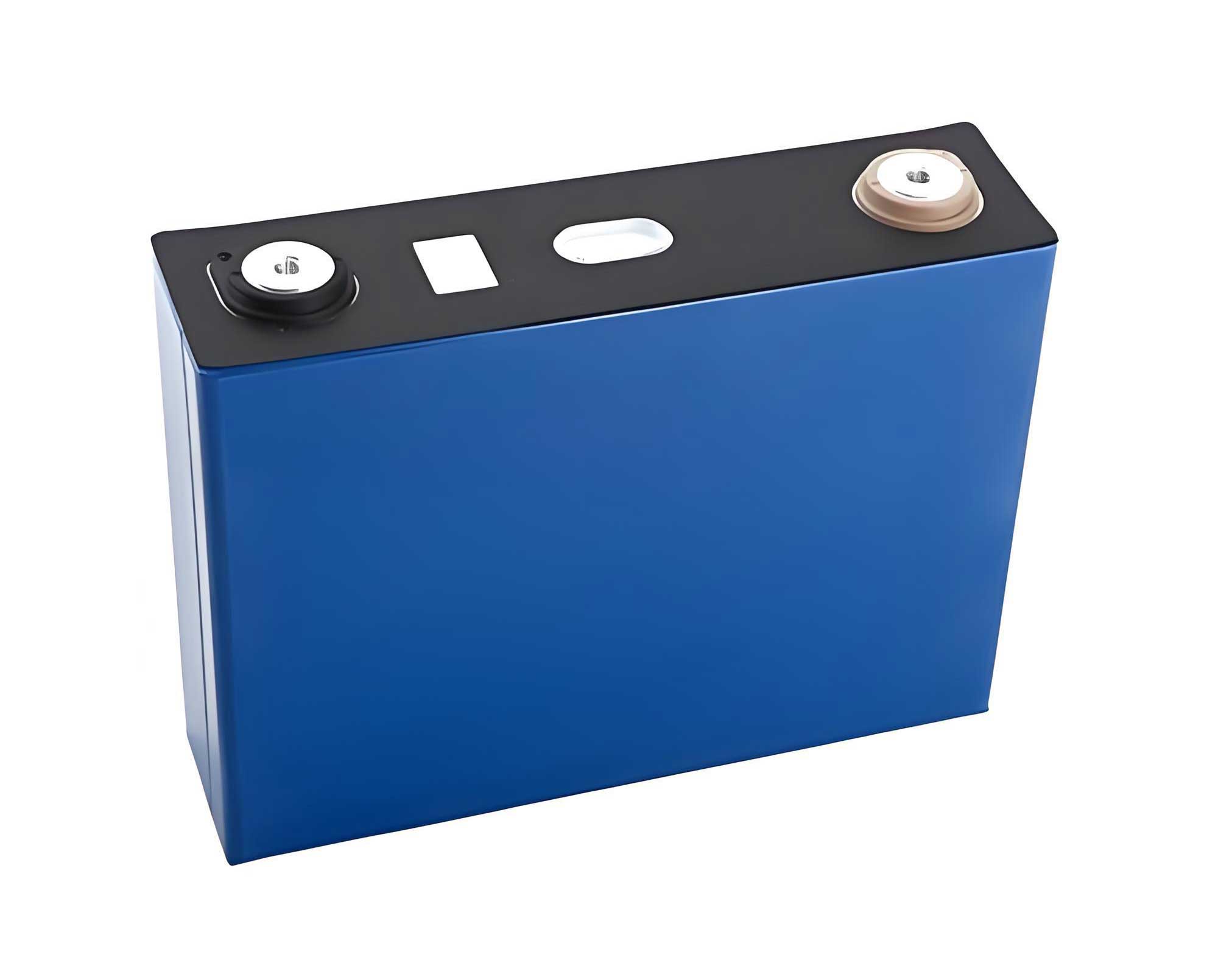
The lifepo4 battery used in our experiments has a nominal capacity of 280 Ah and a voltage range of 2.50–3.65 V. Key parameters are summarized in Table 1. We simplified the CFD model to include only essential components, such as battery racks, and meshed it with approximately 800,000 cells to ensure accuracy. The simulation domain measured 6 m × 2.2 m × 2.6 m, representing a typical energy storage enclosure. Gas detectors were placed at five strategic locations to monitor concentration changes over time. For the lifepo4 battery thermal runaway simulations, we inputted gas composition data from experiments and used fitted velocity profiles based on measured exhaust speeds.
| Parameter | Value |
|---|---|
| Dimensions (L × W × H, mm) | 173.9 × 71.7 × 207.2 |
| Rated Capacity (Ah) | 280 |
| Nominal Voltage (V) | 3.2 |
| Operating Voltage (V) | 2.50–3.65 |
| Cathode Material | LiFePO₄ |
| Anode Material | Graphite |
| State of Charge (SOC, %) | 0, 50, 100 |
Our experimental results reveal distinct thermal runaway phases for the lifepo4 battery. Phase I involves gradual heating with internal gas accumulation. Phase II marks vent opening, accompanied by rapid gas ejection and temperature spikes. Phase III is a cooling period with diminishing gas production. The temperature evolution, particularly at the battery surface (T₂ point), shows SOC-dependent trends. For the 0% SOC lifepo4 battery, the temperature rise rate remained below 1°C/s, failing to trigger full thermal runaway, whereas for 50% and 100% SOC, thermal runaway was initiated with significantly higher rates. Key temperature parameters are compiled in Table 2.
| SOC (%) | θmax (°C) | θvent (°C) | θTR (°C) | dθmax (°C·s⁻¹) |
|---|---|---|---|---|
| 0 | 159.15 | 57.57 | — | 0.23 |
| 50 | 283.89 | 47.39 | 196.84 | 6.84 |
| 100 | 356.60 | 31.90 | 86.21 | 46.58 |
The pressure dynamics inside the chamber further highlight SOC effects. The 0% SOC lifepo4 battery exhibited a slow pressure rise without secondary venting, while higher SOC cases showed rapid pressure fluctuations due to intense gas release. Gas composition analysis indicates a shift from CO₂-dominated emissions at low SOC to H₂-rich mixtures at high SOC. The volume fractions of major gases are listed in Table 3. These compositions arise from complex electrochemical reactions during thermal runaway of the lifepo4 battery. For instance, CO₂ generation is primarily attributed to SEI decomposition:
$$(CH_2OCO_2Li)_2 \rightarrow Li_2CO_3 + C_2H_4 + CO_2 + 0.5 O_2$$
Additionally, reactions with HF and H₂ produce CO₂:
$$ROCO_2 + HF \rightarrow ROH + CO_2 + LiF$$
$$2 ROCO_2Li + H_2 \rightarrow 2 ROH + Li_2CO_3 + CO_2$$
Carbon monoxide (CO) forms via reduction of CO₂ or electrolyte decomposition:
$$2 CO_2 + 2 Li^+ + 2 e^- \rightarrow Li_2CO_3 + CO$$
$$DMC + 2 Li^+ + 2 e^- \rightarrow 2 CH_3OLi + CO$$
Hydrogen (H₂) is largely derived from binder decomposition:
$$PVdf \rightarrow LiF + -CH = CF – + 0.5 H_2$$
Methane (CH₄) results from hydrogenation of dimethyl carbonate (DMC):
$$DMC + Li^+ + e^- + 0.5 H_2 \rightarrow CH_3OCO_2 Li + 2 CH_4$$
These reactions underscore the reactivity of the lifepo4 battery components under thermal stress. The gas volume and mass loss increase with SOC, as summarized in Table 4. The venting time and thermal runaway trigger time decrease with higher SOC, indicating enhanced instability in fully charged lifepo4 battery units.
| SOC (%) | CO₂ | H₂ | CO | CH₄ | Others |
|---|---|---|---|---|---|
| 0 | 78.41 | 8.60 | 6.20 | 3.29 | 3.50 |
| 50 | 42.54 | 36.98 | 8.31 | 4.76 | 7.41 |
| 100 | 28.61 | 44.84 | 9.80 | 7.06 | 9.69 |
| SOC (%) | Vent Time, tvent (s) | TR Trigger Time, tTR (s) | Gas Volume (L) | Mass Loss (g) |
|---|---|---|---|---|
| 0 | ~2500 | — | 12.5 | 45.2 |
| 50 | ~1200 | ~800 | 18.3 | 68.7 |
| 100 | ~1000 | ~600 | 25.6 | 92.1 |
To understand the safety implications, we simulated gas diffusion for 0% and 100% SOC cases, as they represent extremes in gas composition. For the 0% SOC lifepo4 battery, the exhaust velocity was set at 5 m/s, based on experimental measurements. The simulation shows that CO₂, the dominant gas, initially accumulates at the bottom of the enclosure, then gradually stratifies and diffuses upward. After approximately 262 seconds, the gas disperses throughout the entire space. Concentration profiles at detector locations indicate that lower detectors (e.g., Detector 1) sense gases earlier, with peaks around 850 ppm for CO₂ before stabilization.
In contrast, for the 100% SOC lifepo4 battery, the exhaust velocity profile was fitted to a polynomial function derived from pitot tube data:
$$v = (4.64 \times 10^{-11} \times t^6 – 2.82 \times 10^{-8} \times t^5 + 6.57 \times 10^{-6} \times t^4 – 7.53 \times 10^{-4} \times t^3 + 0.046 \times t^2 – 1.53 \times t + 31.53) \, \text{m/s}$$
Here, t is time in seconds from vent opening. The simulation reveals rapid vertical rise of H₂-rich gas, reaching the top of the enclosure within 9 seconds. The gas then spreads laterally across the ceiling before descending. Detector 1, closest to the vent, records H₂ concentrations exceeding 18,000 ppm within 14 seconds, highlighting the fast propagation. This behavior underscores the explosive risk associated with high-SOC lifepo4 battery thermal runaway, as H₂ has a low explosion limit.
The diffusion patterns can be mathematically described using the advection-diffusion equation, which governs gas transport in the enclosure:
$$\frac{\partial C}{\partial t} + \nabla \cdot (\mathbf{u} C) = \nabla \cdot (D \nabla C) + S$$
where C is gas concentration, u is velocity vector, D is diffusion coefficient, and S is source term from the lifepo4 battery vent. For turbulent flows, we employed the Realizable k-ε model in ANSYS Fluent to solve this equation. The model equations include:
$$\frac{\partial (\rho k)}{\partial t} + \frac{\partial (\rho k u_i)}{\partial x_i} = \frac{\partial}{\partial x_j} \left[ \left( \mu + \frac{\mu_t}{\sigma_k} \right) \frac{\partial k}{\partial x_j} \right] + G_k – \rho \varepsilon$$
$$\frac{\partial (\rho \varepsilon)}{\partial t} + \frac{\partial (\rho \varepsilon u_i)}{\partial x_i} = \frac{\partial}{\partial x_j} \left[ \left( \mu + \frac{\mu_t}{\sigma_\varepsilon} \right) \frac{\partial \varepsilon}{\partial x_j} \right] + \rho C_1 S \varepsilon – \rho C_2 \frac{\varepsilon^2}{k + \sqrt{\nu \varepsilon}}$$
where k is turbulent kinetic energy, ε is dissipation rate, μ is dynamic viscosity, μt is turbulent viscosity, and constants are σk = 1.0, σε = 1.2, C1 = 1.44, C2 = 1.9. These simulations confirm that SOC critically affects gas dispersal: high-SOC lifepo4 battery emissions lead to ceiling-accumulation risks, while low-SOC gases pose longer-term stratification hazards at floor level.
Further analysis of the lifepo4 battery thermal runaway mechanism involves heat generation equations. The total heat release Q during thermal runaway can be approximated as:
$$Q = \sum_i m_i \Delta H_i$$
where mi is mass of component i (e.g., electrolyte, electrodes) and ΔHi is enthalpy of reaction. For the lifepo4 battery, exothermic reactions such as anode-electrolyte interactions dominate at high SOC, leading to higher Q values. We estimate that for 100% SOC, Q is about 1.5 times that at 50% SOC, based on temperature rise data. This aligns with the observed faster thermal runaway propagation in high-SOC lifepo4 battery cells.
Regarding gas toxicity and flammability, the lower explosion limit (LEL) of the mixture can be estimated using Le Chatelier’s rule:
$$\text{LEL}_{\text{mix}} = \left( \sum \frac{y_i}{\text{LEL}_i} \right)^{-1}$$
where yi is volume fraction of gas i, and LELi is its pure LEL. For the 100% SOC lifepo4 battery gas mix, with H₂ LEL at 4% and CO₂ acting as diluent, the overall LEL is around 5–6%, indicating high flammability. In contrast, the 0% SOC mix, rich in CO₂, has an LEL above 20%, reducing immediate fire risk. These calculations emphasize the need for SOC-aware gas detection systems in lifepo4 battery storage installations.
Our simulation results also provide insights into detector placement. For high-SOC lifepo4 battery scenarios, ceiling-mounted detectors are crucial for early H₂ detection, whereas for low-SOC cases, floor-level sensors may be more effective for CO₂ monitoring. We recommend a multi-tier detection network to cover all SOC possibilities in lifepo4 battery racks. Additionally, ventilation strategies should consider vertical extraction for high-SOC gases and horizontal circulation for low-SOC emissions.
The impact of SOC on lifepo4 battery thermal runaway extends to pressure dynamics. The ideal gas law relates pressure rise to gas production:
$$P V = n R T$$
where P is pressure, V is chamber volume, n is moles of gas, R is gas constant, and T is temperature. For the 100% SOC lifepo4 battery, rapid gas generation causes sharp pressure spikes, while for 0% SOC, the increase is gradual. This pressure behavior can be used as a secondary indicator for thermal runaway severity in lifepo4 battery systems.
In terms of material degradation, the lifepo4 battery undergoes phase transitions during heating. The LiFePO₄ cathode may decompose at elevated temperatures, releasing oxygen and contributing to gas composition. However, compared to other chemistries, lifepo4 battery materials are more stable, which partly explains the predominance of venting over flaming in our experiments. Still, the gas hazards remain significant, especially for large-format lifepo4 battery units like the 280 Ah cell studied here.
To enhance safety, we propose design modifications based on our findings. For instance, increasing venting areas in lifepo4 battery modules can reduce internal pressure and accelerate gas expulsion, lowering explosion risks. Moreover, thermal management systems should account for SOC-dependent heat generation rates. Active cooling may be prioritized for high-SOC lifepo4 battery packs to delay thermal runaway onset.
Future work on lifepo4 battery safety could explore multi-cell thermal runaway propagation and gas interactions in larger arrays. Integrating real-time SOC monitoring with gas detection algorithms could enable predictive safety measures. Additionally, advanced CFD models incorporating chemical kinetics may further refine diffusion predictions for lifepo4 battery enclosures.
In conclusion, our integrated experimental and simulation study demonstrates that SOC profoundly influences the thermal runaway behavior and gas diffusion patterns of lifepo4 battery systems. High-SOC lifepo4 battery cells exhibit rapid, H₂-rich gas release with vertical dispersion, posing acute explosion hazards. Low-SOC lifepo4 battery cells produce CO₂-dominated gases that accumulate horizontally, presenting longer-term risks. These insights underline the importance of SOC-specific safety protocols in the design and operation of lifepo4 battery energy storage systems. By leveraging tables, formulas, and simulations, we provide a comprehensive framework for mitigating thermal runaway risks in lifepo4 battery applications, contributing to safer renewable energy integration.