
In recent years, energy storage lithium battery systems have become a rapidly developing and convertible high-quality resource, playing a critical role in supplementing the growing capacity gap of power grids and efficiently utilizing renewable energy. As a key component of electrochemical energy storage, energy storage lithium battery stations enable high-efficiency energy applications, with types including mechanical, electrochemical, and electromagnetic storage. Among these, electrochemical energy storage lithium battery stations stand out due to their low investment, short construction cycles, high energy density, high cycle efficiency, and fast response times, making them a popular choice. To meet high-capacity demands, numerous energy storage lithium batteries are often densely arranged in series and parallel configurations. However, this high-density layout leads to poor heat dissipation, increasing the risk of thermal runaway and potential fire hazards.
Current electrochemical energy storage stations primarily use lithium-ion batteries, favored for their high energy density, long cycle life, and low cost. When subjected to external stimuli such as mechanical damage, electrical faults, or abnormal temperatures, these energy storage lithium batteries can release substantial heat along with flammable gases like hydrogen, carbon monoxide, and methane, leading to open flames, thermal runaway, or even explosions. From an emergency response perspective, the process of thermal runaway in energy storage lithium batteries can be divided into three stages: the initial stage, where battery temperature rises and charge-discharge currents become abnormal; the intermediate stage, involving battery deformation and release of pyrolytic gases; and the final stage, characterized by dense smoke, flames, and potential explosions.
Prefabricated container-based lithium iron phosphate energy storage lithium battery stations typically consist of multiple containerized units, each containing battery clusters with numerous modules. Conventional fire detection systems in these setups rely on composite detectors that monitor parameters like smoke concentration, ambient temperature, CO, VOC, and hydrogen levels. Fire suppression systems often combine liquid and gas-based methods. While liquid systems offer effective cooling, water-based agents have poor insulation properties and can cause short circuits, damaging battery modules. In contrast, gas suppression systems preserve equipment integrity and reduce property loss, proving more effective for early and intermediate thermal runaway stages in energy storage lithium batteries. In enclosed prefabricated containers, gas extinguishing agents can achieve optimal results when concentration conditions are met. Commonly used agents include heptafluoropropane and perfluorohexanone, with the latter being less toxic and having a lower global warming potential, making it more environmentally friendly. However, perfluorohexanone decomposes at temperatures above 550°C, limiting its use in high-temperature fires, and its effectiveness for dense energy storage lithium battery arrays requires further investigation.
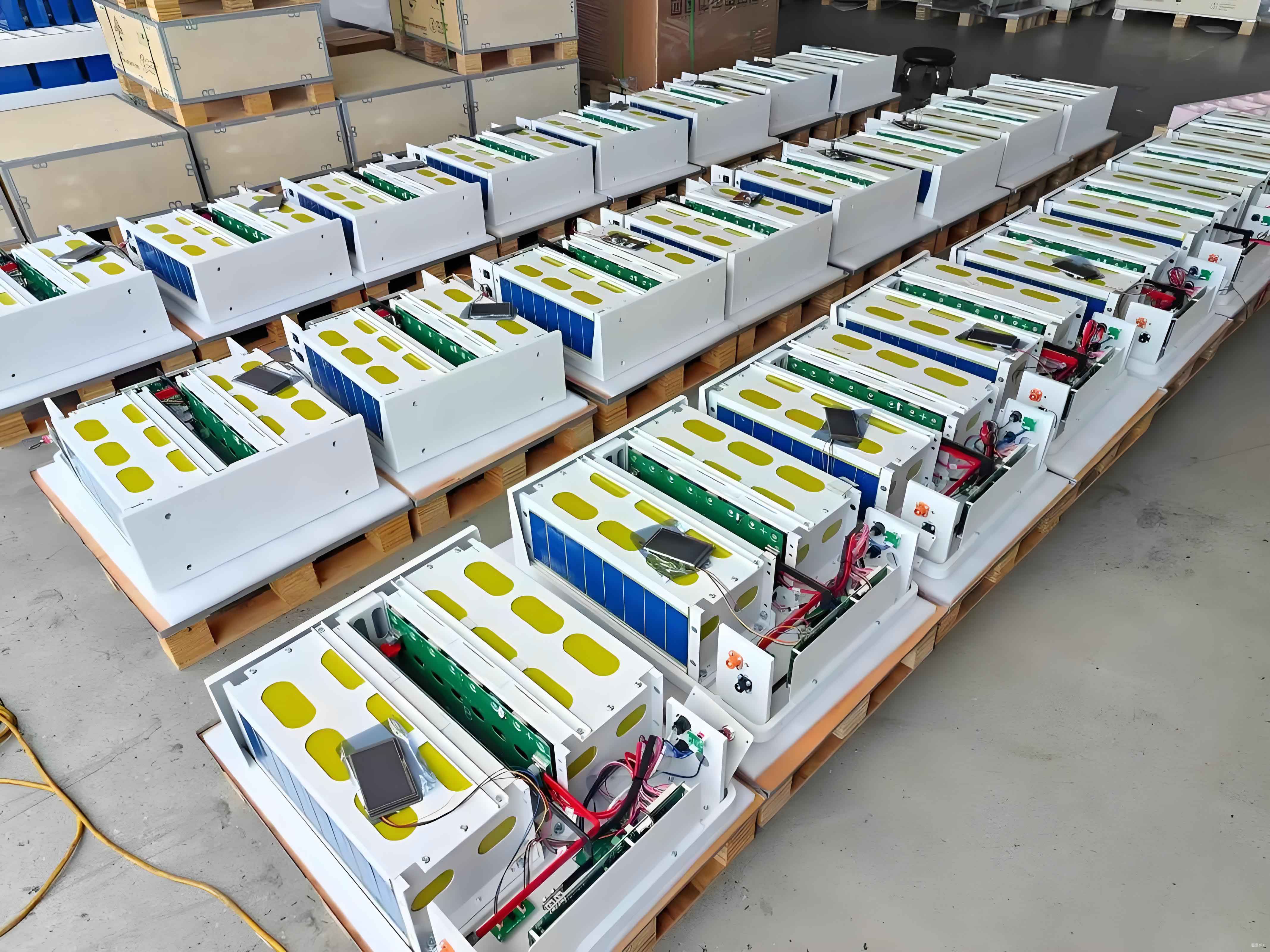
To address these challenges, I designed an experimental platform to simulate thermal runaway in energy storage lithium batteries. The setup involved a lithium iron phosphate battery pack measuring 1000 × 800 × 240 mm, housed in a standard 20-foot container. A simulated battery cluster was constructed at the container’s center, with the battery pack fixed at the middle layer. Thermal runaway was induced by internal overheating using two 1 kW heating strips placed inside the battery module. Temperature sensors were installed at 17 positions within the module to monitor thermal behavior, and 10 composite fire detectors were distributed throughout the cluster to track CO, VOC, smoke, and temperature data during the energy storage lithium battery thermal runaway process.
The experimental procedure began by activating the heating strips, leading to a rapid temperature increase. Key events included detector alarms at specific time intervals, battery pack swelling, audible cracks, smoke emission, and open flames. Upon fire detection, a perfluorohexanone gas suppression system was activated, resulting in flame reduction and eventual extinguishment without re-ignition. Data collected from detectors and temperature sensors provided insights into the dynamics of energy storage lithium battery thermal runaway.
The temperature evolution during the experiment can be modeled using a exponential growth function to represent the rapid heat release in energy storage lithium batteries. For instance, the temperature \( T \) at time \( t \) can be expressed as:
$$ T(t) = T_0 + A \cdot e^{k t} $$
where \( T_0 \) is the initial temperature, \( A \) is a constant related to heat generation, and \( k \) is the rate constant specific to energy storage lithium battery systems. Similarly, the concentration of gases like CO and VOC during thermal runaway can be described by empirical equations. For CO concentration \( C_{CO}(t) \):
$$ C_{CO}(t) = C_{\text{max}} \left(1 – e^{-\beta t}\right) $$
where \( C_{\text{max}} \) is the maximum concentration and \( \beta \) is a decay constant. These formulas help in predicting hazardous conditions in energy storage lithium battery setups.
To summarize the experimental data, I have compiled key parameters into tables. Table 1 presents the alarm levels and corresponding parameters from the composite fire detectors during the energy storage lithium battery thermal runaway event.
| Detector ID | Alarm Level | Time (min) | CO Concentration (ppm) | VOC Concentration (V) | Temperature (°C) | Smoke Alarm |
|---|---|---|---|---|---|---|
| 1 | 2 | 11 | 194 | 1.814 | 6 | No |
| 1 | 3 | ~39 | 831 | 2.469 | 5 | Yes |
| 4 | 4 | 39.7 | N/A | N/A | 80 | N/A |
Table 2 shows the temperature data from various sensors placed inside the energy storage lithium battery pack, highlighting the localized nature of thermal runaway.
| Sensor ID | Initial Temperature (°C) | Peak Temperature (°C) | Time to Peak (min) | Location Notes |
|---|---|---|---|---|
| U1 | ~20 | 251 | ~40 | Near heating strip |
| U11 | ~20 | >300 | ~45 | Rapid rise zone |
| U4, U5, U7 | ~20 | >200 | ~41 | Affected areas |
| U8, U9, U10 | ~20 | <30 | N/A | Unaffected left side |
The data indicate that thermal runaway in energy storage lithium batteries initiates with a gradual increase in CO and VOC levels, providing an early warning opportunity. For example, the CO concentration detected by the internal detector rose from 194 ppm to over 1500 ppm, following a trend that can be approximated by:
$$ C_{CO}(t) = 1500 \left(1 – e^{-0.1 t}\right) $$
This early detection is crucial for implementing suppression measures in energy storage lithium battery systems. The temperature distribution across the battery cluster, as captured by the detectors, showed that only the detector directly above the flame site reached the alarm threshold of 80°C, while others remained below 20°C, underscoring the effectiveness of timely gas suppression in controlling energy storage lithium battery fires.
In terms of fire suppression, perfluorohexanone demonstrated efficacy in extinguishing flames and reducing ambient temperatures in the energy storage lithium battery experiment. The extinguishing process can be modeled by considering the heat absorption capacity of the agent. The cooling effect \( \Delta T \) can be expressed as:
$$ \Delta T = \frac{Q}{m \cdot c} $$
where \( Q \) is the heat absorbed, \( m \) is the mass of the agent, and \( c \) is the specific heat capacity. For energy storage lithium battery applications, this highlights the importance of adequate dosing to achieve complete extinguishment, as observed in the container setup.
Further analysis of the gas concentrations reveals that VOC levels also followed an exponential trend, with the initial value of 1.814 V rising to 3.1 V at peak. The relationship can be described as:
$$ V_{VOC}(t) = V_0 + B \cdot \left(1 – e^{-\gamma t}\right) $$
where \( V_0 \) is the initial VOC voltage, \( B \) is a scaling factor, and \( \gamma \) is a constant. This behavior is typical in energy storage lithium battery thermal runaway events, where electrolyte decomposition releases volatile compounds.
The spatial variation in temperature across the energy storage lithium battery pack emphasizes the need for distributed sensing. As shown in the data, sensors on the right side experienced rapid heating, while the left side remained cool, indicating that thermal propagation in energy storage lithium batteries can be highly localized. This inhomogeneity can be quantified using a thermal diffusion equation:
$$ \frac{\partial T}{\partial t} = \alpha \nabla^2 T + \dot{q} $$
where \( \alpha \) is the thermal diffusivity and \( \dot{q} \) is the heat generation rate per unit volume, which is particularly relevant for dense energy storage lithium battery configurations.
In conclusion, this study on energy storage lithium battery thermal runaway provides valuable insights into early detection and suppression strategies. The experimental data confirm that monitoring CO and VOC concentrations can facilitate early warnings, while perfluorohexanone gas suppression can effectively control fires in enclosed environments. However, the scalability and optimal dosing for larger energy storage lithium battery systems require further research to enhance safety and reliability in real-world applications.