
In modern energy systems, electrochemical energy storage plays a pivotal role in stabilizing power grids and managing renewable energy fluctuations. Among various technologies, the energy storage lithium battery, particularly lithium iron phosphate (LiFePO4) batteries, has gained widespread adoption due to its high energy density and long cycle life. However, the high packing density and substantial charge-discharge rates of these batteries often lead to significant heat accumulation. If the temperature exceeds the safe operating range, it can trigger thermal runaway, posing serious safety risks. Therefore, effective thermal management is crucial for ensuring the reliability and longevity of energy storage lithium battery systems. Liquid cooling has emerged as a promising solution, offering superior heat dissipation compared to air cooling. In this study, we focus on optimizing the thermal performance of a large-capacity energy storage lithium battery module by designing a parallel serpentine flow channel liquid cooling system. We propose strategies such as staggered cooling plate arrangement and differentiated flow velocity distribution to enhance cooling efficiency while minimizing energy consumption. Experimental validation confirms the effectiveness of our approach.
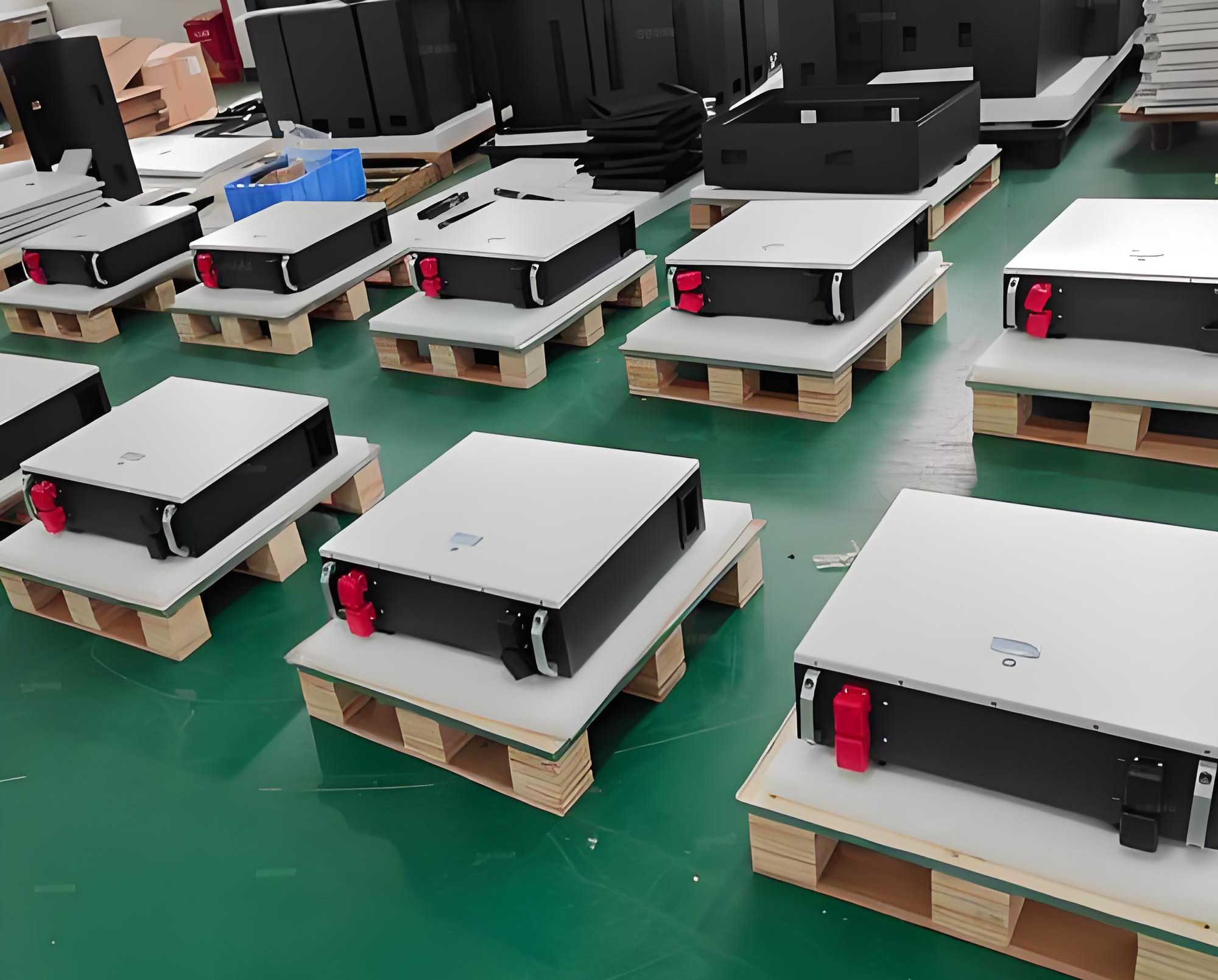
The thermal behavior of an energy storage lithium battery is governed by heat generation and transfer mechanisms. During operation, heat is primarily generated from electrochemical reactions, Joule heating due to internal resistance, polarization effects, and side reactions. The heat generation rate can be modeled using the following equation:
$$ \dot{q} = I^2 R + I \left( T \frac{\partial E}{\partial T} \right) $$
where \(\dot{q}\) is the volumetric heat generation rate, \(I\) is the current, \(R\) is the internal resistance, \(T\) is the temperature, and \(E\) is the open-circuit voltage. For a 208 Ah LiFePO4 battery at 1C charging, the heat generation rate is approximately 6362 W/m³. Heat transfer occurs through conduction, convection, and radiation, with conduction being dominant in tightly packed modules. The general heat conduction equation is:
$$ \rho c_p \frac{\partial T}{\partial t} = \nabla \cdot (k \nabla T) + \dot{q} $$
where \(\rho\) is density, \(c_p\) is specific heat capacity, and \(k\) is thermal conductivity. In our design, we developed a parallel serpentine flow channel for the liquid cooling plates, which combines the advantages of parallel and serpentine layouts to balance pressure drop and heat dissipation. The cooling performance and energy consumption were evaluated using computational fluid dynamics (CFD) simulations. Key parameters for the battery and coolant are summarized in Table 1.
| Material | Density (kg/m³) | Specific Heat (J/kg·K) | Thermal Conductivity (W/m·K) | Heat Generation Rate (W/m³) |
|---|---|---|---|---|
| Battery | 2405 | 1329 | 3.72/28/26 | 6362 |
| Coolant (50% EG) | 1070 | 3396 | 0.399 | – |
We compared three flow channel designs: traditional serpentine, traditional parallel, and our proposed parallel serpentine. The parallel serpentine channel features a hybrid structure with parallel main paths and serpentine sub-channels to improve flow distribution. Simulation results under 1C charging conditions (27°C ambient) showed that the parallel serpentine design reduced the maximum temperature and temperature difference within the module while maintaining a moderate pressure drop. The performance metrics are summarized in Table 2.
| Flow Channel Type | Max Temperature (°C) | Temperature Difference (°C) | Pressure Drop (Pa) |
|---|---|---|---|
| Traditional Serpentine | 32.5 | 6.8 | 1252.5 |
| Traditional Parallel | 32.9 | 7.5 | 101.2 |
| Parallel Serpentine | 32.6 | 7.1 | 748.6 |
The parallel serpentine channel achieved a balance, with a pressure drop only 59.77% of the traditional serpentine design, indicating lower pumping energy requirements. This makes it suitable for long-duration operation of energy storage lithium battery systems. To further optimize thermal uniformity, we implemented staggered cooling plate arrangement and differentiated flow velocity. In staggered arrangement, adjacent cooling plates have inlets on opposite sides, which reduces temperature gradients. For flow velocity differentiation, we assigned higher velocities (0.3 m/s) to inner cooling plates and lower velocities (0.1 m/s) to outer ones, leveraging the heat concentration in the module center.
We built an experimental platform using a 30-cell battery module (each cell 208 Ah) housed in a stainless steel enclosure. The module was instrumented with 20 thermal sensors placed at the center of each battery surface. The liquid cooling system used 50% ethylene glycol as coolant, with a chiller maintaining inlet temperature at 25°C. Tests were conducted under 1C charging from 27°C initial temperature. The results for different configurations are shown in Table 3.
| Configuration | Max Module Temperature (°C) | Temperature Difference in Outer Column (°C) |
|---|---|---|
| Natural Convection | 40.3 | – |
| Symmetrical Plates, 0.1 m/s | 34.6 | 1.2 |
| Staggered Plates, 0.1 m/s | 34.3 | 0.9 |
| Staggered Plates, 0.2 m/s Uniform | 32.9 | 0.7 |
| Staggered Plates, Differentiated Flow | 32.7 | 0.7 |
Staggered arrangement reduced the maximum temperature by 0.3°C and the temperature difference by 25% compared to symmetrical arrangement. Differentiated flow velocity further lowered the maximum temperature by 0.2°C, demonstrating enhanced cooling for the inner region where heat accumulates. The experimental data aligned well with simulations, with maximum errors below 2°C and error rates under 6%, validating the model accuracy. The improvements are attributed to better flow distribution and targeted cooling of hotspots in the energy storage lithium battery module.
In conclusion, our parallel serpentine flow channel design effectively manages the thermal characteristics of energy storage lithium battery modules. The optimized liquid cooling system reduces the maximum temperature from 40.3°C under natural convection to 32.7°C under 1C charging, while maintaining temperature uniformity. Staggered plate arrangement and differentiated flow velocity further enhance performance without additional energy costs. This approach ensures safe and efficient operation of energy storage lithium battery systems, contributing to the advancement of electrochemical energy storage technologies. Future work will focus on refining flow velocity ratios and integrating real-time control for dynamic thermal management.