
In recent years, the global push to reduce carbon emissions and promote clean energy has made energy storage systems a critical component of modern power infrastructure. As a key element in these systems, the energy storage lithium battery faces significant challenges related to thermal management due to its sensitivity to temperature variations. The optimal operating temperature for lithium-ion batteries, which are widely used in energy storage applications, ranges from 25°C to 45°C. Deviations from this range can lead to reduced capacity, accelerated aging, and even safety hazards such as thermal runaway, where temperatures can soar to 700°C, posing risks of fire or explosion. According to the Arrhenius equation, the aging rate of energy storage lithium batteries increases by approximately 7% for every 1°C rise in temperature, highlighting the importance of effective cooling strategies. In this study, we focus on the thermal performance of energy storage lithium battery modules during discharge, employing heat pipe-based cooling systems to enhance safety and efficiency. We developed a simulation model and conducted experimental validations to analyze temperature variations under different environmental conditions and discharge currents, providing insights for optimizing thermal management in energy storage lithium battery systems.
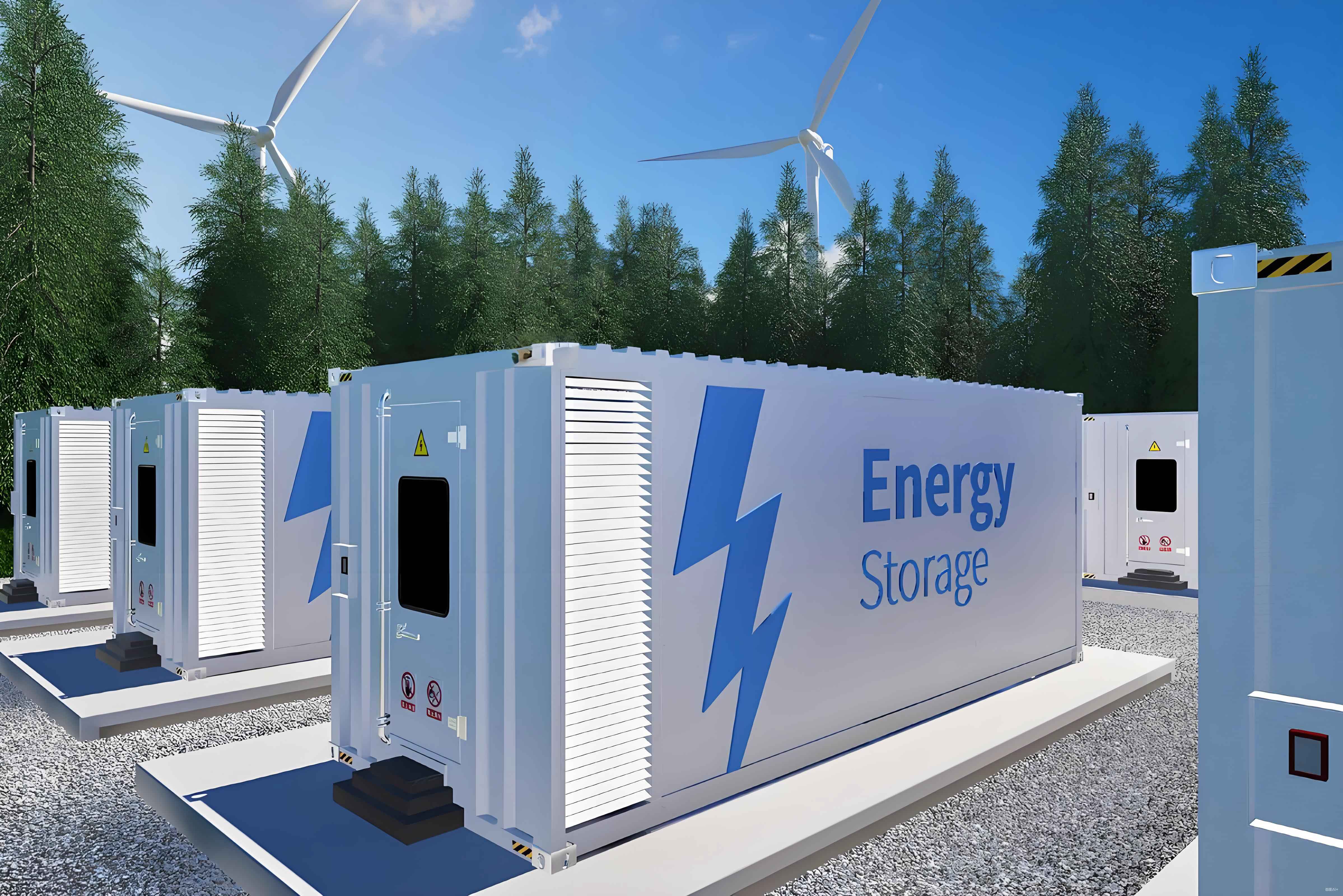
The thermal characteristics of energy storage lithium battery systems are influenced by internal heat generation during charge and discharge cycles. The heat generation rate in a lithium-ion battery can be described by the following equation, which accounts for irreversible and reversible heat effects: $$ \dot{q} = I \left( V – U \right) + I T \frac{dU}{dT} $$ where \(\dot{q}\) is the heat generation rate per unit volume, \(I\) is the current, \(V\) is the terminal voltage, \(U\) is the open-circuit voltage, and \(T\) is the temperature. This equation underscores the need for efficient heat dissipation to prevent hotspots and maintain uniform temperature distribution in energy storage lithium battery packs. In our design, we integrated flat sintered heat pipes with a startup temperature of 25°C into a battery module consisting of eight series-connected soft-pack lithium-ion cells, each with a nominal capacity of 30 Ah and voltage of 3.7 V. The heat pipes were attached to the battery surfaces using high-thermal-conductivity grease, and forced air convection was applied at the condenser ends to enhance heat removal. This setup aims to address the thermal challenges in energy storage lithium battery systems, particularly in high-density configurations like containerized energy storage stations, where temperature control is crucial for longevity and safety.
To simulate the thermal behavior of the energy storage lithium battery module, we developed a three-dimensional model using COMSOL Multiphysics, incorporating solid domains for the batteries and heat pipes, and a fluid domain for the air flow. The model assumptions included uniform internal heat generation, constant material properties, and negligible radiation heat transfer. The governing heat conduction equation is given by: $$ \rho c_p \frac{\partial T}{\partial t} = \nabla \cdot (k \nabla T) + \dot{q} $$ where \(\rho\) is density, \(c_p\) is specific heat capacity, \(k\) is thermal conductivity, and \(\dot{q}\) is the volumetric heat source. For the air flow, we applied a standard turbulence model with a velocity of 5 m/s, and simulations were conducted at environmental temperatures of 25°C and 35°C with discharge currents of 5 A, 10 A, and 15 A. The Arrhenius equation was also referenced to model aging effects: $$ k_{\text{aging}} = A e^{-E_a / (R T)} $$ where \(k_{\text{aging}}\) represents the aging rate constant, \(A\) is the pre-exponential factor, \(E_a\) is the activation energy, and \(R\) is the universal gas constant. These simulations help predict temperature rises and validate the cooling efficiency of heat pipes in energy storage lithium battery systems under various operational scenarios.
In our experimental study, we constructed a battery module with eight cells connected in series, resulting in a total voltage of 33.6 V and capacity of 30 Ah. The heat pipes used were 200 mm long, 8 mm wide, and 2 mm thick, with a liquid filling ratio of 0.1%. Temperature was monitored using T-type thermocouples placed at critical points on the battery surfaces, and the module was enclosed in an acrylic box to simulate real-world energy storage lithium battery enclosures. An axial fan provided forced air cooling at the inlet. The testing procedure involved charging the batteries at 25°C, allowing them to stabilize, and then discharging at constant currents of 5 A, 10 A, and 20 A while recording temperature data until the voltage dropped to the protection limit. This process was repeated for different environmental temperatures to assess the impact on thermal performance. The results emphasize the critical role of heat pipes in maintaining safe operating temperatures for energy storage lithium battery systems, especially under high discharge rates.
The experimental data revealed significant temperature variations depending on discharge currents and environmental conditions. For instance, at 25°C with a 5 A discharge current, the peak battery temperature reached 33°C, with a maximum temperature difference of 1.9°C within the module. At higher currents, such as 20 A, the temperature peaked at 41.8°C with a difference of 4.6°C. Under elevated environmental temperatures, like 35°C, the maximum temperature rose to 46.7°C with a 4.7°C difference at 20 A discharge. These findings are summarized in Table 1, which compares temperature peaks and differences across various test conditions. The data indicate that lower environmental temperatures lead to more pronounced temperature changes during discharge, due to increased electrolyte viscosity and SEI film resistance in energy storage lithium batteries, which accelerate heat generation. This trend underscores the importance of adaptive thermal management strategies for energy storage lithium battery systems in diverse climates.
| Discharge Current (A) | Environmental Temperature (°C) | Peak Temperature (°C) | Max Temperature Difference (°C) |
|---|---|---|---|
| 5 | 25 | 33.0 | 1.9 |
| 10 | 25 | 37.3 | 2.8 |
| 20 | 25 | 41.8 | 4.6 |
| 5 | 35 | 38.5 | 2.5 |
| 10 | 35 | 42.1 | 3.7 |
| 20 | 35 | 46.7 | 4.7 |
To further analyze the thermal dynamics, we compared the simulation results with experimental data for a 10 A discharge at 25°C and 35°C. The temperature profiles showed similar trends, with simulations slightly underestimating the experimental values due to idealized assumptions, such as constant material properties and uniform heat distribution. For example, at 25°C, the experimental temperature rise was higher than in simulations, but the overall patterns aligned, validating the model’s accuracy for energy storage lithium battery applications. The heat transfer efficiency of the heat pipe system can be expressed using the effectiveness-NTU method: $$ \epsilon = 1 – e^{-\mathrm{NTU}} $$ where \(\epsilon\) is the heat exchanger effectiveness and NTU is the number of transfer units, calculated as \( \mathrm{NTU} = \frac{U A}{C_{\min}} \), with \(U\) as the overall heat transfer coefficient, \(A\) as the area, and \(C_{\min}\) as the minimum heat capacity rate. This approach helps quantify the cooling performance in energy storage lithium battery systems and guides design improvements. Additionally, the temperature dependence of battery internal resistance, which affects heat generation, can be modeled as: $$ R_{\text{int}} = R_0 e^{\beta (T – T_0)} $$ where \(R_{\text{int}}\) is the internal resistance, \(R_0\) is the reference resistance at temperature \(T_0\), and \(\beta\) is a temperature coefficient. Incorporating these equations enhances the predictive capability of thermal models for energy storage lithium battery packs.
The impact of environmental temperature on the cooling performance of energy storage lithium battery systems is evident from the experimental curves. At 10 A discharge, the temperature rise was more rapid and higher in a 35°C environment compared to 25°C, as shown in Figure 1 (refer to the image for visual context). This aligns with the Arrhenius-based aging model, where higher temperatures accelerate degradation. The heat pipe system effectively mitigated these effects by maintaining temperatures within safe limits, demonstrating its suitability for energy storage lithium battery applications in variable climates. In terms of thermal uniformity, the maximum temperature difference across the module remained below 5°C in all tests, which is acceptable for preventing localized overheating in energy storage lithium battery arrays. However, at extreme conditions, such as high discharge rates and elevated ambient temperatures, supplementary cooling methods may be necessary to enhance the reliability of energy storage lithium battery systems.
| Time (s) | Experimental Temperature at 25°C (°C) | Simulated Temperature at 25°C (°C) | Experimental Temperature at 35°C (°C) | Simulated Temperature at 35°C (°C) |
|---|---|---|---|---|
| 0 | 25.0 | 25.0 | 35.0 | 35.0 |
| 2000 | 30.2 | 29.5 | 38.4 | 37.8 |
| 4000 | 33.8 | 32.9 | 40.7 | 39.9 |
| 6000 | 36.1 | 35.2 | 42.3 | 41.4 |
| 8000 | 37.3 | 36.5 | 43.1 | 42.2 |
| 10000 | 37.0 | 36.8 | 42.8 | 42.0 |
In summary, our research on energy storage lithium battery thermal management demonstrates that heat pipe-based cooling systems can effectively control temperature rises during discharge, with performance varying based on environmental conditions and discharge currents. The simulation model proved accurate in predicting trends, providing a reliable tool for designing energy storage lithium battery systems. Future work could explore hybrid cooling approaches or advanced materials to further optimize thermal performance. As the demand for energy storage lithium battery solutions grows, robust thermal management will remain essential for ensuring safety, efficiency, and longevity in applications ranging from grid storage to electric vehicles. The integration of real-time monitoring and adaptive control algorithms could also enhance the resilience of energy storage lithium battery systems in dynamic operating environments.
Overall, the findings underscore the critical role of thermal management in advancing energy storage lithium battery technology. By addressing temperature-related challenges, we can unlock the full potential of energy storage lithium battery systems in the global transition to sustainable energy. Continued innovation in cooling strategies, coupled with accurate modeling, will drive improvements in energy density, cycle life, and safety for energy storage lithium battery deployments worldwide.