
In the realm of electric vehicles and renewable energy storage, lithium-ion batteries have become indispensable due to their high energy density, lightweight design, and long cycle life. However, their performance is severely hampered in cold climates, where temperatures often drop below 0°C. As a researcher focused on thermal management systems, I have extensively studied how phase change materials (PCMs) can mitigate these issues by providing passive insulation for lithium-ion batteries. This article delves into our numerical investigation of PCM-based thermal insulation for lithium-ion battery packs under various low-temperature environments, emphasizing the critical role of PCM phase change temperatures in maintaining optimal operating conditions. The goal is to present a comprehensive analysis that aids in designing efficient battery thermal management systems without additional energy consumption, ensuring the reliability and longevity of lithium-ion batteries in winter conditions.
The challenges faced by lithium-ion batteries in cold weather are multifaceted. When temperatures fall below 0°C, the electrochemical reactions within lithium-ion batteries slow down, leading to reduced capacity, diminished output power, and accelerated aging. Moreover, excessive temperature differences among battery cells can cause uneven chemical reactions, further degrading battery health. To address this, passive thermal management using PCMs has emerged as a promising solution. PCMs absorb and release latent heat during phase transitions, effectively stabilizing battery temperatures within a desirable range. In this study, we employed a GPU-accelerated multiple-relaxation time lattice Boltzmann method (MRT-LBM) based on the enthalpy approach to simulate the thermal behavior of a lithium-ion battery pack over multiple charge-discharge cycles. We explored three ambient temperatures: -20°C, -10°C, and 0°C, and analyzed how PCMs with different phase change temperatures influence battery insulation. Our findings aim to provide practical insights for selecting PCMs that enhance the performance of lithium-ion batteries in cold environments.
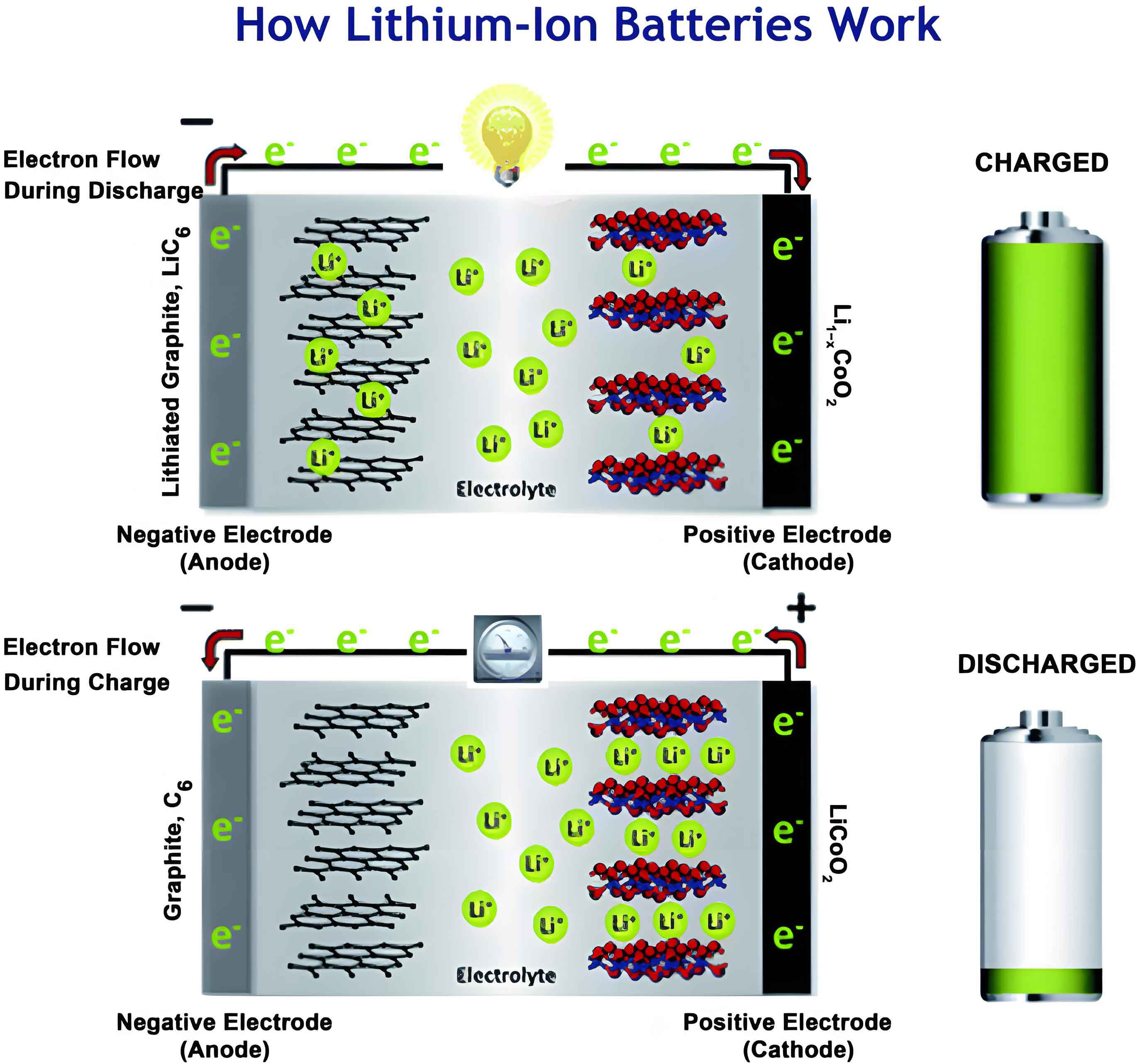
To model the thermal dynamics, we considered a battery pack comprising 40 cylindrical lithium-ion batteries, specifically the Panasonic 18650 type, arranged in a 4×10 configuration. Each lithium-ion battery has a diameter of 18 mm and a height of 65 mm, with a nominal capacity of 2.9 Ah. The batteries are surrounded by PCM, which is encapsulated in polyurethane (PU) insulation material to minimize heat loss to the environment. The thermophysical properties of the materials involved are summarized in Table 1. The PCM thickness is set at 10 mm, and its phase change temperature varies from 18°C to 32°C to assess the insulation effects. We assume natural convection at the outer surface with a heat transfer coefficient of 5 W/(m²·K), simulating typical stationary conditions. The simulation focuses on a two-dimensional cross-section along the width direction, as it captures significant temperature gradients while reducing computational complexity.
| Material | Density (kg/m³) | Specific Heat Capacity (J/kg·K) | Thermal Conductivity (W/m·K) | Phase Change Temperature (°C) | Latent Heat (J/kg) |
|---|---|---|---|---|---|
| Lithium-Ion Battery | 2870 | 700 | 3 | — | — |
| PCM (Paraffin) | 770 | 2460 | 0.15 | 18–32 | Assumed constant |
| Polyurethane Insulation | 50 | 1460 | 0.025 | — | — |
| Aluminum (for casing) | 2719 | 871 | 202.4 | — | — |
The mathematical framework for this study is grounded in conjugate heat transfer with phase change. We use the enthalpy-based method to model the PCM, where the heat conduction equation accounts for latent heat absorption and release. The governing equations for the PCM and lithium-ion battery are expressed as follows:
For the PCM region:
$$ \rho_{\text{PCM}} \frac{\partial h}{\partial t} = \lambda_{\text{PCM}} \left( \frac{\partial^2 T}{\partial x^2} + \frac{\partial^2 T}{\partial y^2} \right) $$
where \( \rho_{\text{PCM}} \) is the density, \( h \) is the enthalpy, \( t \) is time, \( \lambda_{\text{PCM}} \) is the thermal conductivity, and \( T \) is temperature. The enthalpy \( h \) is defined as:
$$ h_{\text{PCM}} = c_{p,\text{PCM}} (T – T_m) + f_l L_{a,\text{PCM}} $$
Here, \( c_{p,\text{PCM}} \) is the specific heat capacity, \( T_m \) is the phase change temperature, \( f_l \) is the liquid fraction, and \( L_{a,\text{PCM}} \) is the latent heat. The liquid fraction \( f_l \) varies between 0 (solid) and 1 (liquid) based on enthalpy thresholds.
For the lithium-ion battery region:
$$ \rho_b \frac{\partial h}{\partial t} = \lambda_b \left( \frac{\partial^2 T}{\partial x^2} + \frac{\partial^2 T}{\partial y^2} \right) $$
with \( \rho_b \) and \( \lambda_b \) being the density and thermal conductivity of the battery, respectively. The battery enthalpy is \( h_b = c_{p,b} (T – T_m) \), where \( c_{p,b} \) is the battery’s specific heat capacity. We assume uniform heat generation within the lithium-ion battery during discharge, calculated using the Bernardi equation:
$$ Q = I^2 R + I T \frac{dE}{dT} $$
In this equation, \( Q \) is the total heat generation rate, \( I \) is the current, \( R \) is the internal resistance, and \( \frac{dE}{dT} \) is the temperature coefficient of the open-circuit voltage, taken as 11.16 mV based on empirical data. For charging cycles, we assume negligible heat generation to simplify the analysis. The boundary conditions involve natural convection at the outer insulation layer:
$$ -\lambda \frac{\partial T_{w2}}{\partial x} = h_w (T_{w2} – T_{\text{air}}) $$
where \( h_w \) is the convective heat transfer coefficient, \( T_{w2} \) is the wall temperature, and \( T_{\text{air}} \) is the ambient temperature.
We implemented the GPU-accelerated MRT-LBM to solve these equations efficiently. The D2Q9 lattice model is used for discretization, and the evolution equation for enthalpy distribution functions is:
$$ g_\alpha(\mathbf{x} + \mathbf{e}_\alpha \Delta t, t + \Delta t) = g_\alpha(\mathbf{x}, t) – \mathbf{M}^{-1} \mathbf{N} [\mathbf{m}(\mathbf{x}, t) – \mathbf{m}^{\text{eq}}(\mathbf{x}, t)] $$
where \( g_\alpha \) is the distribution function, \( \mathbf{e}_\alpha \) is the discrete velocity, \( \Delta t \) is the time step, \( \mathbf{M} \) is the transformation matrix, and \( \mathbf{N} \) is the relaxation matrix. The equilibrium distribution function \( \mathbf{m}^{\text{eq}} \) is derived from macroscopic variables. This method allows for accurate simulation of phase change phenomena while leveraging parallel computing for speed. We validated our model against experimental data for single lithium-ion battery temperature rise at different discharge rates, as shown in Table 2, confirming good agreement with errors within acceptable limits.
| Discharge Rate (C) | Heat Generation Power (W/m³) | Simulated Temperature Rise (°C) | Experimental Temperature Rise (°C) |
|---|---|---|---|
| 0.5 | 6062.82 | ~5 | ~5.2 |
| 1.0 | 22294.63 | ~12 | ~11.8 |
| 2.0 | 85265.21 | ~25 | ~24.5 |
| 3.0 | 188911.75 | ~38 | ~37.5 |
Our simulation spans five consecutive charge-discharge cycles at a 1C rate, totaling 10 hours of operation, to mimic real-world usage in electric vehicles. The initial temperature of the lithium-ion battery pack is set equal to the ambient temperature. We analyze key metrics: average battery temperature, maximum temperature difference among cells, and PCM liquid fraction. The optimal working range for lithium-ion batteries is 20°C to 45°C, with a maximum temperature difference below 5°C to prevent accelerated aging. Below, we present detailed results for each ambient temperature scenario.
First, for an ambient temperature of 0°C, the insulation performance of PCMs with phase change temperatures from 18°C to 32°C is evaluated. The average temperature of the lithium-ion battery pack over time reveals distinct patterns. During the initial cycle, the battery temperature remains low, and the PCM does not melt significantly. However, from the second cycle onward, the PCM begins to absorb and release latent heat, stabilizing the temperature. As the phase change temperature increases, the average battery temperature at the end of discharge rises accordingly. For instance, with a PCM phase change temperature of 18°C, the average temperature reaches 19.8°C after the second discharge, whereas with 32°C PCM, it peaks at 29.8°C. The temperature growth rate slows once the battery temperature approaches the PCM’s phase change point, due to latent heat absorption. This effect is quantified by the liquid fraction \( f_l \), which increases during discharge and decreases during charge. Table 3 summarizes the average battery temperatures and maximum temperature differences for different PCMs at 0°C ambient.
| PCM Phase Change Temperature (°C) | Average Battery Temperature After 5 Cycles (°C) | Maximum Temperature Difference Among Cells (°C) | PCM Liquid Fraction at Peak Discharge |
|---|---|---|---|
| 18 | 22.5 | 6.0 | 0.85 |
| 20 | 24.1 | 5.5 | 0.80 |
| 22 | 26.0 | 5.0 | 0.75 |
| 24 | 27.8 | 4.8 | 0.70 |
| 26 | 29.5 | 4.6 | 0.65 |
| 28 | 31.0 | 4.5 | 0.60 |
| 30 | 32.8 | 4.6 | 0.55 |
| 32 | 34.8 | 4.7 | 0.50 |
The data indicates that PCMs with phase change temperatures between 26°C and 30°C maintain the lithium-ion battery pack within the optimal range of 20°C to 45°C after the second cycle, while keeping temperature differences below 4.6°C. Lower phase change temperatures lead to higher liquid fractions but also larger temperature differences in later cycles, exceeding 5°C for 18°C and 20°C PCMs. This suggests a trade-off: higher PCM utilization (more latent heat storage) may not always yield better temperature uniformity. The underlying mechanism can be described by the energy balance equation for the lithium-ion battery pack:
$$ \sum m_b c_{p,b} \frac{dT_b}{dt} = Q_{\text{gen}} – Q_{\text{PCM}} – Q_{\text{loss}} $$
where \( m_b \) is the battery mass, \( Q_{\text{gen}} \) is the heat generation from discharge, \( Q_{\text{PCM}} \) is the heat absorbed by PCM phase change, and \( Q_{\text{loss}} \) is the heat loss to the environment. When the PCM phase change temperature is too low, it melts early, but its latent heat capacity is exhausted quickly, reducing its buffering effect in subsequent cycles. Conversely, higher phase change temperatures delay melting, providing sustained insulation but potentially allowing temperatures to rise too high if not controlled.
Moving to an ambient temperature of -10°C, the challenges intensify for lithium-ion batteries. Our simulations show that without active heating, the battery pack takes approximately 30 minutes to reach 0°C from -10°C, relying solely on self-heating during discharge. The PCM’s role becomes crucial in maintaining warmth during charging phases. With PCM phase change temperatures from 18°C to 32°C, we observed that only those above 22°C ensure the average battery temperature stays above 20°C after the third cycle. Specifically, PCMs at 22°C to 28°C keep the battery in the 20.0°C to 28.9°C range, with temperature differences constrained to less than 4.3°C. Interestingly, for PCMs with phase change temperatures of 30°C and 32°C, the latent heat storage is not fully utilized until the fourth cycle, indicating a delayed response. The liquid fraction dynamics are captured by the equation:
$$ f_l = \begin{cases} 0, & h \leq h_s \\ \frac{h – h_s}{h_l – h_s}, & h_s < h < h_l \\ 1, & h \geq h_l \end{cases} $$
where \( h_s \) and \( h_l \) are the enthalpies at solid and liquid states, respectively. At -10°C, the PCM initially remains solid, acting as an insulating layer rather than a phase change medium. Over multiple cycles, as the lithium-ion battery generates heat, the PCM gradually melts, enhancing thermal inertia. Table 4 compares key outcomes for -10°C ambient.
| PCM Phase Change Temperature (°C) | Time to Reach 0°C (minutes) | Average Battery Temperature After 5 Cycles (°C) | Maximum Temperature Difference Among Cells (°C) | PCM Utilization Efficiency (%) |
|---|---|---|---|---|
| 18 | 35 | 18.5 | 4.2 | 90 |
| 20 | 32 | 19.8 | 3.8 | 85 |
| 22 | 30 | 22.0 | 3.4 | 80 |
| 24 | 30 | 24.5 | 3.2 | 75 |
| 26 | 30 | 26.8 | 3.1 | 70 |
| 28 | 31 | 28.9 | 3.3 | 65 |
| 30 | 33 | 30.5 | 3.5 | 60 |
| 32 | 35 | 32.0 | 3.7 | 55 |
PCM utilization efficiency here refers to the percentage of latent heat used relative to total capacity. It decreases with higher phase change temperatures, as less melting occurs. However, the lithium-ion battery temperature stability improves with PCMs around 24°C to 28°C, where temperature fluctuations between cycles are under 1.0°C. This stability is vital for prolonging battery life, as expressed by the Arrhenius equation for aging:
$$ \tau = A \exp\left(\frac{E_a}{k T}\right) $$
where \( \tau \) is the degradation time, \( A \) is a pre-exponential factor, \( E_a \) is activation energy, \( k \) is Boltzmann’s constant, and \( T \) is absolute temperature. Maintaining a steady temperature minimizes variations in degradation rates across cells.
For the harshest condition at -20°C ambient temperature, the limitations of passive PCM insulation become apparent. The lithium-ion battery pack requires about 140 minutes to warm up to 0°C through self-heating alone, which is impractical for real-time applications. Over five charge-discharge cycles, the average battery temperature remains below 20°C for most PCMs, except those with phase change temperatures above 26°C, which achieve temperatures near 20°C only in later cycles. The maximum temperature difference among cells stays within 5.0°C for all cases, but this is insufficient to ensure optimal performance. The heat loss to the environment dominates, as described by the convection equation earlier. To quantify, the overall energy balance for the battery pack can be integrated over time:
$$ \int_0^t Q_{\text{gen}} \, dt = \int_0^t (Q_{\text{PCM}} + Q_{\text{loss}}) \, dt + \Delta U $$
where \( \Delta U \) is the change in internal energy. At -20°C, \( Q_{\text{loss}} \) is significant due to the large temperature gradient, overwhelming the PCM’s latent heat storage. Therefore, we recommend combining PCMs with active preheating systems, such as electric heaters or fluid circulation, for rapid warming. The PCM can then serve as a thermal buffer to maintain temperature once the lithium-ion battery reaches its operational range. Table 5 summarizes the findings for -20°C.
| PCM Phase Change Temperature (°C) | Time to Reach 0°C (minutes) | Average Battery Temperature After 5 Cycles (°C) | Maximum Temperature Difference Among Cells (°C) | Recommendation for Hybrid System |
|---|---|---|---|---|
| 18 | 145 | 15.0 | 4.9 | Essential |
| 20 | 142 | 16.5 | 4.8 | Essential |
| 22 | 140 | 18.0 | 4.7 | Essential |
| 24 | 140 | 19.5 | 4.6 | Advised |
| 26 | 141 | 21.0 | 4.5 | Advised |
| 28 | 143 | 22.5 | 4.4 | Advised |
| 30 | 145 | 23.8 | 4.3 | Optional |
| 32 | 147 | 25.0 | 4.2 | Optional |
In conclusion, our numerical study demonstrates that phase change materials can effectively insulate lithium-ion batteries in cold environments, but their efficacy depends critically on the phase change temperature relative to ambient conditions. For 0°C ambient, PCMs with phase change temperatures of 26°C to 30°C offer the best balance, keeping lithium-ion batteries within 20°C to 45°C and temperature differences below 4.6°C. At -10°C, PCMs from 22°C to 28°C are optimal, enabling the battery pack to reach 0°C within 30 minutes and maintain stable temperatures with minimal fluctuations. However, at -20°C, passive PCM insulation alone is inadequate for timely warming, necessitating hybrid systems with active components. These insights underscore the importance of tailoring PCM selection to specific climatic conditions to enhance the performance and durability of lithium-ion batteries in electric vehicles and energy storage applications. Future work could explore advanced PCM composites with improved thermal conductivity or integrate dynamic control strategies for adaptive thermal management.
Throughout this research, we have emphasized the centrality of lithium-ion battery thermal behavior, and our findings contribute to the growing body of knowledge on sustainable battery technologies. By leveraging numerical simulations like MRT-LBM, we can optimize designs without extensive prototyping, accelerating the adoption of lithium-ion batteries in diverse environments. As the demand for electric mobility rises, such studies will play a pivotal role in ensuring reliability across all seasons, ultimately supporting the transition to clean energy systems.