
The rapid global transition towards renewable energy sources like solar and wind has underscored a critical challenge: their inherent intermittency and variability. To ensure grid stability and maximize the utilization of these clean resources, advanced energy storage technologies have become indispensable. Among these, lithium-ion battery-based cell energy storage systems have emerged as a dominant solution, prized for their high energy density, declining costs, and proven scalability. The drive for greater economic efficiency in large-scale deployments has pushed the development of batteries with ever-increasing single-cell capacities, often exceeding 200 Ah. While this trend reduces the number of individual cells and interconnections, thereby lowering system complexity and cost, it introduces significant new challenges. The management of heat generated within these large-format cells and the consequent impact on their long-term health are paramount concerns for the safety, reliability, and longevity of the entire cell energy storage system.
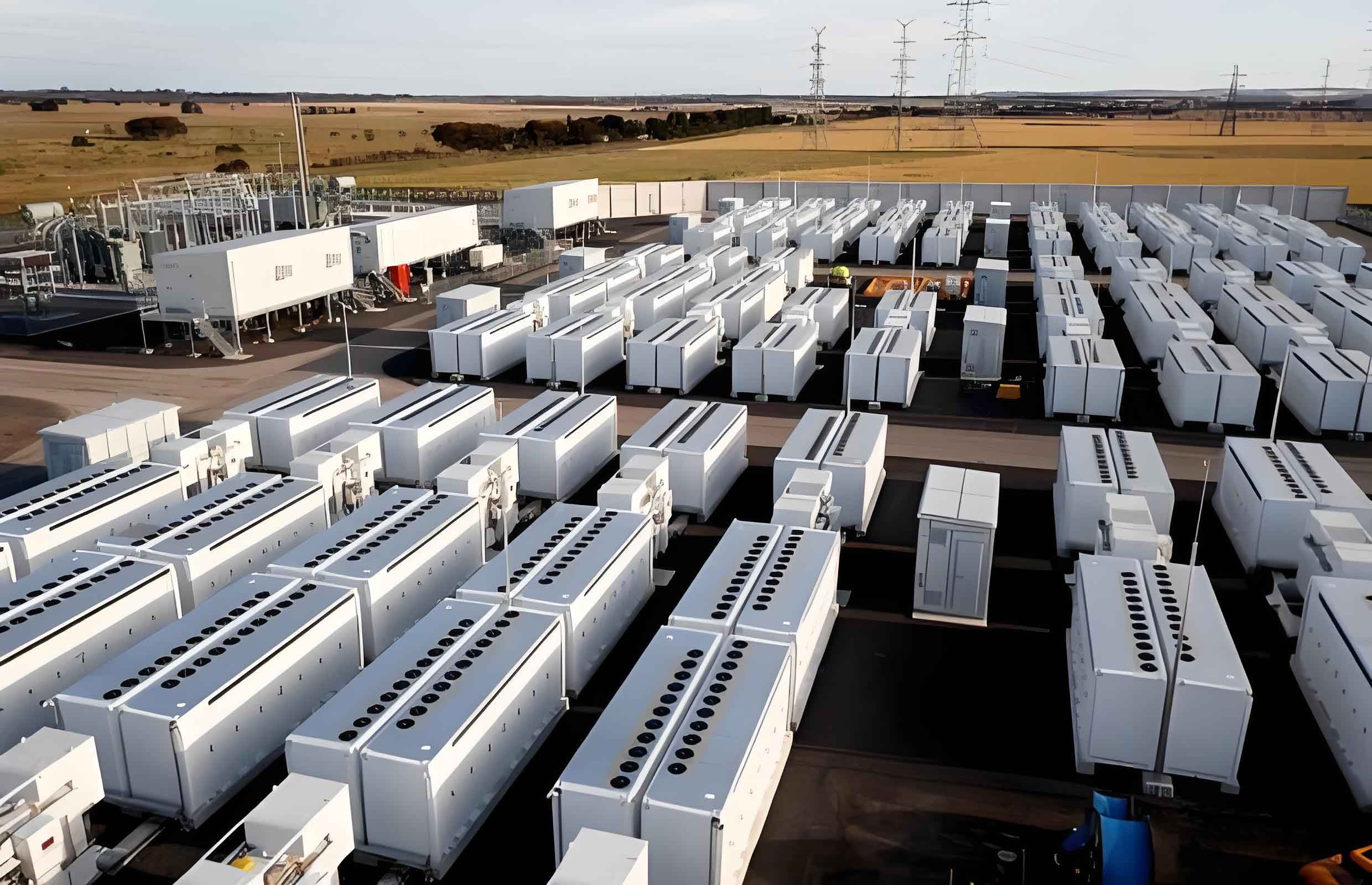
In any electrochemical cell energy storage system, heat generation is an inevitable byproduct of operation. During charge and discharge, electrical energy is converted to chemical energy and vice versa, with inefficiencies manifesting as heat. This heat arises from two primary sources: irreversible heat and reversible heat. Irreversible heat is mainly composed of Joule heating due to the cell’s internal resistance (ohmic losses) and polarization losses from kinetic limitations of the electrochemical reactions. Reversible heat, also known as entropic heat, results from the entropy change of the electrode materials during lithium intercalation and deintercalation; it can be either exothermic or endothermic depending on the state of charge. In a large-capacity cell energy storage system, the sheer volume of active material means that even moderate specific heat generation rates can lead to substantial total heat accumulation. Furthermore, the larger dimensions impede efficient heat dissipation to the environment, creating pronounced internal temperature gradients. Elevated and non-uniform temperatures accelerate degradation mechanisms such as solid electrolyte interphase (SEI) growth, electrolyte decomposition, and active material loss, directly leading to capacity fade and power capability reduction. Therefore, a fundamental understanding of the thermal behavior and its coupling with performance degradation is essential for designing effective battery thermal management systems (BTMS) and optimizing the operating protocols for large-scale cell energy storage systems.
Methodology and Experimental Framework
Our investigation focuses on characterizing the thermal and aging behavior of a commercial large-format lithium iron phosphate (LFP) cell, representative of those used in stationary cell energy storage systems. The cell under test has a nominal capacity of 280 Ah. To establish a comprehensive understanding, our experimental framework combines direct measurements of thermal response under varied operational conditions with long-term cycle aging tests.
The core experimental setup involves placing the cell inside a climate chamber capable of maintaining precise environmental temperatures. The cell is connected to a high-precision battery cycler for applying controlled charge and discharge profiles. To capture the spatial temperature distribution—a critical aspect for large-format cells—an array of thermocouples is attached to the cell surface at strategic locations: the center of the large face, the corners, and along the side, with particular attention to areas near the positive and negative tabs. A heat flux sensor is also employed on the cell surface to directly measure the rate of heat transfer to the environment. The internal resistance, a key parameter governing irreversible heat generation, is characterized using the Hybrid Pulse Power Characterization (HPPC) method at various states of charge (SOC). The entropic heat coefficient, which dictates the reversible heat, is determined by measuring the open-circuit voltage variation with temperature at fixed SOC points.
For aging studies, the cell is subjected to continuous charge-discharge cycling at a constant rate (1C) under different, controlled ambient temperatures. Periodic check-up tests, including capacity verification and internal resistance measurement, are conducted to track the evolution of performance metrics. Analysis techniques like Incremental Capacity Analysis (ICA) are applied to the voltage-capacity data to glean insights into the underlying degradation modes. This multi-faceted approach allows us to correlate operational stressors (C-rate, temperature) with thermal response and long-term degradation in a cell energy storage system component.
| Parameter | Specification |
|---|---|
| Chemistry | Lithium Iron Phosphate (LFP) |
| Nominal Capacity | 280 Ah |
| Nominal Voltage | 3.2 V |
| Voltage Range | 2.0 V – 3.65 V |
| Mass | Approx. 5.3 kg |
| Dimensions | 173 mm × 71 mm × 204 mm |
Theoretical Framework for Heat Generation
The total heat generation rate within a cell, $ \dot{Q}_{total} $, is the sum of irreversible and reversible components. This can be described by the widely adopted Bernardi model:
$$
\dot{Q}_{total} = I(V_{ocv} – V) + I T \frac{dU_{ocv}}{dT}
$$
where $I$ is the current (positive for discharge), $V_{ocv}$ is the open-circuit voltage, $V$ is the terminal voltage, $T$ is the absolute temperature, and $\frac{dU_{ocv}}{dT}$ is the entropic heat coefficient. The first term, $I(V_{ocv} – V) = I^2 R_{total}$, represents the irreversible heat, dominated by the cell’s total internal resistance $R_{total}$. The second term, $I T \frac{dU_{ocv}}{dT}$, represents the reversible entropic heat.
The internal resistance itself is not constant but a function of SOC, temperature, and current magnitude. It can be decomposed into ohmic resistance $R_{\Omega}$ and polarization resistance $R_{pol}$:
$$ R_{total} = R_{\Omega} + R_{pol} $$
$R_{\Omega}$ is associated with ionic and electronic conduction through bulk materials and is immediately apparent upon current application. $R_{pol}$ arises from charge transfer kinetics and mass transport limitations, which evolve over time. In a cell energy storage system, understanding this dynamic $R_{total}$ is crucial for predicting heat generation under realistic, variable load profiles.
The sign of the entropic coefficient $\frac{dU_{ocv}}{dT}$ determines whether the reversible reaction absorbs heat (endothermic, positive sign) or releases heat (exothermic, negative sign). For LFP cells, this coefficient typically transitions from negative at very high and very low SOC to positive in the mid-SOC range. This means the reversible term can either exacerbate or mitigate the temperature rise caused by irreversible Joule heating, depending on the operating point of the cell energy storage system.
Results and Discussion: Heat Generation Behavior
Influence of Discharge Rate and Ambient Temperature
The discharge rate, or C-rate, has a profound and non-linear impact on the thermal behavior of the large-capacity cell. Our measurements unequivocally show that higher C-rates lead to dramatically increased heat generation and surface temperature rise. This is a direct consequence of the $I^2R$ relationship for irreversible heat. At a low rate of 0.25C (70A), the cell exhibited a modest temperature rise of approximately 3.5°C above the 25°C ambient. In contrast, discharging at 1.0C (280A) caused the surface temperature to soar by over 21°C, reaching nearly 46°C. The peak heat flux measured at the surface correspondingly increased by an order of magnitude, confirming the intense thermal power generated within the cell.
The ambient temperature also plays a significant role in modulating the thermal response. Interestingly, we observed that for a given discharge rate, the total temperature rise above ambient is often higher at lower starting temperatures. For example, discharging at 1.0C from a 15°C ambient may result in a larger ΔT than from a 35°C ambient. This phenomenon can be attributed to the strong temperature dependence of the cell’s internal resistance, particularly the polarization component. At lower temperatures, electrolyte viscosity increases and ionic conductivity drops, leading to a significant rise in $R_{pol}$. This elevated resistance then causes more Joule heating during discharge. This has critical implications for the cell energy storage system performance in cold climates: not only is available capacity reduced, but a larger fraction of the stored energy is dissipated as waste heat, lowering round-trip efficiency.
| Ambient Temp. (°C) | Discharge C-rate | Max. Surface Temp. (°C) | Temperature Rise, ΔT (°C) | Peak Heat Flux (W/m²) |
|---|---|---|---|---|
| 25 | 0.25C | 28.5 | 3.5 | ~50 |
| 25 | 0.5C | 34.8 | 9.8 | ~250 |
| 25 | 1.0C | 46.6 | 21.6 | ~600 |
| 15 | 1.0C | 39.1 | 24.1 | ~700 |
| 35 | 1.0C | 53.5 | 18.5 | ~550 |
Spatial Temperature Non-Uniformity
A defining characteristic of large-format cells in a cell energy storage system is significant internal and surface temperature variation. Our multi-point temperature monitoring clearly revealed this inhomogeneity. The hottest spot consistently occurred near the negative tab region, with temperatures several degrees Celsius higher than the geometric center or the bottom of the cell. This gradient became more pronounced at higher C-rates. Several factors contribute to this:
1. Current Density Distribution: The path of electrical current from the tabs through the internal foil windings or stacks is not perfectly uniform. Areas with higher local current density experience greater $I^2R$ heating.
2. Joule Heating in Tabs and Connectors: The tabs themselves have resistance, generating localized heat.
3. Cooling Boundary Conditions: In a typical cell energy storage system module, cooling is often applied to one or two faces. The sides and corners of the cell have poorer heat dissipation, leading to warmer temperatures.
This spatial non-uniformity is not merely a thermal concern; it has direct electrochemical consequences. Regions at higher temperature will experience different rates of reaction, lithium diffusion, and degradation compared to cooler regions, leading to accelerated and non-uniform aging across the cell. This poses a major challenge for the state-of-health estimation and lifespan prediction of a cell energy storage system.
Dynamic Heat Generation During Operation
The heat generation rate is not constant throughout a discharge or charge cycle. Analyzing the temperature and voltage profiles reveals a dynamic interplay between irreversible and reversible heat. During the mid-SOC range (e.g., 20%-80% for this LFP cell), where the entropic coefficient is positive, the reversible reaction is endothermic. This absorbs a portion of the irreversible Joule heat, moderating the temperature rise rate. In some low-rate discharges, this can even cause a temporary plateau or slight decrease in temperature. However, at the extremes of SOC (below 10% and above 90%), the entropic coefficient becomes negative, making the reversible reaction exothermic. Here, both irreversible and reversible heats contribute to warming, causing a sharp acceleration in temperature rise at the end of discharge or charge. This is compounded by the fact that internal resistance also typically increases at voltage extremes. Therefore, operating a cell energy storage system within moderate SOC windows is beneficial not only for longevity but also for thermal management.
Results and Discussion: Capacity Fade Mechanisms
Accelerated Aging at Elevated Temperatures
The long-term cycling tests provided clear evidence that ambient temperature is a primary accelerator of capacity fade in the cell energy storage system component. While an elevated temperature initially reduces cell polarization and can slightly increase accessible capacity (as seen in the first few cycles), its long-term effect is profoundly detrimental. After 100 full charge-discharge cycles at 1C rate, the cell cycled at 45°C ambient lost approximately 10.3 Ah of its capacity, corresponding to a fade rate of about 3.6%. In comparison, the cell cycled at 25°C lost only 4.1 Ah, a fade rate of 1.6%. The cell at 35°C exhibited an intermediate loss of 7.0 Ah (2.5% fade). This establishes that the capacity fade rate more than doubled when the operating temperature was increased by 20°C. The relationship between fade rate and temperature in this range can be approximated by an Arrhenius-type expression, highlighting the thermally activated nature of the underlying degradation processes.
| Ambient Temperature (°C) | Initial Capacity (Ah) | Capacity after 100 cycles (Ah) | Absolute Loss (Ah) | Relative Fade Rate |
|---|---|---|---|---|
| 25 | ~270 | ~265.9 | 4.1 | 1.0x (Baseline) |
| 35 | ~270 | ~263.0 | 7.0 | ~1.7x |
| 45 | ~270 | ~259.7 | 10.3 | ~2.3x |
Degradation Mode Analysis via Incremental Capacity
Incremental Capacity Analysis (ICA) offers a diagnostic view of the degradation mechanisms. The dQ/dV vs. V curve features characteristic peaks corresponding to phase transitions in the electrode materials. As cycling progresses, these peaks diminish in height and shift in position. Our analysis showed that with increasing cycle number and temperature, all peaks attenuated, indicating a loss of active material (LAM) and loss of lithium inventory (LLI). The peak associated with the higher-voltage plateau of the LFP cathode showed a more rapid attenuation at 45°C compared to the lower-voltage peaks. This suggests that elevated temperature may preferentially accelerate degradation modes related to the positive electrode, such as possible iron dissolution or accelerated SEI-related side reactions that consume lithium ions, in addition to the well-known SEI growth on the graphite anode. The overall rightward shift of the dQ/dV curve indicates an increase in internal resistance and polarization, consistent with the direct resistance measurements that showed a steady rise in $R_{pol}$ with cycling.
The capacity fade can be modeled as a function of time or cycle count, often following a power-law or square-root-of-time dependence linked to SEI growth. A simplified empirical model can be expressed as:
$$ Q_{loss}(N, T) = A(T) \cdot N^{z} $$
where $Q_{loss}$ is the lost capacity, $N$ is the number of equivalent full cycles, $z$ is an exponent often near 0.5, and $A(T)$ is a temperature-dependent pre-factor that follows an Arrhenius relationship:
$$ A(T) = A_0 \cdot \exp\left(-\frac{E_a}{k_B T}\right) $$
Here, $E_a$ is the apparent activation energy for the dominant fade mechanism, and $k_B$ is Boltzmann’s constant. Our data strongly supports such a temperature-accelerated model, emphasizing the need for precise thermal control in a cell energy storage system to minimize the value of $A(T)$.
Interplay Between Thermal Stress and Aging
The experiments reveal a vicious cycle linking heat generation and capacity fade in a cell energy storage system. High operational loads (high C-rates) generate excessive heat, raising cell temperature. This elevated temperature, in turn, dramatically accelerates chemical and electrochemical degradation processes (SEI growth, electrolyte oxidation, etc.), leading to rapid capacity fade and increased internal resistance. The now-higher internal resistance causes even more Joule heating during subsequent cycles at the same current, further raising temperature and accelerating fade. This positive feedback loop, if unchecked, can lead to premature failure. Furthermore, the spatial temperature gradients cause non-uniform aging, where hotter regions degrade faster. This imbalance can lead to increasing cell heterogeneity over time, causing voltage imbalances in a series-connected string within a cell energy storage system and reducing the usable capacity of the entire pack to that of the weakest, most degraded cell.
Conclusion and Implications for Cell Energy Storage System Design
This detailed investigation into the thermal and aging behavior of a large-format LFP cell provides critical insights for the engineering of safe, durable, and efficient cell energy storage systems. The key findings are as follows:
- Heat Generation is Dominated by Operational Parameters: Discharge/charge rate is the most significant factor determining instantaneous heat output, with a quadratic relationship due to $I^2R$ heating. Ambient temperature modulates the cell’s internal resistance, leading to higher heat generation and temperature rise in cold environments for the same current, impacting the efficiency of a cell energy storage system in seasonal climates.
- Spatial Inhomogeneity is Inherent: Large-format cells develop significant internal temperature gradients, with “hot spots” typically near current collection points. This non-uniformity necessitates distributed temperature sensing for an effective battery management system (BMS) in a cell energy storage system.
- Temperature is the Primary Aging Accelerator: Long-term cycle life is extremely sensitive to operating temperature. A 20°C increase in ambient temperature can more than double the capacity fade rate. The dominant aging mechanisms shift and intensify with temperature, involving both anode and cathode degradation pathways.
- A Vicious Cycle Links Heat and Degradation: High temperatures accelerate aging, which increases internal resistance, which in turn generates more heat during operation, creating a self-reinforcing degradation loop.
The implications for cell energy storage system design are profound. First, thermal management is not optional but a core requirement. The BTMS must be designed to handle peak heat loads during high-power events (like grid frequency regulation) and maintain the entire battery pack within an optimal, narrow temperature window (e.g., 25°C ± 5°C) during all operating and standby conditions. Active liquid cooling is often necessary for large, high-power cell energy storage systems. Second, the BMS algorithms must account for the coupled thermal-electrochemical state. State-of-Charge (SOC) and State-of-Health (SOH) estimation should incorporate temperature and resistance measurements. Operating strategies should avoid prolonged operation at very high or low SOC extremes where heat generation and degradation are exacerbated. Finally, cell and module design should aim to minimize current density inhomogeneity and improve internal heat conduction to reduce spatial gradients, thereby promoting more uniform aging and extending the useful life of the cell energy storage system.
In conclusion, mastering the thermal dynamics is synonymous with ensuring the safety and unlocking the full economic potential of large-scale cell energy storage systems. Future work will focus on integrating these experimental findings into high-fidelity multi-physics models to predict cell behavior under complex, real-world duty cycles and to optimize BTMS and BMS strategies proactively.