
From my perspective as an observer and analyst of the energy storage landscape, the transition to electric vehicles (EVs) is irrevocable. At the heart of this transformation lies the battery, the definitive component influencing range, charging speed, and crucially, safety. While conventional liquid lithium-ion batteries have powered the first wave of EVs, they are approaching their theoretical limits in energy density and present persistent safety concerns related to thermal runaway. In this context, the solid-state battery emerges not merely as an incremental improvement, but as a potential paradigm shift—a master key poised to unlock the next era of electric mobility characterized by superior safety, extended range, and compact design.
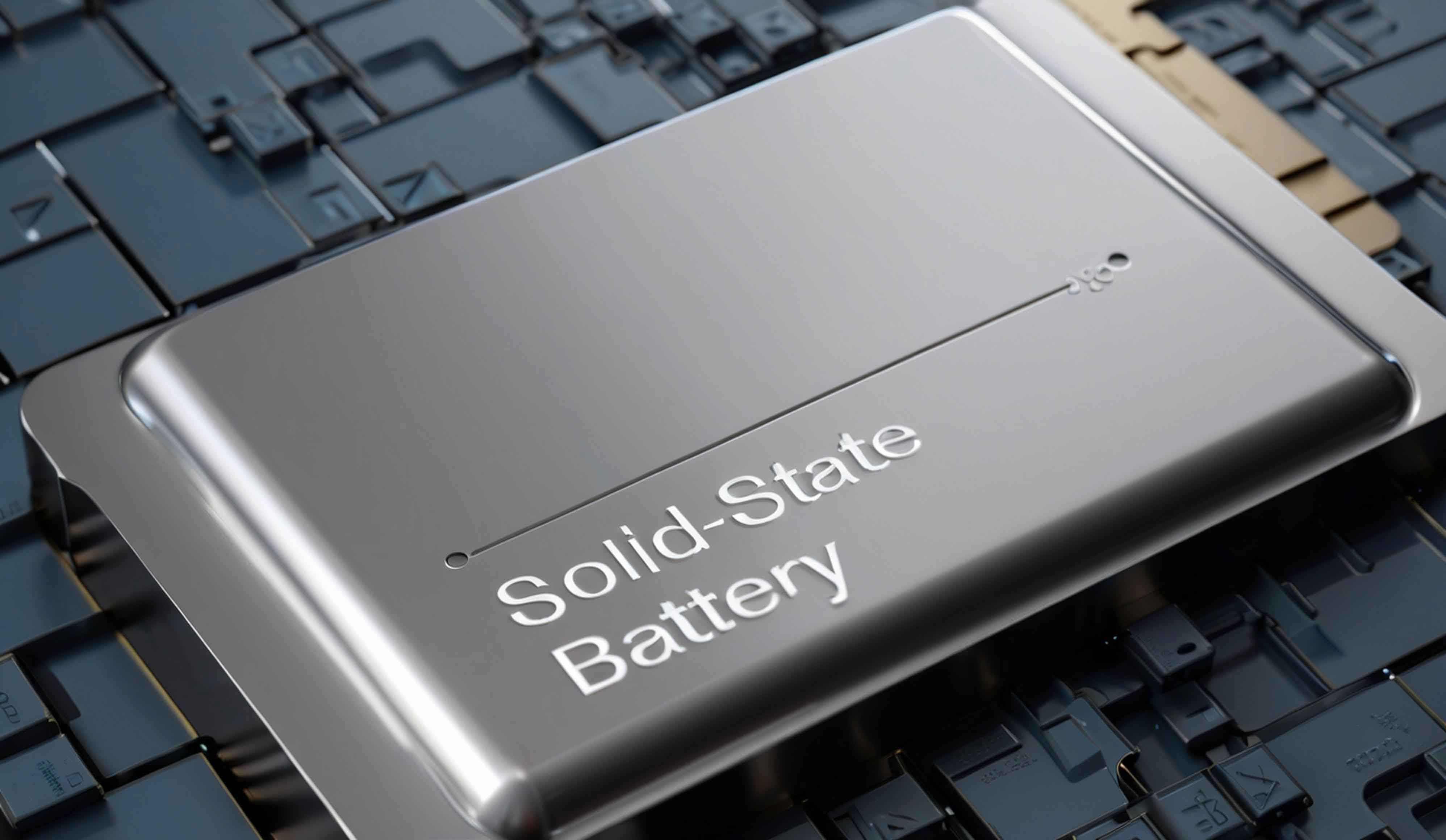
The fundamental distinction of a solid-state battery is the replacement of the flammable organic liquid electrolyte with a solid electrolyte. This single change catalyzes a cascade of advantages. The most prominent is enhanced safety. The removal of the volatile liquid electrolyte virtually eliminates the risk of leakage and dramatically reduces the propensity for thermal runaway, even under conditions of mechanical abuse like crushing or penetration. Furthermore, the solid-state battery enables the use of a lithium-metal anode, which boasts an exceptionally high theoretical capacity of 3,860 mAh/g, compared to ~370 mAh/g for conventional graphite. This directly translates to a significantly higher energy density. The solid electrolyte is also typically more stable across a wider voltage window, allowing pairing with high-voltage cathodes, further boosting the energy pack. The solid-state architecture can also lead to simpler battery pack designs due to reduced need for extensive cooling and safety housings.
The performance leap can be summarized by comparing key metrics. The energy density of current state-of-the-art liquid lithium-ion batteries is plateauing around 250-300 Wh/kg at the cell level. In contrast, solid-state battery prototypes have demonstrated potentials exceeding 500 Wh/kg. The operational voltage window for liquid electrolytes is generally limited to about 4.3V versus Li/Li⁺ before decomposition occurs, whereas some solid electrolytes are stable beyond 5V, enabling cathodes like LiNi0.5Mn1.5O4 (LNMO). The ionic conductivity ($\sigma_{i}$), a critical parameter, has seen dramatic improvements in solid electrolytes, with some sulfide-based materials now approaching the conductivity of liquid electrolytes (~10⁻² S/cm).
| Parameter | Liquid Li-ion Battery | Solid-State Battery |
|---|---|---|
| Electrolyte | Organic Liquid (Flammable) | Solid Ceramic/Glass/Polymer (Non-flammable) |
| Theoretical Anode | Graphite (C6) | Lithium Metal (Li) |
| Energy Density (Cell, Practical) | ~250-300 Wh/kg | >400 Wh/kg (Target) |
| Key Safety Risk | Thermal Runaway | Dendrite Growth (Managed) |
| Operating Temp. Range | Narrower | Potentially Wider |
| Fast-Charge Capability | Limited by Li-plating | Potentially Higher |
The Global R&D Race for the Solid-State Battery
The strategic importance of the solid-state battery has triggered a global technological race, with national governments and industrial giants placing massive strategic bets. Japan was an early mover, with the New Energy and Industrial Technology Development Organization (NEDO) launching a comprehensive public-private R&D project in 2018, uniting automakers like Toyota, battery firms, and academia with the goal of commercializing the technology. The United States has seen a surge in venture capital and strategic automotive investments into start-ups. QuantumScape, backed by Volkswagen, Solid Power, partnering with BMW and Ford, and SES (formerly SolidEnergy Systems), with support from General Motors and Hyundai, are leading the charge. The European Union, through initiatives like the Battery 2030+ roadmap, is also heavily funding research into next-generation batteries, including solid-state technologies, to build a resilient regional supply chain.
China, recognizing the disruptive potential, has integrated the solid-state battery into its national industrial strategy. The “Energy-Saving and New Energy Vehicle Technology Roadmap 2.0” set clear targets for battery energy density: 400 Wh/kg by 2025 and 500 Wh/kg by 2030, goals that inherently point towards solid-state solutions. This top-down guidance has galvanized a dynamic ecosystem. Battery giants like CATL and BYD have dedicated advanced research teams, while specialized firms have emerged as frontrunners. Companies like ProLogium, Qing Tao Energy Development, and Beijing Welion are progressing from lab-scale prototypes to pilot production lines. Downstream, EV manufacturers from traditional OEMs to new-age makers like Nio are actively exploring partnerships and have announced vehicle models with semi-solid-state battery packs, aiming for commercialization within this decade.
The intensity of this global competition is reflected in investment, patent filings, and announced timelines. The table below captures a snapshot of the key players and their stated goals, illustrating the consensus that the late 2020s will be the pivotal period for initial commercialization of the solid-state battery.
| Region/Country | Leading Entities | Key Approach / Electrolyte | Announced Target for Mass Production |
|---|---|---|---|
| Japan | Toyota, Panasonic | Sulfide-based | 2027-2028 |
| USA | QuantumScape, Solid Power | Ceramic/Polymer Hybrid, Sulfide | 2025-2026 (Pilot) |
| South Korea | Samsung SDI, LG Energy Solution | Sulfide, Polymer | 2027 |
| China | ProLogium, CATL, Welion | Oxide, Polymer/Sulfide Hybrid | 2023-2025 (Semi-solid), 2030 (All-solid) |
| Europe | Volkswagen (via QS), BMW (via Solid Power) | Via Partnerships | Aligned with partner timelines |
Core Challenges on the Path to a Viable Solid-State Battery
Despite the euphoria, the path from laboratory breakthrough to a cost-competitive, mass-produced solid-state battery is fraught with profound scientific and engineering challenges. These hurdles must be overcome to realize the promised performance.
1. The Solid Electrolyte Itself: The ideal solid electrolyte must satisfy a demanding set of properties simultaneously: high ionic conductivity ($\sigma_{i}$) for lithium ions, negligible electronic conductivity ($\sigma_{e}$), excellent electrochemical stability against both the anode and cathode, good mechanical properties (to suppress dendrites), and low cost. These requirements often conflict. For instance, sulfide-based electrolytes offer superb $\sigma_{i}$ (approaching $10^{-2}$ S/cm) but are sensitive to moisture, releasing toxic H2S, and can have limited stability against high-voltage cathodes. Oxide-based electrolytes (e.g., LLZO, LLTO) are stable and less reactive but typically have lower conductivity and require high-temperature sintering, leading to brittle ceramics and high interfacial resistance. Polymer electrolytes offer flexibility but suffer from low conductivity at room temperature, often requiring operation above 60°C. The search continues for stable, highly conductive, and processable materials, often through doping or creating composite structures.
2. The Interfacial Problem: This is arguably the most critical bottleneck. In a liquid cell, the electrolyte readily flows and forms intimate contact with the porous electrodes. In a solid-state battery, the contact between two rigid solids (electrode particles and electrolyte) is inherently poor, leading to high interfacial resistance. This “point contact” issue severely limits active material utilization and rate capability. Furthermore, chemical and electrochemical reactions at these interfaces can form passivating layers, increasing resistance over time. Volume changes in the electrodes during charge/discharge cycles can break contact entirely, causing rapid capacity fade. The problem is twofold: at the cathode-electrolyte interface and, more severely, at the lithium metal anode-electrolyte interface.
3. Lithium Dendrite Suppression: While the solid electrolyte is mechanically stronger than a soft separator, it is not an absolute barrier to lithium dendrites. Under high current densities during charging, lithium ions can plate non-uniformly. Defects, grain boundaries, or voids in the solid electrolyte can become hotspots where lithium metal penetrates, eventually leading to a short circuit. The critical current density (CCD)—the current below which stable plating/stripping occurs—must be raised to practical levels (e.g., > 3 mA/cm²) for fast charging. This requires careful engineering of the electrolyte’s mechanical modulus and the anode/electrolyte interface, sometimes using interlayers or alloy anodes as a stepping stone.
4. Manufacturing and Cost: The fabrication processes for solid-state batteries are radically different and currently more expensive. Producing thin, defect-free solid electrolyte films at high throughput is challenging. For oxide ceramics, high-temperature sintering is energy-intensive and can cause unwanted reactions. Sulfide electrolytes require strict dry-room conditions. Assembling the cell stack while maintaining perfect interfacial contact adds complexity. The cost of precursor materials for some solid electrolytes remains high. Scaling these processes while driving down cost to be competitive with mature lithium-ion manufacturing (now below $100/kWh) is a monumental task. The total cost of ownership equation must factor in not just cell cost, but potential savings from simplified thermal management and safety systems.
The interplay of these challenges can be conceptualized through a simplified performance metric for a solid-state battery cell, which must be maximized:
$$ \text{Cell Performance} \propto \frac{\sigma_{i} \cdot A_{interface} \cdot \Delta V}{R_{int} \cdot C_{manufacture}} $$
Where $\sigma_{i}$ is the ionic conductivity, $A_{interface}$ is the effective electrochemically active interfacial area, $\Delta V$ is the operational voltage window, $R_{int}$ is the total interfacial resistance, and $C_{manufacture}$ is the manufacturing cost. Current R&D focuses intensely on improving the numerator terms while minimizing the denominator.
A Strategic Roadmap for Solid-State Battery Development
Based on the current technological and industrial landscape, I believe a pragmatic, phased approach is essential for bringing the solid-state battery to market. A “leapfrog” strategy aiming directly for a perfect all-solid, lithium-metal battery may be high-risk. A more likely evolution involves intermediary steps.
Phase 1: Hybrid/Semi-Solid-State Batteries. This is already underway. These cells incorporate a small amount of liquid or gel electrolyte (5-20% by weight) within a solid matrix or at the critical interfaces. The goal is to immediately improve safety (by reducing flammable liquid) and enable the initial use of high-capacity silicon-based anodes, offering a 20-40% energy density boost over the best liquid cells. This phase allows manufacturers to develop and scale fabrication processes for solid components while mitigating the most severe interfacial issues. Many of the announced “solid-state” vehicle launches for 2024-2026 will likely be of this type.
Phase 2: All-Solid-State with Composite or Stabilized Anode. The next step completely removes the liquid. To manage the lithium interface challenge, the initial all-solid-state battery may use a composite anode (e.g., Li metal mixed with a buffer matrix) or a lithium alloy (e.g., Li-In). This sacrifices some energy density but provides crucial cycling stability. The solid electrolyte would be a sulfide or oxide composite, optimized for processability. This phase proves the all-solid manufacturing chain and establishes reliability.
Phase 3: All-Solid-State with Pure Lithium Metal Anode. This is the ultimate goal. It requires solving the dendrite and interface stability problems, likely through engineered electrolyte surfaces, artificial interlayers (e.g., Al2O3, Li3N coatings), or electrolytes with inherently high shear modulus. It also demands perfect, void-free fabrication. This phase delivers the full promise of >500 Wh/kg and ultra-safe cells.
To navigate this roadmap successfully, a concerted effort is needed:
1. Deepened Fundamental Research and Collaborative Ecosystems: Breakthroughs in interfacial science and novel materials will come from sustained basic research. Governments should fund long-term, mission-oriented research programs. Crucially, these programs must foster deep collaboration between national labs, universities, and industrial players to bridge the “valley of death” between discovery and commercialization. Creating open-innovation platforms or pre-competitive consortia focused on shared challenges (e.g., interface characterization standards, material databases) can accelerate progress for all.
2. Targeted Policy and Investment Support: Policy must provide clear, long-term signals. This includes continued R&D tax credits, grants for pilot production facilities, and inclusion of advanced batteries in strategic green technology lists. Public procurement for specialized applications (e.g., urban buses, aviation, grid storage) can create early markets. Investment should be directed not only at cell makers but also at the critical upstream materials and equipment suppliers—the makers of solid electrolyte powder, atmospheric-controlled coaters, and stack assembly tools—to build a resilient supply chain.
3. Development of Standards and a Safety Framework: The nascent state of the solid-state battery industry presents an opportunity to establish robust standards early. International bodies should work on defining performance testing protocols, safety evaluation criteria (which will differ from liquid cells), and terminology (e.g., defining “semi-solid” vs. “all-solid”). A clear safety certification pathway will be vital for consumer confidence and regulatory approval. Proactive engagement in international standard-setting is crucial to avoid future trade barriers and ensure a level playing field.
In conclusion, the solid-state battery represents a technological frontier with the potential to redefine energy storage. While significant hurdles in materials, interfaces, and manufacturing remain, the global momentum is undeniable. The transition will likely be evolutionary rather than overnight, with hybrid solutions paving the way. Success will belong to those who can not only achieve laboratory breakthroughs but also master the intricate art of scaling materials science into reliable, affordable industrial products. From my viewpoint, the race for the solid-state battery is more than a competition for market share; it is a foundational endeavor shaping the safety, sustainability, and performance of our electrified future.