
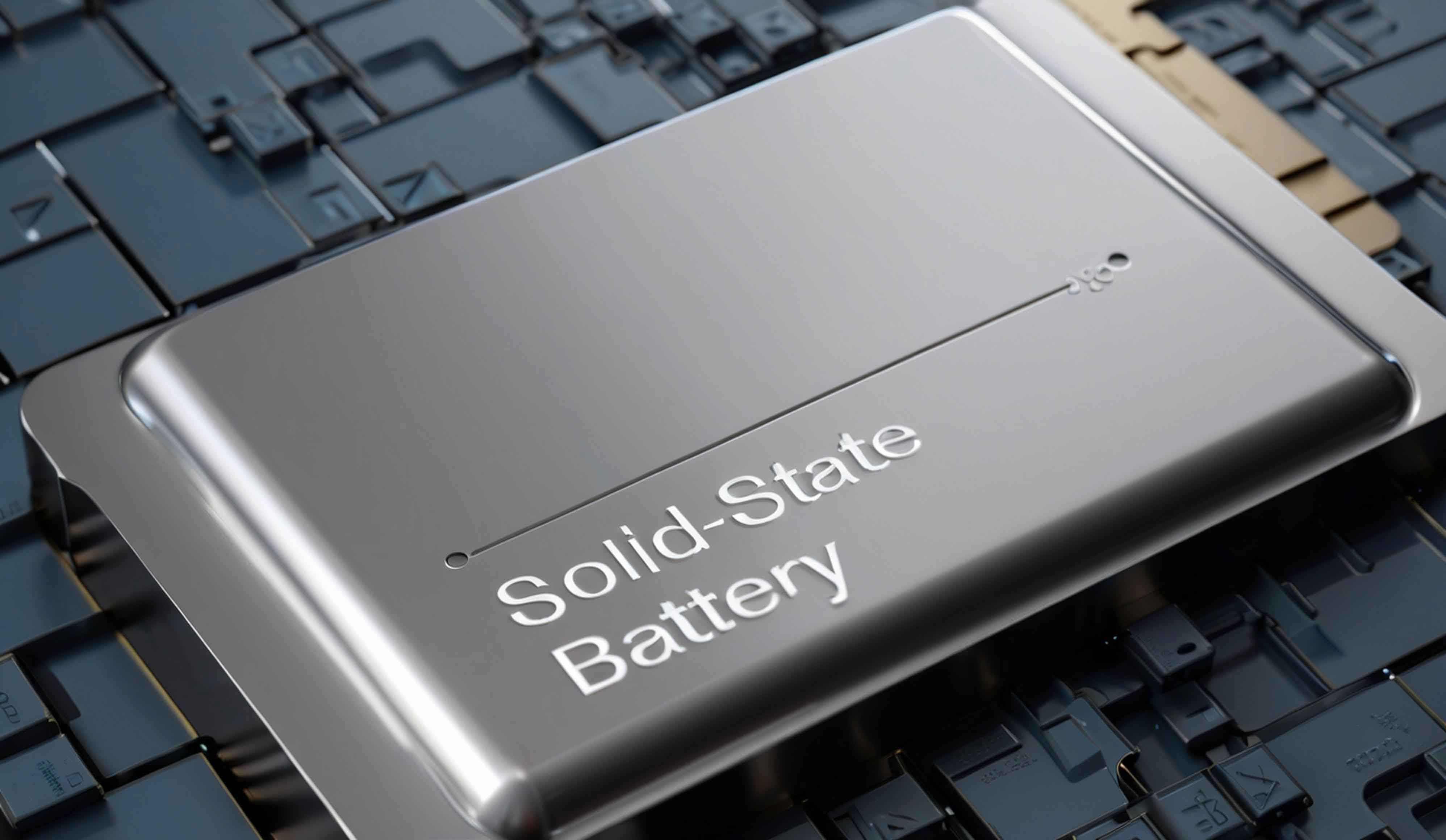
Recent advancements in solid-state battery technology are reshaping the automotive industry’s electrification roadmap. Honda’s announcement of its pilot production line for self-developed solid-state batteries marks a pivotal moment, with the facility scheduled for operational verification in Spring 2024. This breakthrough aligns with broader industry trends:
| Automaker | Technology | Energy Density (Wh/kg) | Production Timeline |
|---|---|---|---|
| Honda | Full Solid-State | ≥400 | 2025-2027 |
| GAC Group | Full Solid-State | 380-420 | 2026 |
| NIO | Semi-Solid-State | 360 | 2024 (Limited) |
| CATL | Sulfide-Based | 500 (Lab) | 2028-2030 |
The fundamental advantages of solid-state batteries over conventional Li-ion batteries can be quantified through these key equations:
Energy density enhancement:
$$ \Delta E = \frac{E_{SSB} – E_{LIB}}{E_{LIB}} \times 100\% $$
Where typical values range from 50-150% improvement
Safety parameter improvement:
$$ S_{index} = \frac{T_{thermal-runaway}^{SSB}}{T_{thermal-runaway}^{LIB}} \geq 2.5 $$
Major technical pathways demonstrate distinct characteristics:
| Electrolyte Type | Conductivity (S/cm) | Stability | Manufacturing Complexity |
|---|---|---|---|
| Polymer | 10-4-10-3 | Moderate | Low |
| Oxide | 10-5-10-3 | High | High |
| Sulfide | 10-2-10-1 | Low | Extreme |
Current development focuses on overcoming interfacial resistance challenges:
$$ R_{interface} = R_{cathode|electrolyte} + R_{anode|electrolyte} $$
Where industry targets aim for:
$$ R_{interface} < 10 \Omega\cdot cm^2 $$
Cost structure analysis reveals key commercialization barriers:
| Component | Li-ion Cost (%) | Solid-State Cost (%) | Reduction Pathway |
|---|---|---|---|
| Electrolyte | 12-15 | 35-40 | Scale effect |
| Cathode | 40-45 | 30-35 | Material innovation |
| Manufacturing | 25-30 | 30-35 | Process optimization |
The Arrhenius equation governs temperature-dependent performance:
$$ \sigma = \sigma_0 \exp\left(-\frac{E_a}{k_B T}\right) $$
Where solid-state batteries show flatter temperature response curves compared to liquid electrolytes.
Industry experts propose a phased development model:
- Hybrid electrolytes (2024-2026)
$$ f_{liquid} = 5-10\% $$ - Semi-solid-state (2026-2028)
$$ f_{liquid} \leq 5\% $$ - Full solid-state (2030+)
$$ f_{liquid} = 0 $$
Key performance projections:
| Parameter | 2025 | 2030 | 2035 |
|---|---|---|---|
| Energy Density (Wh/kg) | 350-400 | 450-500 | 600+ |
| Cycle Life | 800-1000 | 1500+ | 2000+ |
| Cost ($/kWh) | 150-180 | 100-120 | <80 |
Manufacturing challenges remain significant, particularly in atmospheric control:
$$ P_{process} < 10^{-3} \, \text{Pa (for sulfide electrolytes)} $$
$$ \mathrm{H_2O}\ \text{content} < 1 \, \text{ppm} $$
Automotive integration parameters demonstrate the technology’s potential:
$$ \text{Range} = \frac{E_{battery} \times \eta}{C_d \times A \times v^2} \propto \rho_{energy} $$
Where solid-state batteries enable 30-50% range improvement at equivalent pack size.
Global patent landscape analysis shows intense competition:
| Company | Patents (2020-2024) | Key Focus Area |
|---|---|---|
| Toyota | 1,342 | Sulfide electrolytes |
| CATL | 987 | Interface engineering |
| Samsung SDI | 845 | Thin-film processes |
| BYD | 723 | Manufacturing equipment |
The solid-state battery revolution follows an S-curve adoption model:
$$ f(t) = \frac{1}{1 + e^{-k(t – t_0)}} $$
Where industry consensus estimates:
$$ t_0 = 2028 \pm 2 \text{ years} $$
$$ k = 0.5 \text{ year}^{-1} $$
As the technology matures, solid-state batteries are poised to transform multiple transportation sectors through these key performance vectors:
$$ \text{Figure of Merit} = \frac{\text{Energy Density} \times \text{Safety Index}}{\text{Cost} \times \text{Charge Time}} $$
Projected to improve 5-8× versus current Li-ion solutions by 2030.