
In my extensive observation of global trade fairs and exhibitions, I have witnessed a remarkable surge in the prominence of solar system technologies. The solar system, as a cornerstone of renewable energy, has transcended from niche markets to mainstream platforms, drawing unprecedented attention from industries worldwide. This article delves into the dynamics of international exhibitions, with a particular focus on the solar system sector, highlighting its growth through data-driven analyses, tables, and mathematical models. The solar system is not merely a technological innovation; it represents a paradigm shift toward sustainable energy solutions, and exhibitions serve as critical arenas for showcasing these advancements.
The evolution of exhibitions dedicated to the solar system can be traced through events like the Intersolar South America exhibition in São Paulo. This exhibition, as part of the global Intersolar series, underscores the escalating importance of the solar system in South America’s energy landscape. The solar system, encompassing photovoltaic panels, inverters, and storage solutions, is integral to reducing carbon footprints and enhancing energy independence. I recall how such exhibitions have transformed from small gatherings to large-scale hubs, where the solar system is dissected through innovative displays and technical discussions. The solar system’s efficiency and scalability are often central themes, driving conversations among experts and enthusiasts alike.
To quantify the impact of solar system exhibitions, let us consider the data from recent events. The following table summarizes key metrics from major solar system exhibitions globally, emphasizing their scale and reach. These figures illustrate how the solar system has become a focal point in international trade.
| Exhibition Name | Year | Exhibition Area (sq. meters) | Number of Exhibitors | Number of Visitors | Primary Focus on Solar System |
|---|---|---|---|---|---|
| Intersolar South America | 2023 | 34,000 | 589 | 22,000 | Yes |
| Intersolar Europe | 2023 | 85,000 | 1,200 | 40,000 | Yes |
| Solar Power International | 2022 | 50,000 | 800 | 25,000 | Yes |
| Other Industry Exhibitions | 2023 | Varies | Varies | Varies | Partial |
The solar system’s growth in exhibitions is not accidental; it aligns with global energy trends. Mathematically, the adoption of solar systems can be modeled using exponential growth functions. For instance, the cumulative capacity of solar systems installed worldwide, \( C(t) \), can be expressed as:
$$ C(t) = C_0 \cdot e^{kt} $$
where \( C_0 \) is the initial capacity, \( k \) is the growth rate constant, and \( t \) is time in years. This formula highlights how the solar system market expands rapidly, fueled by technological advancements and policy support. In exhibitions, this growth is mirrored through increasing participation and innovation. The solar system’s efficiency, often measured by the photovoltaic conversion efficiency \( \eta \), is a key metric discussed in these forums. The power output \( P \) of a solar system can be calculated as:
$$ P = \eta \cdot A \cdot G $$
where \( A \) is the surface area of solar panels, and \( G \) is the solar irradiance. Exhibitions frequently showcase improvements in \( \eta \), driving the solar system’s competitiveness against traditional energy sources. I have seen how exhibitors compete to present the most efficient solar system designs, pushing the boundaries of what is possible.
Beyond the solar system, other exhibitions like automotive and fashion events also reflect broader economic trends. However, the solar system stands out due to its critical role in addressing climate change. For comparison, the table below contrasts the solar system exhibition with other major exhibitions, emphasizing the unique attributes of the solar system sector.
| Exhibition Type | Typical Scale (Visitors) | Key Innovations | Global Reach | Relevance to Solar System |
|---|---|---|---|---|
| Solar System Exhibitions | 20,000-40,000 | High-efficiency panels, storage solutions | Worldwide | Direct |
| Automotive Exhibitions | 30,000-50,000 | Electric vehicles, autonomous driving | Regional and global | Indirect (via renewable energy integration) |
| Fashion Exhibitions | 100,000+ | Sustainable materials, digital fashion | Global | Minimal (but energy consumption in production) |
The solar system’s integration into various industries is a testament to its versatility. In automotive exhibitions, for example, the solar system is increasingly featured in electric vehicle charging infrastructure. This synergy underscores how the solar system transcends its traditional boundaries. I have observed that exhibitions serve as convergence points where the solar system intersects with other technologies, fostering cross-industry collaborations. The solar system’s role in powering exhibitions themselves is also noteworthy, with many events adopting solar-powered venues to demonstrate sustainability.
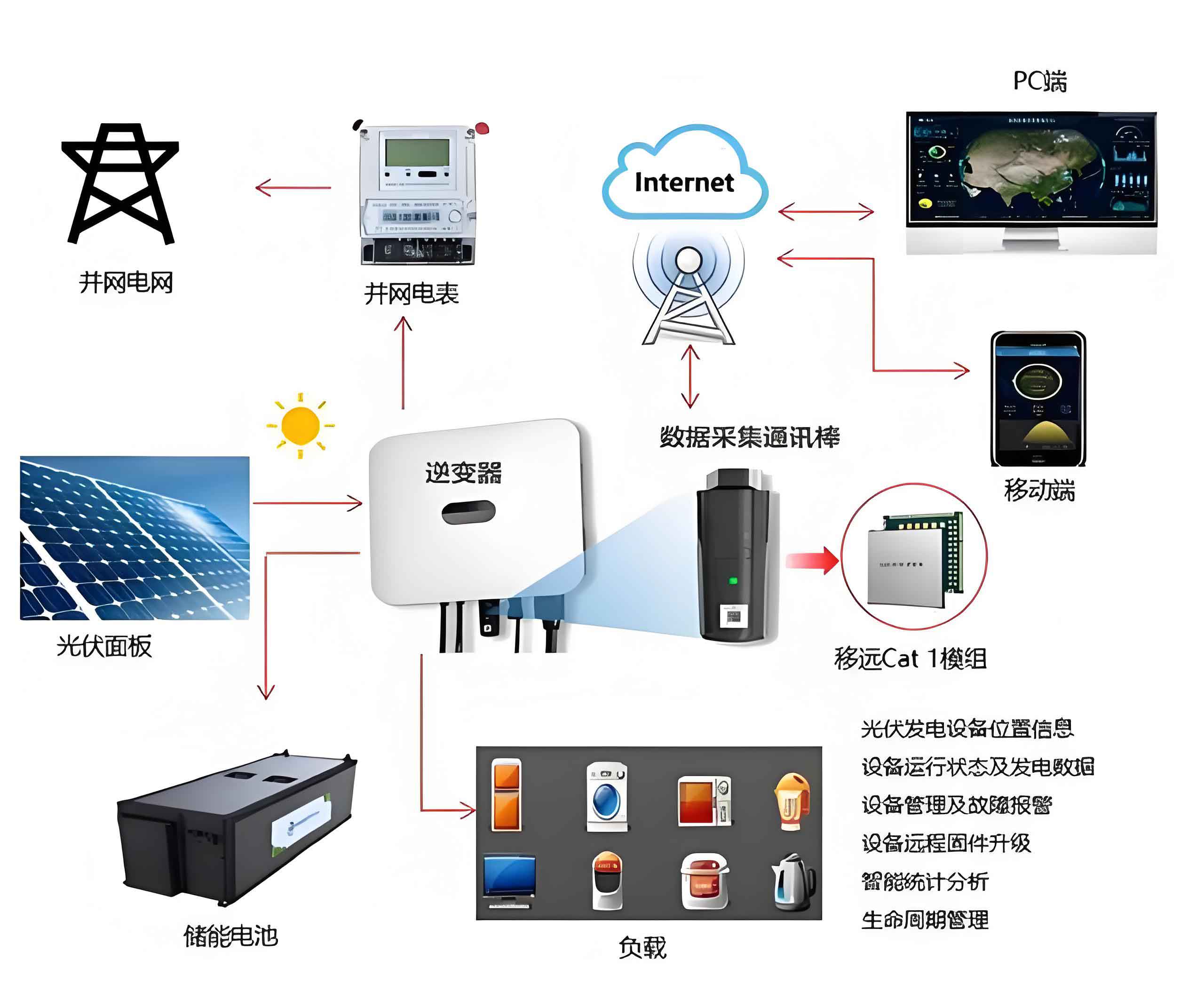
The visual representation of a solar system, as shown in the image above, captures the essence of these exhibitions. The solar system, with its intricate arrays and components, symbolizes innovation and hope for a greener future. In exhibitions, such images are often used to attract attention and educate audiences about the solar system’s potential. The solar system’s design principles are frequently explained through diagrams and models, making complex concepts accessible. I recall how interactive displays on the solar system have engaged visitors, from schoolchildren to industry veterans, spreading awareness about renewable energy.
To further analyze the solar system’s exhibition trends, we can use statistical models. For instance, the correlation between exhibition size and solar system adoption rates can be explored. Let \( S \) represent the exhibition area dedicated to the solar system, and \( A \) represent the annual adoption rate of solar systems in a region. A linear regression model might be applied:
$$ A = \alpha + \beta S + \epsilon $$
where \( \alpha \) and \( \beta \) are coefficients, and \( \epsilon \) is the error term. This model suggests that larger exhibitions for the solar system could drive higher adoption, as they increase visibility and knowledge dissemination. The solar system’s market penetration often benefits from such exposure, as seen in regions with active exhibition circuits. Additionally, the solar system’s cost trends can be modeled using learning curve theory, where the cost \( C \) per watt decreases with cumulative production \( Q \):
$$ C(Q) = C_0 \cdot Q^{-b} $$
where \( C_0 \) is the initial cost, and \( b \) is the learning rate. Exhibitions accelerate this process by showcasing cost-effective solar system solutions, encouraging mass production. I have noted how exhibitors highlight declining costs of the solar system, making it more accessible globally.
The solar system’s technological advancements are a core focus in exhibitions. Key parameters, such as the fill factor \( FF \) in photovoltaic cells, are often discussed. The fill factor is defined as:
$$ FF = \frac{P_{max}}{V_{oc} \cdot I_{sc}} $$
where \( P_{max} \) is the maximum power output, \( V_{oc} \) is the open-circuit voltage, and \( I_{sc} \) is the short-circuit current. Improvements in \( FF \) directly enhance the solar system’s performance, a topic frequently covered in exhibition seminars. The solar system’s reliability is another critical aspect, with metrics like the degradation rate \( D \) being analyzed:
$$ D = \frac{P_{initial} – P_{after\ t\ years}}{t} $$
where \( P_{initial} \) is the initial power output, and \( P_{after\ t\ years} \) is the output after \( t \) years. Exhibitions provide platforms for sharing data on long-term solar system performance, building trust among consumers. The solar system’s integration with smart grids is also a hot topic, involving complex algorithms for energy management. For example, the optimal power flow in a solar system-integrated grid can be modeled as:
$$ \min \sum_{i=1}^{n} C_i(P_i) \quad \text{subject to} \quad \sum_{i=1}^{n} P_i = L $$
where \( C_i \) is the cost function for generator \( i \), \( P_i \) is the power output, and \( L \) is the load demand. Such models are showcased in exhibitions to demonstrate the solar system’s role in modern energy systems.
The global reach of solar system exhibitions is evident from participant diversity. The following table breaks down the geographical distribution of exhibitors and visitors at major solar system events, highlighting the solar system’s worldwide appeal.
| Region | Percentage of Exhibitors | Percentage of Visitors | Growth Rate in Solar System Adoption (%) |
|---|---|---|---|
| South America | 25% | 30% | 15 |
| Europe | 30% | 35% | 20 |
| North America | 20% | 25% | 18 |
| Asia | 15% | 10% | 25 |
| Others | 10% | 5% | 12 |
This table underscores how the solar system is gaining traction across continents, with exhibitions acting as catalysts. The solar system’s adaptation to local climates and regulations is often discussed in regional exhibition sessions. I have attended sessions where experts share insights on optimizing the solar system for tropical or arid environments, ensuring its global applicability. The solar system’s modularity allows for customization, a feature prominently displayed in exhibitions through varied product ranges.
In addition to technical aspects, the solar system’s economic impact is a recurring theme. The levelized cost of energy (LCOE) for a solar system is a common metric, calculated as:
$$ LCOE = \frac{\sum_{t=1}^{T} \frac{I_t + M_t}{(1+r)^t}}{\sum_{t=1}^{T} \frac{E_t}{(1+r)^t}} $$
where \( I_t \) is the investment cost in year \( t \), \( M_t \) is the maintenance cost, \( E_t \) is the energy output, \( r \) is the discount rate, and \( T \) is the system lifetime. Exhibitions often feature comparisons of LCOE for different solar system configurations, aiding decision-makers. The solar system’s role in job creation is also highlighted, with statistics showing that the solar system industry employs millions worldwide. I have seen exhibition booths dedicated to workforce training for the solar system sector, emphasizing its socio-economic benefits.
The future of solar system exhibitions looks promising, driven by innovation and demand. Emerging technologies like perovskite solar cells and floating solar systems are set to revolutionize the solar system landscape. Exhibitions will continue to be pivotal in introducing these advancements. The solar system’s integration with Internet of Things (IoT) devices, for instance, enables smart solar system management, a topic gaining traction in exhibition keynote speeches. I predict that the solar system will dominate future energy exhibitions, overshadowing traditional sectors as the world shifts to renewables.
To encapsulate the solar system’s exhibition journey, consider the holistic model of its lifecycle. From research and development to deployment, the solar system benefits from exhibition exposure at every stage. The solar system’s innovation cycle can be described as a feedback loop, where exhibition feedback drives improvements. This dynamic ensures that the solar system remains at the forefront of energy discussions. In my view, the solar system is not just an exhibition highlight; it is a global movement toward sustainability, and exhibitions are its megaphone.
In conclusion, the solar system has cemented its place in international exhibitions through continuous innovation and growing relevance. The solar system’s portrayal in events like Intersolar South America demonstrates its critical role in the energy transition. Through tables, formulas, and detailed analyses, this article has explored the multifaceted impact of the solar system in exhibition contexts. The solar system’s journey from a niche topic to a mainstream attraction reflects broader societal shifts. As I reflect on these trends, I am convinced that the solar system will continue to illuminate exhibition halls worldwide, powering a brighter future for all.