
In June 2024, lithium iron phosphate (LFP) batteries accounted for 74% of total installations in China’s electric vehicle (EV) sector, cementing their dominance over nickel-cobalt-manganese (NCM) alternatives. This shift, driven by cost efficiency and technological breakthroughs, reflects a broader industry realignment toward sustainable and economically viable energy storage solutions. Below, we explore the factors behind this trend, the evolving technical landscape, and the competitive dynamics shaping the future of EV batteries.
Market Dominance and Cost Advantages
LFP batteries have surged ahead due to their superior cost-performance ratio. As of July 2024, the average price of LFP cells was ¥380/kWh, compared to ¥550/kWh for high-nickel NCM cells. For a typical 75 kWh EV battery pack, this translates to a cost difference of approximately ¥12,750 ($1,750), making LFP a preferred choice amid intensifying price competition.
| Month | LFP Share | NCM Share |
|---|---|---|
| January | 68% | 32% |
| April | 71% | 29% |
| June | 74% | 26% |
The cost advantage is amplified by volatile prices of nickel and cobalt, critical for NCM batteries. From 2021 to 2024, nickel prices fluctuated between $18,000 and $48,000 per ton, while cobalt hovered around $33,000–$55,000 per ton. In contrast, LFP’s raw material costs remain stable, with iron and phosphorus widely available.
Technological Evolution of Lithium Iron Phosphate Batteries
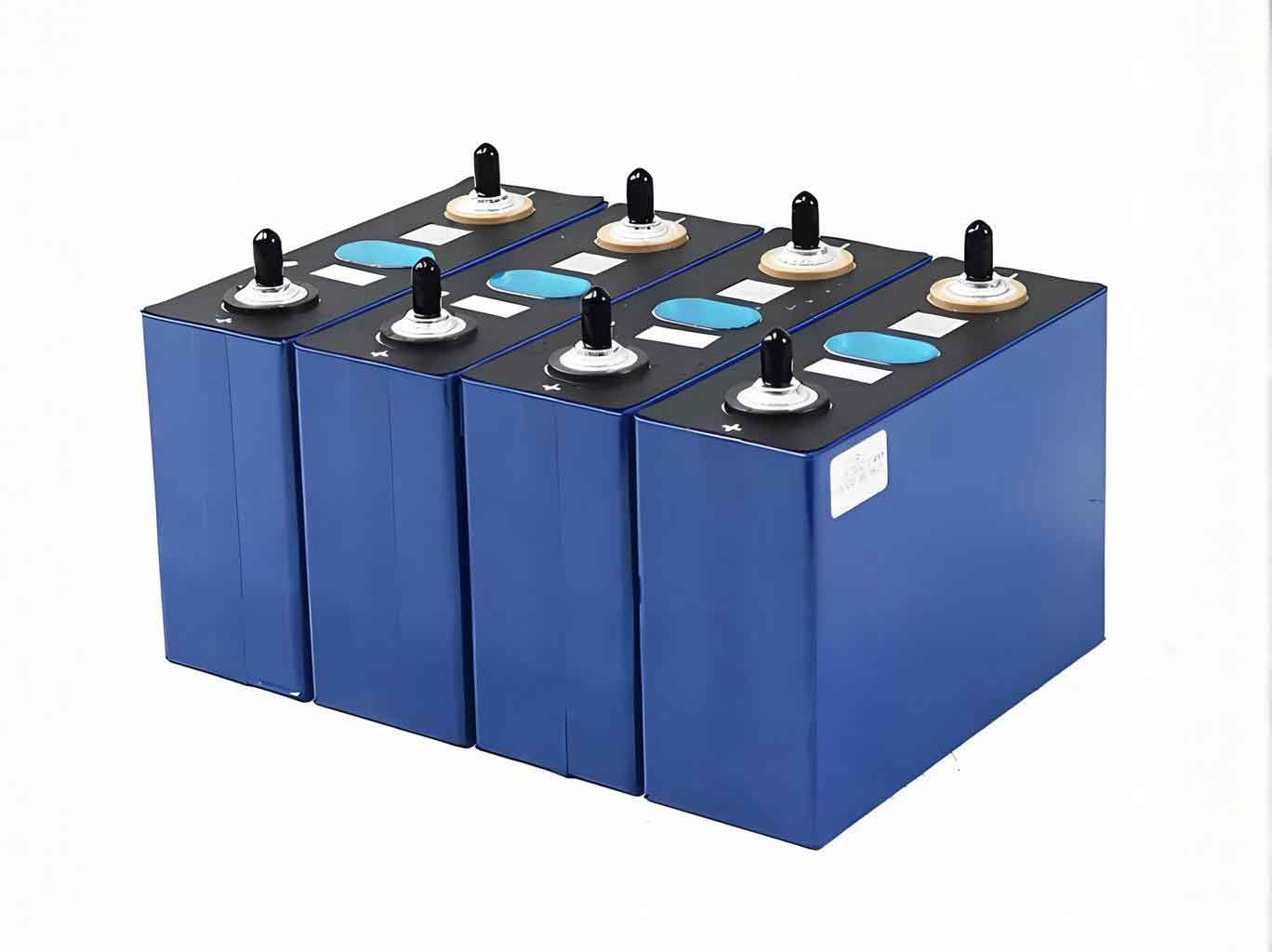
Early LFP batteries faced limitations in energy density due to low electrical conductivity. However, innovations in nanostructuring and carbon coating have significantly improved performance. Modern LFP cells achieve energy densities of 160–180 Wh/kg, closing the gap with NCM’s 200–250 Wh/kg while maintaining thermal stability.
The energy density of a battery is calculated as:
$$ E = \frac{C \times V}{m} $$
Where \( C \) is capacity (Ah), \( V \) is voltage (V), and \( m \) is mass (kg). For LFP batteries, advancements in cell-to-pack (CTP) and cell-to-chassis (CTC) integration further optimize space utilization, enabling higher pack-level energy density.
The “Long vs. Short” Blade Cell Debate
Industry players are divided over optimal cell designs. BYD’s long blade cells (up to 2.5 meters) maximize space efficiency but face challenges in internal resistance management. In contrast, Geely’s 58 cm short blade cells prioritize thermal control and fast-charging capabilities. Comparative studies show:
| Parameter | Long Blade | Short Blade |
|---|---|---|
| Internal Resistance (mΩ) | 2.8 | 1.5 |
| Charge Time (10–80%) | 32 mins | 18 mins |
| Energy Density (Wh/L) | 400 | 380 |
Despite trade-offs, both designs underscore the adaptability of lithium iron phosphate battery technology. As CTP and CTC architectures mature, blade-style cells are expected to dominate 70% of the LFP market by 2026.
Vertical Integration: Automakers’ Battery Ambitions
Major OEMs are investing in proprietary LFP production to secure supply chains and reduce costs. Examples include:
- Geely’s Guardian Short Blade battery (58 cm cells, 4C fast charging)
- GAC Aion’s P58 Microcrystalline ultra-fast charging battery
- Zeekr’s Golden Brick 800V LFP battery
This trend aligns with projections that in-house battery production could improve automakers’ gross margins by 8–10 percentage points. As NIO CEO William Li noted, “EV profitability hinges on controlling core technologies like batteries.”
Future Outlook and Emerging Alternatives
While lithium iron phosphate batteries will likely maintain dominance through 2030, new technologies are emerging. M3P batteries (lithium manganese iron phosphate) offer 15–20% higher energy density than LFP at lower costs than NCM, with potential mass adoption by 2027:
$$ \text{M3P Energy Density} = E_{LFP} \times 1.18 $$
Solid-state and sodium-ion batteries also show promise but face commercialization hurdles. For now, LFP’s cost-safety balance remains unmatched, ensuring its central role in the global electrification transition.