
The integration of photovoltaic power generation with agricultural production, often termed agrivoltaics or agro-photovoltaic systems, represents a promising pathway for sustainable land use, particularly in arid and semi-arid regions. In such systems, the arrangement of solar panels above crops fundamentally alters the microclimate at the soil surface by modifying the incident solar radiation, which in turn impacts soil temperature, moisture dynamics, and ultimately, crop water use efficiency. While the benefits of surface mulching with materials like plastic film or straw on soil hydrothermal regimes are well-documented, the specific effects arising from the physical presence and configuration of overhead solar panels are less understood. This study investigates how different solar panel layout parameters—specifically density, tilt angle, and installation height—influence the characteristics of soil water and heat transport during evaporation. Understanding these relationships is crucial for optimizing solar panel configurations to create a favorable root-zone environment for crops, thereby maximizing the synergistic benefits of combined food and energy production.
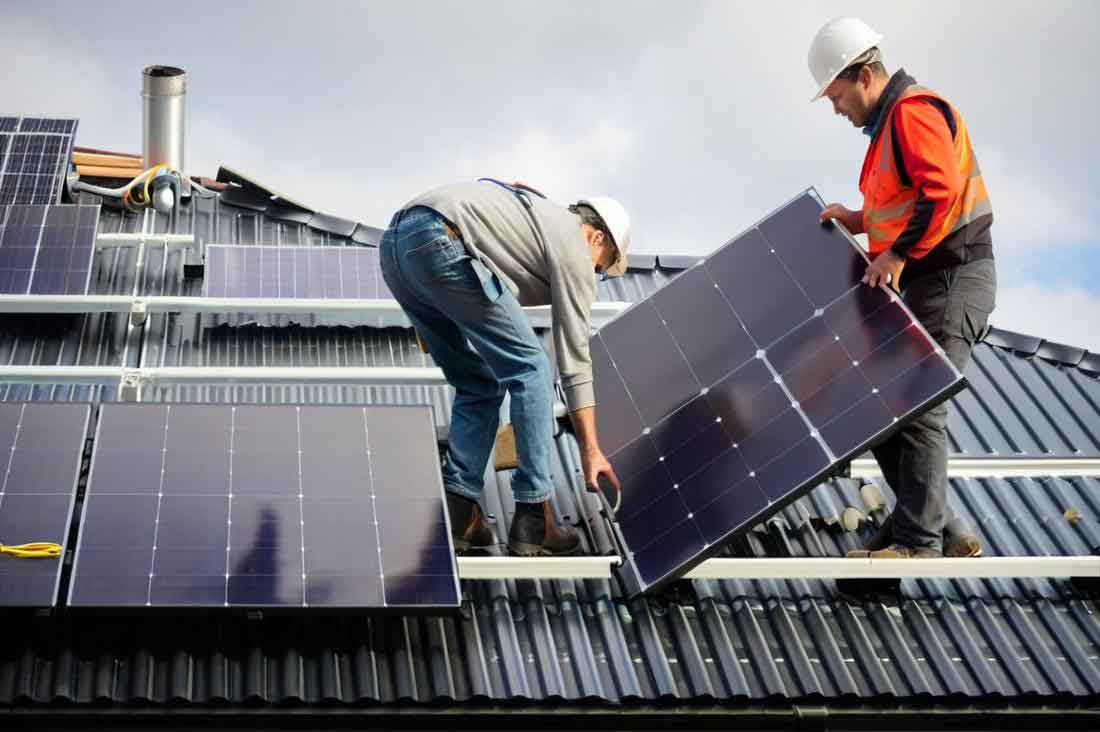
A laboratory-scale soil column evaporation experiment was conducted to isolate and study the effects of solar panel configuration. The soil used was a sandy loam. The experiment simulated solar panel shading using opaque PVC panels. Three primary layout factors were examined, each at four levels, as summarized in the table below:
| Factor | Level 1 | Level 2 | Level 3 | Level 4 |
|---|---|---|---|---|
| Coverage Density (M) | 0.1 | 0.3 | 0.5 | 0.7 |
| Tilt Angle (J, °) | 15 | 35 | 55 | 75 |
| Installation Height (G, cm) | 15 | 20 | 25 | 30 |
An orthogonal experimental design (L16) based on these factors was employed, plus a control treatment (CK) with no solar panel, resulting in 17 distinct treatments. Soil columns were homogeneously packed, saturated from the bottom, and allowed to drain. Evaporation was induced using a 250W infrared lamp positioned 50 cm above the soil surface to simulate a high evaporative demand. Soil temperature and volumetric water content were monitored at multiple depths (5, 10, 15, 20, 30, 40 cm) using sensors. Cumulative soil evaporation was calculated based on the change in soil water storage over time using the principle of water balance.
Soil Temperature Dynamics
The presence of solar panels significantly moderated the diurnal increase in soil temperature compared to the unshaded control. Under the infrared lamp, soil temperature in all treatments increased over time, but the rate and magnitude of increase were substantially reduced by the shading effect of the solar panels. The influence of each configuration factor was pronounced.
- Density (M): Higher solar panel coverage density led to a greater reduction in soil temperature rise. The M4 treatment (density=0.7) showed the smallest temperature increase, while M1 (density=0.1) showed a larger increase, closer to the CK.
- Tilt Angle (J): Steeper solar panel tilt angles resulted in higher soil temperatures. The J4 treatment (75°) exhibited a greater temperature increase compared to the J1 treatment (15°).
- Installation Height (G): Lower mounting heights for the solar panels were more effective at suppressing soil temperature increases. The G1 treatment (15 cm height) maintained lower soil temperatures than the G3 treatment (25 cm height).
The variation in soil temperature with time under different solar panel configurations was successfully modeled using a logarithmic function. The general form of the relationship is given by:
$$ T = (aX + b) \ln(t) + c $$
where \( T \) is the soil temperature (°C), \( X \) represents the configuration factor (density, angle, or height), \( t \) is time (days), and \( a \), \( b \), \( c \) are fitting parameters. The determination coefficients (R²) for these fits were all above 0.70, indicating a good representation of the observed trends. The specific parameters are listed in the following table.
| Configuration Factor | a | b | c | R² |
|---|---|---|---|---|
| Density (M) | -1.7151 | 3.5468 | 20.0965 | 0.7243 |
| Tilt Angle (J) | -0.0042 | 3.0514 | 20.0967 | 0.7032 |
| Height (G) | -0.0155 | 3.2502 | 20.0967 | 0.8688 |
A multifactor analysis of variance (ANOVA) was performed to statistically assess the influence of the solar panel layout factors and their interactions on soil temperature. The results, presented below, confirm that density, tilt angle, height, and all their two-way and three-way interactions had a highly significant effect (p < 0.001) on soil temperature.
| Factor | F-value | p-value | Significance |
|---|---|---|---|
| Coverage Density (M) | 39.435 | 0.001 | ** |
| Tilt Angle (J) | 55.666 | 0.001 | ** |
| Installation Height (G) | 40.226 | 0.001 | ** |
| M × J | 20.532 | 0.001 | ** |
| M × G | 26.206 | 0.001 | ** |
| J × G | 20.288 | 0.001 | ** |
| M × J × G | 1168.87 | 0.001 | ** |
** p < 0.001
Soil Moisture Dynamics
The shading provided by the solar panels effectively conserved soil moisture by reducing evaporation. The decline in soil water content over time was markedly slower under all solar panel treatments compared to the control. The configuration of the solar panel array played a critical role in determining the rate of water loss.
- Density (M): Soil moisture retention improved with increasing solar panel density. The M4 treatment maintained the highest final water content, while M1 showed a more rapid decline.
- Tilt Angle (J): Shallower tilt angles were more effective at preserving soil moisture. The J1 treatment (15°) resulted in slower drying compared to the J4 treatment (75°).
- Installation Height (G): Solar panels installed at lower heights created a more confined microclimate, leading to better moisture conservation. The G1 treatment retained more water than the G3 treatment.
The temporal variation of soil water content under different solar panel configurations was well-described by an exponential decay model:
$$ S = a \cdot e^{(bX – c)t} $$
where \( S \) is the soil volumetric water content (%), \( X \) is the configuration factor, \( t \) is time (days), and \( a \), \( b \), \( c \) are fitting parameters. The high R² values (>0.89) demonstrate the model’s accuracy.
| Configuration Factor | a | b | c | R² |
|---|---|---|---|---|
| Density (M) | 29.899 | 0.0696 | 0.0835 | 0.9512 |
| Tilt Angle (J) | 30.063 | -0.0001 | 0.0392 | 0.9104 |
| Height (G) | 29.9040 | 0.0001 | 0.0498 | 0.8945 |
The ANOVA for soil water content, shown in the next table, revealed that all main factors and their interactions also had a highly significant impact (p < 0.001) on soil moisture status, underscoring the complex interplay between solar panel geometry and soil hydrological processes.
| Factor | F-value | p-value | Significance |
|---|---|---|---|
| Coverage Density (M) | 127.789 | 0.001 | ** |
| Tilt Angle (J) | 155.743 | 0.001 | ** |
| Installation Height (G) | 174.408 | 0.001 | ** |
| M × J | 59.921 | 0.001 | ** |
| M × G | 53.507 | 0.001 | ** |
| J × G | 44.03 | 0.001 | ** |
| M × J × G | 2219.02 | 0.001 | ** |
** p < 0.001
Cumulative Soil Evaporation
The most direct agronomic benefit observed was the substantial reduction in cumulative soil evaporation due to solar panel shading. Compared to the uncovered control (CK), the presence of solar panels reduced total evaporation by approximately 55-57%, depending on the specific configuration.
- Density (M): Evaporation decreased monotonically with increasing solar panel density. The M4 treatment had the lowest cumulative evaporation.
- Tilt Angle (J): Shallower angles led to greater evaporation suppression. The J1 treatment resulted in less cumulative water loss than the J4 treatment.
- Installation Height (G): Lower mounting heights were more effective at inhibiting evaporation. The G1 treatment showed lower cumulative evaporation than the G3 treatment.
The progression of cumulative evaporation over time was effectively modeled using a logarithmic function incorporating the configuration factors:
$$ Z = aX^2 + bX + c\ln(t) + d $$
where \( Z \) is the cumulative evaporation (mm), and \( a \), \( b \), \( c \), \( d \) are fitting parameters. The models achieved R² values greater than 0.83.
| Configuration Factor | a | b | c | d | R² |
|---|---|---|---|---|---|
| Density (M) | 16.449 | -18.183 | 8.726 | 2.18865 | 0.8534 |
| Tilt Angle (J) | 0.0004 | -0.0414 | 5.7687 | 2.18865 | 0.8345 |
| Height (G) | 0.0204 | -1.0506 | 17.801 | 2.4007 | 0.9007 |
Discussion and Implications
The results demonstrate that the configuration of a solar panel array is a powerful tool for manipulating the soil microclimate in agrivoltaic systems. The physical barrier created by the solar panels intercepts direct solar radiation, which is the primary driver of soil heating and evaporation. This leads to the observed cooling and moisture-conserving effects, analogous to but distinct from traditional mulches. The key finding is that these effects are not uniform but can be finely tuned by altering the density, tilt, and height of the solar panel installation.
A higher density of solar panels provides greater shade coverage, naturally leading to lower soil temperatures, higher soil moisture, and less evaporation. The effect of tilt angle is linked to the geometry of shading and potentially to airflow; a steeper angle may allow more diffuse or angled radiation to reach the soil surface and may alter the aerodynamic properties at the soil-atmosphere interface, leading to slightly warmer and drier conditions. The installation height influences the size and characteristics of the shaded zone; a lower height creates a more confined and sheltered space with reduced wind speed and vapor pressure gradient, enhancing the conservation of both water and heat (or rather, reducing heat gain).
The derived empirical models provide a quantitative framework for predicting soil hydrothermal responses based on solar panel design parameters. This is invaluable for the planning and design of agrivoltaic systems. For instance, in water-limited environments, configuring solar panels with high density, low tilt angle, and low mounting height would maximize water saving. Conversely, if a certain level of soil warming is desired for crop germination or growth in cooler seasons, a configuration with lower density, steeper angle, or greater height could be selected. The significant interaction effects highlighted by the ANOVA indicate that these factors do not operate independently, and optimal design requires a holistic consideration of their combined impact.
This laboratory study provides clear mechanistic insights under controlled conditions. The logical next step is field validation, where dynamic environmental factors such as wind, varying solar angles, rainfall, and crop canopy development interact with the solar panel array. Furthermore, research should focus on coupling these soil hydrothermal effects with crop growth models to identify solar panel configurations that optimize the trade-off between photovoltaic energy output and agricultural yield for specific crops and climates.
Conclusion
This investigation conclusively shows that the layout of solar panels in an agrivoltaic system significantly alters soil water and heat transport processes. The major conclusions are:
- Soil temperature and cumulative evaporation decrease with increasing solar panel coverage density, but increase with greater tilt angle and higher installation height.
- Soil water content increases with higher solar panel density, but decreases with greater tilt angle and higher installation height.
- The temporal dynamics of soil temperature and cumulative evaporation under different solar panel configurations can be described by logarithmic functions, while soil water content dynamics follow an exponential decay pattern.
- The density, tilt angle, and installation height of solar panels, along with their interactions, have a statistically highly significant influence on both soil temperature and moisture regimes.
The strategic configuration of solar panels is therefore not merely an engineering decision for energy capture but a critical agronomic management tool. By carefully selecting the density, angle, and height of the solar panel array, it is possible to tailor the subsurface environment to better meet the water and temperature requirements of specific crops, thereby unlocking the full potential of agrivoltaic systems for sustainable and efficient land use.