
The relentless global expansion of the electric vehicle market and the rapid development of emerging fields such as industrial robotics and unmanned aerial vehicles have not only broadened the application prospects for lithium-ion batteries but have also imposed significantly higher demands on their energy density and safety. Among cathode materials, lithium- and manganese-rich layered oxides (LMRO) with the general formula xLi2MnO3·(1-x)LiMO2 (where M = Ni, Co, Mn, etc., and 0 < x < 1) have garnered considerable attention due to their high specific capacity (>250 mAh g-1), which translates to high energy density, alongside advantages like low cost and environmental friendliness. However, the practical application of LMRO cathodes in commercial lithium-ion batteries is hindered by several intrinsic challenges, including severe voltage fade during cycling, poor rate capability, and significant first-cycle irreversible capacity loss. While strategies like surface coating, elemental doping, and structural design have been explored to mitigate these issues, the fundamental problem of poor electronic conductivity of the LMRO material itself remains a critical bottleneck. This necessitates the incorporation of conductive additives during electrode fabrication to construct an efficient percolation network for electron transport.
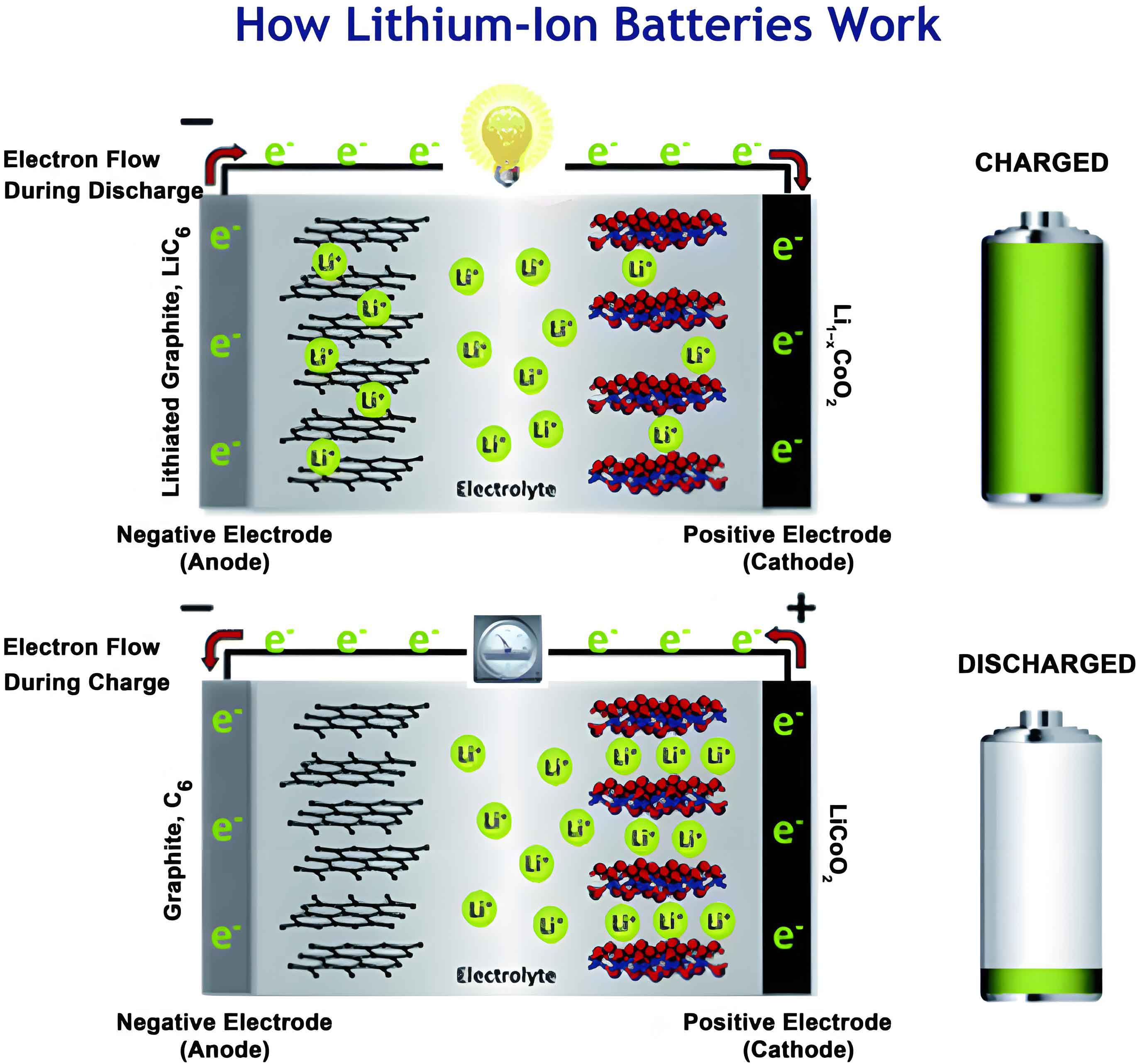
Conductive carbon additives are indispensable components in the design of high-performance electrodes for lithium-ion batteries. Traditional carbon black (e.g., Super P), while effective, often requires a high loading (typically 3-5 wt.%) to form a conductive network, which reduces the overall energy density of the battery. In contrast, multi-walled carbon nanotubes (MWCNTs) present a promising alternative due to their unique one-dimensional tubular structure, extraordinarily high aspect ratio, intrinsic electrical conductivity (theoretically exceeding 5 × 10⁵ S cm-1 at room temperature), and excellent mechanical flexibility. These properties allow MWCNTs to form a more efficient “line-to-point” contact mode with active material particles, potentially creating a robust, three-dimensional (3D) conductive network at lower additive contents. This network is crucial for facilitating rapid electron transport throughout the electrode, especially under high-rate charging and discharging conditions, which are increasingly important for advanced applications of the lithium-ion battery.
However, the relationship between MWCNTs content and electrode performance is not linear and is governed by the percolation theory. An insufficient amount fails to establish a continuous conductive pathway, leading to high internal resistance and poor performance. Conversely, an excessive amount can lead to severe agglomeration due to strong van der Waals forces, which not only diminishes the effectiveness of the conductive network but also compromises the energy density and safety of the lithium-ion battery by potentially blocking Li+ ion diffusion paths and increasing the risk of local hot spots. Therefore, identifying the optimal MWCNTs content is paramount for balancing electronic conductivity, electrochemical performance, and practical energy density.
In this investigation, we systematically study the impact of varying MWCNTs content on the electrochemical performance, polarization behavior, and impedance evolution of LMRO-based cathodes for high-voltage lithium-ion battery applications. We aim to elucidate the underlying mechanisms by which MWCNTs influence electrode behavior through a combination of electrochemical tests and physical characterization, ultimately determining the optimal conductive additive formulation.
Experimental Methodology
1. Materials and Electrode Fabrication
The active material used was a cobalt-free lithium-rich manganese-based layered oxide (Li1.2Ni0.13Mn0.54O2). The conductive additives were multi-walled carbon nanotubes (supplied as a 5 wt.% dispersion in N-Methyl-2-pyrrolidone, NMP) and mesocarbon microbeads (MCMB). Polyvinylidene fluoride (PVDF) was used as the binder. The mass ratio of LMRO : PVDF : Total Conductive Additive was fixed at 90 : 4 : 6. The conductive additive was a binary system of MCMB and MWCNTs. Five different electrodes were prepared by varying the mass ratio of MCMB to MWCNTs within the 6 wt.% total conductive additive, as detailed in Table 1.
| Electrode Designation | LMRO (wt.%) | PVDF (wt.%) | MCMB (wt.%) | MWCNTs (wt.%) | MCMB:MWCNTs (Mass Ratio) |
|---|---|---|---|---|---|
| LR-1MWCNTs | 90 | 4 | 5 | 1 | 5:1 |
| LR-2MWCNTs | 90 | 4 | 4 | 2 | 4:2 |
| LR-3MWCNTs | 90 | 4 | 3 | 3 | 3:3 |
| LR-4MWCNTs | 90 | 4 | 2 | 4 | 2:4 |
| LR-5MWCNTs | 90 | 4 | 1 | 5 | 1:5 |
The electrode slurry was prepared by dissolving the weighed components in an appropriate amount of NMP solvent. For slurries containing MWCNTs, a pre-dispersion step involving ultrasonication for 1 hour was employed to disentangle nanotube bundles, followed by vigorous mechanical stirring. The homogeneous slurry was then coated onto an aluminum foil current collector using a doctor blade and dried at 80 °C for 4 hours. The electrodes were subsequently calendared to a consistent porosity. The mass loading of active material was controlled to be identical for all electrodes to ensure a fair comparison.
2. Physical and Electrochemical Characterization
The surface resistance of the dried electrode sheets was measured using a four-point probe resistivity meter. The cross-sectional morphology of the electrodes was examined using scanning electron microscopy (SEM).
CR2032-type coin cells were assembled in an argon-filled glovebox for electrochemical testing. The prepared LMRO electrode served as the working electrode, lithium metal foil as the counter/reference electrode, a microporous polypropylene membrane as the separator, and 1 M LiPF6 in a mixture of ethylene carbonate and dimethyl carbonate (EC:DMC = 1:1 by volume) as the electrolyte.
The galvanostatic charge-discharge tests were performed using a battery cycler. The cells were first activated at 0.1 C (1 C = 200 mA g-1) between 2.0 and 4.8 V. For the cycle life test, a regime of constant current charging at 0.3 C to 4.7 V followed by a constant voltage step at 4.7 V until the current dropped to 0.05 C, and then discharging at 1 C to 2.0 V was employed for 100 cycles. Rate capability was assessed by charging at 0.3 C to 4.7 V (with CV) and discharging at progressively increasing rates from 0.1 C to 3 C.
Electrochemical impedance spectroscopy (EIS) measurements were conducted on cells charged to a 50% state-of-charge (SOC) at different cycle intervals using an electrochemical workstation. The amplitude of the AC perturbation was 5 mV over a frequency range from 105 Hz to 10-2 Hz. The obtained spectra were fitted to an appropriate equivalent circuit model to extract specific resistance parameters.
Results and Discussion
1. Physical Properties of Electrodes: Morphology and Surface Resistance
The SEM image of the pristine MWCNTs confirms their characteristic one-dimensional, entangled tubular structure with lengths on the micrometer scale. Analysis of the electrode cross-sections reveals a clear evolution of the conductive network architecture with increasing MWCNTs content. In the LR-1MWCNTs and LR-2MWCNTs electrodes, a significant number of LMRO particles appear exposed or are only sparsely contacted by the conductive additives. The primary conductive pathway in these electrodes relies heavily on point-to-point contacts between the spherical MCMB particles, which creates a discontinuous and tortuous electron transport path. Large voids between the micron-sized MCMB and LMRO particles further impede the formation of a coherent conductive network.
In contrast, the LR-3MWCNTs electrode exhibits a markedly different microstructure. The LMRO particles appear to be more uniformly enveloped and interconnected by a web-like structure formed by the MWCNTs. This suggests the establishment of a more continuous and uniform 3D conductive network, where the high-aspect-ratio MWCNTs bridge adjacent active material particles, creating efficient “line-to-point” and “line-to-line” contacts. This network is non-tortuous and provides multiple parallel pathways for electron conduction, which is critical for the high-power operation of a lithium-ion battery.
When the MWCNTs content is increased to 4% and 5%, the density of nanotubes increases visibly. However, the beneficial effect of a more connected network is counteracted by the onset of significant agglomeration. The MWCNTs tend to bundle together, forming dense clusters rather than a homogeneously dispersed network. This agglomeration, driven by van der Waals forces, can create regions of high electronic conductivity that are poorly connected to isolated LMRO particles, while also potentially blocking pores necessary for electrolyte infiltration and Li+ ion transport.
The surface resistance measurements provide quantitative support for the morphological observations. The results are summarized in Table 2 and follow a trend consistent with percolation theory. The surface resistance, Rs, decreases sharply as the MWCNTs content increases from 1% to 3%, indicating the formation of an effective conductive network. The most dramatic reduction occurs between 1% and 2% MWCNTs. The resistance of the LR-3MWCNTs electrode is only 15.5% of that of the LR-1MWCNTs electrode, demonstrating the profound impact of the nanotube-based network.
The percolation threshold, a critical concentration above which a continuous conductive path is formed and conductivity increases dramatically, appears to be near 3% MWCNTs in this system. This can be conceptually related by a power-law equation:
$$ \sigma \propto (p – p_c)^t $$
where $\sigma$ is the electrical conductivity, $p$ is the volume fraction of the conductive filler (MWCNTs), $p_c$ is the percolation threshold, and $t$ is a critical exponent. Our data suggests $p_c$ is reached around 3 wt.% MWCNTs. Beyond this threshold, further additions (4% and 5%) yield diminishing returns in reducing Rs, as the network is already well-established and agglomeration effects begin to dominate.
| Electrode | Surface Resistance, Rs (Ω) | Normalized Rs (vs. LR-1MWCNTs) |
|---|---|---|
| LR-1MWCNTs | 55.06 | 1.00 |
| LR-2MWCNTs | 13.89 | 0.25 |
| LR-3MWCNTs | 8.54 | 0.16 |
| LR-4MWCNTs | 8.25 | 0.15 |
| LR-5MWCNTs | 6.23 | 0.11 |
2. Electrochemical Performance: Rate Capability and Cycle Life
Rate Capability: The discharge capacities of the electrodes at various C-rates are graphically compared. A clear trend emerges: electrodes with higher MWCNTs content consistently deliver superior capacity retention at elevated discharge rates. The performance gap widens significantly as the current demand increases. For instance, at a 1 C discharge rate, the LR-3MWCNTs electrode delivers a capacity of 158.7 mAh g-1, which is 10.3% higher than the LR-1MWCNTs electrode and 6.7% higher than the LR-5MWCNTs electrode. The advantage becomes more pronounced at 2 C, where the capacity of the LR-3MWCNTs electrode (106.0 mAh g-1) is more than double that of the LR-1MWCNTs electrode (52.0 mAh g-1).
This enhancement is directly attributable to the improved electronic wiring of the LMRO particles. The 3D network formed by MWCNTs ensures that electrons can be rapidly supplied to or withdrawn from the active material surface even under high current densities, minimizing kinetic limitations and reducing ohmic polarization ($\eta_{ohm}$) within the electrode. The ohmic polarization can be described by Ohm’s law:
$$ \eta_{ohm} = I \cdot R_{int} $$
where $I$ is the applied current and $R_{int}$ is the internal resistance of the cell. The lower $R_s$ values for high-MWCNTs electrodes directly contribute to a smaller $\eta_{ohm}$ during high-rate operation, thereby preserving a higher working voltage and accessible capacity. The plateau in performance improvement beyond 3% MWCNTs aligns with the surface resistance data, indicating that the electronic conductivity is no longer the sole limiting factor at very high nanotube loadings, possibly due to ionic transport limitations or agglomeration effects.
Cycle Performance: The long-term cycling stability of the lithium-ion battery cathodes, tested at 1 C discharge rate following an activation cycle, reveals a strong dependence on MWCNTs content. The LR-1MWCNTs electrode suffers from the most rapid capacity fade, retaining only 8.7 mAh g-1 after 100 cycles. In contrast, the LR-3MWCNTs electrode demonstrates the best capacity retention, delivering 94.6 mAh g-1 after 100 cycles, corresponding to a capacity retention of 60.3%. This is approximately 10.9 times and 1.5 times the capacity of the LR-1MWCNTs and LR-5MWCNTs electrodes at the same cycle number, respectively.
To understand this behavior, we analyzed the evolution of polarization during cycling. Two key metrics were examined: the initial ohmic drop (IR drop) at the beginning of discharge, representing the instantaneous ohmic polarization at full charge (100% SOC), and the average voltage difference between charge and discharge ($\Delta V_{avg}$), which reflects the total polarization (ohmic + charge transfer + concentration) over the entire cycle.
The IR drop increases with cycle number for all electrodes, indicating a general rise in internal resistance. However, the rate of increase is steepest for the LR-1MWCNTs electrode and slowest for the LR-3MWCNTs electrode. This suggests that the robust MWCNTs network in the LR-3MWCNTs electrode more effectively mitigates the increase in electronic contact resistance that typically occurs due to micro-crack formation, particle isolation, and surface film growth on LMRO during high-voltage cycling in a lithium-ion battery.
The $\Delta V_{avg}$ shows a similar trend. After 100 cycles, the $\Delta V_{avg}$ for the LR-3MWCNTs electrode (1.250 V) is significantly lower than that for the LR-1MWCNTs (1.885 V) and LR-5MWCNTs (1.522 V) electrodes. A larger voltage hysteresis signifies greater energy loss per cycle and accelerates capacity fade. The superior performance of the LR-3MWCNTs electrode indicates that its optimized conductive network minimizes overall polarization, leading to more reversible electrochemical reactions and enhanced structural stability of the LMRO material.
3. Electrochemical Impedance Spectroscopy (EIS) Analysis
EIS provides deeper insight into the interfacial processes and resistance components. The Nyquist plots for all electrodes after different cycle numbers typically consist of a high-frequency intercept on the Z’ axis, a depressed semicircle in the medium-to-high frequency region, and a low-frequency Warburg tail. The high-frequency intercept corresponds to the ohmic resistance (Re) of the electrolyte, separator, and electrodes. The semicircle is primarily attributed to the charge transfer resistance (Rct) at the electrode/electrolyte interface, coupled with the double-layer capacitance.
The fitted values of Re and Rct are tabulated in Tables 3 and 4, respectively.
| Cycle Number | Re (Ω) | ||||
|---|---|---|---|---|---|
| LR-1MWCNTs | LR-2MWCNTs | LR-3MWCNTs | LR-4MWCNTs | LR-5MWCNTs | |
| 1 | 10.09 | 6.11 | 6.58 | 7.01 | 3.77 |
| 20 | 20.77 | 13.72 | 6.59 | 17.51 | 20.89 |
| 30 | 32.17 | 12.26 | 11.07 | 12.52 | 15.83 |
| 40 | 60.78 | 18.91 | 13.79 | 16.67 | 21.79 |
| Cycle Number | Rct (Ω) | ||||
|---|---|---|---|---|---|
| LR-1MWCNTs | LR-2MWCNTs | LR-3MWCNTs | LR-4MWCNTs | LR-5MWCNTs | |
| 1 | 10.76 | 9.11 | 11.15 | 15.69 | 14.64 |
| 20 | 25.35 | 26.85 | 11.78 | 39.59 | 62.24 |
| 30 | 29.36 | 30.82 | 27.12 | 49.72 | 77.13 |
| 40 | 76.17 | 67.13 | 61.81 | 126.00 | 235.60 |
Analysis of Re: The initial Re is relatively low for all electrodes. Upon cycling, Re increases, reflecting the growth of surface films and possible degradation of electronic contacts. Crucially, the LR-3MWCNTs electrode exhibits the smallest and most stable Re throughout the cycling test. After 40 cycles, its Re (13.79 Ω) is only 22.7% of that of the LR-1MWCNTs electrode and 63.3% of the LR-5MWCNTs electrode. This confirms that the uniform 3D MWCNTs network provides resilient electronic pathways that survive the mechanical stresses of cycling better than the point-contact network in low-MWCNTs electrodes or the agglomerated, potentially obstructive network in high-MWCNTs electrodes.
Analysis of Rct: The Rct values are particularly informative. The charge transfer kinetics at the LMRO/electrolyte interface are highly sensitive to the effective electronic connection to the active material surface. The Butler-Volmer equation governs this kinetics:
$$ j = j_0 \left[ \exp\left(\frac{\alpha_a F \eta_{ct}}{RT}\right) – \exp\left(-\frac{\alpha_c F \eta_{ct}}{RT}\right) \right] $$
where $j$ is the current density, $j_0$ is the exchange current density, $\alpha$ is the transfer coefficient, $F$ is Faraday’s constant, $\eta_{ct}$ is the charge transfer overpotential, $R$ is the gas constant, and $T$ is the temperature. A lower Rct implies a higher $j_0$, meaning faster interfacial reaction kinetics.
The data shows that the LR-3MWCNTs electrode maintains the lowest Rct after prolonged cycling. After 40 cycles, its Rct (61.81 Ω) is 81.1% of the LR-1MWCNTs value and a mere 26.2% of the LR-5MWCNTs value. This dramatic difference underscores the critical role of the conductive network architecture. The well-dispersed, interconnected MWCNTs in the LR-3MWCNTs electrode ensure that a maximal number of active reaction sites on the LMRO particles are electrically wired, facilitating efficient charge transfer. In the LR-5MWCNTs electrode, severe agglomeration likely leads to an uneven distribution of electronic current. Some LMRO particles may be isolated, while others in contact with agglomerates may experience inefficient charge distribution, both scenarios leading to a dramatically increased apparent Rct. This increased impedance directly correlates with the accelerated capacity fade and larger polarization observed for the LR-5MWCNTs electrode.
Conclusions
In this comprehensive study, we have investigated the role of multi-walled carbon nanotubes as a conductive additive in optimizing the performance of lithium-rich manganese-based layered oxide cathodes for high-energy lithium-ion battery applications. Our findings conclusively demonstrate that the content and dispersion state of MWCNTs are decisive factors governing the electrochemical behavior of the composite electrode.
- Optimal Content and Network Formation: An MWCNTs content of 3 wt.% within the total conductive additive represents an optimal threshold. At this concentration, the MWCNTs form a uniform, continuous, and resilient three-dimensional conductive network throughout the electrode. This network establishes efficient “line-to-point” and “line-to-line” contacts with the LMRO particles, creating non-tortuous, low-resistance pathways for electron transport. This is evidenced by the lowest surface resistance and the most stable ohmic resistance (Re) during cycling for the LR-3MWCNTs electrode.
- Enhanced Electrochemical Performance: The optimized conductive network directly translates to superior electrochemical performance. The LR-3MWCNTs electrode exhibits the best rate capability, especially at high discharge currents (e.g., 2 C), and the most stable cycle life with the highest capacity retention (60.3% after 100 cycles at 1 C). This is attributed to minimized ohmic and charge transfer polarization, as confirmed by the smallest voltage hysteresis and the lowest charge transfer resistance (Rct) after extended cycling.
- Detrimental Effects of Deviation from Optimum: An insufficient amount of MWCNTs (1-2%) fails to establish an effective percolating network, leading to high electronic resistance, severe polarization, and rapid capacity fade. Conversely, an excessive amount (4-5%) induces significant agglomeration of the nanotubes. This agglomeration disrupts the homogeneity of the network, can block ionic pathways, and leads to inefficient charge distribution, resulting in a dramatic increase in Rct and accelerated performance degradation, despite a marginally lower initial surface resistance.
- Mechanistic Insight: The primary mechanism through which MWCNTs enhance LMRO electrode performance is by constructing a robust 3D electronic highway that mitigates increases in both bulk electronic resistance and interfacial charge transfer resistance during the demanding high-voltage operation of a lithium-ion battery. This network ensures kinetic stability alongside the thermodynamic challenges inherent to LMRO materials.
In summary, the judicious incorporation of MWCNTs as a conductive additive, at an optimal concentration of approximately 3 wt.%, is a highly effective strategy to address the electronic conductivity limitations of LMRO cathodes. This approach significantly enhances rate performance, suppresses polarization, and improves cycling stability, thereby advancing the practicality of high-energy-density lithium-rich materials for the next generation of lithium-ion batteries. Future work could focus on advanced pre-dispersion techniques for MWCNTs to further push the performance envelope or explore hybrid conductive systems combining MWCNTs with other nano-carbons for synergistic effects.