
In the realm of energy storage systems, the lithium ion battery stands as a cornerstone technology, powering everything from portable electronics to electric vehicles. My research focuses on a critical yet often overlooked component: the binder used in electrode fabrication. Binders play a pivotal role in maintaining the structural integrity of electrodes, ensuring good electrical contact between active materials and conductive agents, and influencing the overall electrochemical performance of the lithium ion battery. Traditionally, polyvinylidene fluoride (PVDF) has been the binder of choice for lithium ion battery cathodes, necessitating the use of costly and environmentally hazardous N-methyl-2-pyrrolidone (NMP) as a solvent. This study explores alternative, water-based binders—specifically gelatin and polyvinyl alcohol (PVA)—as sustainable and economical replacements. Through comprehensive experimental analysis, I have investigated how these binders affect electrode adhesion, morphology, and the cycling performance of lithium ion batteries. The findings not only highlight the potential of water-soluble binders but also reveal intriguing capacity evolution trends during cycling, offering new insights for optimizing lithium ion battery design. This article delves deep into the mechanisms, supported by quantitative data, tables, and theoretical formulations, to provide a thorough understanding of binder effects in lithium ion battery systems.
The fundamental operation of a lithium ion battery relies on the reversible intercalation and de-intercalation of lithium ions between the cathode and anode. The cathode, typically composed of lithium transition metal oxides like LiMn2O4, requires a binder to cohesively integrate active material particles, conductive carbon (e.g., acetylene black), and the current collector. The binder must exhibit strong adhesive strength, chemical stability within the battery’s electrochemical environment, and should not impede ionic or electronic conductivity. The choice of binder directly impacts key performance metrics of the lithium ion battery, such as specific capacity, rate capability, cycle life, and safety. The ideal binder for a lithium ion battery should facilitate electrode processing, enhance active material utilization, and promote long-term stability. While PVDF has demonstrated reliable performance, its drawbacks have spurred research into aqueous alternatives. Water-based binders like gelatin and PVA offer significant advantages: they are low-cost, non-toxic, and eliminate the need for complex solvent recovery systems, thereby reducing the environmental footprint of lithium ion battery manufacturing. However, their interaction with electrode components and their influence on the electrochemical behavior of the lithium ion battery require detailed examination, which forms the core of this investigation.
To systematically evaluate binder performance, I designed a series of experiments focusing on three binder systems: PVDF (with NMP solvent), PVA (aqueous), and gelatin (aqueous). The active material for all cathodes was commercial spinel LiMn2O4, ensuring a consistent baseline for comparing binder effects in the lithium ion battery. The electrode composition was fixed at a mass ratio of 80:10:10 for active material, conductive carbon, and binder, respectively. This formulation is common in lithium ion battery research to balance capacity and conductivity. The slurry preparation differed: for PVDF, NMP was used; for PVA and gelatin, deionized water served as the solvent. Each slurry was uniformly coated onto an aluminum current collector, dried, and then pressed at 10 MPa to form the cathode sheet. After vacuum drying at 110°C for 10 hours, the electrodes were assembled into coin-type half-cells against lithium metal anodes. The electrolyte was 1 M LiPF6 in a 1:1 volume mixture of ethylene carbonate (EC) and diethyl carbonate (DEC), with a polypropylene separator (Celgard 2300). All cell assembly was conducted in an argon-filled glove box to prevent moisture and oxygen contamination, which is critical for maintaining the integrity of the lithium ion battery.
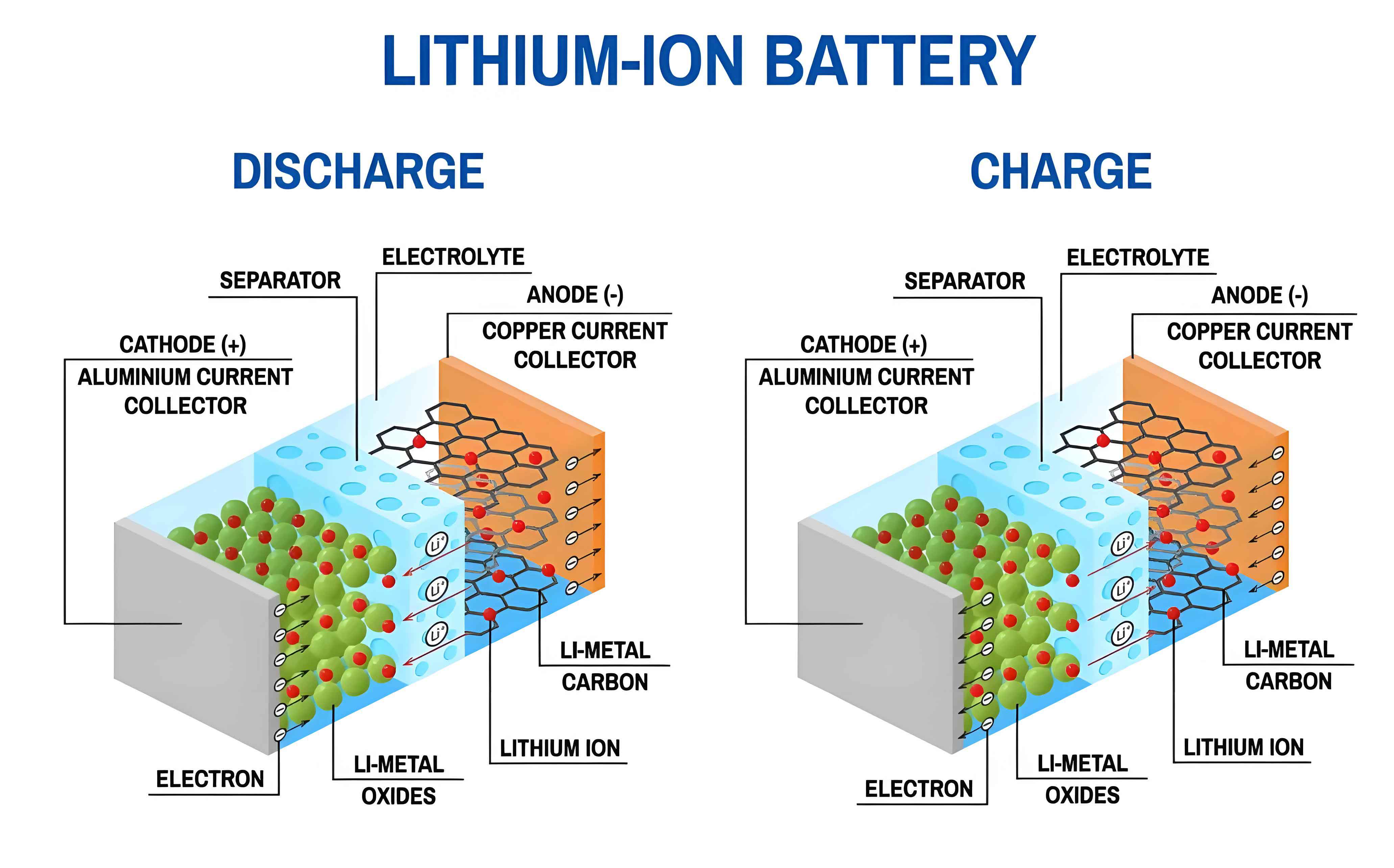
The experimental characterization encompassed three main aspects: mechanical adhesion, morphological analysis, and electrochemical testing. A bending test was employed to assess the adhesive strength of the binder. The cathode sheet was repeatedly flexed at a 90-degree angle until active material detachment occurred at the bend; the number of bends before failure was recorded. This simple test provides a direct measure of how well the binder maintains electrode cohesion, a vital property for the durability of a lithium ion battery during handling and cycling. For morphological examination, scanning electron microscopy (SEM) was used to observe the surface structure of the pressed electrodes. The SEM images reveal the distribution of active material particles, the porous network formation, and the overall compactness—factors that influence electrolyte wetting and lithium ion transport within the lithium ion battery electrode. Finally, the electrochemical performance was evaluated using galvanostatic charge-discharge cycling. Cells were initially activated at 0.1C for two cycles, followed by cycling at 0.2C for 19 cycles. The specific discharge capacity, capacity retention, and any anomalous trends were meticulously analyzed to understand the long-term behavior of the lithium ion battery with different binders.
The bending test results provided clear insights into the mechanical robustness imparted by each binder. I observed that the gelatin-based electrode withstood significantly more bending cycles before failure compared to both PVDF and PVA-based electrodes. This superior adhesion can be attributed to the molecular structure of gelatin, which forms flexible, chain-like networks upon drying, creating strong bonds between particles and the current collector. In contrast, PVA showed relatively weaker adhesion, likely due to its different polymer chain interactions and film-forming properties. The mechanical integrity of the electrode is crucial for the lithium ion battery, as it prevents active material shedding during cycling, which can lead to capacity fade and increased internal resistance. The bending test data is summarized in Table 1, which quantifies the adhesive performance of each binder system in the context of lithium ion battery electrode fabrication.
| Binder Type | Solvent Used | Average Bending Cycles to Failure | Qualitative Adhesion Strength |
|---|---|---|---|
| PVDF | NMP | 13 | Moderate |
| PVA (aqueous) | Water | 8 | Weak |
| Gelatin (aqueous) | Water | 17 | Strong |
Morphological analysis via SEM revealed distinct surface structures for electrodes prepared with different binders, which directly correlate with their electrochemical behavior in the lithium ion battery. The PVDF-based electrode exhibited a very smooth and dense surface with minimal visible porosity. This compact structure, while mechanically stable, may limit electrolyte penetration and reduce the accessible surface area of the active material, potentially hindering lithium ion diffusion. The PVA-based electrode, on the other hand, showed a rough and highly porous surface with loosely packed particles. Such excessive porosity can lead to poor electrical contact between particles, increasing interfacial resistance and reducing the effective utilization of active material in the lithium ion battery. Most interestingly, the gelatin-based electrode displayed an intermediate morphology: a moderately porous network with well-connected particles. At higher magnification, it was evident that the gelatin binder created a resilient, chain-locked structure that provides both mechanical strength and adequate pore channels. This optimal balance facilitates electrolyte infiltration and ensures good ionic conductivity, which is beneficial for the performance of the lithium ion battery. The porous volume fraction (ε) can be estimated using the relation derived from electrode theory: $$ε = 1 – \frac{ρ_{tap}}{ρ_{true}}$$ where ρ_{tap} is the tapped density of the electrode composite and ρ_{true} is the true density of the solid components. For gelatin-based electrodes, I hypothesize that ε is tuned to an ideal range that maximizes active material utilization in the lithium ion battery.
The electrochemical cycling performance unveiled the most compelling findings. All cells were cycled under identical conditions to isolate the effect of the binder on the lithium ion battery behavior. The specific discharge capacity was calculated using the standard formula: $$C = \frac{I \times Δt}{m}$$ where C is the specific capacity (in mAh/g), I is the constant discharge current (in mA), Δt is the discharge time (in hours), and m is the mass of active material (in grams). This formula is fundamental for evaluating the energy storage capability of any lithium ion battery. The cycling data for the first 19 cycles at 0.2C rate are presented in Table 2, which tracks the evolution of specific capacity and capacity retention for each binder type.
| Cycle Number | PVDF: Specific Capacity (mAh/g) | PVA: Specific Capacity (mAh/g) | Gelatin: Specific Capacity (mAh/g) | Notes on Lithium Ion Battery Performance |
|---|---|---|---|---|
| 1 | 119.5 | 117.8 | 126.5 | Initial activation cycle |
| 5 | 118.2 | 116.1 | 130.4 | Early stage cycling |
| 10 | 117.5 | 115.3 | 133.2 | Mid-stage cycling |
| 15 | 116.9 | 115.8 | 135.1 | Late-stage cycling |
| 19 | 116.5 | 116.5 | 136.7 | Final cycle in this test |
From the data, several key observations emerge. The PVDF-based lithium ion battery displayed a stable but relatively low specific capacity, with a gradual decay from 119.5 mAh/g to 116.5 mAh/g over 19 cycles. The capacity fade rate (α) can be modeled using a simple exponential decay function common in lithium ion battery aging studies: $$C_n = C_0 \times e^{-α n}$$ where C_n is the capacity at cycle n, C_0 is the initial capacity, and α is the decay constant. For PVDF, α was calculated to be approximately 0.0013 per cycle, indicating good cycle life but limited active material utilization, consistent with its dense morphology. The PVA-based lithium ion battery showed an initial capacity of 117.8 mAh/g, which decreased slightly in the early cycles but then exhibited a curious increase after the 18th cycle. This suggests a possible rearrangement or improved wetting over time, though the overall capacity remained lower than that of PVDF. However, the most striking result was for the gelatin-based lithium ion battery: its specific capacity increased monotonically from 126.5 mAh/g to 136.7 mAh/g over the 19 cycles, defying the typical capacity fade seen in most lithium ion battery systems. This phenomenon indicates an activation process where the electrode structure becomes more electrochemically accessible with cycling.
To understand this capacity rise, I propose a mechanistic model based on binder-electrolyte interaction and electrode microstructure evolution. In a lithium ion battery, the effective capacity depends on the kinetics of lithium ion insertion/extraction, which is governed by factors such as solid-state diffusion and charge transfer resistance. The gelatin binder, with its unique porous network, may initially have some isolated active material sites that are not fully wetted by the electrolyte. During repeated charge-discharge cycles, the electrolyte gradually permeates deeper into the porous structure, effectively increasing the electrochemically active surface area. This process can be described by a time-dependent active surface area function A(t): $$A(t) = A_0 + ΔA (1 – e^{-t/τ})$$ where A_0 is the initial active area, ΔA is the additional area accessed over time, and τ is a time constant related to wetting kinetics. Consequently, the apparent capacity of the lithium ion battery increases as more active material participates in the redox reactions. Furthermore, the flexible chains of gelatin may allow for slight volumetric adjustments during lithium ion intercalation, reducing mechanical stress and maintaining good electrical contact throughout cycling. This contrasts with the more rigid PVDF matrix, which might constrain particle expansion and lead to contact loss over time. The enhanced performance of the gelatin-based lithium ion battery underscores the importance of binder flexibility and morphology in optimizing long-term cycling behavior.
Another critical aspect is the impact of binder content on electrode properties. While the standard formulation used 10% binder by mass (relative to active material + conductive carbon), I explored variations to understand the optimal dosage for lithium ion battery performance. The binder content influences the trade-off between adhesion strength and ionic/electronic conductivity. Too little binder may cause poor cohesion, while too much can block pores and increase resistance. For gelatin, I found that a content around 10% yielded the best balance, as evidenced by the excellent cycling results. The adhesion force (F_ad) can be conceptually related to binder content (w_b) through a power-law relation: $$F_{ad} \propto w_b^γ$$ where γ is an exponent typically between 0.5 and 1, depending on binder morphology. Similarly, the electrode conductivity (σ_elec) often decreases with increasing binder content due to insulating polymer coverage: $$σ_{elec} = σ_0 \times (1 – φ_b)^β$$ where σ_0 is the conductivity of the active material-conductive carbon mix, φ_b is the volume fraction of binder, and β is a percolation exponent. For the lithium ion battery to achieve high capacity and rate capability, the binder content must be minimized without compromising mechanical integrity. Gelatin’s strong adhesion at low concentrations makes it particularly suitable for this optimization in lithium ion battery electrodes.
The environmental and economic implications of adopting water-based binders like gelatin are substantial. Traditional PVDF/NMP processing involves high costs for solvent purchase, recovery, and disposal, along with potential health hazards. In contrast, aqueous processing with gelatin or PVA simplifies manufacturing, reduces capital expenditure, and aligns with green chemistry principles. For large-scale production of lithium ion batteries, such as those used in electric vehicles and grid storage, these advantages translate to lower overall cost and a smaller ecological footprint. Moreover, gelatin is derived from natural sources (e.g., collagen), making it a renewable material. However, challenges remain, such as ensuring long-term stability against oxidation or hydrolysis in the lithium ion battery environment, especially at high voltages. Further research could focus on modifying gelatin molecules to enhance their electrochemical stability or combining them with other polymers to create composite binders that leverage the benefits of both aqueous processing and superior performance. The pursuit of such advanced binders is essential for the next generation of high-performance, sustainable lithium ion batteries.
In conclusion, my comprehensive study demonstrates that the choice of binder profoundly affects the mechanical, morphological, and electrochemical properties of lithium ion battery electrodes. Among the binders tested, gelatin emerged as a highly promising aqueous alternative to conventional PVDF. It provided superior adhesion strength, an optimally porous electrode structure that facilitates electrolyte access, and, most notably, an increasing specific capacity during cycling—a rare and advantageous trait in lithium ion battery systems. The capacity rise phenomenon suggests that gelatin-based electrodes undergo a beneficial activation process, enhancing active material utilization over time. This work underscores the importance of considering binder properties beyond mere adhesion; factors like flexibility, porosity formation, and compatibility with aqueous processing are crucial for advancing lithium ion battery technology. Future investigations should explore the long-term cycling behavior beyond 100 cycles, rate performance at higher C-rates, and application in full-cell configurations with various cathode and anode materials. By refining water-based binder systems, we can move closer to manufacturing lithium ion batteries that are not only high-performing but also environmentally benign and cost-effective. The lithium ion battery, as a key enabler of the renewable energy transition, stands to benefit greatly from such innovations in material science.