
As a researcher and engineer in the field of logistics and storage systems, I firmly believe that aluminum alloy heavy-duty shelving will become a mainstream product in warehousing systems and play a crucial role in the future. This perspective is grounded in the material advantages, structural efficiency, and sustainability of aluminum alloys, which align with global trends toward green technology and energy efficiency. In this article, I will delve into the design, analysis, and broader implications of aluminum alloy shelving, integrating insights from materials science, structural engineering, and emerging technologies like solid-state batteries. I will use tables and formulas to summarize key points, ensuring a comprehensive understanding of why aluminum alloys are poised to dominate the warehousing industry.
Aluminum alloys, particularly the 6061-T6 grade, have gained prominence in heavy-duty shelving due to their high strength-to-weight ratio, corrosion resistance, and recyclability. Compared to traditional steel shelving, aluminum offers significant weight reduction, which translates to easier installation, lower transportation costs, and reduced structural load on warehouse floors. According to standards such as GB/T 6892-2015 for aluminum alloy extruded profiles, these materials exhibit excellent mechanical properties, making them suitable for demanding storage applications. For instance, the yield strength of 6061-T6 aluminum alloy can exceed 240 MPa, with a density of approximately 2.7 g/cm³, much lower than steel’s 7.85 g/cm³. This weight advantage is critical in modern warehousing, where efficiency and flexibility are paramount.
In structural design, aluminum alloy heavy-duty shelving typically employs bolt connections, ensuring modularity and ease of assembly. The design process must adhere to standards like JB/T 9018-2011 for automated storage systems and GB/T 28576-2012 for industrial shelving design calculations. Key parameters include load capacity, column slenderness, and beam deflection. For example, consider a shelving unit with columns subjected to axial loads. The stress in a column can be calculated using the formula: $$\sigma = \frac{P}{A}$$ where $\sigma$ is the stress, $P$ is the applied load, and $A$ is the cross-sectional area. For aluminum alloy columns, the maximum allowable stress is determined by material properties and safety factors. In one analysis, when a design load is applied, the maximum stress in an aluminum column was found to be $\sigma_{\text{max}} = 18.99 \text{ MPa}$, well within safe limits.
Similarly, for load-bearing beams, deflection is a critical criterion. The maximum deflection $\omega_{\text{max}}$ under a uniformly distributed load can be expressed as: $$\omega_{\text{max}} = \frac{5qL^4}{384EI}$$ where $q$ is the load per unit length, $L$ is the span length, $E$ is the modulus of elasticity (approximately 69 GPa for aluminum alloys), and $I$ is the moment of inertia. In practical designs, calculations have shown that $\omega_{\text{max}} = 9.46 \text{ mm}$ for aluminum beams, meeting standards such as GB/T 27924-2011 for industrial shelving dimensions and rated loads. These results validate the safety and feasibility of aluminum alloy shelving, as demonstrated in structural analyses where slenderness ratios $\lambda_x = 63.41$ and $\lambda_y = 37.82$ indicate stability against buckling.
To illustrate the material advantages, Table 1 compares aluminum alloy and steel for heavy-duty shelving applications.
| Property | Aluminum Alloy (6061-T6) | Steel (Q235) |
|---|---|---|
| Density (g/cm³) | 2.7 | 7.85 |
| Yield Strength (MPa) | 240-270 | 235 |
| Modulus of Elasticity (GPa) | 69 | 200 |
| Corrosion Resistance | High | Low (requires coating) |
| Recyclability | High (energy savings up to 95%) | Moderate |
| Weight Reduction | ~65% lighter than steel | Baseline |
Beyond structural performance, aluminum’s sustainability is a key driver for its adoption. As a recyclable green resource, aluminum supports circular economy goals, reducing environmental impact. This aligns with national policies, such as China’s Nonferrous Metals Industrial Development Plan (2016-2020), which promotes aluminum for energy-saving applications. Interestingly, the push for green technology extends to energy storage, where aluminum plays a role in solid-state batteries. Solid-state batteries, particularly aluminum-ion variants, represent a breakthrough in battery technology, offering higher energy density, improved safety, and lower costs compared to lithium-ion batteries. The development of solid-state batteries leverages aluminum’s conductive properties and abundance, creating synergies with the warehousing sector where aluminum shelving can be part of a broader sustainable infrastructure.
Solid-state batteries are gaining attention due to their potential to revolutionize energy storage. Unlike conventional lithium-ion batteries, solid-state batteries use solid electrolytes, eliminating risks like thermal runaway and dendrite formation. Aluminum-ion solid-state batteries, in particular, utilize aluminum as an anode material, which is cheaper and more abundant than lithium. The energy density of such batteries can be modeled using the formula: $$E = \frac{C \times V}{m}$$ where $E$ is the energy density in Wh/kg, $C$ is the capacity, $V$ is the voltage, and $m$ is the mass. Reports suggest that aluminum-ion solid-state batteries can achieve energy densities up to 600 Wh/kg, significantly higher than the 150-350 Wh/kg of typical lithium-ion batteries. This makes solid-state batteries ideal for applications ranging from electric vehicles to grid storage, indirectly benefiting warehousing through improved energy management systems.
The connection between aluminum alloy shelving and solid-state batteries lies in material innovation. Aluminum alloys undergo processes like homogenization and cooling to enhance their properties, as studied in treatments for 6061 alloy. Similarly, advanced manufacturing techniques, such as electromagnetic casting (ElmaCast), are used to produce high-strength aluminum wires for batteries. These processes ensure thermal stability, with some aluminum alloys withstand temperatures up to 400°C, as seen in Russian research. This thermal resilience is crucial for both shelving in harsh environments and battery components. Table 2 summarizes key aspects of solid-state battery technology relevant to aluminum applications.
| Aspect | Description | Impact on Warehousing |
|---|---|---|
| Energy Density | Up to 600 Wh/kg, enabling longer-lasting power | Supports automated systems and IoT devices in warehouses |
| Safety | No fire risks due to solid electrolytes | Reduces hazards in storage facilities with flammable goods |
| Cost | 50% cheaper than lithium-ion batteries | Lowers operational costs for energy-dependent warehousing |
| Lifespan | Long cycle life, reducing replacement frequency | Enhances sustainability of warehouse energy systems |
| Material Use | Aluminum as a recyclable component | Aligns with green initiatives for aluminum shelving |
In warehousing systems, the integration of aluminum alloy shelving with solid-state battery technology can optimize energy usage. For instance, automated guided vehicles (AGVs) and robotic pickers powered by solid-state batteries could operate more efficiently, leveraging the lightweight nature of aluminum structures. The design of such systems involves calculating load distributions and dynamic effects. The stress on shelving under seismic loads, for example, can be assessed using: $$\sigma_{\text{dynamic}} = \frac{M}{S}$$ where $M$ is the bending moment and $S$ is the section modulus. Aluminum’s damping capacity helps absorb vibrations, enhancing safety in automated warehouses.
Looking ahead, the evolution of solid-state batteries will further drive aluminum demand. Research into enhanced altered aluminum ion (Ea2I) batteries aims to commercialize solid-state aluminum batteries by 2022, with claims of 1500 Wh/L energy density. This progress underscores aluminum’s versatility, from structural components to energy storage. As a green resource, aluminum supports decarbonization goals, making it a cornerstone of future warehousing. I envision warehouses where aluminum shelving not only stores goods but also incorporates embedded solid-state batteries for backup power, creating resilient and sustainable logistics hubs.
To visualize the potential of these technologies, consider the following image that highlights the innovation in solid-state battery design.
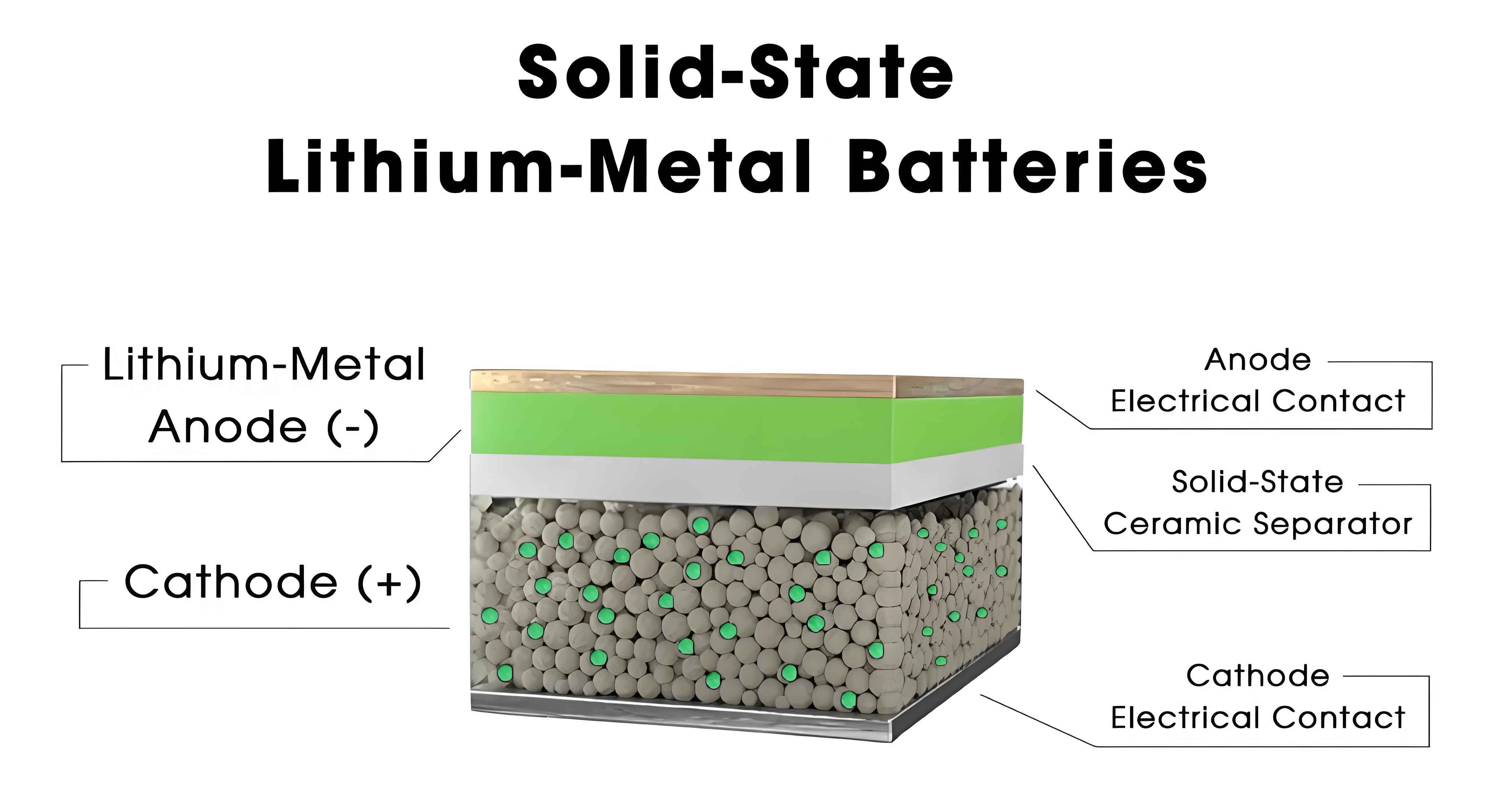
This represents the cutting-edge advancements that complement aluminum alloy applications in warehousing.
In conclusion, aluminum alloy heavy-duty shelving is set to become mainstream due to its structural efficacy, lightweight properties, and sustainability. The synergy with solid-state battery technology amplifies this trend, as aluminum’s role in energy storage fosters a holistic approach to green warehousing. Through rigorous design calculations and adherence to standards, aluminum shelving proves safe and feasible, while its recyclability aligns with global environmental initiatives. As solid-state batteries evolve, they will enhance the energy dynamics of warehouses, making aluminum an indispensable material. I am confident that embracing aluminum alloy shelving will lead to more efficient, safe, and sustainable storage systems, shaping the future of logistics worldwide.