
The modern energy landscape is undergoing a profound transformation, driven by the global imperative for decarbonization and the rapid integration of intermittent renewable sources like wind and solar. In this context, energy storage has emerged as a cornerstone technology for ensuring grid stability, enhancing energy security, and maximizing the utilization of clean power. At its core, a battery energy storage system (BESS) is defined as an integrated setup that stores electrical energy through electrochemical means and releases it when needed. As a critical flexibility resource, the advancement and deployment of the battery energy storage system are pivotal to building a resilient and sustainable power grid for the future.
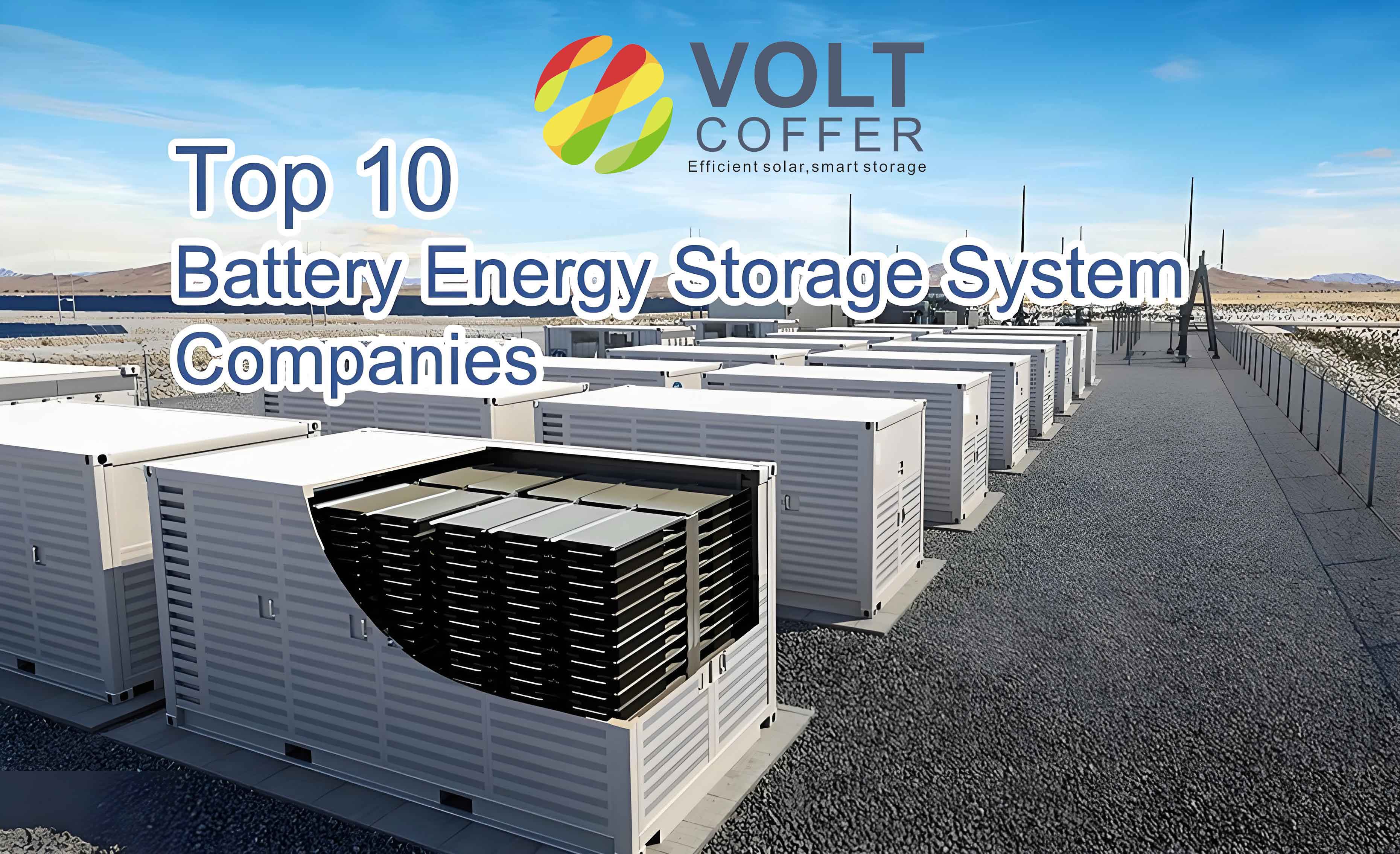
Broadly, energy storage technologies can be categorized based on the form of energy stored. The primary classifications include thermal storage, electrical storage, and hydrogen/ammonia storage. Within electrical storage, the domain most relevant to modern grid applications, there exist several sub-categories, with electrochemical storage—the foundation of the battery energy storage system—being the most rapidly growing. The following table provides a comparative overview:
| Storage Category | Primary Technologies | Key Characteristics |
|---|---|---|
| Mechanical Storage | Pumped Hydro, Compressed Air (CAES), Flywheel | Large-scale, long-duration (Pumped Hydro); Site-dependent; Flywheels offer high power for short duration. |
| Electrochemical Storage (BESS) | Lithium-ion, Lead-acid, Flow Battery, Sodium-based | Modular, scalable, fast response; High energy density; Wide range of power and energy ratings. |
| Electromagnetic Storage | Supercapacitors, Superconducting Magnetic | Extremely fast charge/discharge; Very high power density; Low energy density. |
| Thermal Storage | Molten Salt, Ice Storage | Stores energy as heat/cold; Often integrated with industrial processes or solar thermal plants. |
While pumped hydro remains the largest contributor by capacity globally, its growth is limited by geographical constraints and long development cycles. This has created a massive opportunity for new, flexible storage solutions. Among these, the electrochemical battery energy storage system stands out due to its modularity, declining costs, and technological maturity. Lithium-ion battery technology, in particular, has become the dominant force within the BESS domain, prized for its high energy density, efficiency, and rapidly improving cycle life. The fundamental energy relationship in any battery energy storage system can be expressed as:
$$E = P \times t$$
where \(E\) is the total energy storage capacity (in Watt-hours, Wh), \(P\) is the power rating (in Watts, W), and \(t\) is the duration of discharge at rated power (in hours, h). This simple formula underscores the dual metrics—power and energy—that define the application scope of a battery energy storage system.
Developmental Trajectory of the Battery Energy Storage Industry
Reflecting on the industry’s growth, I observe that the market for battery energy storage system technologies has evolved through four distinct, yet overlapping, phases. This evolution mirrors the learning curve, policy support, and market acceptance necessary for a complex energy technology.
| Development Phase | Time Period | Key Characteristics & Drivers |
|---|---|---|
| Technology Validation | ~2000-2010 | Focus on basic R&D and pilot-scale demonstration projects. Technologies were proven in controlled environments, primarily in labs and small-scale grid trials. |
| Demonstration & Application | ~2011-2015 | Larger demonstration projects deployed. Performance metrics improved rapidly, application models (e.g., frequency regulation, renewable integration) became clearer, and value propositions gained recognition. |
| Initial Commercialization | ~2016-2020 | Strengthened policy support and evolving market mechanisms. Significant growth in installed capacity. Initial business models emerged, and costs began to fall steeply due to manufacturing scale-up, particularly for lithium-ion. |
| Scaled Industrialization | ~2021-Present | Widespread project deployment. Technology iteration accelerates. Standards and regulations mature. A complete industrial ecosystem forms, with strong domestic and international market competition. BESS becomes a recognized economic growth pillar within the energy sector. |
The transition into the scaled industrialization phase is largely catalyzed by national strategies targeting carbon neutrality. Supportive policies have been instrumental. These policies aim to shift the battery energy storage system market from initial commercialization to full-scale, market-driven development by 2030, addressing not just technology push but also market pull mechanisms.
Deconstructing the Battery Energy Storage System Value Chain
The ecosystem surrounding a battery energy storage system is extensive and involves numerous specialized players. The value chain can be systematically broken down into three primary segments: upstream materials and equipment, midstream manufacturing and integration, and downstream applications.
Upstream: This segment provides the fundamental building blocks. It includes raw materials for battery cells (cathode, anode, electrolyte, separator) and the precision manufacturing equipment required for cell and module production. The cost, performance, and supply security of these materials directly impact the entire industry.
Midstream: This is the core of the battery energy storage system physical implementation. It involves cell manufacturing, assembly into battery packs with a Battery Management System (BMS), and the integration of these packs with other critical components. These components include:
- Power Conversion System (PCS)/Inverter: Converts DC battery power to AC grid power and vice versa. Its efficiency and grid-forming capabilities are crucial.
- Energy Management System (EMS): The “brain” of the installation, controlling charge/discharge cycles, optimizing for economics or grid services, and ensuring operational safety.
- System Integration: The engineering process of combining batteries, PCS, EMS, thermal management, and safety systems into a turnkey, site-ready solution.
Downstream: This encompasses all application scenarios where the battery energy storage system delivers value. The primary sectors are:
- Generation-side: Paired with solar or wind farms to smooth output, reduce curtailment, and provide ancillary services.
- Grid-side: Deployed by utilities for grid stabilization, congestion relief, voltage support, and deferred infrastructure investment.
- User-side: Includes commercial & industrial (C&I) facilities and residential homes, primarily for peak shaving, backup power, and self-consumption optimization.
- Other Emerging Sectors: Backup power for data centers and telecom towers, mobile power for robotics and military applications.
| Chain Segment | Key Components/Activities | Primary Value Addition |
|---|---|---|
| Upstream | Cathode/Anode Materials, Electrolyte, Separator, Manufacturing Equipment | Defines core cell chemistry, cost basis, and manufacturing scale. |
| Midstream (BESS Core) | Cell Production, BMS, Battery PACK, PCS, EMS, System Integration | Transforms materials into a functional, safe, and grid-interactive system. |
| Downstream | Project Development, EPC, Operation & Maintenance, Asset Management | Deploys systems in real-world scenarios, captures revenue from diverse value streams. |
Current Market Dynamics and the Rise of Niche Applications
The global energy storage market is experiencing exponential growth. Industry data indicates that from 2017 to 2023, the average annual growth rate of new global energy storage capacity (in GWh) exceeded 85%. The year 2023 was a landmark, with global new additions reaching approximately 103.5 GWh, a figure that astonishingly surpassed the entire historical cumulative installed capacity up to that point (101 GWh). This explosive growth underscores the urgent global demand for flexibility solutions, with the battery energy storage system at the forefront.
Within this global surge, one market has established undeniable leadership. New installed capacity has consecutively outpaced that of all other major economies, securing the top position globally. In 2023, this single market accounted for roughly 49% of all new global installations, adding an estimated 51 GWh. By the end of that year, the cumulative installed capacity of new energy storage (dominated by BESS) in this market exceeded 34.5 GW / 74.5 GWh, representing a year-on-year power and energy growth of over 150%. Notably, new additions in 2023 were three times the level of 2022 and, for the first time, exceeded new pumped hydro additions by nearly fourfold. Over 100 projects at the 100MW-level were commissioned, signaling a shift towards gigawatt-scale deployment.
Technologically, lithium-ion batteries have further consolidated their dominance within the battery energy storage system landscape, increasing their share from 94% to 97% of new installations. However, diversification is beginning. Non-lithium technologies like compressed air energy storage, sodium-ion batteries, and flow batteries are achieving critical demonstration breakthroughs, offering promising alternatives for long-duration storage needs and enhancing portfolio resilience.
Beyond large-scale grid applications, a vibrant consumer and professional market for portable battery energy storage system units has emerged. Known as portable power stations or emergency backup power, these devices are compact, lithium-based systems typically ranging from 100Wh to 3000Wh. They offer multiple output ports (AC, DC, USB, PD) and are replacing small gasoline generators in a variety of scenarios. The market size for these products has skyrocketed, demonstrating a compound annual growth rate well over 100% in recent years, evolving from a niche to a multi-billion-dollar consumer electronics segment.
The application mix for these portable battery energy storage system solutions is diverse:
| Application Scenario | Market Share Estimate | Key Drivers & Characteristics |
|---|---|---|
| Emergency Response & Public Safety | 55% – 60% | Widest range of uses; Critical for disaster relief, field operations, and public service continuity. |
| Outdoor Recreation & Travel | 15% – 20% | Fueled by lifestyle trends (camping, van life); Consumer-grade demand with focus on portability and features. |
| Medical Rescue & Mobile Healthcare | 11% – 16% | High-reliability requirement; Used in hospitals, mobile clinics, and for powering critical medical devices. |
| Mining & Remote Industrial Work | 5% – 8% | High degree of customization; Demanding environmental conditions; Still in early adoption phase. |
Future Outlook: Challenges, Opportunities, and Strategic Imperatives
Looking ahead, the future of the battery energy storage system industry is exceptionally bright, yet navigating its path requires addressing persistent challenges. The core value proposition of a battery energy storage system in enabling a high-renewables grid is indisputable. However, for sustainable, market-driven growth, three intertwined issues must be resolved: economic competitiveness, safety and reliability, and the maturation of market mechanisms.
1. The Quest for Commercial Viability: While capital costs have plummeted, the Levelized Cost of Storage (LCOS) remains a key metric for investment decisions. LCOS accounts for all lifetime costs against total energy delivered. Its reduction is a function of capex, operational lifespan, cycle efficiency, and operational costs. The formula can be simplified as:
$$LCOS = \frac{C_{cap} + \sum_{t=1}^{n} \frac{C_{O\&M,t}}{(1+r)^t}}{\sum_{t=1}^{n} \frac{E_{output,t}}{(1+r)^t}}$$
where \(C_{cap}\) is capital expenditure, \(C_{O\&M,t}\) is operation and maintenance cost in year \(t\), \(E_{output,t}\) is energy discharged in year \(t\), \(r\) is the discount rate, and \(n\) is the system lifetime. Achieving lower LCOS requires technological advances for longer life (more cycles, slower degradation), higher round-trip efficiency, and innovative business models that stack multiple revenue streams (e.g., energy arbitrage, capacity markets, frequency regulation).
2. The Paramount Importance of Safety: High-profile incidents involving battery fires have rightly focused industry and regulatory attention on safety. A holistic safety approach for a battery energy storage system spans:
- Cell Chemistry: Developing inherently safer chemistries (e.g., LFP cathode, solid-state electrolytes).
- System Design: Robust Battery Management Systems (BMS) for early fault detection, effective thermal management, and physical compartmentalization.
- Standards & Installation Codes: Evolving international and national standards for testing, installation, fire suppression, and setback distances.
3. Diverging Market Strategies: Success factors for a battery energy storage system provider vary dramatically across downstream segments, requiring distinct corporate capabilities.
| Market Segment | Business Model | Critical Success Factors |
|---|---|---|
| Residential (Primarily Overseas) | Business-to-Consumer (B2C) | Strong brand marketing, extensive retail & installer channels, localized customer support and warranties, sleek product design. |
| Utility & Large-Scale C&I (Global) | Business-to-Business (B2B) | Deep technical expertise in system integration, proven bankability and safety record, competitive cost structure, access to project finance, strong utility/developer relationships. |
In conclusion, the journey of the battery energy storage system from a laboratory curiosity to a central pillar of the clean energy transition is one of the most significant technological narratives of our time. The industry has progressed through validation, demonstration, and into a phase of explosive, policy-supported growth. While lithium-ion technology currently leads, the ecosystem is diversifying. The future will be defined by the industry’s ability to drive down costs through innovation and scale, to embed safety as a non-negotiable principle, and to create markets that properly value the myriad services a battery energy storage system provides. As renewable penetration deepens globally, the role of the sophisticated, reliable, and cost-effective battery energy storage system will only become more indispensable, solidifying its status as the linchpin of a flexible, resilient, and low-carbon power grid.