
The proliferation of large-scale battery energy storage systems (BESS) is a cornerstone of the modern grid’s transition towards renewable energy integration. Among various chemistries, the Lithium Iron Phosphate (LiFePO4) battery has garnered significant attention due to its inherent safety advantages, including stable crystal structure and high thermal stability. However, under extreme abuse conditions such as overcharging, LiFePO4 batteries can still undergo thermal runaway—a self-sustaining, uncontrollable increase in temperature leading to fire or explosion. The infamous 2019 incident at an APS facility starkly highlighted the catastrophic potential of such events. Therefore, developing reliable early warning systems is paramount for the safe and widespread deployment of LiFePO4-based energy storage. This article explores the thermal runaway characteristics of LiFePO4 battery modules under overcharge conditions, with a particular focus on the online monitoring of evolved gases as a highly sensitive and characteristic precursor to failure.
The fundamental mechanism of gas generation during the overcharge of a LiFePO4 battery is rooted in the decomposition of cell components. As the cell voltage is forced beyond its design limit during overcharging, lithium is excessively extracted from the LiFePO4 cathode, making the delithiated material highly oxidative. Concurrently, the temperature rises due to joule heating and exothermic side reactions. This elevated thermal and electrochemical stress triggers a cascade of decomposition reactions.
Firstly, the common lithium salt LiPF6 in the electrolyte thermally decomposes and reacts with trace moisture, producing highly toxic hydrogen fluoride (HF):
$$ \text{LiPF}_6 \rightarrow \text{LiF} + \text{PF}_5 $$
$$ \text{PF}_5 + \text{H}_2\text{O} \rightarrow 2\text{HF} + \text{POF}_3 $$
Secondly, the oxidative cathode material attacks the organic solvents in the electrolyte (e.g., Ethylene Carbonate (EC), Propylene Carbonate (PC)). These solvents decompose, releasing flammable gases like carbon monoxide (CO) and carbon dioxide (CO2):
$$ \text{O}_2 + \text{C}_3\text{H}_4\text{O}_3 \text{ (EC)} \rightarrow 3\text{CO}_{(g)} + \text{H}_2\text{O} $$
$$ 4\text{O}_2 + \text{C}_4\text{H}_6\text{O}_3 \text{ (PC)} \rightarrow 4\text{CO}_{2(g)} + 3\text{H}_2\text{O} $$
Hydrogen (H2) is also a primary product, likely generated from the reduction of protons or the decomposition of lithium alkyl carbonates formed at the anode. As the situation escalates towards full thermal runaway, the Solid Electrolyte Interphase (SEI) decomposes, the binder breaks down, and the separator melts, leading to internal short circuits and the generation of additional gases such as hydrocarbons (CxHy), sulfur dioxide (SO2), and hydrogen cyanide (HCN). This predictable sequence of gas evolution, occurring before the onset of open fire, makes gas sensing a potent tool for early warning.
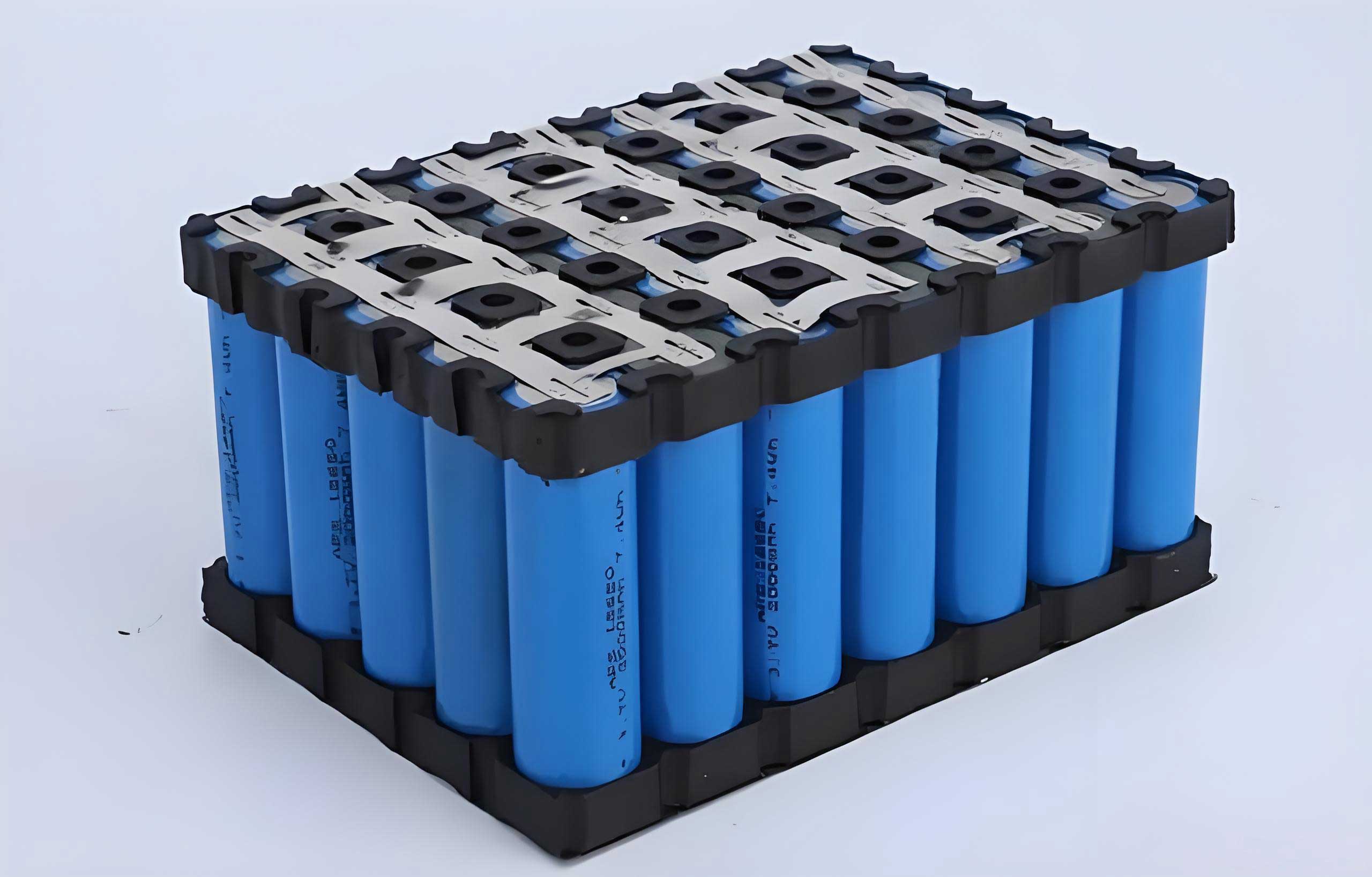
To empirically investigate this phenomenon, a test platform replicating a real energy storage container environment was established. Two distinct types of LiFePO4 battery modules were subjected to overcharge tests until thermal runaway and combustion occurred. The specifications of the test modules are detailed below:
| Parameter | Hard-Case LiFePO4 Module | Soft-Packed LiFePO4 Module |
|---|---|---|
| Cell Configuration | 32 cells (4P8S) | 72 cells (6P12S) |
| Cell Chemistry | Lithium Iron Phosphate (LiFePO4) | |
| Nominal Voltage | 25.6 V | 38.4 V |
| Rated Capacity | 344 Ah (8.8 kWh) | 288 Ah (11.1 kWh) |
| Overcharge Current | 172 A (0.5C) | 144 A (0.5C) |
| Key Structural Feature | Aluminum alloy case with pressure relief valves (safety vents). | Aluminum laminate film (pouch) casing; no dedicated pressure relief valve. |
The experimental setup integrated multiple monitoring systems: a constant current charger for controlled overcharging, visible-light cameras for visual documentation, an infrared thermal imaging system for surface temperature mapping, and a critical array of industrial-grade gas detectors. These detectors were positioned strategically to measure the real-time mass concentration (in mg/L) of key gases: H2, CO, CO2, HF, HCl, SO2, HCN, and total hydrocarbons (reported as %LEL).
The overcharge process for both LiFePO4 battery module types was not an instantaneous event but a graduated progression through distinct phases. The external manifestations and internal gas dynamics, however, differed notably due to their mechanical design.
Hard-Case LiFePO4 Battery Module: The rigid aluminum casing confines the generated gases until internal pressure forces open the built-in safety vents.
1. Initial/Gas Release Phase (t ~ 1060s): The first safety valve opened, followed by others in quick succession, ejecting electrolyte and white residue. This was the first clear signal of internal failure.
2. Development/Smoke Emission Phase (t ~ 2000s): Profuse white smoke began emanating from the module, quickly filling the test chamber. This smoke represented aerosolized electrolyte and decomposition products.
3. Thermal Runaway & Combustion Phase (t ~ 2964s): The module erupted into violent flame, accompanied by a noticeable pressure wave (gas explosion).
Soft-Packed LiFePO4 Battery Module: The flexible pouch has no discrete vent, leading to a different failure mode.
1. Initial/Expansion Phase: As gases evolved, internal pressure caused the pouch cells to swell visibly, deforming the module structure.
2. Rupture & Initial Release Phase (t ~ 1463s): The swollen module ruptured at its seams, releasing gas and electrolyte.
3. Development/Smoke Emission Phase (t ~ 2000s): Similar to the hard-case, light smoke progressed to dense, chamber-filling smoke.
4. Thermal Runaway & Combustion Phase (t ~ 2319s): The module entered full thermal runaway, with the combustible aluminum laminate pouch contributing to a more vigorous fire.
The infrared temperature data, while useful, showed significant limitations. The surface temperature rise was gradual and lagged behind internal chemical reactions. Furthermore, the emitted smoke severely obscured the infrared cameras, causing drastic and unreliable fluctuations in the measured temperature profile. This underscores that surface temperature alone is an insufficient and delayed indicator for early warning.
In stark contrast, the gas detection system provided a clear, timely, and quantitative narrative of the internal failure process. The gas release profiles for both LiFePO4 battery types are summarized in the following analysis.
The gas evolution was found to be intrinsically linked to the visual phases of thermal runaway. The table below synthesizes the relationship between stages, phenomena, and key gas markers for a typical LiFePO4 battery overcharge event.
| Thermal Runaway Stage | Key Observable Phenomena | Primary Gas Indicators & Trend | Early Warning Relevance |
|---|---|---|---|
| 1. Early Internal Decomposition | Voltage plateau/excursion; Mild temperature rise; Possible first vent opening (hard-case) or swelling (pouch). | H2, CO, CO2: Concentrations begin a clear, measurable increase from baseline. HCl/HF: Initial slight rise may be detected. | CRITICAL WINDOW. First definitive electronic/chemical signature of serious abnormality before smoke or fire. |
| 2. Active Decomposition & Smoke Generation | Multiple vents open/smoke emission; Significant smoke production; Temperature rise becomes more pronounced. | H2, CO, CO2: Concentrations rise sharply, often exceeding sensor ranges. HF, HCl: Concentrations spike dramatically. Hydrocarbons, SO2, HCN: Begin to appear and increase. | IMMINENT HAZARD. Confirms severe failure is in progress. Smoke and toxic gas generation have begun. |
| 3. Thermal Runaway & Combustion | Open flame; Violent burning; Potential explosion. | Gas concentrations are extremely high and chaotic. Combustion consumes some gases, altering ratios (e.g., O2 depletion, new combustion products). | FAILURE EVENT. Warning window has closed. Focus shifts to fire suppression and containment. |
Comparative Analysis of Gas Release Dynamics:
While the sequence of gas generation is chemically similar, the release profile differs between hard-case and pouch LiFePO4 batteries due to mechanical design.
* Onset Time: Gases were detected earlier in the hard-case module (~1060s) because safety vents provide a dedicated release path. Gases in the pouch module were detected later (~1463s) only after the sealed pouch swelled and ruptured.
* Release Rate: The initial release rate of H2 was significantly higher for the hard-case battery (44.4 mg/(L·s)) compared to the pouch (26.8 mg/(L·s)). This is attributed to the rapid, directed ejection of high-pressure gas and aerosol through the vents, directly hitting the nearby sensor. The pouch release was a more diffuse burst.
* Commonality for Warning: Crucially, both LiFePO4 battery types exhibited the same hierarchy of gas sensitivity. The flammable gases (H2, CO, CO2) were the first and most sensitive indicators, rising consistently from the early stages. The toxic gases (HF, HCl) showed a secondary, sharp increase closely associated with the massive smoke generation phase.
The comparative findings from testing both LiFePO4 battery architectures lead to a proposed multi-tier gas-sensing strategy for early warning in energy storage systems.
Tier 1 Warning (Primary Alert – Incipient Failure): Triggered by a sustained rise in the concentrations of H2, CO, and/or CO2 above their normal background levels. This tier is designed to provide the earliest possible alert, potentially before any significant temperature increase or visible smoke is apparent. Upon a Tier 1 warning, system operations should be halted (charging stopped), and targeted cooling could be initiated to attempt to arrest the failing cell.
The response logic can be modeled as a function of gas concentration (C) and its rate of change (dC/dt):
$$ \text{Tier 1 Alert} = f(C_{H_2}, C_{CO}, C_{CO_2}, \frac{dC}{dt}_{H_2/CO/CO_2}) > \text{Threshold} $$
This function must account for baseline levels and rule out sensor drift or environmental interference.
Tier 2 Warning (Secondary Alert – Accelerated Decomposition): Triggered by a subsequent rapid increase in the concentrations of HF and/or HCl. The detection of these highly toxic and corrosive gases signifies that severe electrolyte and salt decomposition is underway, coinciding with the generation of copious smoke. A Tier 2 warning should initiate immediate and full emergency protocols: isolation of the affected battery rack, activation of fire suppression systems (e.g., aerosol-based suppressants that are effective on Li-ion fires), and evacuation alerts for personnel due to the high toxicity of HF.
$$ \text{Tier 2 Alert} = \text{Tier 1 Active} \ \& \ f(C_{HF}, C_{HCl}, \frac{dC}{dt}_{HF/HCl}) \gg \text{Threshold} $$
This two-tiered approach, based on the distinct temporal release profiles of different gas species, maximizes the warning time for operators. Temperature monitoring should be used as a supporting diagnostic tool but not as the primary trigger due to its latency and susceptibility to interference.
In conclusion, the overcharge-induced thermal runaway of LiFePO4 battery modules is a gradual, multi-stage process characterized by a predictable sequence of gas evolution. While mechanical differences between hard-case and soft-packed LiFePO4 batteries affect the timing and rate of gas release, the fundamental hierarchy of gas generation remains consistent: flammable gases (H2, CO, CO2) appear first, followed by a sharp rise in toxic gases (HF, HCl) associated with smoke. Relying solely on surface temperature monitoring for early warning is inadequate due to thermal lag and obscuration by smoke. A gas-sensing-based strategy, implementing a two-tier warning system as outlined, offers a far more sensitive, reliable, and timely method for detecting incipient failure in LiFePO4-based energy storage systems. This approach can trigger preventive actions during the early stages of overcharge, potentially preventing the progression to catastrophic thermal runaway and fire, thereby enhancing the safety and viability of large-scale LiFePO4 battery energy storage.